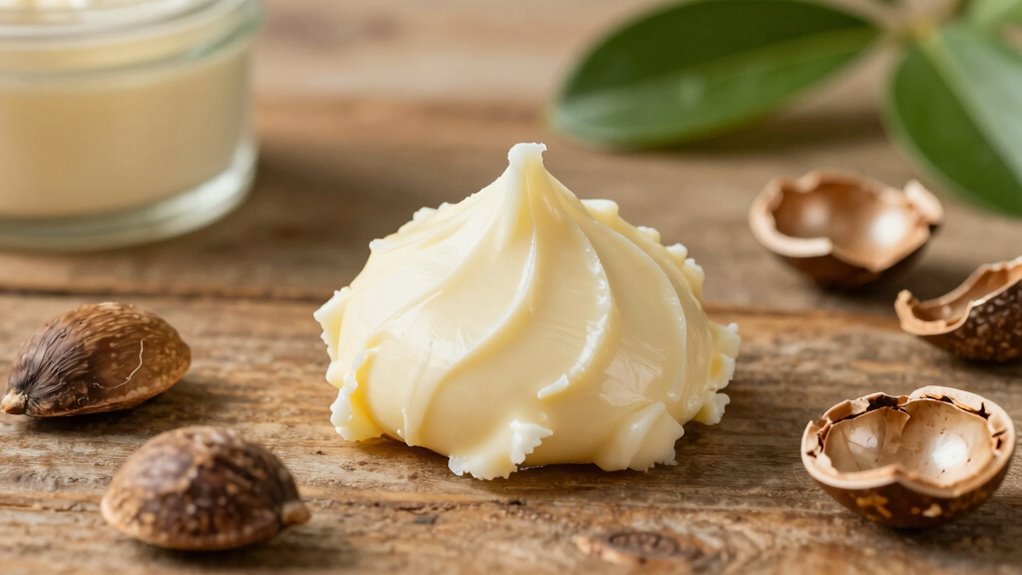

Shea butter helps some skin by deeply nourishing, softening, and protecting it, thanks to its rich fatty acids and vitamins. It’s especially beneficial for dry, sensitive, or irritated skin, offering relief and restoring resilience. However, if you have oily or acne-prone skin, it can clog pores and cause breakouts due to its thick, occlusive nature. Understanding your skin type and how to use shea butter properly can help you enjoy its benefits—more details await you.

Turn your quiet moments into listening time
- Thousands of audiobooks, podcasts and originals
- Listen on your phone, tablet or Echo — also offline
- Cancel anytime
Key Takeaways
- Shea butter’s rich fatty acids and vitamins hydrate and nourish skin, benefiting dry or sensitive skin types.
- Its occlusive properties can clog pores in oily or acne-prone skin, leading to breakouts.
- Proper application and moderation help prevent irritation or pore blockage, especially for prone skin.
- Individual skin responses vary; some may experience increased oiliness or irritation due to shea butter’s richness.
- Patch testing and adjusting usage can help determine if shea butter suits your skin’s unique needs.
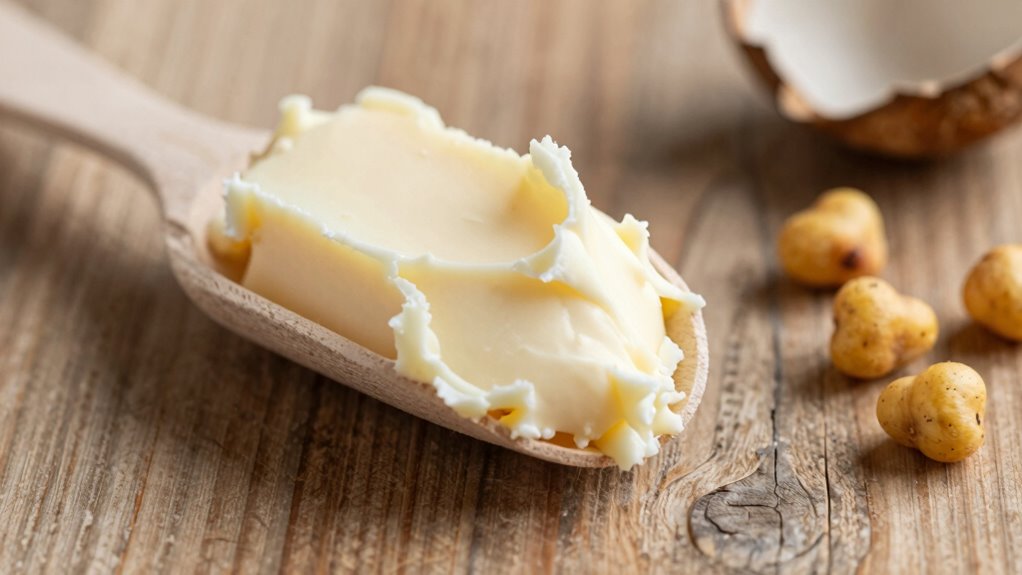
Have you ever wondered what makes shea butter a beloved ingredient in skincare? It’s because of its incredible ingredient benefits that have made it a staple for many. Shea butter is rich in fatty acids and vitamins, particularly vitamins A, E, and F, which nourish and hydrate the skin deeply. These nutrients help improve skin elasticity, soothe irritation, and promote healing, making shea butter especially effective for dry, flaky, or sensitive skin. Its natural anti-inflammatory properties can reduce redness and swelling, providing relief for conditions like eczema and psoriasis. Additionally, shea butter forms a protective barrier over the skin, locking in moisture and shielding it from environmental stressors such as pollution and harsh weather. Because of these ingredient benefits, it’s often used in products designed to restore skin’s softness and resilience.
When it comes to application tips, you want to use shea butter correctly to maximize its benefits and avoid breakouts. First, always opt for pure, unrefined shea butter when possible, as it retains most of its natural nutrients. If you’re applying it to your face, start with a small amount—about the size of a pea—and gently warm it between your fingertips before patting it onto your skin. This helps it melt slightly, making it easier to spread evenly. For best results, apply shea butter on slightly damp skin after cleansing, as this helps lock in moisture more effectively. If your skin is prone to breakouts, be cautious about the amount you use and focus on areas that need extra hydration. You might also consider mixing shea butter with other non-comedogenic ingredients, like aloe or jojoba oil, to reduce the risk of clogged pores. For body application, shea butter can be used more liberally, especially after a shower to seal in moisture.
It’s important to listen to your skin’s response. While shea butter benefits many, some skin types, especially oily or acne-prone skin, might react differently. If you notice increased breakouts or irritation, cut back on the frequency or try a patch test first. Remember, application tips are about respecting your skin’s unique needs. When used thoughtfully, shea butter can be a powerful ally in your skincare routine—hydrating, healing, and protecting. But if your skin doesn’t react well, it’s best to seek alternatives. Ultimately, understanding the ingredient benefits and applying shea butter correctly will help you decide whether it’s the right fit for your skincare needs.
Products Worth Considering

Shark HydroVac MessMaster Wet/Dry Vacuum & Mop Combo (AW261)

Blueair Blue Pure 511i Max Air Purifier

Bose TV Speaker Compact Soundbar with Bluetooth and HDMI-ARC, Black
As an affiliate, we earn on qualifying purchases.
Frequently Asked Questions
Can Shea Butter Cause Allergic Reactions in Sensitive Skin?
Yes, shea butter can cause allergic reactions in sensitive skin. If you have allergies or very sensitive skin, you might experience redness, itching, or irritation after applying it. It’s best to do a patch test first—apply a small amount to your skin and wait 24 hours to see if any reaction occurs. If you notice any discomfort, stop using it and consult a dermatologist for personalized advice.
How Do I Determine if Shea Butter Is Suitable for My Skin Type?
Think of your skin as a garden; some plants thrive with certain nutrients, while others struggle. To see if shea butter suits you, do a skin patch test on a small area and wait 24 hours for any reaction. Check ingredient labels for pure shea butter and avoid additives. If no irritation appears, it’s likely safe for your skin type, but always proceed cautiously.
Does the Processing Method Affect Shea Butter’s Skin Effects?
Yes, the processing method affects shea butter’s skin effects. If it’s highly refined, it may lose some of its natural nutrients and antioxidants, reducing its benefits. On the other hand, pure, minimally processed shea butter retains higher processing purity, offering better moisturizing and healing properties. Refining effects can also introduce chemicals or remove beneficial compounds, so choosing unrefined or cold-pressed shea butter guarantees you get the most natural and effective product for your skin.
Can Shea Butter Be Used on Acne-Prone Skin Without Clogging Pores?
Think of your skin like a sponge—if it’s clogged, adding more oil might cause it to overflow. Shea butter can be used on acne-prone skin, but it depends on your pores’ oil absorption. It’s generally non-comedogenic, meaning it’s unlikely to clog pores, but if your skin is very sensitive or oily, test a small area first. Always choose unrefined, pure shea butter for the best chance to avoid pore clogging.
What Are the Best Ways to Apply Shea Butter for Skin Benefits?
You should apply shea butter using gentle application techniques, like massaging a small amount into clean, damp skin to enhance absorption. For best skin benefits, consider combining shea butter with ingredients like honey or aloe vera, which can soothe and hydrate. Avoid over-application, especially if you have oily or acne-prone skin, and focus on targeted areas. This way, you maximize benefits while minimizing potential breakouts.
Conclusion
Shea butter can be a blessing or a bane, depending on your skin type. If you’re among the 90% of people with dry or sensitive skin, it might deeply hydrate you. But if you’re prone to breakouts, it could clog your pores. Remember, your skin’s unique makeup matters. So, before slathering on shea butter daily, test a small patch first—because what works for 90% may not work for you, and your skin deserves the best care.