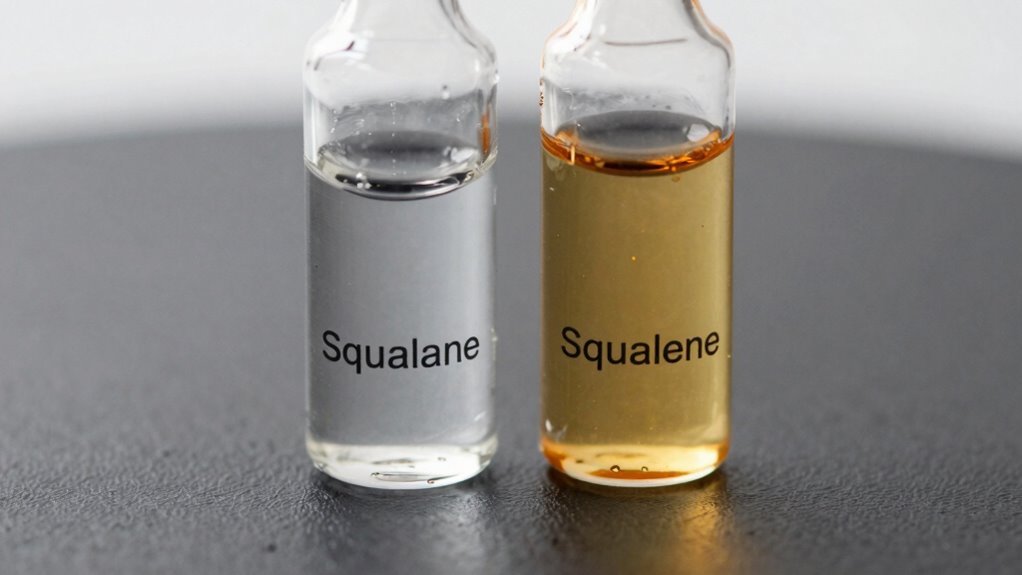

Squalene and squalane are both lipids used in skincare, but they differ in structure and stability. Squalene is unsaturated and prone to oxidation, making it less durable, while squalane is fully saturated, offering longer shelf life and better stability. Squalane is usually plant-derived and ideal for sensitive skin, whereas squalene’s antioxidant benefits come with some risks of irritation. To learn more about how each can benefit your skin, keep exploring these fascinating differences.
Key Takeaways
- Squalene is an unsaturated hydrocarbon prone to oxidation; squalane is its saturated, more stable hydrogenated form.
- Squalane offers longer shelf life, better stability, and is less likely to cause skin irritation than squalene.
- Squalene is naturally sourced from shark liver or plants; squalane is produced by hydrogenating squalene for enhanced durability.
- Squalane is preferred in skincare for its quick absorption, deep hydration, and suitability for sensitive skin types.
- The saturation of squalane makes it more environmentally friendly and sustainable compared to the more unstable squalene.
What Are Squalene and Squalane? Key Differences Explained
Have you ever wondered what makes squalene and squalane different? The main distinction lies in their stability and skin absorption. Squalene is a natural, unsaturated lipid that your skin absorbs easily, but it’s prone to oxidation, which can reduce its effectiveness and impact the environment negatively when it breaks down. Squalane, on the other hand, is a hydrogenated, stable version of squalene that lasts longer and resists oxidation, making it better for prolonged skin contact. From an environmental perspective, squalane’s durability means less frequent production and waste, lowering its overall environmental impact. Additionally, the chemical stability of squalane ensures it maintains its beneficial properties over time. Understanding these differences helps you choose the right ingredient for skincare that’s both effective and eco-friendly. The environmental benefits of squalane also include its potential for sustainable sourcing, which is increasingly important in eco-conscious skincare choices.
How Are Squalene and Squalane Made? Origins and Production Methods
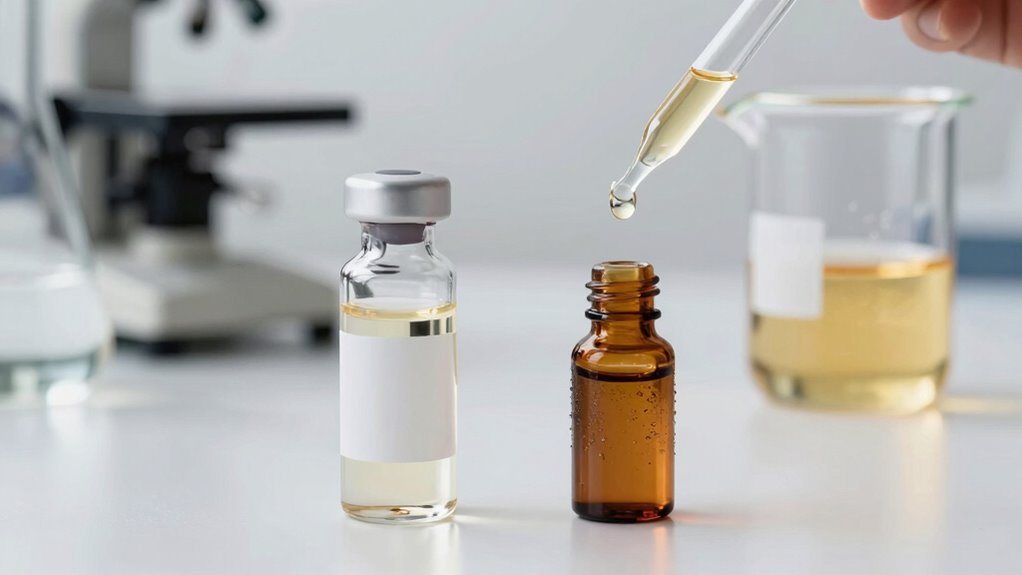
Squalene and squalane originate from different sources and undergo distinct production processes. Squalene is naturally found in sources like shark liver oil and plant oils such as olives and rice bran. To extract squalene, manufacturers use extraction methods like cold-pressing or solvent extraction, ensuring minimal degradation. Once obtained, squalene often undergoes industrial production, which may involve purification steps to remove impurities. Squalane, on the other hand, is a hydrogenated form of squalene. It is produced through hydrogenation, where hydrogen molecules are added to convert squalene into a more stable, saturated oil. This process enhances shelf life and stability, making squalane suitable for skincare. Both ingredients are produced industrially to meet the demand for high-purity, consistent quality in cosmetic formulations.
Squalene vs. Squalane: Which Is Better for Sensitive Skin?
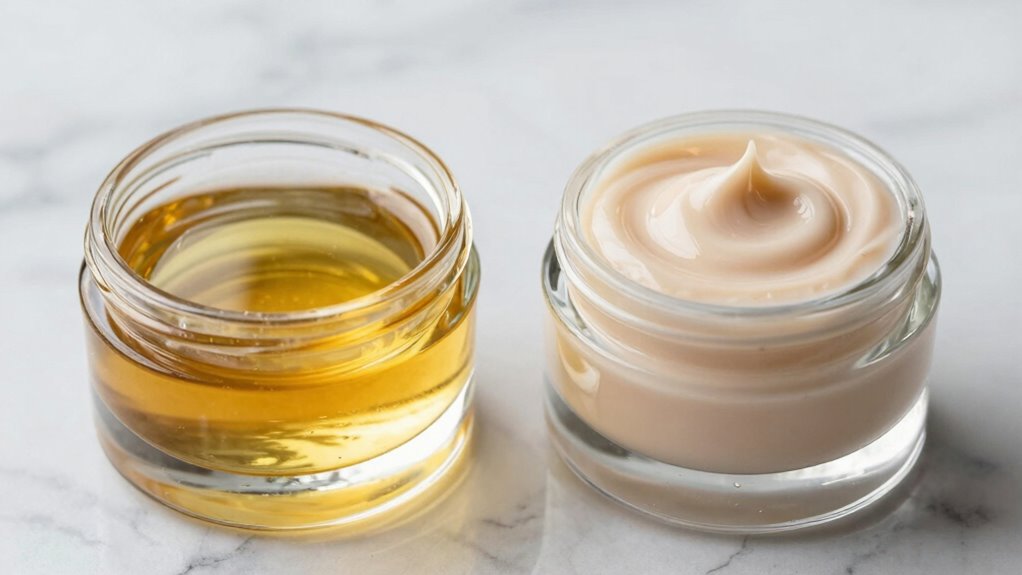
Both squalene and squalane are popular ingredients in skincare, but their suitability for sensitive skin differs markedly. Squalane, being more stable and less likely to cause irritation, is often better suited for sensitive skin types. It’s typically derived from natural sourcing, such as plant oils, and many brands offer cruelty-free options. Squalene, although natural, can sometimes trigger reactions due to its origin or purity levels. When choosing, consider your skin’s tolerance and look for products that emphasize natural sourcing and cruelty-free options. Here’s a quick comparison:
| Feature | Squalene | Squalane |
|---|---|---|
| Stability | Less stable | More stable |
| Sensitivity | Higher risk of irritation | Gentle, suitable for sensitive skin |
| Sourcing | Usually from shark or plants | Usually from plants (natural sourcing) |
| Cruelty-free options | Limited | Widely available |
| Use in skincare | Less common | More common |
How Do Squalane and Squalene Perform in Skincare? Benefits and Stability
You’ll notice that squalane and squalene differ in how effectively they moisturize your skin, with squalane often providing longer-lasting hydration. Squalane’s superior stability also means it’s less likely to oxidize and spoil, giving your products a longer shelf life. Understanding these differences helps you choose the best option for your skincare routine.
Moisturizing Effectiveness Differences
When it comes to moisturizing, squalane and squalene differ markedly in their effectiveness and stability. Squalane is highly effective at locking in moisture, thanks to its excellent formulation compatibility with various skincare ingredients. It absorbs quickly without leaving a greasy residue, making it suitable for all skin types. Squalene, while naturally occurring in skin, is less stable and can be less effective unless properly stabilized in formulations. Its moisturizing benefits are notable but may require more frequent application. Additionally, squalane has a lower environmental impact during production, as it can be synthesized sustainably. Product stability can be improved by choosing formulations that incorporate stabilized squalene derivatives, enhancing their longevity and efficacy. Moreover, the popularity of squalane has increased due to its eco-friendly production process and biocompatibility with skin. Overall, squalane offers more reliable and long-lasting hydration, with better stability and compatibility, making it the preferred choice for effective and eco-conscious moisturizing in skincare routines.
Oxidation and Shelf Life
Squalane and squalene differ considerably in their stability and shelf life because of their chemical structures. Squalane’s saturated form offers superior oxidation stability, meaning it resists becoming rancid over time. This enhances its shelf longevity, making it ideal for long-term storage and consistent skincare use. Squalene, however, is more prone to oxidation due to its unsaturated nature, which can lead to faster degradation when exposed to air, light, or heat. As a result, squalene products require careful packaging and quicker usage to maintain efficacy. If you’re looking for a product that stays fresh longer, squalane provides better stability. oxidation stability is a crucial factor in determining the overall safety and effectiveness of these oils over time. Additionally, understanding the chemical stability of these ingredients can help you make informed choices for your skincare routine.
When Should You Use Squalene or Squalane? Choosing the Right Lipid for Your Skin
Choosing between squalene and squalane depends on your skin’s specific needs and your skincare goals. If you want a lightweight oil for quick absorption, squalane is ideal, especially during the day or under makeup. Use it after cleansing and serums, as part of your application timing to lock in moisture and enhance absorption. Squalene, being more delicate and prone to oxidation, suits nighttime use or products with antioxidant ingredients, where its freshness can be preserved. When selecting products, consider ingredient pairing: squalane blends well with humectants and occlusives, while squalene pairs nicely with antioxidants. Ultimately, your choice hinges on your skin’s sensitivity, desired texture, and the formulation’s compatibility with your routine.
Mythbusting Squalene and Squalane: Separating Facts From Fiction
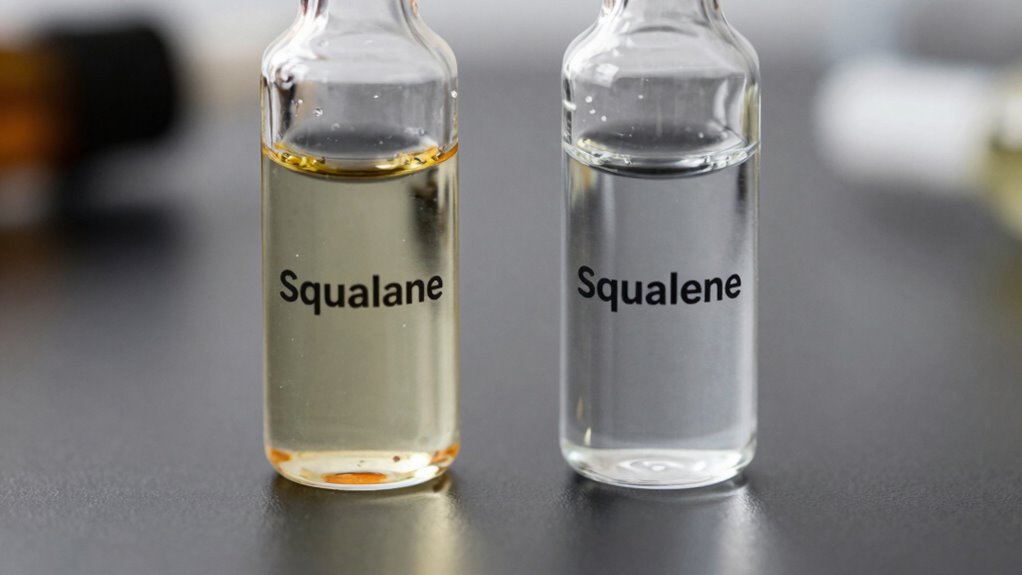
Many myths surround squalene and squalane, leading to confusion about their true benefits. Understanding their chemical differences, how they’re used, and common misconceptions can help you make better choices. For example, the sourcing from plant-based or animal-based origins can impact their sustainability and ethical considerations. Additionally, their origin and production methods can influence their properties and environmental footprint.
Chemical Composition Differences
Despite their similar names, squalene and squalane differ markedly in their chemical makeup. Squalene has a molecular structure composed of six isoprene units, giving it the chemical formula C30H50. Its structure is a naturally occurring, unsaturated hydrocarbon with multiple double bonds, making it less stable. Squalane, on the other hand, is a fully saturated hydrocarbon with the chemical formula C30H62. Its molecular structure results from hydrogenating squalene, removing the double bonds. This saturation makes squalane more stable and resistant to oxidation. The key difference lies in their molecular structures and chemical formulas: squalene’s unsaturated form is less stable, while squalane’s saturated form provides durability and longevity in skincare formulations.
Usage and Benefits
Squalene and squalane are often touted for their skincare benefits, but understanding how they actually perform can clear up many misconceptions. Both offer antioxidant properties that help protect your skin from environmental damage, reducing signs of aging. Squalane, in particular, is known for its excellent skin absorption, allowing it to penetrate deeply and deliver moisture effectively. Its lightweight, non-greasy texture makes it suitable for all skin types, including sensitive skin. Squalene, while less stable, still provides antioxidant benefits, but its lower skin absorption rate means it’s often used in formulations for surface protection. Overall, these lipids enhance your skin’s barrier, boost hydration, and offer anti-aging benefits, making them versatile ingredients in your skincare routine.
Common Misconceptions
There are several misconceptions about squalene and squalane that can lead to confusion about their true benefits and uses. One common myth is that squalene only comes from animal sources, but many cosmetic applications now use plant sources like olives and sugarcane, making it more sustainable and suitable for vegans. Some believe squalane is solely an anti-aging ingredient, but it also offers moisturizing and antioxidant benefits. Additionally, people assume squalane is always natural and unprocessed, yet it can be derived through hydrogenation of plant-based squalene. Understanding these facts helps you make informed choices about products, recognizing that both compounds serve valuable roles in skincare and are often sourced responsibly from plants for safer cosmetic applications. Moreover, the horsepower of electric dirt bikes can range from 10 to 20 horsepower, providing a comparison of power output similar to traditional gas-powered bikes.
Frequently Asked Questions
Are Squalene and Squalane Suitable for Oily Skin Types?
Yes, squalene and squalane can suit oily skin types. They help balance oiliness without clogging pores, making your skin feel less greasy. Squalane, in particular, promotes pore refinement and maintains hydration while controlling excess oil. Using these ingredients in your routine can improve skin texture, reduce shine, and support a healthy oiliness balance, leaving your skin feeling refreshed and smoother throughout the day.
Can Squalane or Squalene Cause Allergic Reactions?
Did you know that less than 1% of people report allergenic reactions to squalane or squalene? These lipids are generally well-tolerated, but skin sensitivities can vary. While rare, some individuals may experience allergic reactions, such as redness or irritation. To avoid issues, do a patch test first, especially if you have sensitive skin. If reactions occur, discontinue use and consult a dermatologist.
How Long Does It Take to See Results Using These Lipids?
You’ll typically see visible improvements within 2 to 4 weeks of consistent use of squalane or squalene. Timing expectations vary based on your skin type and concerns, but patience is key. Regular application helps your skin absorb these lipids better, promoting hydration and smoothness. Keep using them daily, and you’ll notice a healthier, more radiant complexion over time.
Are There Environmental Impacts Associated With Sourcing Squalene?
You’re right to ask if there are environmental impacts with sourcing squalene. It’s a bit of a double-edged sword—traditional extraction from shark liver raises concerns about overfishing and marine ecosystems. However, many brands now prioritize sustainable sourcing, using plant-based methods like olives or sugarcane, which considerably reduce the environmental footprint. So, look for responsible brands to ensure your skincare choices are eco-friendly and align with conservation efforts.
Can These Lipids Be Used Together in Skincare Routines?
Yes, you can use squalane and squalene together in your skincare routine. They’re lipid compatible, meaning they work well when mixed or layered. Squalane’s stability and lightweight texture complement squalene’s moisturizing properties. For ideal skincare mixing, apply them in the right order—usually squalene first, then squalane—to maximize benefits. Just ensure your products suit your skin type and needs for the best results.
Conclusion
Understanding the differences between squalene and squalane helps you make smarter skincare choices. Did you know that squalane’s stability extends its shelf life by up to 50% compared to squalene? By choosing the right lipid for your skin type, you can boost hydration and protection effectively. Keep in mind, 70% of your skin’s natural oils are squalene, so incorporating these ingredients thoughtfully can truly enhance your skincare routine.