


Tranexamic acid helps target uneven skin tone by inhibiting melanin overproduction, which reduces dark spots and hyperpigmentation. It works by blocking the pathways that trigger excess pigment formation, leading to a more even complexion. Whether applied topically, taken orally, or injected, it promotes a brighter, more radiant skin over time. To discover how this treatment can fit into your skincare routine and its full benefits, keep exploring the options available.
Key Takeaways
- Tranexamic acid inhibits melanin overproduction, helping to lighten dark spots and hyperpigmentation.
- It reduces skin inflammation, which can trigger pigmentation irregularities.
- The medication blocks pathways involved in abnormal pigment formation.
- When used topically or orally, it promotes a more even skin tone over time.
- It works best as part of a comprehensive skincare routine with sun protection.
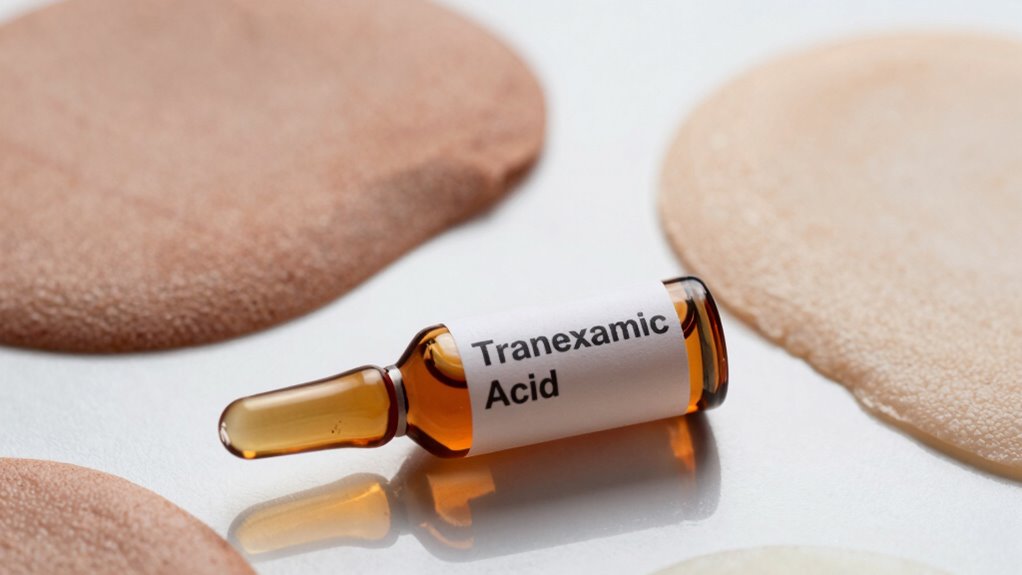
Tranexamic acid is a medication commonly used to reduce bleeding by helping blood clot more effectively. However, in recent years, it has gained popularity for its ability to address skin pigmentation issues, making it a notable option in the domain of cosmetic treatments. If you’re struggling with uneven skin tone or dark spots, you might find that tranexamic acid offers a promising solution. It works by inhibiting the overproduction of melanin, the pigment responsible for dark spots and hyperpigmentation, helping your skin look more even and radiant over time.
Tranexamic acid helps reduce pigmentation and promotes an even, radiant skin tone over time.
When it comes to skin pigmentation concerns, many treatment options exist, but tranexamic acid stands out because of its targeted action and minimal invasiveness. Unlike some topical creams that can take months to show results, tranexamic acid can be administered orally, topically, or through injections, providing flexibility based on your needs and preferences. Topical formulations are often preferred for treating mild pigmentation irregularities, as they directly deliver the drug to the affected areas. Oral or injectable forms are typically reserved for more extensive pigmentation issues or when other treatments haven’t worked effectively.
You should consider treatment options that include tranexamic acid if you’re looking for a non-invasive approach with a relatively low risk of side effects. Many dermatologists recommend it as part of a broader skincare regimen, especially for conditions like melasma or post-inflammatory hyperpigmentation. It’s important to remember that while tranexamic acid can be effective, you’ll also need to incorporate sun protection into your routine. UV exposure can worsen pigmentation, so daily use of a broad-spectrum sunscreen is vital to maintain results and prevent further darkening.
In terms of treatment options, tranexamic acid is often used in combination with other skin-lightening agents such as vitamin C or hydroquinone to maximize effectiveness. Your dermatologist can tailor a plan based on your skin type, pigmentation severity, and treatment goals. While the medication is generally well-tolerated, some individuals may experience mild side effects like skin irritation or gastrointestinal discomfort when taking it orally. It’s essential to discuss your medical history with your healthcare provider before starting treatment to guarantee safety. Additionally, understanding the role of skin pigmentation can help you better grasp how tranexamic acid works in addressing uneven skin tone.
Frequently Asked Questions
Can Tranexamic Acid Improve Skin Elasticity?
Tranexamic acid can help improve your skin’s elasticity by promoting pigmentation reduction and supporting skin firmness enhancement. It works by inhibiting melanin production, leading to a more even tone, which can make your skin appear smoother and more resilient. While its primary benefits are pigmentation reduction, many users notice improved skin texture and firmness over time, making it a valuable addition to your skincare routine for a more youthful, elastic appearance.
How Long Does It Take for Results to Appear?
You can expect to see visible improvements in your skin tone within 4 to 6 weeks of regular tranexamic acid use. Timing expectations vary depending on individual skin responses and treatment frequency. Consistency is key, so stick with your regimen. Typically, you’ll notice a gradual lightening of dark spots and an even skin tone, but patience is essential for ideal results.
Are There Any Age Restrictions for Use?
Absolutely, there are age restrictions for usage guidelines with tranexamic acid. Generally, it’s recommended for adults and not suitable for children or teenagers without medical supervision. You should always consult your healthcare provider to guarantee proper safety and suitability, especially if you’re over 40 or have underlying health conditions. Following these guidelines helps prevent potential problems and promotes safe, successful skin treatment.
Does It Work on All Skin Types?
Tranexamic acid generally works on most skin types, but skin compatibility varies. You should do a patch test first to check for allergic reactions, especially if you have sensitive skin. While many people see positive results, those with known allergies or sensitive skin might experience irritation. Consulting a dermatologist can help determine if it’s suitable for your skin type and to minimize the risk of allergic reactions.
Is Tranexamic Acid Safe for Pregnant Women?
You should avoid using tranexamic acid during pregnancy because its pregnancy safety hasn’t been established. While topical application is generally considered safe for many, it’s best to consult your healthcare provider before use. They can advise you on whether the treatment is appropriate for your specific situation. Prioritizing your health and your baby’s safety is essential, so always seek professional guidance before adding new skincare products during pregnancy.
Conclusion
If you struggle with uneven skin tone, tranexamic acid offers a promising solution. Imagine Sarah, who battled dark spots for years and finally saw significant improvement after consistent treatments. By targeting the melanin pathways, this ingredient helps restore balance and radiance to your skin. With patience and proper guidance, you can achieve a more even complexion. Tranexamic acid isn’t just a trend—it’s a scientifically supported option that could transform your skincare routine.