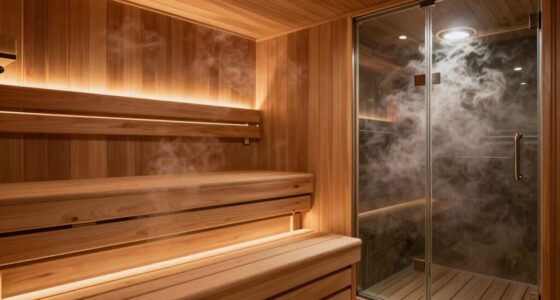
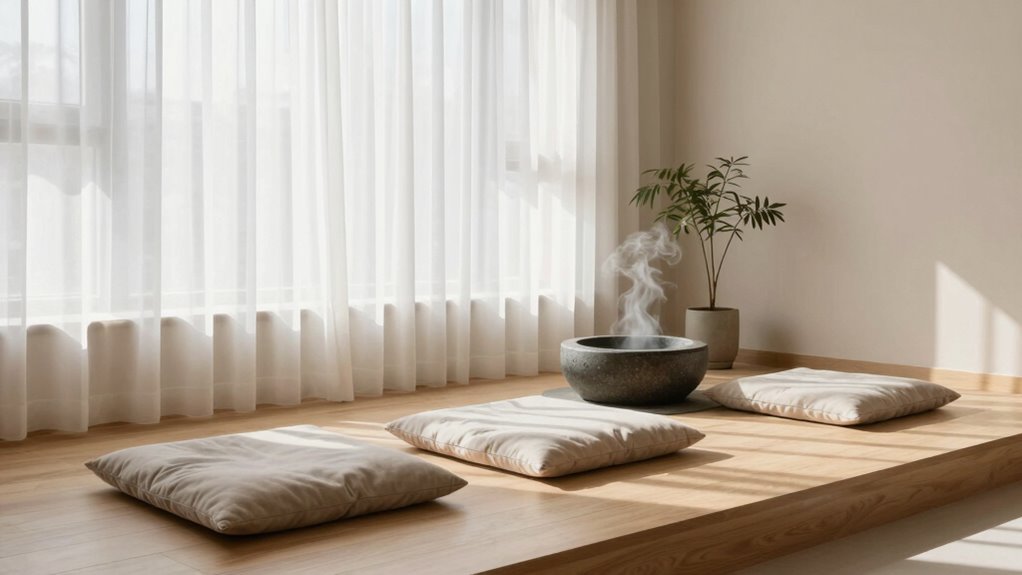

The “Silent Spa” concept shows that reducing external stimuli helps you relax more deeply by calming your mind and body. When you limit noise, chatter, and digital distractions, you create a peaceful environment that promotes mindfulness and internal awareness. This gentle withdrawal from stimulation lowers stress, eases muscle tension, and enhances your sense of calm. If you want to discover how controlling sensory input can transform your well-being, there’s more to explore ahead.
Key Takeaways
- Reducing external stimuli helps calm the nervous system, promoting deeper relaxation and mental clarity.
- Less stimulation minimizes mental clutter, allowing for increased mindfulness and present-moment awareness.
- Controlled sensory input decreases stress hormones and muscle tension, enhancing overall well-being.
- A quieter environment fosters a stronger mind-body connection, improving self-awareness and internal peace.
- Simplifying sensory experiences provides a restorative escape from overstimulation, supporting mental and physical health.
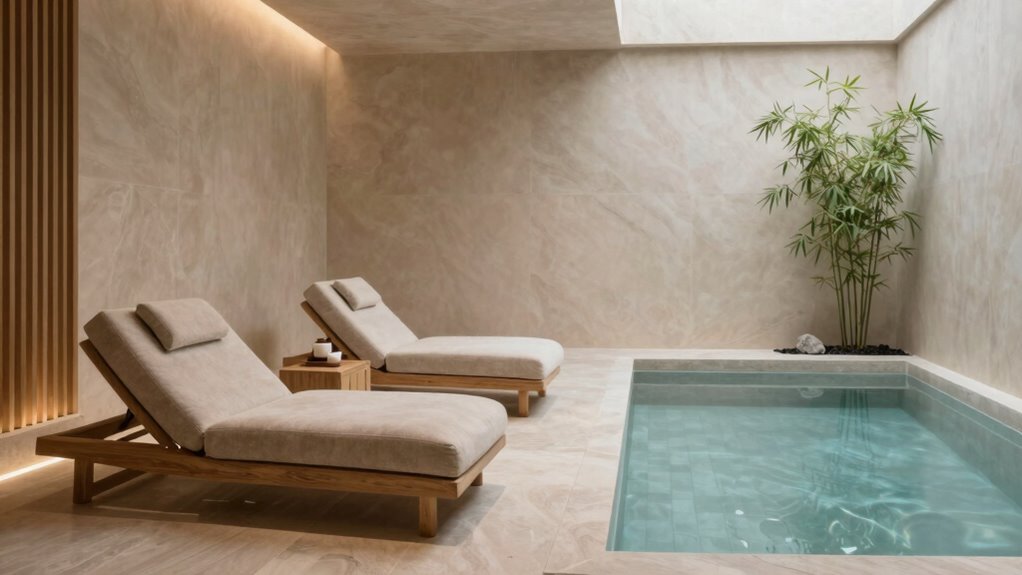
Have you ever wished for a spa experience free from noise and distractions? Imagine stepping into a space where your senses are gently muted, allowing you to truly unwind without the usual interruptions. That’s the essence of the silent spa concept. By intentionally reducing external stimuli, you create an environment that promotes mindful relaxation. This approach isn’t just about silence; it’s about giving yourself permission to disconnect from the constant stream of noise, chatter, and digital distractions that often dominate everyday life. Instead, you’re invited to focus inward, tuning into your body and breath, fostering a sense of calm that’s hard to find in typical busy settings. Sensory deprivation, in this context, isn’t about complete silence or darkness but about controlling the level of input so your mind can settle and your body can relax more deeply. When you remove the overstimulation, your nervous system can shift from heightened alertness to a state of tranquility. The absence of loud sounds, bright lights, and intrusive sensations helps you enter a state of mindful relaxation, where your awareness is centered on your internal experience rather than external chaos. This intentional deprivation of sensory input can lead to a profound sense of clarity and peace, allowing your mind to reset and your body to recover. Many find that the quiet environment helps them become more aware of subtle sensations—like the gentle rise and fall of their breath or the feeling of the air on their skin. This heightened awareness encourages mindfulness, helping you stay present rather than lost in worries or racing thoughts. The benefits extend beyond mental calmness; sensory deprivation during a silent spa session can lower stress hormones, reduce muscle tension, and promote better sleep. It’s a form of active relaxation where you’re consciously choosing to detach from overstimulation, rather than passively enduring it. Incorporating controlled sensory input into your relaxation routine can optimize the benefits of this experience. As you embrace this concept, you might notice how your overall well-being improves. Less stimulation means less mental clutter, allowing you to reconnect with your body, your breath, and your true self. The silent spa concept isn’t just about eliminating noise; it’s about creating a space where you can truly unwind, focus inward, and experience a deeper level of relaxation. It’s an intentional pause amidst the chaos—a way to nourish your mind and body with the gentle power of sensory deprivation, offering a *rejuvenating* simple yet profound escape from the overstimulating world outside.
Frequently Asked Questions
How Does the Silent Spa Concept Impact Mental Health?
The silent spa concept benefits your mental health by promoting mindfulness meditation and reducing sensory deprivation. When you experience less stimulation, you allow your mind to relax and focus inward, easing anxiety and stress. This environment helps you disconnect from external chaos, enabling better emotional regulation and mental clarity. As a result, your overall mood improves, and you develop healthier coping mechanisms, fostering a deeper sense of peace and well-being.
Can Silent Spas Accommodate Individuals With Sensory Processing Disorders?
Silent spas can accommodate individuals with sensory processing disorders by incorporating sensory accommodations and accessibility features. You’ll find options like adjustable lighting, soundproof areas, and calming textures that reduce overstimulation. These features help create a comfortable environment, allowing you to relax without feeling overwhelmed. By prioritizing accessibility, silent spas make it possible for everyone to enjoy the benefits of tranquility and sensory-friendly experiences.
What Are the Costs Associated With Implementing Silent Spa Environments?
Implementing silent spa environments involves costs related to a thorough cost analysis, including specialized soundproofing, signage, and staff training. You’ll face operational challenges like maintaining a consistently quiet atmosphere and managing customer expectations. While initial investments can be high, the long-term benefits—such as attracting niche clientele and providing unique wellness experiences—may outweigh expenses. Careful planning helps balance costs with the value of creating a peaceful, sensory-friendly space.
Are Silent Spas Suitable for Children and Teenagers?
Silent spas can be suitable for children and teenagers if you prioritize child safety and consider sensory sensitivity. You should guarantee the environment is tailored to their needs, with quiet zones and gentle stimuli. Keep in mind that some young people may find complete silence overwhelming, so offering options for different sensory levels helps create a safe, comfortable space where they can relax without feeling overstimulated.
How Do Silent Spas Compare to Traditional Spas in Relaxation Effectiveness?
Silent spas often offer a deeper relaxation experience compared to traditional spas because they reduce sensory overload, allowing your mind to unwind more fully. Without loud noises and bright lights, you can focus on calming relaxation techniques like breathing or meditation. This quiet environment helps you achieve mental clarity and physical calmness more effectively, making silent spas ideal if you’re seeking a break from overstimulation and a truly restorative experience.
Conclusion
Embracing the silent spa concept allows you to recharge without overwhelming your senses. Imagine stepping into a space where the average person experiences 70,000 thoughts a day—silence helps quiet that mental chatter. By choosing less stimulation, you create room for genuine relaxation and clarity. Next time you seek peace, remember that sometimes, doing less truly offers the most profound refresh. Silence isn’t empty; it’s filled with potential.