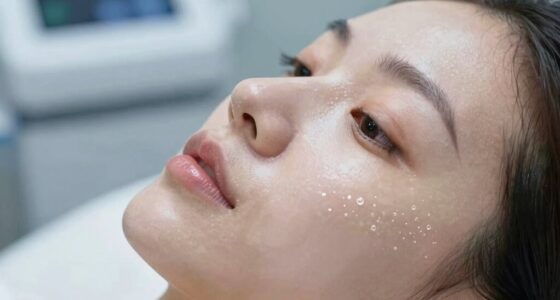
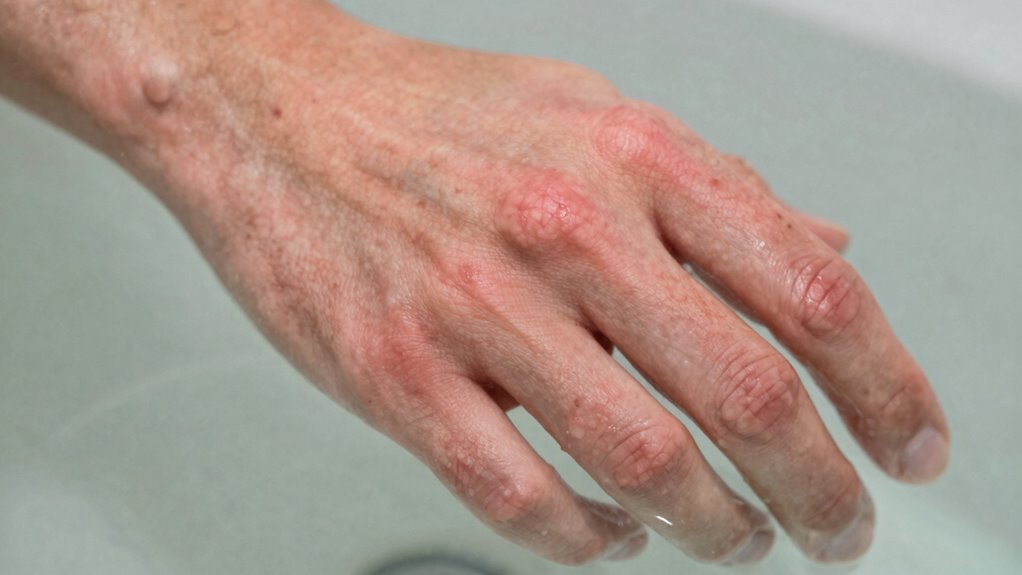

If your skin feels rough, dull, or tight, you might be dealing with hard water, which causes mineral buildup and clogging pores. On the other hand, if your skin is dry, irritated, or burning, chlorinated water could be to blame, stripping natural oils and causing inflammation. You may notice rashes or itchiness as well. Understanding these effects can help you identify what’s affecting your skin—keep exploring to find out more.

Turn your quiet moments into listening time
- Thousands of audiobooks, podcasts and originals
- Listen on your phone, tablet or Echo — also offline
- Cancel anytime
Key Takeaways
- Hard water causes mineral buildup, leading to rough, dull, or tight skin, while chlorine causes dryness and irritation.
- Mineral deposits from hard water can clog pores and cause roughness; chlorine strips natural oils, causing redness.
- Hard water often results in skin roughness and dullness; chlorine leads to stinging, burning, or inflamed skin.
- Symptoms like dryness, irritation, or clogged pores help identify whether hard water or chlorine affects your skin.
- Using water filters or softeners can reduce the adverse effects of both hard water and chlorine on your skin.
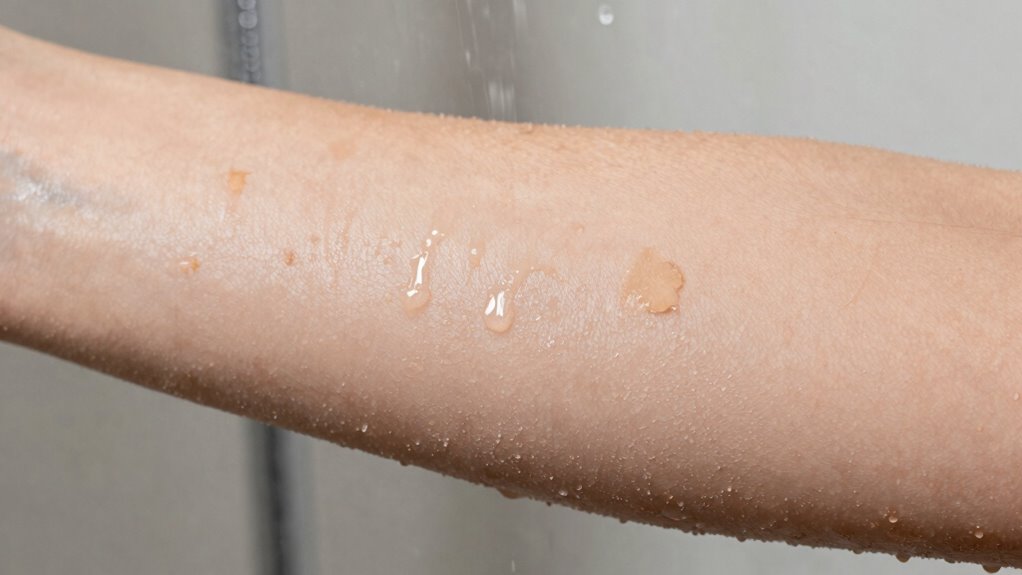
When it comes to maintaining healthy skin, understanding how your water quality affects you is essential. Whether you’re showering, washing your face, or doing laundry, the minerals and chemicals in your water can have a real impact on how your skin feels and looks. Hard water, which contains high levels of minerals like calcium and magnesium, often leads to mineral buildup on your skin. Over time, this buildup can clog pores, leaving your skin feeling rough, dull, or tight. It can also strip away natural oils, causing your skin to become dry and flaky. If you notice persistent dryness or a dull appearance, mineral buildup from hard water might be a contributing factor, especially if your water isn’t filtered or softened.
Hard water minerals can clog pores, causing dryness, dullness, and rough skin over time.
On the other hand, if your water contains chlorinated chemicals used to disinfect it, you might experience skin irritation. Chlorine can strip away natural oils, leading to dryness and irritation, but it can also cause a stinging or burning sensation, especially for those with sensitive skin. Some people develop rashes, redness, or itchiness after exposure to chlorinated water. While chlorine is effective at killing bacteria, it doesn’t discriminate against your skin’s natural barrier, leaving it vulnerable to irritation and dehydration. If you notice your skin becoming red or inflamed after bathing or washing, chlorinated water could be a culprit.
You might find that your skin reacts differently depending on the water source. For example, in areas with very hard water, you may see more issues with mineral buildup, leading to clogged pores and roughness. Conversely, in places where chlorine levels are high, skin irritation and dryness might be more common. It’s also possible to experience a combination of both issues if your water is both hard and chlorinated, which can compound skin problems and make it harder to maintain a clear, smooth complexion. Being aware of your water quality, including levels of minerals and chemicals, can help you better understand these skin reactions. Understanding the water composition in your area can guide you toward more effective skincare solutions. Additionally, knowing how water treatment methods impact your water quality can help you make informed decisions about your home’s water systems.
Ultimately, understanding the specific effects of your water type helps you choose better skincare routines. If you suspect mineral buildup from hard water, using a gentle, hydrating cleanser and applying moisturizer regularly can help protect your skin. For chlorine-related irritation, installing a shower filter or using skincare products designed to restore moisture and barrier function can make a significant difference. Recognizing how these water qualities affect your skin empowers you to take targeted steps for healthier, more comfortable skin every day. Additionally, staying informed about local water quality reports can help you anticipate and address skin concerns more proactively.
As an affiliate, we earn on qualifying purchases.
Frequently Asked Questions
Can Hard Water or Chlorine Cause Skin Allergies?
Yes, hard water and chlorine can cause skin allergies or sensitivity. Hard water, rich in minerals, can irritate your skin and trigger allergy symptoms, especially if you have sensitive skin. Chlorine, often found in tap water, can strip your skin’s natural oils and cause dryness, redness, or allergic reactions. Both are common allergy triggers, so if your skin reacts after bathing, consider testing for these factors and using water filters or gentle skincare.
How Long Does It Take to See Skin Changes From Hard Water?
You might notice skin changes within a few weeks of exposure to hard water. Water mineralization can cause your skin to feel dry, flaky, or irritated, especially if your skin has a pH imbalance. These effects can build up gradually, so don’t ignore the signs. Staying aware of your skin’s response helps you catch trouble early before it becomes a bigger problem, like fighting an uphill battle.
Are There Specific Skin Conditions Worsened by These Substances?
Yes, both hard water and chlorine can worsen skin dryness and pH imbalance. If you already have conditions like eczema or psoriasis, these substances may trigger flare-ups or make your skin feel more irritated and dry. You might notice increased redness, itching, or discomfort. To protect your skin, consider using gentle cleansers, moisturizing regularly, and installing filters to reduce exposure to these substances.
Do Shower Filters Effectively Reduce Skin Irritation?
Shower filters can effectively reduce skin irritation by minimizing mineral buildup and balancing water pH. They trap minerals like calcium and magnesium, which cause irritation and dryness, and help neutralize harsh chlorine effects. By filtering out these irritants, your skin feels softer, less itchy, and less inflamed. However, the effectiveness hinges on the filter’s quality and maintenance. Regularly replacing filters ensures you continue to enjoy smoother, healthier skin.
Can Diet Influence Skin Reactions to Hard Water or Chlorine?
Did you know that a balanced diet can reduce skin reactions caused by hard water or chlorine? Your diet impact and nutritional factors play a vital role in strengthening your skin barrier, making it more resilient. Consuming foods rich in antioxidants, omega-3s, and vitamins helps protect your skin from irritation. So, by improving your nutrition, you may lessen uncomfortable skin reactions to hard water or chlorine exposure.
chlorine water filter for shower
As an affiliate, we earn on qualifying purchases.
As an affiliate, we earn on qualifying purchases.
Conclusion
So, next time you’re puzzled by dry, itchy skin after a shower, remember—it’s probably not just in your head. Whether it’s hard water’s mineral assault or chlorine’s chemical kiss, both are secretly sabotaging your skin’s happiness. Ironically, what’s meant to cleanse might actually be the culprit. So go ahead, take that plunge—just maybe invest in some good water filters or skin moisturizer. Your skin didn’t sign up for this battle, after all.
As an affiliate, we earn on qualifying purchases.
As an affiliate, we earn on qualifying purchases.
Halloween Picks
halloween
As an affiliate, we earn on qualifying purchases.