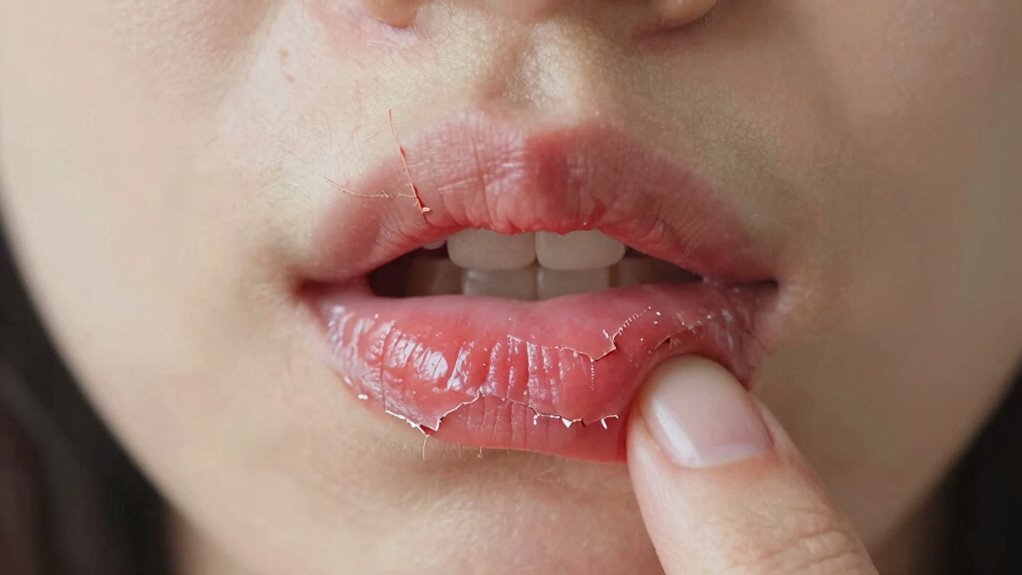
If your lips keep peeling, you might be making the problem worse without realizing it. Habits like overusing lip balm, biting your nails, or licking your lips can damage the skin’s natural healing and moisture balance. These actions can cause cracks, inflammation, and further dryness. To improve your lips, it’s important to stop these habits and adopt better care routines. Keep going to discover how small changes can make a big difference.
Key Takeaways
- Overusing lip balm can create dependency, reducing natural moisture and worsening peeling.
- Nail biting causes lip injuries and infections, preventing healing and increasing peeling.
- Frequent lip licking strips away protective skin, leading to dryness and peeling.
- Environmental factors like cold, wind, and indoor heat accelerate moisture loss and lip dryness.
- Habits disrupting natural healing, such as biting or excessive balm use, worsen persistent lip peeling.
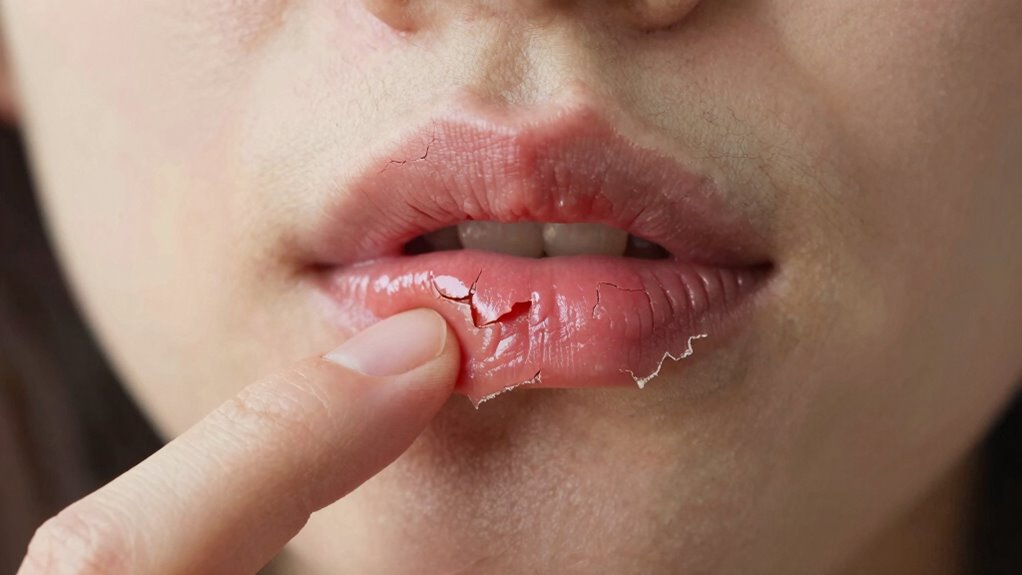
Peeling lips can be uncomfortable and frustrating, often caused by habits you might not even realize you have. One common culprit is lip balm misuse. While applying lip balm might seem like a harmless way to soothe dry lips, overusing it or choosing the wrong type can actually make things worse. Constantly slathering on chapstick can create a dependency, prompting your lips to produce less natural moisture. When the balm wears off, your lips may become even drier and more prone to peeling. If you notice yourself constantly reapplying, it’s a sign you might be relying too heavily on it. Opt for a good, nourishing lip balm with natural ingredients, and use it sparingly to help your lips regain their natural moisture balance.
Another habit that worsens peeling lips is nail biting. This unconscious behavior can cause significant damage to your lips and the skin around them. When you bite your nails or pick at your lips, you’re essentially creating tiny wounds. These injuries can become inflamed, cracked, or infected, making your lips more prone to peeling and dryness. Nail biting also introduces bacteria and dirt, which can lead to infections and further irritation. The more you bite, the more your lips are exposed to trauma, preventing healing and perpetuating the peeling cycle. Breaking this habit takes awareness and effort, but it’s essential for healthier lips.
You might also be unknowingly contributing to your peeling lips through habits like licking your lips frequently. While it feels soothing temporarily, saliva evaporates quickly, leaving your lips even drier than before. This constant moisture and evaporation cycle strips away the protective barrier, leading to peeling and chapping. To combat this, try to be mindful of when you lick your lips and replace that habit with applying a nourishing balm instead. Staying hydrated is equally important, as dehydration can make your lips more vulnerable. Additionally, environmental factors like cold, windy weather and indoor heating can strip moisture from your skin, including your lips. If you’re exposed to these conditions regularly, you’re more likely to develop peeling lips. Protect your lips with a barrier of good lip balm before heading outdoors, and consider using a humidifier indoors to maintain ideal moisture levels.
In short, peeling lips are often a result of habits that disrupt the skin’s natural healing process. Be mindful of lip balm misuse, break nail biting habits, and avoid licking your lips. Combined with environmental care, these small changes can make a significant difference in stopping the cycle of peeling and restoring your lips’ health. Understanding the role of moisture and environmental conditions can help you better protect and care for your lips.
Frequently Asked Questions
Can Dehydration Cause Lips to Peel Frequently?
Yes, dehydration can cause your lips to peel frequently. When you don’t maintain proper hydration habits, your skin, including your lips, becomes dry and more prone to peeling. Skin dryness results from a lack of moisture, making lips crack and peel easily. To prevent this, drink plenty of water daily, keep your lips moisturized, and avoid habits that worsen dryness, like licking your lips often.
Are Certain Foods Linked to Peeling Lips?
Certain foods can definitely be connected to peeling lips, like a spark igniting a fire. Spicy or acidic foods may irritate your lips, especially if you have food sensitivities. Additionally, dietary deficiencies, such as lacking vitamins B and C, can weaken your skin, making lips more prone to peeling. To help, identify and avoid trigger foods and make certain your diet includes essential nutrients to support healthy, hydrated lips.
How Does Weather Affect Lip Peeling?
Weather greatly affects lip peeling, especially in cold or windy conditions. When it’s chilly, your lips lose moisture faster and become dry and cracked. To combat this, use a good lip balm regularly and keep your skin hydrated by drinking plenty of water. Protect your lips with a scarf in harsh weather, and avoid licking them, which worsens peeling. Proper skin hydration and consistent lip balm use help keep your lips smooth and healthy.
Is Lip Peeling Related to Any Underlying Health Conditions?
Is your lip peeling a silent alarm? It often hints at underlying health conditions like vitamin deficiencies or oral infections. When your body lacks essential nutrients, it struggles to repair skin, causing peeling. Similarly, infections in your mouth can lead to inflammation and dryness, making lips peel more. Pay attention to these signs—they’re your body’s way of signaling that something needs care beyond just lip balm.
Can Lip Peeling Be a Sign of Allergies?
Yes, lip peeling can be a sign of allergies. You might experience allergic reactions or skin sensitivities that cause your lips to peel, especially after exposure to certain foods, cosmetics, or environmental factors. Pay attention to any new products or allergens you’ve come into contact with. If your lip peeling is persistent or severe, consult a healthcare professional to identify and manage potential allergies effectively.
Conclusion
So, next time your lips start peeling, remember it might be your own habits making it worse. You try to fix it with balm, but often, it’s the constant licking or picking that’s the real culprit. Ironically, your efforts to soothe your lips could be sabotaging them. Sometimes, the best fix is simply stopping the habit and letting your lips heal naturally. Sometimes, the biggest solution is doing less—yet, that’s the hardest part.