
Rough or uneven skin texture is often mistaken for other issues, but the main causes are dead skin buildup, dehydration, acne scars or hyperpigmentation, and environmental damage. Each of these presents differently but can look similar on the surface. Knowing the differences helps you target the right treatment. If you’re curious about how to identify and address each cause properly, understanding these key points will guide you toward healthier, smoother skin.
Key Takeaways
- Dead skin buildup, dehydration, acne scars, and environmental damage often cause similar skin roughness but are distinct issues.
- Dry patches may be mistaken for aging or dullness, though they result from dehydration or skin conditions.
- Uneven skin tone from hyperpigmentation can resemble rough or textured skin, but it is primarily discoloration.
- Skin conditions like eczema or psoriasis cause rough patches that might be confused with aging or dehydration effects.
- External factors such as pollution and sun damage can mimic signs of aging, affecting skin texture similarly.
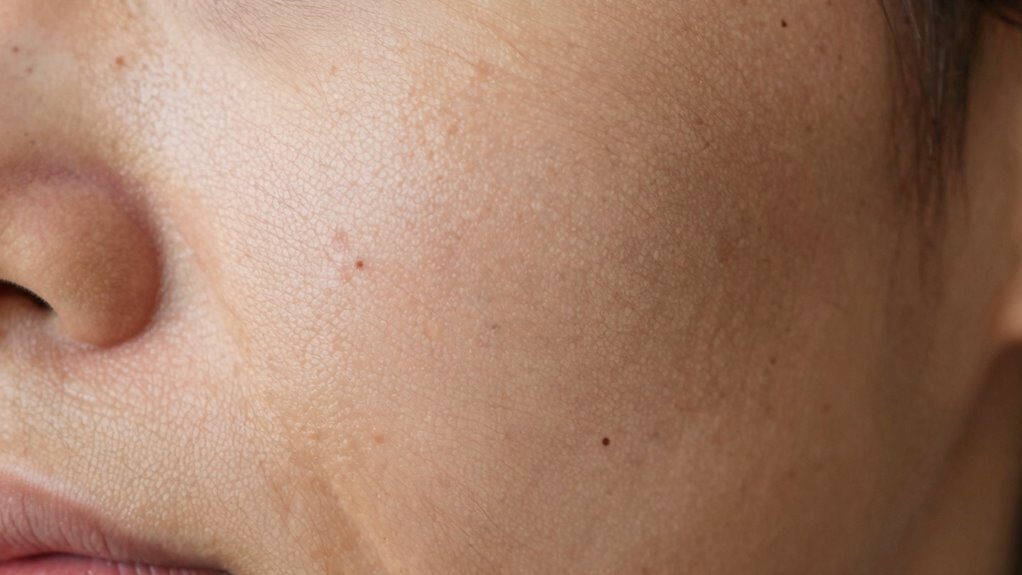
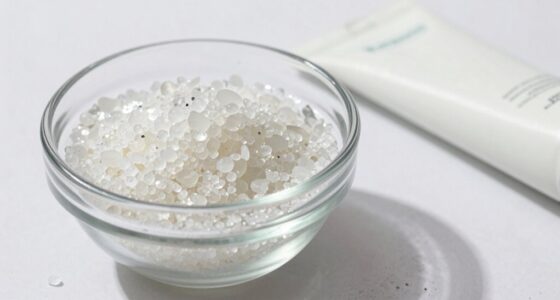
Your skin texture plays a critical role in your overall appearance and confidence. When your skin feels rough, uneven, or dull, it can make you look older or less vibrant than you actually are. Understanding what causes these changes is essential, especially since many people confuse different skin issues. One key aspect is exfoliation techniques, which can greatly improve skin smoothness when done correctly. Regular exfoliation helps remove dead skin cells that accumulate on the surface, revealing fresher, healthier skin underneath. You can choose from physical scrubs, chemical exfoliants, or even natural remedies like sugar or oatmeal masks, depending on your skin type and sensitivity. Incorporating proper exfoliation into your routine can diminish rough patches, reduce clogged pores, and promote a more even skin tone.
Exfoliation reveals healthier, smoother skin and enhances overall complexion.
However, it’s important to recognize that not all skin texture concerns are the same. Sometimes, what appears to be roughness might actually be a result of dehydration, buildup, or underlying skin conditions. For instance, dry patches can be mistaken for signs of aging or dullness, but they often respond well to hydration and gentle exfoliation. Using natural remedies such as honey masks or aloe vera can soothe and moisturize the skin, improving its overall feel and appearance without harsh chemicals. These remedies are gentle yet effective, especially if you have sensitive skin.
Another common cause of uneven skin texture is acne scars or hyperpigmentation, which can create a rough or bumpy surface. People often confuse these with aging or environmental damage, but treatments like mild chemical exfoliants or natural remedies like turmeric and lemon juice can help fade discoloration and smooth out the surface over time. It’s essential to be cautious with natural remedies and patch-test before applying them widely, as some ingredients might irritate sensitive skin.
Understanding your skin type and concerns allows you to differentiate between various causes of uneven texture. Whether it’s caused by dead skin buildup, dehydration, scars, or other factors, consistent care makes a difference. Incorporating gentle exfoliation techniques and natural remedies into your routine can help you achieve a smoother, healthier complexion. Remember, patience is key—improvements take time, but with the right approach, you can restore your skin’s natural radiance and feel more confident in your skin.
Frequently Asked Questions
Can Diet Changes Improve Skin Texture?
Yes, diet impact can markedly improve your skin texture. By focusing on nutritional factors like increasing your intake of antioxidants, vitamins, and healthy fats, you help your skin heal and stay elastic. Cutting down on processed foods and sugar reduces inflammation, which can improve uneven skin. Making these dietary changes supports your skin’s natural barrier, resulting in a smoother, more radiant complexion.
How Much Does Age Affect Skin Surface?
As you age, your skin surface reveals more than just time passing—it’s a sign of age-related changes and skin aging. These shifts can cause uneven texture, fine lines, and loss of elasticity. You might notice subtle differences that hint at deeper aging processes. The impact varies, but understanding that age influences skin surface helps you better care for your skin and possibly slow some effects.
Are Skin Texture Issues Hereditary?
Yes, skin texture issues can be hereditary. Your genetic predisposition plays a significant role in how your skin develops, affecting factors like pore size, oil production, and collagen levels. If family members have skin concerns, you’re more likely to experience similar issues due to family history. While environmental factors also influence skin texture, understanding your genetic background helps you better address and manage these concerns effectively.
Do Environmental Factors Influence Skin Roughness?
You might be surprised, but environmental factors definitely influence your skin’s roughness. Pollution effects can clog pores and damage your skin barrier, making your skin feel rough and uneven. High humidity impacts moisture levels, either hydrating or dehydrating your skin, depending on the conditions. These elements can subtly alter your skin texture over time, so staying aware and protecting your skin becomes essential to maintain its smoothness and health.
Can Skincare Products Permanently Alter Skin Texture?
Skincare products can help improve your skin texture, but they typically don’t cause permanent changes. Most products offer temporary texture improvement, making your skin feel smoother or more even for a while. To achieve lasting results, you might need professional treatments or consistent skincare routines. Remember, product permanence varies, so it’s crucial to choose the right ingredients and stay committed for sustained texture improvements.
Conclusion
Understanding skin texture is like deciphering a complex map—you need to recognize the subtle landmarks that lead to clarity. By identifying the four common causes, you can navigate your skincare journey with confidence and avoid confusing one issue for another. Remember, your skin’s texture tells a story; once you learn its language, you can address its needs more effectively. Embrace this knowledge, and you’ll guide your skin toward smoother, healthier chapters ahead.