

If your face feels tight after washing, it’s likely due to using harsh cleansers or hot water that strip your skin’s natural oils, damaging the moisture barrier. Over-cleansing and aggressive scrubbing can also cause discomfort and sensitivity. To fix this, switch to gentle, pH-balanced cleansers, apply moisturizer immediately, and avoid hot water. For more tips on soothing and protecting your skin, keep exploring ways to maintain your skin’s health and resilience.
Key Takeaways
- Harsh cleansers and hot water strip natural oils, damaging the skin’s moisture barrier and causing tightness.
- Over-cleansing or using inappropriate products can weaken skin resilience, leading to discomfort.
- Use gentle, pH-balanced cleansers and avoid over-washing to maintain the skin’s moisture balance.
- Immediately apply hydrating products like moisturizers or serums with hyaluronic acid after washing.
- Seek dermatological advice if tightness persists, indicating possible sensitivity or underlying skin conditions.
Why Does My Face Feel Tight After Washing?
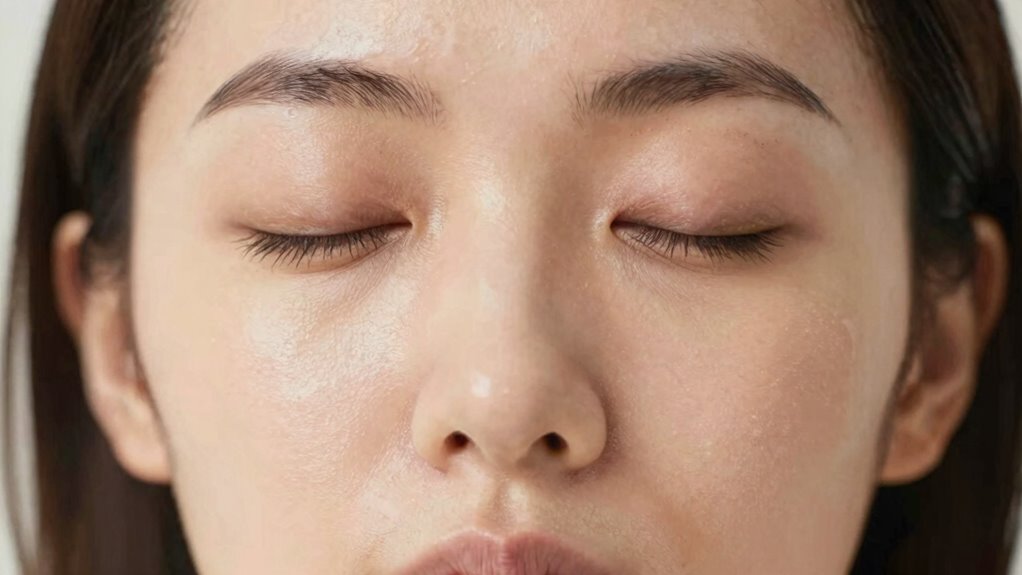
Have you ever wondered why your skin feels so tight after washing your face? The answer lies in your cleansing techniques. When you use harsh soaps or scrub aggressively, you strip away your skin’s natural oils, which are essential for maintaining skin elasticity. Over-cleansing or using products that aren’t suited for your skin type can disrupt your skin’s moisture balance, leaving it feeling tight and uncomfortable. Proper cleansing techniques involve gentle motions and choosing products that cleanse without stripping. Using the right cleansing methods can help preserve your skin’s natural barrier and keep your skin elastic. Additionally, selecting gentle skincare products formulated for your skin type can prevent over-drying. Incorporating hydrating ingredients like hyaluronic acid or glycerin can also replenish moisture and improve skin elasticity. Being mindful of cleansing frequency can further prevent stripping your skin of essential oils, helping maintain its natural resilience. When your skin maintains its elasticity, it stays firm, smooth, and healthy-looking. So, adjusting your cleansing routine can make a significant difference in how your skin feels after washing.
How Do Harsh Cleansers Damage Your Skin’s Moisture Barrier?

Harsh cleansers can severely compromise your skin’s moisture barrier by stripping away its natural oils and lipids. When this barrier is damaged, it becomes less effective at locking in moisture and protecting against irritants. Many cleansers contain strong surfactants that can cause surfactant damage, disrupting the integrity of your skin’s outer layer. This damage leads to increased water loss and heightened sensitivity, making your skin feel tight and uncomfortable. Over time, repeated use of harsh cleansers can weaken your moisture barrier, leaving it vulnerable to environmental stressors and pollutants. To maintain healthy skin, it’s essential to choose gentle, pH-balanced cleansers that support your skin’s natural barrier rather than damage it through aggressive surfactants. Incorporating skin barrier repair elements in your skincare routine can also help restore balance and resilience to your skin.
How to Prevent Skin Tightness After Cleansing

To prevent that tight, uncomfortable feeling after cleansing, it’s important to choose products that support your skin’s natural moisture barrier. Opt for gentle cleansers that are free of harsh ingredients and avoid over-washing, which can strip essential oils. Incorporate proper moisturization techniques right after cleansing, such as applying a hydrating toner or a moisturizer suited for your skin type. Stick to a consistent cleansing routine that balances cleanliness with hydration, rather than using aggressive scrubs or hot water. Keep your skin’s moisture barrier intact by limiting harsh products and focusing on gentle, nourishing cleansers. Additionally, paying attention to your skin’s overall skin barrier health can help maintain elasticity and prevent tightness, leaving your face feeling comfortable and well-hydrated after every wash. Supporting your skin’s barrier function through the use of hydrating products can further support your skin’s resilience, especially when selecting items that support skin barrier function. Using hydrating ingredients like hyaluronic acid and ceramides can also enhance your skin’s ability to retain moisture and stay supple.
Best Hydrating Products for Sensitive Skin

Finding the right hydrating products for sensitive skin can make a significant difference in soothing irritation and restoring moisture. Look for products that prioritize gentle exfoliation, helping remove dead skin without causing redness. Nourishing serums are excellent for deep hydration and calming inflammation. Consider these options:
- Gentle, fragrance-free moisturizers with ceramides
- Serums containing hyaluronic acid for lasting hydration
- Products with soothing ingredients like aloe vera or chamomile
- Serums with nourishing oils, such as squalane or jojoba, to restore skin barrier function
Avoid harsh ingredients and opt for formulas designed specifically for sensitive skin. Incorporating these products into your routine will help reduce tightness, boost comfort, and support healthy, balanced skin.
When Should You See a Dermatologist for Tight Skin?

While occasional tightness after washing is normal, you should see a dermatologist if your skin remains persistently tight, itchy, or inflamed despite using gentle products. If your skincare routines involve harsh ingredients or if you notice redness, swelling, or discomfort, professional advice is essential. Persistent tightness may indicate ingredient sensitivity or underlying skin conditions like eczema or dermatitis that require targeted treatment. Don’t ignore ongoing symptoms, especially if they interfere with your daily routine or cause pain. A dermatologist can assess your skin’s health, identify irritants, and recommend suitable products or treatments to restore comfort. Understanding skin sensitivity and how it affects your skin’s response to products can help you better address these issues. Recognizing skin reactions can guide you in choosing appropriate skincare. Additionally, being aware of how skin barrier function influences skin resilience can aid in selecting supportive products and routines. Proper skincare routines that include gentle cleansing and barrier protection are essential for maintaining skin health. Seeking expert guidance ensures you address the root cause and avoid further damage from inappropriate skincare routines.
Frequently Asked Questions
Can Over-Washing Cause Long-Term Skin Damage?
Yes, over-washing can cause long-term skin damage. When you wash your face excessively, you strip away your skin’s natural oils, damaging the skin barrier and leading to increased moisture loss. This makes your skin more vulnerable to irritation and dryness over time. To avoid this, limit washing to twice daily, use gentle cleansers, and apply moisturizer to help restore your skin’s protective barrier and retain moisture.
Are Natural or Organic Cleansers Better for Sensitive Skin?
Natural or organic cleansers are better for sensitive skin because they contain natural ingredients and organic formulations that are gentler and less likely to cause irritation. You benefit from fewer synthetic chemicals and preservatives, reducing the risk of redness and dryness. By choosing cleansers with natural ingredients, you support your skin’s health and maintain its balance, making it more resilient and comfortable after cleansing.
How Does Climate Affect Post-Wash Skin Tightness?
Climate greatly impacts your skin’s tightness after washing. In humid conditions, your skin feels less tight because moisture helps maintain elasticity, while seasonal dryness causes increased tightness due to the lack of humidity. Fluctuations in humidity can make your skin more sensitive and prone to tightness. To combat this, adapt your skincare routine with hydrating products, especially during dry seasons, and use a humidifier indoors when needed.
What Ingredients Should I Avoid to Prevent Skin Tightness?
You should avoid harmful chemicals like fragrances, alcohol, and sulfates, as they can strip your skin’s natural oils and cause tightness. Also, steer clear of pore-clogging ingredients such as mineral oil, lanolin, and certain silicones, which can block your pores and worsen dryness. Reading labels helps you identify these ingredients. Instead, opt for gentle, hydrating cleansers with soothing ingredients like glycerin or hyaluronic acid to keep your skin comfortable.
Can Facial Exercises Help Relieve Tightness After Washing?
Ever wondered if facial exercises can help with tightness? They can actually improve your skin’s elasticity and relieve that uncomfortable feeling. Gentle facial exercises stimulate blood flow, relax tense muscles, and boost collagen production, helping your skin bounce back. Incorporate simple movements like cheek lifts or jaw stretches daily. While they won’t fix severe dryness, regular facial exercises support healthier, more flexible skin, making tightness less noticeable over time.
Conclusion
Think of your skin’s moisture barrier as a delicate fortress, guarding your glow. When you use harsh cleansers, it’s like knocking down walls, leaving your skin vulnerable and tight. To keep that fortress strong, choose gentle, hydrating products and avoid over-washing. If your skin remains stubbornly tight despite these tips, don’t hesitate to see a dermatologist. Treat your face with kindness—after all, it’s the canvas that reflects your inner radiance.