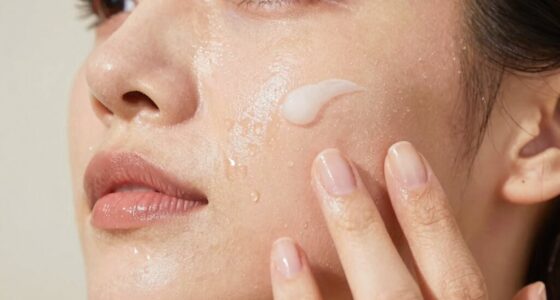


If your sunscreen stings, it’s likely due to chemical ingredients like oxybenzone or preservatives irritating your sensitive skin or compromised barrier, especially after exfoliating. To reduce discomfort, consider switching to mineral sunscreens with zinc oxide or titanium dioxide, which are gentler options. Always patch test new products and apply them on clean, dry skin to prevent irritation. If you want to learn more about managing stinging and protecting your skin comfortably, keep exploring the options available.
Key Takeaways
- Chemical ingredients like oxybenzone or avobenzone can irritate sensitive skin, causing stinging upon application.
- Mineral sunscreens with zinc oxide or titanium dioxide are gentler and less likely to cause discomfort.
- Always perform a patch test before full application to identify potential reactions and prevent widespread irritation.
- Applying sunscreen on clean, dry skin and avoiding harsh skincare or exfoliation can reduce stinging.
- If irritation occurs, rinse off immediately, switch to a mineral formula, and consider consulting a dermatologist.

If you’ve ever experienced a stinging sensation after applying sunscreen, you’re not alone. Many people encounter this discomfort, often wondering why their skin reacts this way. The culprit can be chemical irritation, which occurs when certain ingredients in sunscreen don’t sit well with your skin. This reaction is especially common among individuals with skin sensitivity, where even mild formulations can cause discomfort. Understanding the causes can help you choose products that prevent irritation and keep your skin happy.
Chemical irritation happens when active ingredients in sunscreen, like oxybenzone, avobenzone, or preservatives, come into contact with your skin and trigger a reaction. These chemicals can break down your skin’s natural barrier or cause an inflammatory response, resulting in that sharp, burning feeling. This isn’t necessarily an allergy; instead, it’s often a direct irritation—your skin simply doesn’t tolerate certain compounds. People with skin sensitivity, including those with conditions like eczema or rosacea, are particularly vulnerable because their skin’s protective barrier is already compromised. For them, even mild chemicals can lead to redness, itching, or stinging sensations after application.
Chemical ingredients like oxybenzone or preservatives can cause skin irritation and burning sensations.
To avoid this uncomfortable experience, start by scrutinizing your sunscreen’s ingredients. Look for labels that specify “hypoallergenic,” “for sensitive skin,” or “chemical-free.” Mineral sunscreens containing zinc oxide or titanium dioxide tend to be gentler because they physically block UV rays rather than using chemical filters. These options are less likely to cause chemical irritation or trigger reactions in sensitive skin types. Also, test a small amount of new sunscreen on a discreet patch of skin before applying it all over your face or body. This way, you can gauge your skin’s reaction and prevent widespread discomfort.
Another helpful tip is to ensure your skin is clean and dry before applying sunscreen. Sometimes, leftover skincare products or sweat can interact with sunscreen ingredients, intensifying irritation. Also, avoid applying sunscreen immediately after exfoliating or using harsh skincare treatments, as your skin may be more vulnerable during these times. If your skin feels irritated or stings after application, rinse it off promptly and switch to a different, more suitable product. Moisturizing beforehand can also create a protective barrier, reducing the chances of irritation. Additionally, understanding your filtration system can help you select products that are less likely to cause irritation, as they may work better with your skin’s natural defenses.
Ultimately, understanding your skin’s sensitivities and choosing the right sunscreen can make a big difference. Pay attention to ingredient lists, opt for mineral formulations if needed, and perform patch tests to find what works best. By doing so, you’ll protect your skin from UV rays without the uncomfortable sting, keeping your skin healthy and comfortable all summer long.
mineral sunscreen for sensitive skin
As an affiliate, we earn on qualifying purchases.
As an affiliate, we earn on qualifying purchases.
Frequently Asked Questions
Can Sensitive Skin Types Avoid Sunscreen Stinging?
Yes, sensitive skin types can avoid sunscreen stinging by choosing products specifically formulated for sensitive skin. Look for sunscreens labeled “hypoallergenic,” “for sensitive skin,” or “sunscreen compatibility” with your skin. Opt for mineral-based formulas with zinc oxide or titanium dioxide, which are gentler and less likely to cause irritation. Always patch-test new sunscreens and apply them carefully to prevent stinging and guarantee comfortable sun protection.
Are There Specific Ingredients That Cause Burning Sensations?
Think of your skin as a delicate garden that needs gentle care. Certain ingredients like chemical irritants and fragrances can cause burning sensations, especially if you’re sensitive. For example, alcohol-based sunscreens often sting because they strip moisture. Fragrance sensitivities can also trigger discomfort. To avoid this, choose mineral sunscreens with zinc oxide or titanium dioxide, which tend to be gentler and less likely to cause stinging.
Does the Stinging Indicate Skin Damage or Allergy?
The stinging usually doesn’t mean you have skin damage, but it could be a sign of an allergic reaction or a compromised skin barrier. If your skin feels irritated or burns after applying sunscreen, it might indicate sensitivity to certain ingredients. To protect yourself, choose hypoallergenic or mineral-based sunscreens, and avoid products with harsh chemicals. If symptoms persist, consult a dermatologist to prevent further skin issues.
How Can I Test if My Sunscreen Will Sting?
To test if your sunscreen will sting, do a patch test first. Apply a small amount of sunscreen to a discreet skin area, like behind your ear or on your forearm. Wait 24 hours to see if there’s any redness or irritation. Also, check the ingredient list for potential allergens or irritants. If you notice any stinging or discomfort, consider switching to a fragrance-free or mineral-based sunscreen.
Are There Natural Alternatives to Chemical Sunscreens?
Think of natural sunscreen alternatives as a gentle shield, crafted from nature’s own armor. You can choose products with mineral filters like zinc oxide or titanium dioxide, which sit on your skin like a calm lake reflecting sunlight. These natural ingredients provide effective sun protection without the chemical irritation, making them perfect for sensitive skin. Look for mineral-based formulas, and you’ll enjoy a safer, more harmonious sun experience.
hypoallergenic zinc oxide sunscreen
As an affiliate, we earn on qualifying purchases.
As an affiliate, we earn on qualifying purchases.
Conclusion
Think of sunscreen stinging like a tiny, unwanted splash of cold water on your skin—uncomfortable but temporary. By choosing the right formula, applying it gently, and patch-testing first, you can turn that splash into a smooth, sun-safe shield. Don’t let irritation spoil your sunny day; instead, treat your skin like a delicate garden that needs tender care. With a little attention, you’ll enjoy the sunshine without the sting, keeping your skin happy and protected.
chemical-free sunscreen for face
As an affiliate, we earn on qualifying purchases.
As an affiliate, we earn on qualifying purchases.
sunscreen for sensitive skin that doesn't sting
As an affiliate, we earn on qualifying purchases.
As an affiliate, we earn on qualifying purchases.