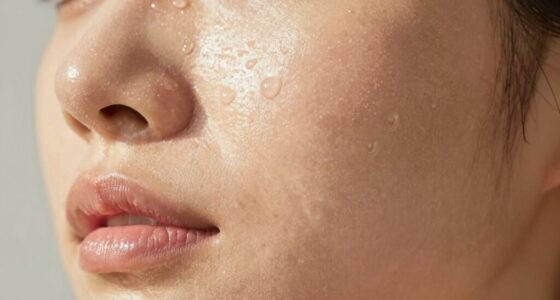
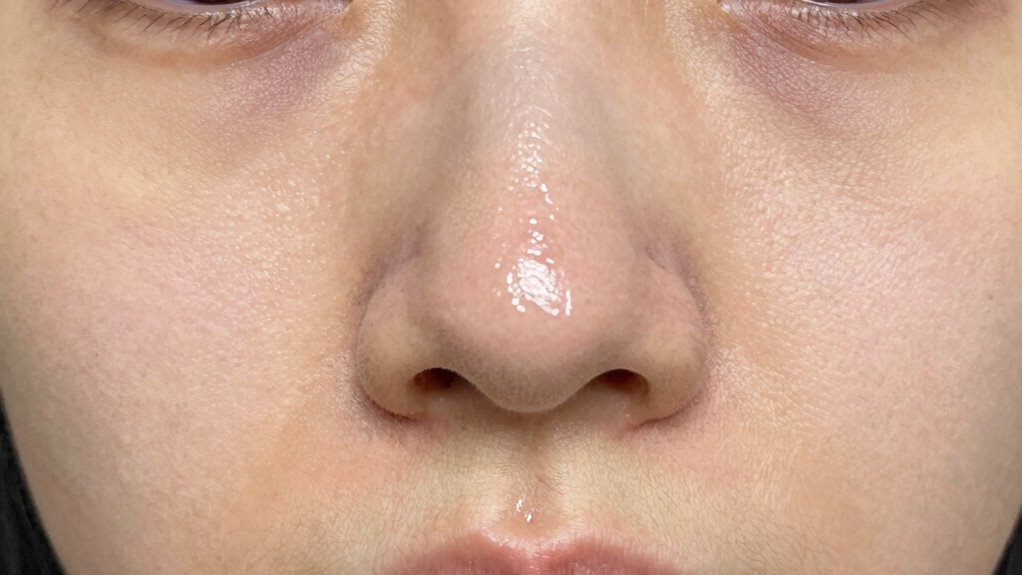

Your nose gets oilier than the rest of your face because it has more oil-producing glands, leading to increased sebum production. This higher gland density causes your nose to shine and become greasy faster. Pore congestion and blackheads also play a role by trapping oil and debris, making the area appear oilier. If you want to understand how to manage this, there’s more to uncover about effective skincare tips and causes.
Key Takeaways
- The nose has a higher density of sebaceous glands, leading to increased sebum production.
- Pore congestion and blackheads trap oil, making the nose appear oilier.
- Hormonal fluctuations can specifically boost oil production on the nose.
- Environmental factors and physical activity stimulate more oil secretion in that area.
- Regular cleansing and exfoliation help control excess oil on the nose.
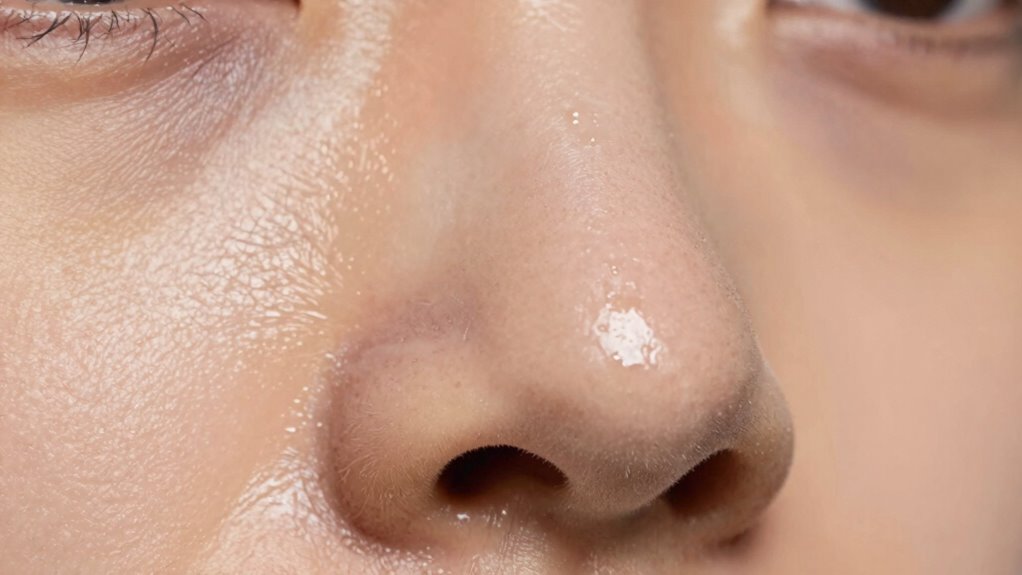
Have you ever wondered why your nose tends to get oily throughout the day? It’s a common concern, and understanding the reasons behind it can help you manage the shine better. Your nose has more oil-producing glands than other areas of your face, which naturally makes it more prone to excess sebum. But the real issue isn’t just the oil; it’s how your skin reacts to that oil, especially when pore congestion occurs. When your pores become clogged with dead skin cells, dirt, and excess oil, they can’t breathe properly. This congestion creates an environment where blackhead formation becomes more likely. Blackheads are tiny dark spots that appear when the pore is blocked but still open to the air, which causes the accumulated oil and debris to oxidize, turning black. The more pore congestion you experience, the more blackheads you’re likely to develop, and that adds to the overall oily appearance of your nose.
The underlying reason your nose gets oilier than the rest of your face is tied to your skin’s anatomy. The skin on your nose contains a higher number of sebaceous glands, which produce sebum to keep your skin moisturized and protected. When these glands overproduce oil, especially in response to hormonal fluctuations, stress, or environmental factors, your nose can become shiny and greasy quickly. If you don’t address pore congestion, the excess oil can get trapped in your pores, leading to blackhead formation. This cycle makes your nose look even oilier because the presence of blackheads and clogged pores can cause your skin to produce more oil as a defensive response. Additionally, factors like hormonal fluctuations can significantly influence sebum production, further exacerbating oiliness. You might notice that your nose gets oilier at certain times of the day, like mid-afternoon or after a workout. This fluctuation is often due to increased sebum production driven by heat, sweat, or hormonal changes. When your pores are congested, the excess oil doesn’t just sit on the surface; it gets trapped inside, which can make your nose appear especially greasy and prone to breakouts. Proper skincare can help break this cycle. Regular cleansing with a gentle, oil-control cleanser can remove surface oil and prevent pore congestion. Exfoliating a few times a week helps clear dead skin cells that clog pores, reducing blackhead formation. Using non-comedogenic products ensures that you’re not adding extra pore congestion, keeping your skin clearer and less oily.
In essence, the oily nature of your nose is a combination of your skin’s anatomy and how well you manage pore congestion. Keeping your pores clean and controlling excess oil production can markedly reduce the shiny, greasy look and prevent blackheads from forming. With consistent care, you can help balance your skin’s oil levels and enjoy a fresher, less oily nose throughout the day.
Frequently Asked Questions
Does Diet Influence Nose Oil Production?
Yes, your diet impacts oil production on your nose. Consuming greasy, sugary, or processed foods can increase oil regulation issues, leading to oilier skin. Eating a balanced diet rich in fruits, vegetables, and lean proteins helps control excess oil. Staying hydrated and avoiding excessive dairy or spicy foods may also reduce oiliness. By managing your diet, you can better regulate your skin’s oil levels and keep your nose less oily.
Can Nose Oiliness Indicate Underlying Health Issues?
Nose oiliness can sometimes signal underlying health issues, especially when hormonal fluctuations occur, increasing oil production. If your skin barrier weakens, it might lead to excess oil and breakouts. Pay attention to any other symptoms like redness or irritation, and consult a healthcare professional if you notice persistent changes. Monitoring these signs helps make sure your skin remains healthy and balanced, preventing potential underlying health concerns.
How Does Humidity Affect Nose Oil Levels?
Humidity effects your nose oil levels by increasing oil production and sweat interaction. When humidity rises, your skin produces more oil to protect itself, making your nose oilier. The moisture also interacts with sweat, creating a shiny, greasy look. High humidity can clog pores, triggering more oil release. So, as humidity levels climb, expect your nose to get oilier and shinier, needing extra cleansing to keep oil control in check.
Are There Specific Skincare Products for Oily Noses?
Yes, there are specific skincare products designed for oily noses. You should look for balancing skin formulas like oil-free cleansers or toners that target excess oil. Incorporate targeted treatments such as clay masks or serums with salicylic acid to control shine and prevent breakouts. These products help you maintain a balanced skin appearance, reducing oiliness while keeping your skin healthy and refreshed throughout the day.
Does Nose Oiliness Change With Age?
Yes, nose oiliness can change with age. You might notice more oil during hormonal fluctuations, like puberty or pregnancy, due to increased sebum production. Your genetic predisposition also plays a role, making some people naturally more prone to oily skin. As you age, oil production may decrease, but hormonal changes can still cause fluctuations. Staying consistent with your skincare helps manage these shifts effectively.
Conclusion
So, next time your nose feels like a greasy pizza, remember, it’s not just oil—it’s a tiny oil factory working overtime just for you! Your nose’s oil glands outshine the rest of your face like a superhero with a secret weapon. Embrace the shine, because it’s your body’s way of saying, “I mean business!” With this oily masterpiece, you’re basically walking around with a natural glow that’s brighter than a diamond. Shine on, you oily legend!