
To guarantee safe at-home spa treatments for sensitive and rosacea-prone skin, choose gentle, soothing ingredients like aloe vera and chamomile while avoiding harsh acids, fragrances, and essential oils that can cause irritation. Always perform patch tests and consult skincare professionals for personalized advice. Use minimal concentrations and skip abrasive scrubs to protect your skin’s barrier. By following these precautions, you’ll create a calming spa experience—keep exploring to learn more tips for safe self-care.
Key Takeaways
- Always research and verify ingredient safety, avoiding harsh or irritating substances like citrus oils and strong acids.
- Conduct patch tests on small skin areas before full application to detect sensitivities early.
- Use soothing, gentle ingredients such as aloe vera, chamomile, and oat extract designed for sensitive skin.
- Keep ingredient concentrations low and avoid synthetic fragrances, alcohol, and preservatives to minimize irritation risk.
- Consult dermatologists or skincare professionals for personalized advice and create a calming environment for safer treatments.
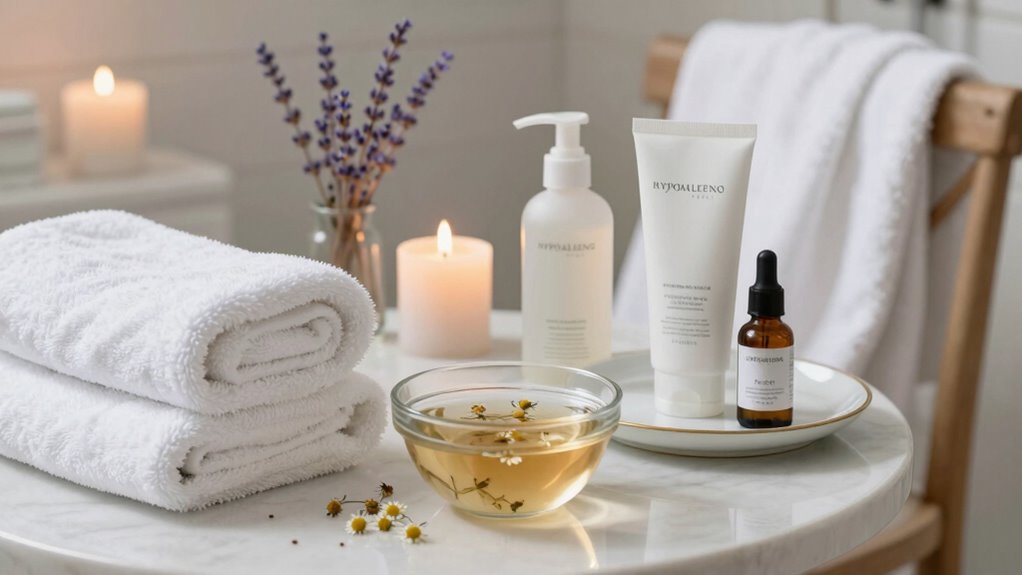
Have you ever wondered if your at-home spa routine is safe for sensitive skin? It’s a common concern, especially when you’re enthusiastic to pamper yourself without risking irritation. When it comes to DIY skincare, the key lies in understanding ingredient safety. Many homemade treatments include natural ingredients that seem gentle and harmless, but some can cause more harm than good if you’re not careful. Knowing what ingredients to use and avoid is essential for maintaining healthy, irritation-free skin.
Ensuring ingredient safety is key to a gentle, irritation-free at-home spa routine for sensitive skin.
To keep your routine safe, always start with reputable sources of information about ingredient safety. Not all natural products are suitable for sensitive skin or rosacea-prone types. For example, citrus oils, cinnamon, and certain essential oils can be too harsh, leading to redness or burning sensations. Before applying any DIY skincare product, do a patch test on a small area of skin. This simple step helps you identify potential allergic reactions or sensitivities before exposing your entire face.
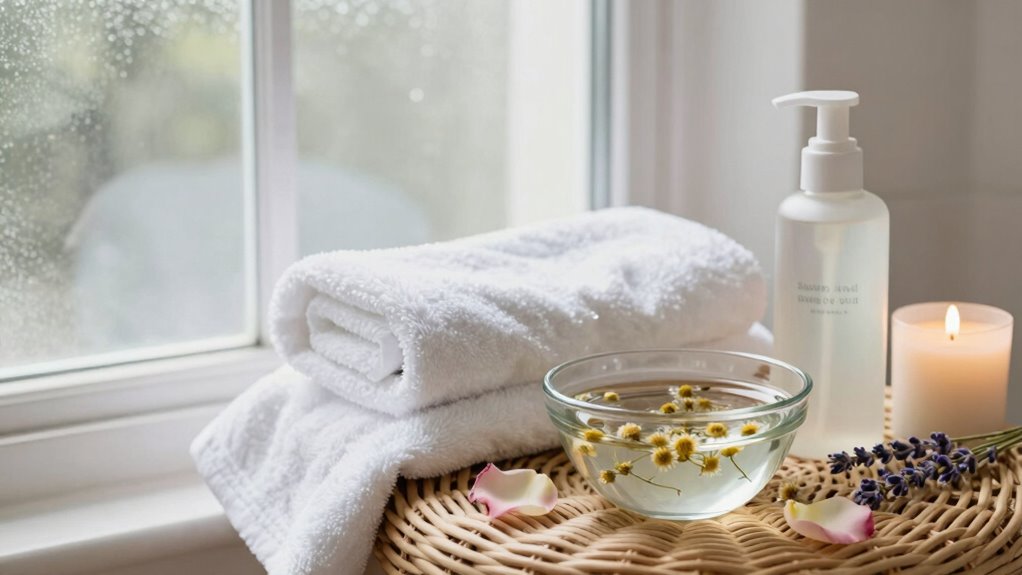
When selecting ingredients for your at-home spa treatments, opt for those known to be gentle and non-irritating. Ingredients like aloe vera, chamomile, and oat extract are often recommended for sensitive skin because they soothe and calm inflammation. Avoid overly abrasive scrubs or harsh acids, which can strip your skin’s natural barrier and make it more reactive. Instead, choose gentle exfoliants like finely ground oats or enzyme-based powders.
Additionally, always be cautious with the quantity and concentration of active ingredients in your DIY skincare. Using large amounts or highly concentrated formulas increases the risk of irritation. Remember, less is more, especially when dealing with sensitive or rosacea-prone skin. Incorporate ingredients that are well-tested and proven safe for sensitive skin, and follow trusted recipes or guidelines. Don’t forget to read labels carefully and avoid products with synthetic fragrances, alcohol, or preservatives that may trigger sensitivity.
Furthermore, understanding the benefits of natural backyard landscaping can help you create a soothing environment that complements your skincare routine. Finally, it’s wise to consult with a dermatologist or skin care professional if you’re unsure about specific ingredients or treatments. They can provide personalized advice tailored to your skin’s unique needs. Taking time to research ingredient safety and practicing cautious application helps you build a safe and effective at-home spa routine. This way, you can enjoy relaxing, pampering sessions without the worry of exacerbating your sensitive skin or rosacea. Prioritizing ingredient safety ensures your DIY skincare experience is both enjoyable and gentle, giving you peace of mind as you indulge in self-care at home.
Frequently Asked Questions
Can I Use Essential Oils on Sensitive or Rosacea-Prone Skin?
Yes, you can use essential oils on sensitive or rosacea-prone skin, but you must prioritize essential oil safety. Always perform a skin sensitivity test first by diluting the oil and applying a small amount to a discreet area. Wait 24 hours to check for any reactions. If irritation occurs, avoid that oil. Stick to gentle, soothing oils like chamomile or lavender, and consult a dermatologist if unsure.
Are There Specific Spa Ingredients to Avoid for Sensitive Skin?
Think of your skin as a delicate garden; harsh chemicals and synthetic fragrances are like invasive weeds that can choke your plants. You should avoid ingredients like alcohol, artificial dyes, and benzoyl peroxide, which can irritate sensitive skin. Instead, choose gentle, natural ingredients that nurture your skin’s health. Protect your skin’s harmony by steering clear of these harsh chemicals, allowing your natural glow to flourish.
How Often Should I Perform At-Home Spa Treatments Safely?
You should limit at-home spa treatments to once every two weeks to respect your skin sensitivity. Following the frequency guidelines helps prevent irritation and over-exfoliation, especially if you have rosacea-prone skin. Always listen to your skin; if you notice redness or discomfort, extend the interval between treatments. Consistent but gentle care keeps your skin healthy and minimizes flare-ups, so prioritize quality over quantity for safe, effective results.
What Signs Indicate a Spa Treatment Is Irritating My Skin?
If your skin becomes more irritated during or after a treatment, it’s a sign it’s irritating your skin. Look for allergic reactions like swelling, hives, or itching, along with persistent redness or skin redness that doesn’t fade. You might also notice increased sensitivity, burning, or stinging. These symptoms indicate you should stop the treatment immediately and consult with a dermatologist to prevent further irritation or damage.
Is It Safe to Use Exfoliating Scrubs on Rosacea-Prone Skin?
You should avoid using exfoliating scrubs on rosacea-prone skin because they can cause irritation and worsen redness. Instead, opt for gentle exfoliation methods, like using a soft washcloth or chemical exfoliants formulated for sensitive skin. Always patch-test new products first, and consult your dermatologist if you’re unsure. By avoiding harsh scrubs and choosing gentle options, you protect your skin’s delicate balance and prevent flare-ups.
Conclusion
Remember, your skin is like a delicate garden that needs gentle care and attentive tending. By choosing safe products and respecting your skin’s boundaries, you nurture its resilience and beauty. Treat your skin like a precious seed—patience and kindness will help it flourish. When you prioritize safety and listen to your skin’s signals, you cultivate a sanctuary of calm and confidence within yourself. Your gentle touch can turn your at-home spa into a haven of healing and renewal.