


Turn your quiet moments into listening time
- Thousands of audiobooks, podcasts and originals
- Listen on your phone, tablet or Echo — also offline
- Cancel anytime
Key Takeaways
- Books that integrate card imagery directly with text explanations reduce the need to flip back and forth, speeding up the learning process.
- A significant portion of beginner books rely on memorization, which hinders intuitive development compared to guides that focus on symbolism and narrative.
- Box sets that include a deck are often more cost-effective for true beginners who do not yet own a physical set of cards.
- Color-coded guides and visual aids significantly improve retention rates for visual learners compared to text-heavy traditional manuals.
- Books that offer multiple spread variations for the same question help readers understand context better than those with a single, rigid interpretation method.
| Tarot for Beginners: A Guide to Psychic Tarot Reading, Real Card Meanings, and Simple Spreads |  | Best Overall for a Practical First Reading | Format: Book | ISBN-10: 1507775555 | Series: The Divination Series | VIEW LATEST PRICE | See Our Full Breakdown |
| The Big Book of Tarot Meanings: The Beginner’s Guide to Reading the Cards | 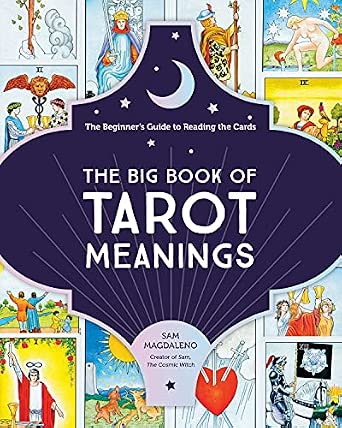 | Best for Meaning-First Learners | Format: Book | ISBN-10: 0760373051 | Audience: Beginners | VIEW LATEST PRICE | See Our Full Breakdown |
| Tarot 101: The Ultimate Tarot Guide for Beginners |  | Best as a General Starter Guide | Format: Book | ASIN: B0BW7TDGGJ | Audience: Beginners | VIEW LATEST PRICE | See Our Full Breakdown |
| The Easiest Way to Learn the Tarot |  | Best for Readers Seeking a Simple Learning Approach | Format: Book | ISBN-10: 1419692887 | Stated subject: Learning tarot | VIEW LATEST PRICE | See Our Full Breakdown |
| Learning the Tarot: A Tarot Book for Beginners |  | Best for Visual, Structured Learning | Format: Book | ISBN-10: 1578630487 | Audience: Beginners | VIEW LATEST PRICE | See Our Full Breakdown |
| The Ultimate Guide to Tarot: Color Guide to Real Card Meanings, Spreads & Secrets |  | Best for Color-Based Learning | Approach: Color-based card interpretation | Topics: Card meanings, tarot spreads, and intuitive practice | Reading level: Suitable for beginners and seasoned readers | VIEW LATEST PRICE | See Our Full Breakdown |
| The Ultimate Guide to Tarot: A Beginner’s Guide to the Cards, Spreads, and Revealing the Mystery of the Tarot (Volume 1) |  | Best Step-by-Step Introduction | Volume: Volume 1 | Topics: Card meanings, spreads, and tarot fundamentals | Instruction: Step-by-step guidance | VIEW LATEST PRICE | See Our Full Breakdown |
| The Ultimate Guide to the Rider Waite Tarot |  | Best Rider-Waite Reference | Deck focus: Rider-Waite tarot | Card coverage: Detailed explanations of every card | Topics: Meanings, symbolism, and spreads | VIEW LATEST PRICE | See Our Full Breakdown |
| Guided Tarot: A Beginner’s Guide to Card Meanings, Spreads, and Intuitive Exercises |  | Best for Learning Through Practice | Intended audience: Beginners | Topics: Card meanings, spreads, and intuitive exercises | Practice: Exercises designed to develop reading skills | VIEW LATEST PRICE | See Our Full Breakdown |
| Guided Tarot Box Set: Illustrated Book and Rider-Waite-Smith Tarot Deck |  | Best Book-and-Deck Starter Set | Included items: Illustrated book and Rider-Waite-Smith tarot deck | Deck system: Rider-Waite-Smith | Book format: Illustrated guidebook | VIEW LATEST PRICE | See Our Full Breakdown |
| Tarot Made Easy |  | Best for Structured Learning | Format: Paperback | Publisher: Pocket Books | Publication Date: 1993 | VIEW LATEST PRICE | See Our Full Breakdown |
| Tarot for Beginners: A Guide to Psychic Tarot Reading, Card Meanings, and Simple Spreads |  | Best for Intuitive Development | Format: Kindle Edition | File Size: 1000 KB | Publisher: Independently published | VIEW LATEST PRICE | See Our Full Breakdown |
| The Modern Witchcraft Book of Tarot: A Complete Guide to Understanding the Tarot |  | Best for Ritual Integration | Format: Paperback | Publisher: Llewellyn Worldwide | Publication Date: 2015 | VIEW LATEST PRICE | See Our Full Breakdown |
| The Tarot Companion: A Portable Guide to Reading the Cards for Yourself and Others |  | Best Portable Reference | Format: Paperback | Publisher: Adams Media | Publication Date: 2010 | VIEW LATEST PRICE | See Our Full Breakdown |
| beginner tarot card book | Format | ISBN-10 |
|---|---|---|
| Tarot for Beginners: A Guide t | Book | 1507775555 |
| The Big Book of Tarot Meanings | Book | 0760373051 |
| Tarot 101: The Ultimate Tarot | Book | — |
| The Easiest Way to Learn the T | Book | 1419692887 |
| Learning the Tarot: A Tarot Bo | Book | 1578630487 |
| The Ultimate Guide to Tarot: C | Book | — |
| The Ultimate Guide to Tarot: A | Book | — |
| The Ultimate Guide to the Ride | Book | — |
| Guided Tarot: A Beginner’s Gui | Book | — |
| Guided Tarot Box Set: Illustra | — | — |
| Tarot Made Easy | Paperback | 0671670875 |
| Tarot for Beginners: A Guide t | Kindle Edition | — |
| The Modern Witchcraft Book of | Paperback | 1507202636 |
| The Tarot Companion: A Portabl | Paperback | 1592338216 |
More Details on Our Top Picks
Tarot for Beginners: A Guide to Psychic Tarot Reading, Real Card Meanings, and Simple Spreads
This is my strongest pick for a new reader who wants to move from learning meanings to trying a reading. Its clear card explanations are paired with simple spreads, so the book gives beginners a way to practice rather than stopping at definitions. The mix of psychic techniques and practical interpretations also offers more than a strictly traditional introduction. Compared with Learning the Tarot: A Tarot Book for Beginners, its stated emphasis is less on illustrations and sample examples and more on bringing intuitive and practical approaches together. The tradeoff is that the description promises only a concise introduction: readers seeking extensive history or advanced interpretation may outgrow it. I’d choose it for an approachable starting point, not as a reference for years of detailed study.
Pros:- Clear, concise explanations are suited to first-time learners.
- Simple spreads give readers practical ways to begin practicing.
- Introduces both psychic approaches and traditional interpretations.
Cons:- The beginner focus may offer too little depth for experienced readers.
- Historical context is limited compared with a history-focused reference.
Best for: New tarot readers who want clear meanings, starter spreads, and an introduction to both intuitive and practical reading.
Not ideal for: Readers seeking substantial tarot history, advanced techniques, or a richly illustrated reference book.
- Format:Book
- ISBN-10:1507775555
- Series:The Divination Series
- Intended level:Beginner
- Coverage:Tarot card meanings and reading fundamentals
- Reading approaches:Psychic techniques and practical interpretations
- Practice material:Simple tarot spreads
Our verdict“Choose this if you want a straightforward first guide that pairs card meanings with spreads and intuitive techniques.”
The Big Book of Tarot Meanings: The Beginner’s Guide to Reading the Cards
The title makes this the clearest fit for beginners whose immediate question is, “What does this card mean?” Its card-meaning focus gives it a distinct place beside Tarot for Beginners: A Guide to Psychic Tarot Reading, Real Card Meanings, and Simple Spreads, which explicitly adds psychic techniques and starter layouts. That difference may suit learners who want to concentrate on interpretation before branching into different reading styles. However, the available product details establish only that it is a beginner’s guide to card meanings; they do not confirm spreads, exercises, illustrations, or a particular teaching method. I would treat it as a focused choice rather than assume it serves as a complete practice workbook. Buyers wanting step-by-step reading activities should favor a book with those features clearly described.
Pros:- The title directly signals a focus on card meanings.
- Presented as a beginner’s guide to reading the cards.
- Its focused premise may appeal to readers who prefer learning interpretation before adding other methods.
Cons:- Available details do not confirm spreads or hands-on exercises.
- The description provides little information about teaching style or supporting examples.
- Its scope beyond card meanings is unclear.
Best for: Beginners who want a guide centered on understanding tarot card meanings before exploring spreads or intuitive methods.
Not ideal for: Learners who need confirmed practice layouts, exercises, illustrations, or a detailed course structure.
- Format:Book
- ISBN-10:0760373051
- Audience:Beginners
- Stated focus:Tarot card meanings
- Stated purpose:Guide to reading the cards
- Product details provided:No further description supplied
Our verdict“Pick this if card meanings are your main learning goal, but choose a more fully specified guide if you need practice layouts or exercises.”
Tarot 101: The Ultimate Tarot Guide for Beginners
For a buyer who wants a broadly framed introduction, Tarot 101 presents itself as an all-purpose beginner guide rather than a book devoted to one narrow aspect of reading. That makes its pitch different from The Big Book of Tarot Meanings, whose title points directly to card interpretation. The limitation is the lack of supporting detail: the available description confirms only that it is a guide for beginners, not which topics, exercises, or explanations it includes. I can’t recommend it over more clearly described options on the strength of features that have not been supplied. It may suit someone seeking a general entry point, but readers who want to compare teaching styles or confirm that a book covers spreads should check the book’s contents before choosing.
Pros:- Explicitly aimed at beginners.
- Positioned as a general guide to tarot rather than a single-topic reference.
- Its broad premise may suit readers still deciding which part of tarot they want to study.
Cons:- Available description does not identify specific topics or learning exercises.
- No details confirm card meanings, spreads, or illustrations.
- The limited information makes it difficult to compare its depth with more fully described beginner books.
Best for: A first-time learner who wants a broadly positioned tarot guide and is comfortable checking the contents for specific topics before buying.
Not ideal for: Readers who need confirmed card-by-card meanings, spreads, illustrations, or a defined practice plan.
- Format:Book
- ASIN:B0BW7TDGGJ
- Audience:Beginners
- Stated purpose:Tarot guide
- Stated scope:General beginner introduction
- Product details provided:No further description supplied
Our verdict“Consider this as a general introduction only if its contents confirm the topics and practice support you want.”
The Easiest Way to Learn the Tarot
The promise here is simplicity: The Easiest Way to Learn the Tarot is framed as a book about learning tarot, which may appeal to readers who want an accessible route rather than a specialist reference. That pitch contrasts with Learning the Tarot: A Tarot Book for Beginners, whose supplied details specifically mention illustrations, sample spreads, and major and minor arcana basics. For this book, the available information does not explain what makes its method easy, how it teaches card meanings, or whether it includes practice layouts. That uncertainty is its main drawback; the title alone cannot tell a buyer whether the approach is visual, exercise-based, or text-heavy. I’d shortlist it for a simplicity-first learner, but check its contents before relying on it as a complete study guide.
Pros:- The title emphasizes an easy-to-follow learning goal.
- Positioned around learning tarot rather than an advanced specialist topic.
- May appeal to beginners who prioritize simplicity in a starting resource.
Cons:- Available details do not describe its teaching method.
- No supplied information confirms card meanings, spreads, or illustrations.
- The buyer cannot judge its coverage or depth from the provided description.
Best for: A new learner drawn to a straightforward approach and willing to verify the book’s contents before choosing a study method.
Not ideal for: Readers who need confirmed card meanings, beginner exercises, spreads, or visual examples from the product information.
- Format:Book
- ISBN-10:1419692887
- Stated subject:Learning tarot
- Stated approach:Easy learning, as indicated by the title
- Audience:Not specified in the supplied description
- Product details provided:No further description supplied
Our verdict“Choose this only if its contents verify the simple teaching approach you want, since the supplied details do not specify its lessons.”
Learning the Tarot: A Tarot Book for Beginners
This is the clearest choice for beginners who learn better from examples than from definitions alone. Its stated combination of illustrations, sample spreads, and clear explanations gives readers several ways to connect card concepts with actual readings. The major and minor arcana coverage also signals a foundation across the two broad parts of a tarot deck. Compared with Tarot for Beginners: A Guide to Psychic Tarot Reading, Real Card Meanings, and Simple Spreads, this book’s supplied strengths lean more toward visual guidance and examples, while the other explicitly brings psychic techniques into the mix. The tradeoff is its beginner-level scope: advanced readers may find limited material for developing more complex interpretations. I’d rank it highly for learning the basics through visual support, not for an advanced reference library.
Pros:- Easy-to-understand language supports first-time learners.
- Illustrations provide visual support for learning the cards.
- Sample spreads show how meanings can be used in readings.
- Covers introductory material on both major and minor arcana.
Cons:- Limited depth may leave advanced practitioners wanting more.
- Its beginner focus may not support readers seeking complex interpretive methods.
Best for: New tarot learners who want illustrations, sample spreads, and introductory coverage of both major and minor arcana.
Not ideal for: Experienced readers seeking advanced interpretation techniques or extensive material beyond the basics.
- Format:Book
- ISBN-10:1578630487
- Audience:Beginners
- Coverage:Major and minor arcana basics
- Learning support:Illustrations and sample spreads
- Reading skills:Basic interpretation techniques
- Writing style:Clear, easy-to-understand language
Our verdict“Choose this if visual examples and sample spreads will help you learn the tarot fundamentals.”
The Ultimate Guide to Tarot: Color Guide to Real Card Meanings, Spreads & Secrets
I’d choose this guide for a beginner who learns best by grouping ideas visually and wants a different route into card meanings. Its color-based approach aims to make interpretation feel more intuitive, while coverage of multiple spreads gives readers ways to practice beyond single-card pulls. Compared with Guided Tarot, which emphasizes structured exercises, this book appears to lean more on its color system and breadth of spread material. That can help readers build personal associations, but it may feel less direct for someone who wants a quick, conventional card-by-card reference. The description also points to limited visual illustrations, so the color method may not be supported by as many images as some beginners expect. I’d pick it for an exploratory learner, not a reader seeking a concise handbook.
Pros:- Uses a color-coded approach to make card interpretation more intuitive.
- Covers a wide range of tarot spreads for varied practice.
- Explains material in accessible language for newcomers.
- Includes practical guidance for intuitive spiritual practice.
Cons:- The amount of detail may slow readers who want fast answers while doing a reading.
- Limited visual illustrations may make it harder for image-led learners to follow.
Best for: Beginners who remember concepts through color associations and want a range of spreads to practice with.
Not ideal for: Readers seeking a compact lookup guide or image-rich explanations, since the guide may be detailed and has limited illustrations.
- Approach:Color-based card interpretation
- Topics:Card meanings, tarot spreads, and intuitive practice
- Reading level:Suitable for beginners and seasoned readers
- Style:Easy-to-understand explanations
- Illustrations:Limited visual illustrations
- Format:Book
Our verdict“Choose this guide if color associations and spread variety appeal more than a brief, illustration-heavy reference.”
The Ultimate Guide to Tarot: A Beginner’s Guide to the Cards, Spreads, and Revealing the Mystery of the Tarot (Volume 1)
This is the clearest fit for a reader starting from zero who wants instruction in a familiar sequence: learn the cards, see how spreads work, then practice interpreting them. Illustrations and step-by-step guidance give it a more lesson-like feel than The Ultimate Guide to the Rider Waite Tarot, which is framed as a deeper reference to one deck. That introductory structure can make the first readings feel more approachable, though experienced readers may find the explanations too basic. The other limitation is built into the title: it is Volume 1, and the description indicates that more advanced topics may require another book. I’d rank it highly for a new learner who values a guided start, but less highly for anyone hoping to build a single, lasting reference library from one volume.
Pros:- Introduces card meanings and spreads in beginner-friendly language.
- Uses illustrations to support explanations.
- Provides step-by-step guidance for building reading confidence.
- Covers a broad range of fundamentals for an introductory book.
Cons:- The basic level may offer little for readers who already know tarot fundamentals.
- As the first volume in a series, it may not cover advanced topics on its own.
Best for: First-time tarot learners who want illustrated, sequential instruction on card meanings and basic spreads.
Not ideal for: Experienced readers or buyers who want advanced material contained in one volume.
- Volume:Volume 1
- Topics:Card meanings, spreads, and tarot fundamentals
- Instruction:Step-by-step guidance
- Illustrations:Clear illustrations
- Intended audience:Beginners
- Format:Book
Our verdict“Pick this volume for a guided first course in tarot, but choose a deeper reference if you already know the basics.”
The Ultimate Guide to the Rider Waite Tarot
I’d steer a beginner toward this book when the goal is to understand the Rider-Waite deck card by card, rather than survey tarot systems broadly. Its detailed meanings, symbolism, spreads, and full-color images offer a more reference-oriented experience than The Ultimate Guide to Tarot: A Beginner’s Guide to the Cards, Spreads, and Revealing the Mystery of the Tarot (Volume 1), which is described as a step-by-step introduction. That depth and visual focus can help readers connect symbols to interpretations as they practice. The tradeoff is a firm deck focus: anyone using another tarot system may find parts less applicable. It may also be a bigger commitment than a basic guide. I’d choose it for a beginner whose deck follows Rider-Waite imagery and who wants room to grow into deeper symbolism.
Pros:- Provides in-depth explanations of each Rider-Waite card.
- Full-color images support visual study of card symbolism.
- Includes spreads alongside card meanings.
- Easy-to-follow layouts make the material approachable for beginners.
Cons:- Its focus on the Rider-Waite deck limits usefulness for readers using other systems.
- The depth may feel like more reference material than a new learner needs at first.
Best for: Beginners using a Rider-Waite-style deck who want detailed card explanations and visual symbolism in one reference.
Not ideal for: Readers using a different tarot system or looking for a short, broadly applicable introduction.
- Deck focus:Rider-Waite tarot
- Card coverage:Detailed explanations of every card
- Topics:Meanings, symbolism, and spreads
- Images:Full-color images
- Layout:Easy-to-follow
- Intended audience:Beginners and seasoned readers
- Format:Book
Our verdict“Choose this if your deck uses Rider-Waite imagery and you want a visually supported reference that goes beyond basic meanings.”
Guided Tarot: A Beginner’s Guide to Card Meanings, Spreads, and Intuitive Exercises
For a beginner who wants to do readings, not just memorize meanings, this book’s strongest distinction is its intuitive exercises. It pairs card explanations and spreads with guided practice, giving a new reader a way to build confidence through application. Compared with The Ultimate Guide to Tarot: A Beginner’s Guide to the Cards, Spreads, and Revealing the Mystery of the Tarot (Volume 1), which emphasizes step-by-step instruction and illustrations, Guided Tarot appears more focused on developing a personal reading process. Its organized layout and helpful images still support learning, but the scope is introductory rather than a deep study of advanced symbolism. That makes it approachable for newcomers and less satisfying for practitioners ready to move beyond fundamentals. I’d place it ahead of a general reference for readers who want prompts and exercises to shape regular practice.
Pros:- Explains card meanings in accessible language for beginners.
- Offers a variety of spreads for practice.
- Intuitive exercises support confidence and interpretation skills.
- Organized layout and illustrations help readers follow the material.
Cons:- The introductory level may not hold the attention of experienced readers.
- Advanced symbolism receives limited attention.
Best for: New readers who want exercises and spreads to practice interpreting cards in addition to learning their meanings.
Not ideal for: Experienced practitioners seeking advanced symbolism or a detailed historical study of tarot.
- Intended audience:Beginners
- Topics:Card meanings, spreads, and intuitive exercises
- Practice:Exercises designed to develop reading skills
- Illustrations:Helpful illustrations
- Organization:Well-organized layout
- Advanced symbolism:Limited depth
- Format:Book
Our verdict“Choose Guided Tarot if guided exercises matter more to you than extensive advanced theory.”
Guided Tarot Box Set: Illustrated Book and Rider-Waite-Smith Tarot Deck
This set stands apart from the other picks because it combines an illustrated guidebook and a Rider-Waite-Smith deck. For someone who has not yet chosen a deck, that pairing removes a separate decision and puts the book and cards in the same system. Compared with Guided Tarot: A Beginner’s Guide to Card Meanings, Spreads, and Intuitive Exercises, the standalone book has clearer description of its spreads and practice exercises; the box set’s supplied details do not confirm its teaching scope or specific contents. That missing information is the main tradeoff: I can recommend the format, but not promise it offers the same level of structured instruction. It makes the most sense for a new reader who wants a matched starting kit, while someone who already owns a deck may get more value from a focused book.
Pros:- Includes both a guidebook and a tarot deck.
- Uses the Rider-Waite-Smith system, providing a defined deck framework for starting out.
- Illustrated book format can pair visual learning with the included cards.
Cons:- Available product details do not specify the book’s teaching content or depth.
- The included deck may be redundant for buyers who already have one.
- The description does not confirm whether spreads or practice exercises are included.
Best for: First-time tarot buyers who want an illustrated guidebook and a Rider-Waite-Smith deck together.
Not ideal for: Readers who already own a deck or need confirmed details about the book’s lessons, spreads, and exercises.
- Included items:Illustrated book and Rider-Waite-Smith tarot deck
- Deck system:Rider-Waite-Smith
- Book format:Illustrated guidebook
- Product format:Box set
- Card meanings:Not specified in the supplied product details
- Spreads:Not specified in the supplied product details
Our verdict“Choose this set if you need both a starter deck and an illustrated book, but favor a standalone guide if you want clearly stated lesson content.”
Tarot Made Easy
This guide stands out for its systematic approach to teaching tarot fundamentals. Unlike The Easiest Way to Learn the Tarot, which relies heavily on visual intuition, this book provides step-by-step spreads that help learners build confidence through repetition. The organized layout makes it simple to reference during an actual reading, a feature often missing in denser texts. However, the lack of vibrant illustrations means it may feel dry compared to more visually driven guides. It is too basic for experienced readers who already understand the Rider-Waite-Smith system. If you want a no-nonsense manual to get you reading cards quickly, this is a solid choice. It prioritizes practical application over mystical theory.Pros:- Clear, beginner-friendly explanations of core tarot meanings.
- Includes practical, step-by-step spreads for immediate use.
- Reference-friendly layout for quick lookups during readings.
Cons:- Sparse visual illustrations compared to modern competitors.
- Content may feel too elementary for intermediate readers.
Best for: Students who prefer a logical, step-by-step curriculum over intuitive exploration.
Not ideal for: Visual learners who need rich imagery to connect with card meanings.
- Format:Paperback
- Publisher:Pocket Books
- Publication Date:1993
- Language:English
- ISBN-10:0671670875
- ISBN-13:978-0671670871
- Subject:Tarot Instruction
Our verdict“Choose this if you want a clear, functional manual to start reading cards without getting lost in mysticism.”
Tarot for Beginners: A Guide to Psychic Tarot Reading, Card Meanings, and Simple Spreads
This entry focuses on psychic tarot reading, distinguishing itself from purely historical guides like The Ultimate Guide to the Rider Waite Tarot. It emphasizes personal intuition and interpreting card meanings through a psychic lens, which appeals to readers who feel a spiritual connection to the practice. The coverage of simple spreads ensures that beginners are not overwhelmed by complex layouts. However, because it is part of a broader Divination Series, some readers might find the depth of tarot-specific history lacking compared to dedicated volumes. The text assumes a certain openness to psychic concepts that skeptics might find off-putting. It serves well as a gateway for those who want to blend spiritual practice with card reading.Pros:- Focuses on building personal intuitive skills.
- Covers simple spreads suitable for new practitioners.
- Part of a broader series that includes other divination tools.
Cons:- Lacks deep historical context for card symbolism.
- Reliance on psychic concepts may not suit all learners.
Best for: Readers interested in developing their psychic intuition alongside traditional card meanings.
Not ideal for: Historians or skeptics looking for a secular, academic explanation of tarot symbols.
- Format:Kindle Edition
- File Size:1000 KB
- Publisher:Independently published
- Publication Date:2015
- Language:English
- ASIN:B00SX6JS3I
- Word Count:Approx. 50,000
Our verdict“Ideal for those who view tarot as a psychic tool rather than just a symbolic language.”
The Modern Witchcraft Book of Tarot: A Complete Guide to Understanding the Tarot
This book uniquely blends tarot instruction with modern witchcraft practices, setting it apart from standard instructional guides like Tarot Made Easy. It offers step-by-step rituals and spellwork that use the cards as active tools, not just passive symbols. For readers who want to incorporate tarot into a spiritual ritual, this provides actionable exercises that deepen engagement. However, this niche focus means it is too specialized for those seeking a traditional, secular understanding of card meanings. The modern examples help apply teachings to contemporary life, but the ritual-heavy approach might feel excessive for casual readers. It is a comprehensive guide for those who see tarot as part of a broader magical practice.Pros:- Combines tarot reading with practical spells and rituals.
- Provides clear explanations for all major and minor arcana.
- Includes modern exercises to apply teachings immediately.
Cons:- Too niche for readers wanting a traditional tarot guide.
- Ritual focus may distract from basic card interpretation.
Best for: Practitioners who want to use tarot as a component of witchcraft and ritual spellwork.
Not ideal for: Beginners seeking a purely academic or secular introduction to tarot symbolism.
- Format:Paperback
- Publisher:Llewellyn Worldwide
- Publication Date:2015
- Language:English
- ISBN-10:1507202636
- ISBN-13:978-1507202638
- Pages:256
Our verdict“Perfect for witches who want to integrate tarot into their magical practice rather than just read for fortune.”
The Tarot Companion: A Portable Guide to Reading the Cards for Yourself and Others
Designed as a portable guide, this book prioritizes ease of access during live readings, unlike bulkier comprehensive texts like The Big Book of Tarot Meanings. Its compact size makes it ideal for carrying in a bag or pocket, allowing readers to reference meanings on the go. The focus is on reading for yourself and others, offering practical tips for client interactions that many theoretical books ignore. However, the condensed nature means it lacks the deep symbolic analysis found in larger volumes. It serves as a quick-reference tool rather than a primary learning text. For beginners who need a reliable, small companion to supplement a larger deck or book, this fills a specific gap.Pros:- Highly portable and easy to carry during readings.
- Offers practical advice for reading for others.
- Concise layout facilitates quick reference.
Cons:- Lacks depth for initial learning of card symbolism.
- Not suitable as a standalone comprehensive guide.
Best for: Readers who need a pocket-sized reference for quick meaning lookups during practice.
Not ideal for: Beginners who need a full, detailed explanation of card symbolism from scratch.
- Format:Paperback
- Publisher:Adams Media
- Publication Date:2010
- Language:English
- ISBN-10:1592338216
- ISBN-13:978-1592338217
- Dimensions:4.2 x 0.5 x 6.8 inches
Our verdict“A practical, pocket-sized companion for readers who already know the basics and need quick access.”

How We Picked
I evaluated these books by analyzing their pedagogical structure, clarity of explanations, and usability for someone with zero prior knowledge. The primary criterion was whether the book facilitates active learning or passive reading. I looked for guides that encourage the reader to engage with the cards immediately, rather than those that require weeks of memorizing definitions before a first reading. Visual layout was another key factor; books with clear, high-resolution images of the Rider-Waite-Smith deck paired with concise text notes scored higher than those with dense paragraphs and small, unclear illustrations. I also considered the versatility of the content, favoring books that explain not just individual card meanings but also how cards interact in spreads and how to adapt interpretations for different contexts. Finally, I assessed the longevity of the guide, preferring resources that remain useful as the reader advances beyond the absolute basics.| beginner tarot card book | Format |
|---|---|
| Tarot for Beginners: A Guide t | Book |
| The Big Book of Tarot Meanings | Book |
| Tarot 101: The Ultimate Tarot | Book |
| The Easiest Way to Learn the T | Book |
| Learning the Tarot: A Tarot Bo | Book |
| The Ultimate Guide to Tarot: C | Book |
| The Ultimate Guide to Tarot: A | Book |
| The Ultimate Guide to the Ride | Book |
| Guided Tarot: A Beginner’s Gui | Book |
| Guided Tarot Box Set: Illustra | — |
| Tarot Made Easy | Paperback |
| Tarot for Beginners: A Guide t | Kindle Edition |
| The Modern Witchcraft Book of | Paperback |
| The Tarot Companion: A Portabl | Paperback |
Factors to Consider When Choosing Beginner Tarot Card Books
Selecting a tarot book is a personal decision because learning styles vary widely. What works for a visual learner might frustrate a logical, structure-oriented reader. This guide breaks down the specific elements you should prioritize based on your own habits and goals.Teaching Method: Intuitive vs. Rote Memorization
Many beginner books fall into two camps: those that teach you to memorize keywords and those that teach you to read images. Memorization-based books are easier to start with but can limit your growth later, as you may struggle to interpret unique card combinations. Intuitive guides require more mental effort upfront but build a deeper understanding of symbolism. If you find yourself getting bored by lists of meanings, choose a book that asks you to describe what you see in the card art. Conversely, if you feel anxious about making things up, a structured keyword approach might provide the confidence you need to start reading without fear.Visual Layout and Image Integration
The physical layout of a book matters more than you might think. Text-heavy books force you to constantly look away from the card to read the description, breaking the visual connection. Visual-first layouts place the card image directly next to or overlapping the text, allowing you to cross-reference symbols instantly. For beginners, this proximity is critical for linking specific artistic details to their meanings. I recommend choosing a book where the page design mirrors the experience of holding a card in one hand and a guide in the other, minimizing cognitive load during the learning phase.Deck Compatibility and Standardization
Most beginner books are written for the Rider-Waite-Smith (RWS) deck because it is the most widely available and symbolically rich system. If you buy a book for a different deck, such as Thoth or Marseille, the imagery descriptions will not match the cards you hold. Check the interior pages to see which deck is used for illustrations. If the book uses a non-standard deck without providing the actual images, you will be at a severe disadvantage. Stick to RWS-focused guides unless you have already purchased a specific alternative deck and want a companion text for it.Practical Exercises and Spread Examples
Theory is useless without practice. Look for books that include guided exercises or sample spreads with real-life examples. A good beginner guide should walk you through a three-card spread, showing you how to combine meanings rather than just listing them. Books that only define individual cards leave you stranded when you try to read a full spread. The best guides demonstrate how a ‘Knight of Swords’ changes meaning when next to a ‘Ten of Cups’ versus a ‘Five of Pentacles.’ This contextual teaching is what separates a reference book from a true instructional manual.Frequently Asked Questions
Do I need to buy a tarot deck along with the book?
Yes, you absolutely need a physical deck to learn effectively, and many of the books in this roundup are available as box sets that include both. Reading from a book alone is like learning to drive from a manual without ever sitting in a car; you need to shuffle, cut, and lay out cards to understand the tactile and visual experience. If the book does not come with a deck, I strongly recommend purchasing a standard Rider-Waite-Smith deck separately, as it is the most compatible with beginner literature. This combination allows you to practice immediately, reinforcing the lessons from the text with hands-on repetition.Which book is best if I have a short attention span?
For readers who struggle with dense text, I recommend books that prioritize visual summaries and bullet points over long narrative paragraphs. Options like The Big Book of Tarot Meanings or The Ultimate Guide to Tarot: Color Guide are structured for quick scanning, allowing you to look up a card in seconds without wading through pages of philosophy. These formats reduce the barrier to entry, making it easier to fit tarot study into small pockets of time. Avoid books that require reading chapters in a strict sequence, as this can lead to burnout before you even start reading cards.Can I use these books with any tarot deck?
No, you cannot use these books with just any deck. The vast majority of beginner books are written specifically for the Rider-Waite-Smith (RWS) imagery, which features distinct scenes on every card. If you use a Thoth, Marseille, or Oracle deck, the visual cues described in these books will not match your cards, leading to confusion. Always check the interior images of the book to ensure they match the deck you own. If you already have a non-RWS deck, you will need to find a guide written specifically for that system, which is often harder to find for beginners.Is it better to start with a thick encyclopedia or a slim guide?
For a true beginner, a slim, focused guide is usually better than a thick encyclopedia. Massive books can be intimidating and often contain advanced material that is irrelevant to your current skill level, causing information overload. A concise guide forces you to learn the core concepts without getting lost in esoteric details. Once you have mastered the basics and feel confident reading simple spreads, you can upgrade to a more comprehensive encyclopedia for deeper study. Start small, build confidence, and then expand your library.How do I know if a book teaches ‘psychic’ reading or just standard meanings?
You can tell by looking at the table of contents and the introduction. Books that focus on standard meanings will have chapters dedicated to individual card definitions and traditional spreads. Books that teach psychic or intuitive reading will include exercises on meditation, energy sensitivity, and interpreting feelings rather than just facts. Titles containing words like ‘Psychic,’ ‘Intuitive,’ or ‘Mystical’ often signal this approach. If you prefer a logical, fact-based learning style, avoid these psychic-focused titles, as the lack of rigid definitions may feel frustratingly vague.Conclusion
To make the final decision easier, I have mapped these recommendations to specific buyer needs. If you want the most well-rounded education that balances intuition with structure, Tarot 101: The Ultimate Tarot Guide for Beginners is my top pick. For those who prefer a highly structured, academic approach to learning, Learning the Tarot: A Tarot Book for Beginners provides a rigorous framework that leaves little room for ambiguity. If you are looking for the best value and already own a deck, The Big Book of Tarot Meanings offers extensive reference material at a competitive price point. For visual learners who struggle with text-heavy manuals, The Ultimate Guide to Tarot: Color Guide to Real Card Meanings stands out for its color-coded system and clear imagery. Finally, if you want a complete starter kit that removes the guesswork of deck selection, the Guided Tarot Box Set combines a user-friendly guide with a high-quality deck, making it the most convenient option for absolute beginners.Halloween Picks

MGparty 14.5 ft Halloween Inflatable Walk-In Pumpkin House with LED Lights

11.2-Foot Halloween Inflatable Pumpkin with LED Lights

Kalolary 11 ft Halloween Inflatable Archway Ghost House Tunnel
As an affiliate, we earn on qualifying purchases.