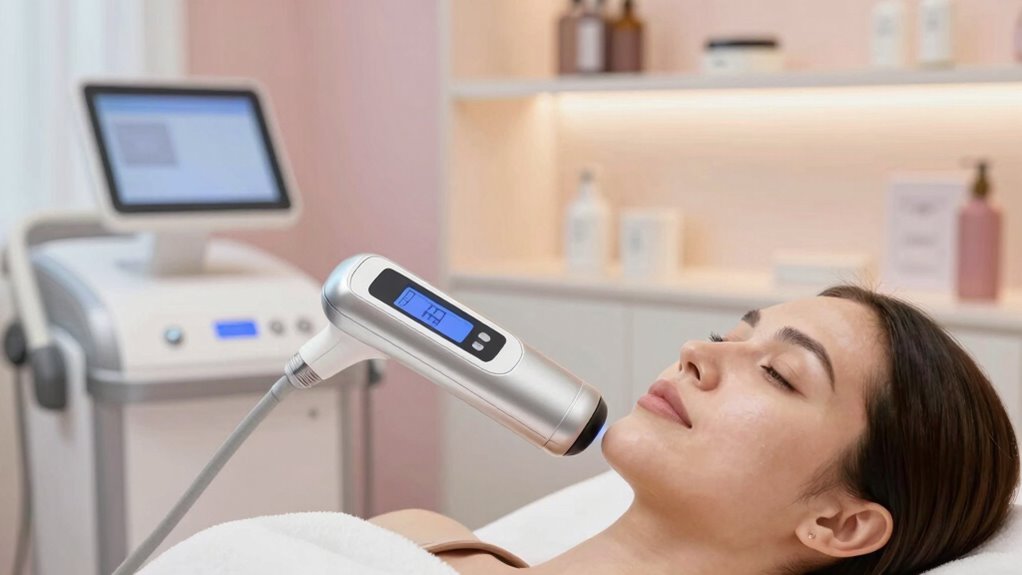

For a radio frequency skin tightening device for the jawline, my best overall pick is the NEWA Facial Skin Tightening Device, a focused option for shoppers prioritizing an RF-specific routine. The Sensica Sensilift stands out for face-and-neck use, while the 6-in-1 RF devices suit buyers who want more functions in one unit. The main tradeoff is between focused RF treatment and extra modes that may add complexity without improving jawline fit. Device shape, treatment instructions, and whether you are comfortable using conductive gel matter as much as a long feature list. Read on for the full breakdown and a buying guide to help match a device to your routine.

Turn your quiet moments into listening time
- Thousands of audiobooks, podcasts and originals
- Listen on your phone, tablet or Echo — also offline
- Cancel anytime
Key Takeaways
- Focused RF models lead this comparison: NEWA and Sensica are more directly aligned with a targeted face-and-jaw routine than devices whose listings emphasize multiple unrelated functions.
- Face-and-neck coverage changes the choice: Sensica is a strong fit for buyers who want to treat beyond the jawline, while a compact facial device may be easier to guide along the lower face.
- More modes do not automatically mean better jawline use: The multifunction 6-in-1 and microcurrent options offer flexibility, but buyers should check which functions they will actually use.
- RF terminology needs scrutiny: The 1 MHz bipolar model names a frequency and electrode arrangement, but shoppers still need clear instructions for treatment area, contact, and safe use.
- Routine fit separates the contenders: Gel requirements, treatment area, handling, and the time commitment can matter more than headline claims when choosing a device for home use.


More Details on Our Top Picks
6-in-1 RF Radio Frequency Skin Tightening Device
For someone who wants a single handheld tool for more than RF, this model pairs radio frequency, TS-current, red LED and vibration with heating and cooling modes. Its listed treatment areas include the jawline, chin and neck, making it more directly suited to a contour-focused routine than the Quiet&Far High Frequency Facial Machine, whose product details do not specify jawline-focused modes or treatment areas. The dual-sided head also adds cooling and heating, though switching sides makes the routine less seamless. The device has timed sessions and includes base gel, but the supplied information says meaningful anti-aging changes may require consistent weekly use for 8–12 weeks. I’d choose it for mode variety, not for a simple, RF-only treatment; the gel requirement and extra steps are real tradeoffs.
Pros:- Lists the jawline, chin and neck among its treatment areas.
- Combines RF with TS-current, red LED, vibration, heat and cooling modes.
- Includes base gel and USB Type-C charging cable.
- Timed sessions include a 3-minute cold mode and 10-minute timer for other modes.
Cons:- Heating and cooling functions require flipping the dual-sided head.
- The product information calls for consistent weekly use over 8–12 weeks for significant anti-aging results.
- Requires the supplied base gel for optimal performance.
Best for: At-home skincare users who want one device for jawline, chin, neck, eye-area and broader facial routines, and are comfortable using gel and switching modes.
Not ideal for: Buyers who want a straightforward RF-only jawline treatment or who do not want to maintain a consistent multi-week routine.
Our verdict“Choose this if you want broad jawline-to-neck routine flexibility and accept gel, mode switching and sustained use.”
Quiet&Far High Frequency Facial Machine for Skin Care
The Quiet&Far is the lineup’s tube-based option: it includes four interchangeable treatment tubes for targeting different facial areas. That makes it a different kind of pick from the Sensica Sensilift, which specifies RF technology, temperature regulation and app guidance for face and neck use. For a jawline buyer, though, the Quiet&Far listing leaves important questions unanswered: it provides no detailed specifications about energy type, settings, session timing, safety controls or a named jawline treatment area. Its description claims wrinkle reduction and skin tightening, but I would not treat those claims as proof of RF performance. The interchangeable tubes may appeal to someone already familiar with facial devices, while beginners may prefer the clearer operating details of the 1 MHz Bipolar Radio Frequency device. The central tradeoff is targeting flexibility versus limited product information.
Pros:- Includes four interchangeable treatment tubes.
- Designed for targeted facial treatments at home.
- The description positions it for wrinkle and skin-tightening routines.
Cons:- No detailed technical specifications are provided.
- The product information does not clearly identify its energy technology or safety controls.
- May be difficult for beginners who lack familiarity with facial devices.
Best for: Experienced at-home skincare users who want interchangeable treatment tubes and are willing to verify operating instructions and suitability before use.
Not ideal for: Jawline-focused buyers who need clear RF specifications, documented safety controls, session guidance or confirmation that the device is designed for their treatment area.
Our verdict“Consider it only if interchangeable tubes matter more to you than clearly documented RF and jawline-specific details.”
Sensica Sensilift Anti-Aging RF Skin Tightening Device for Face & Neck
For a buyer prioritizing an explicitly RF-focused face-and-neck device, the Sensica Sensilift has the strongest documentation in this group: the listing identifies it as FDA-cleared, includes conductive gel, and describes app guidance and temperature regulation. Its dynamic RF energy and electrode motion are intended to support controlled treatment, a more focused approach than the six-mode B0CW38N22F, which adds cooling, heat, LED and current but requires more mode-switching. The stated 4–8 week result window gives buyers a reference for the commitment, not a promise of a particular outcome. The listing does not name the jawline separately, even though it targets face and neck, so shoppers seeking specific contour instructions should check the guidance. It also notes weaker suitability for severe sagging and includes fewer accessories than a multi-function kit.
Pros:- Product data identifies the device as FDA-cleared and RF-based.
- Includes 100 ml of conductive base gel.
- App guidance and temperature regulation support a more structured routine.
- Lists a two-year warranty and 60-day money-back guarantee.
Cons:- Requires consistent use over several weeks for best results.
- The product description says it may be less effective for severe skin sagging.
- Offers fewer accessory and mode options than the six-mode B0CW38N22F.
Best for: Buyers seeking a documented RF face-and-neck routine with app guidance, included conductive gel and a stated two-year warranty.
Not ideal for: People seeking a device explicitly described for severe sagging, a wide set of non-RF modes or detailed jawline-specific treatment claims.
Our verdict“Pick the Sensilift if guided, RF-focused face-and-neck care matters more than extra modes or a specifically named jawline feature.”
1 MHz Bipolar Radio Frequency Facial Skin Care Device
This device stands out for buyers who want a clearly specified RF treatment rather than a bundle of facial modes. Its 1 MHz bipolar RF is paired with dual thermistors, a 40°C energy cutoff and a motion sensor that delivers energy only while the probe moves. Those controls offer a more defined safety approach than the Quiet&Far machine, whose listing provides no comparable operating details. For jawline use, the product data describes mild-to-moderate facial wrinkles and at-home treatment, but does not explicitly name the jawline or neck as target areas. It is also limited to Fitzpatrick skin types I–IV, which narrows who should consider it. Compared with the Sensica Sensilift, this pick provides a precise frequency and cutoff temperature, while the Sensica listing adds app guidance and a warranty. Regular treatments are still needed for visible improvement.
Pros:- Specifies 1 MHz bipolar radio frequency.
- Dual thermistors and a 40°C cutoff help limit excess heat.
- Motion sensor delivers energy only while the probe is moving.
- Designed for non-invasive treatment of mild-to-moderate facial wrinkles.
Cons:- Designed only for Fitzpatrick skin types I–IV.
- The product data does not explicitly list the jawline or neck as treatment areas.
- Requires regular treatments for visible improvement.
Best for: Buyers with Fitzpatrick skin types I–IV who want a focused, non-invasive RF device with specified temperature and motion controls.
Not ideal for: People outside the listed skin-type range, those seeking jawline-specific instructions, or shoppers who want app guidance and a stated warranty.
Our verdict“Choose this for specified RF controls if your skin type fits the stated range and you can confirm the device suits your jawline routine.”
6-in-1 Radio Frequency Skin Tightening Device for Face and Neck
This six-mode device earns its place for buyers who want one routine to cover the jawline, chin and neck as well as the rest of the face. Its listed combination of RF, red light, cold, heat, vibration and current resembles the other six-mode option, B0CW38N22F; the available product details do not establish a meaningful performance difference between the two. The distinction here is its explicit face-and-neck positioning and a straightforward list of included items: device, cable, gel and manual. Cold mode has a three-minute auto-shutoff, while other modes are timed for ten minutes. Those additions make the device versatile, but not especially simple: users need conductive gel for RF and current modes, and switching sides for temperature functions may interrupt treatment. The stated 8–12 week routine also calls for patience rather than quick contour changes.
Pros:- Explicitly lists jawline, chin, face and neck among its target areas.
- Combines RF, red light, cold, heat, vibration and current technologies.
- Includes gel, USB Type-C charging cable and user manual.
- Auto-shutoff timers are listed for cold and other modes.
Cons:- Requires conductive gel for RF and current modes.
- Switching the device for different temperature functions may interrupt treatment.
- The description says regular use over 8–12 weeks may be needed for visible results.
Best for: At-home users who want one multi-mode device covering the jawline, chin and neck and are willing to use gel consistently.
Not ideal for: Buyers seeking a simple RF-only tool, a clearly differentiated performance advantage over the other six-mode device, or quick visible changes.
Our verdict“Choose this for broad jawline-and-neck coverage with multiple modes, but skip it if you want a simpler RF routine.”
Microcurrent Facial Device with Red Light Therapy, Cooling Skin Tightening, 4 Modes & 9 Levels
This is the most versatile pick here, but it is not a dedicated radio-frequency device: its listed features are microcurrent, red and blue LED light, cooling, and skincare absorption support. For jawline shoppers who want several types of facial care in one handheld unit, the four modes and nine intensity levels allow more adjustment than the three-level Divmceknyy RF device. That flexibility also means a less direct fit for buyers specifically seeking the 1 MHz bipolar RF approach.
The nine independent probes and smart display may make it easier to manage settings and treatment areas, while its compact build suits home or travel routines. The tradeoff is a learning curve across the modes, regular charging, and a need for consistent use; the supplied details do not establish a jawline-specific outcome or give a treatment schedule. Choose it for a broader routine, not as a straightforward RF alternative.
Pros:- Combines microcurrent, red and blue LED, cooling, and skincare absorption support
- Four modes and nine intensity levels offer a wide range of adjustments
- Smart display shows mode, battery, and settings
- Compact, ergonomic design supports home use and travel
Cons:- The listed technology is not radio frequency, so it may not suit shoppers focused on RF jawline treatment
- Multiple modes may take time to learn
- Regular charging and consistent use are required
Best for: At-home skincare users who want microcurrent, LED, cooling, and absorption-support modes in one adjustable device and do not require radio-frequency technology.
Not ideal for: Buyers specifically seeking RF treatment for jawline firmness, or anyone who prefers a simple device with few settings and a clearly stated treatment routine.
- Probes:9 independent medical-grade probes
- Modes:4: cleaning, cool, penetration, lifting
- Intensity levels:9
- Light therapy:Red and blue LED
- Display:Shows mode, battery, and settings
- Power:Rechargeable with charging indicator
- Design:Compact and ergonomic
Our verdict“Choose this for a flexible multi-function facial routine, but pick a dedicated RF model if jawline radio-frequency treatment is your priority.”
High Frequency RF Skin Tightening Device for Face & Body, Anti-Aging Beauty Machine, Model EP-400
The EP-400 stands out for shoppers who want one device with face, eye, and body treatment modes, rather than a tool focused only on the jawline. Its six intensity levels and smart temperature control give users more adjustment than the three-level Divmceknyy RF device, which may appeal to those planning to treat several areas. The water-resistant head and one-year warranty add practical details not specified for every option in this batch.
There is a tradeoff: the supplied information does not state an RF frequency or output, making it harder to compare its treatment characteristics directly with the Divmceknyy’s stated 1 MHz bipolar technology. The description calls it painless, but also cautions that it may not suit very sensitive skin. Since it calls for consistent use and offers no professional-treatment substitute, this makes more sense for a patient home user than someone expecting quick, clinic-like results.
Pros:- Face, eye, deep detox, and nutrient import modes support use across multiple treatment areas
- Six intensity levels provide more adjustment than the three-level Divmceknyy model
- Smart temperature control is intended to manage treatment warmth
- Water-resistant head and one-year warranty are specified
Cons:- RF frequency and output are not specified in the supplied product details
- May not suit users with very sensitive skin
- Best results are described as requiring consistent daily use
Best for: Home users who want an RF device with separate face, eye, and body modes and prefer more intensity settings for tailoring a routine.
Not ideal for: Shoppers who need clearly stated frequency and output specifications, have very sensitive skin, or expect a short course to replace professional care.
- Model:EP-400
- Modes:Face, Eye, Deep Detox, Nutrient Import
- Intensity levels:6
- Temperature control:Smart temperature control
- Treatment head:Water-resistant
- Warranty:1 year
- Intended areas:Face, eyes, body, jawline, neck, and cheeks
Our verdict“Pick the EP-400 if you want a multi-area home RF routine with six settings, and skip it if published frequency and output figures are central to your choice.”
Divmceknyy Radio Frequency Skin Tightening Device
For a jawline-focused buyer comparing at-home RF options, the Divmceknyy has a useful advantage: it explicitly lists 1 MHz bipolar radio frequency and 10 W output. That makes its technology easier to evaluate than the EP-400, whose supplied details omit frequency and output. Its three intensity levels keep the controls comparatively simple, while the wireless design and 1600 mAh battery make it easier to move around the face without a cord.
The simpler setup comes with limits. The NEWA Facial Skin Tightening Device, by comparison, provides a treatment schedule and reports study outcomes, while the Divmceknyy listing gives no independent evidence for its claimed results. It also requires an initial charge of at least three hours, and users must apply the included base gel. This is a practical choice for buyers who value disclosed RF specifications and portability more than extensive modes or supporting evidence.
Pros:- Specifies 1 MHz bipolar RF technology and 10 W output
- Wireless operation with a 1600 mAh battery
- Three intensity levels offer straightforward adjustment
- Includes base gel, stand, charging cable, and user manual
Cons:- The product description provides no independent evidence for the claimed skincare results
- Requires an initial charge of at least three hours
- Three intensity levels offer less adjustment than the EP-400’s six
Best for: At-home users seeking a cordless jawline and cheek RF device with a stated frequency, output, and a small number of intensity settings.
Not ideal for: Buyers who want independent evidence for performance, several treatment modes, or a device ready to use immediately without an initial charge.
- Technology:Bipolar radio frequency
- Frequency:1 MHz
- Output:10 W
- Intensity levels:3
- Battery:1600 mAh
- Treatment time:5 minutes
- Included accessories:Base gel, 3.53 fl oz; stand; charging cable; user manual
- Warranty and returns:1-year warranty; 60-day returns
Our verdict“Choose the Divmceknyy for portable RF use with clearly stated frequency and output, but not if independent results evidence is a deciding factor.”
NEWA Facial Skin Tightening Device with Gel, Pink
The NEWA is the strongest fit here for buyers who prefer a defined multi-week routine over choosing among numerous modes. Its listed schedule starts at three sessions weekly for four weeks, then drops to twice weekly for eight weeks. The product description also reports study results for wrinkles, firmness, and collagen content, giving shoppers more outcome information than the Divmceknyy listing, which specifies RF hardware but provides no independent evidence for its claims.
That evidence has limits: the supplied details do not describe the study design or establish a jawline-specific result, so I would treat those figures as reported claims rather than a guarantee. The included gel supports the stated use process, but regular application and a long treatment schedule take commitment. Compared with the multi-mode EP-400, NEWA’s appeal is its clearer schedule and reported study data, not versatility; its plug-in design and unspecified dimensions may also matter to buyers weighing portability.
Pros:- Provides a specific treatment schedule across twelve weeks
- Includes one gel supply for use with the device
- Description reports study results for wrinkle appearance, firmness, and collagen content
- Designed for at-home facial use
Cons:- Requires regular sessions over a multi-week schedule
- Study design and jawline-specific results are not detailed in the supplied information
- Device dimensions and weight are not specified
Best for: Routine-oriented users willing to follow a multi-week at-home plan and interested in a device whose description reports study results for firmness and wrinkles.
Not ideal for: Buyers who want cordless use, a short or low-maintenance routine, clearly stated device dimensions, or jawline-specific clinical evidence.
- Power format:Plug-in device
- Included items:Device and 1 gel supply
- Color:Pink
- Treatment schedule:3 times weekly for 4 weeks, then 2 times weekly for 8 weeks
- Reported wrinkle result:100% of participants improved in wrinkle appearance
- Reported firmness result:84% improved in skin firmness
- Reported collagen result:75.6% increased skin collagen content
Our verdict“Choose NEWA if you will follow a structured multi-week routine and value the reported study data, while keeping in mind that jawline-specific results are not established in the supplied details.”

How We Picked
I ranked these nine products around the specific demands of jawline treatment, not the number of features in their names. I weighed how clearly each listing identifies its technology and intended treatment area, how practical its shape and routine appear for maneuvering along the lower face, and whether its instructions, supplied accessories, and stated controls give a buyer a usable picture of operation. I also considered versatility, maintenance needs, and the tradeoff between a focused RF device and a multifunction tool.
The order gives preference to products presented as dedicated facial RF options, with face-and-neck coverage a useful advantage when the treatment area extends below the jaw. Models with less specific positioning or mixed technologies rank lower because buyers have more uncertainty about which function serves the jawline. Product names alone cannot confirm clinical results or safe suitability for every person, so I favor clear intended use and instructions over broad promises; readers should follow the maker’s directions and consult a qualified clinician if they have relevant health concerns.
Factors to Consider When Choosing Radio Frequency Skin Tightening Device For Jawline
Before choosing a device, I would match its treatment method and routine to how I plan to use it on the lower face. The following factors help separate meaningful jawline fit from feature lists that may suit other areas or goals better.
Match the treatment head to the jawline
A jawline has curves and edges that are harder to cover evenly than a broad cheek area, so the head’s size and shape can affect control. Look for clear guidance on how to move the device around the chin, lower cheeks, and neck rather than assuming a general face label means every area is suitable. A large head may cover more skin per pass but feel awkward near the chin; a smaller head may be easier to steer but take longer. Do not compensate for a poor fit by pressing harder or lingering beyond the maker’s directions. If the product does not explain which facial zones it is designed for, treat that missing detail as a real drawback.
Separate RF from extra technologies
Some devices combine RF with microcurrent, light, cooling, or other modes, but those functions are not interchangeable. Decide whether your priority is an RF-focused routine or a single device for several kinds of facial care. A multifunction unit can make sense when you understand each mode and expect to use it; it can be a poor match if the added settings make the routine harder to follow. Check whether the maker provides separate directions for each mode and treatment area. Avoid choosing by the number of modes alone, since more settings do not tell you how well a device suits the jawline.
Check the full routine, including gel and cleanup
Conductive gel or another specified coupling product may be part of an RF device’s operating instructions, so check what is included and what must be replenished. A supplied gel can make setup simpler, while a product that requires a separate compatible gel adds a recurring task. Read the cleaning directions before buying, especially if the treatment head has seams or multiple contact points. The easiest device to maintain is often the one you are more likely to use as directed. Do not substitute skincare products for a specified gel unless the manufacturer says they are suitable.
Read the instructions before comparing settings
Levels, frequency, and treatment time are only useful when the manual explains how they apply to the intended area. A named frequency such as 1 MHz does not, by itself, tell you which setting is appropriate for a particular user or how to move the device. Check for plain directions on preparation, contact, motion, session length, and areas to avoid. If instructions are vague or difficult to find, a larger control panel will not make the product easier to use safely. Prefer a routine you can follow consistently over the device with the most adjustment options.
Decide whether you need face-only or face-and-neck coverage
Some buyers want to focus on the lower face; others want a routine that also covers the neck. A device described for both face and neck may offer broader use, but that does not prove its head is equally convenient for every contour. If your priority is a precise jawline routine, handling and area-specific directions may matter more than broad coverage. If you plan to treat multiple zones, check whether the instructions explain how to adapt the routine across them. Choose coverage based on the areas you intend to use, not the broadest claim on the box.
Set realistic expectations and know when to ask a clinician
Home beauty devices are not substitutes for medical assessment or professional treatment, and product listings alone cannot establish the results a particular person will see. Before purchasing, review the manufacturer’s safety information, contraindications, and advice about sensitive or treated skin. Ask a qualified clinician before use if you have an implanted electronic device, a relevant medical condition, or recent procedures in the treatment area. Be wary of promises that imply dramatic or permanent changes from a short routine. A sensible choice is one whose use, limits, and maintenance you can understand before committing.
Frequently Asked Questions
Is a device labeled for face and neck automatically a good fit for the jawline?
No. The label indicates a stated treatment area, but it does not tell you how easy the head is to guide around the chin or lower cheek. Check the manual for specific jawline directions, movement guidance, and any areas to avoid. If those details are missing, do not assume that broader coverage means better control. A device with clear lower-face instructions may be a more practical choice than one with a broader label.
Should I choose a multifunction device or an RF-focused model?
Choose based on the routine you expect to follow, not the largest mode count. An RF-focused model may be simpler if your goal is a dedicated lower-face routine, while a multifunction device may suit you if you understand and plan to use its added technologies. Confirm that the instructions distinguish each mode and explain which facial areas it covers. If the extra settings make the device harder to operate, they may add little practical value. A straightforward routine that fits your habits can be a better match than unused versatility.
Do I need to buy gel separately for an RF device?
It depends on the specific product and its instructions. Some listings include gel, while others may require a compatible product that is purchased separately or replaced as it runs out. Check the package contents and the maker’s directions before ordering, then confirm which products are approved for use with the device. Do not assume an ordinary moisturizer can replace specified conductive gel. The ongoing need for gel is part of the device’s maintenance burden, not a minor detail.
How can I tell whether a device’s RF claims are clear enough to compare?
Look beyond the word RF and check whether the listing or manual explains the intended treatment area, device contact, controls, and routine. A frequency or technology label alone does not describe how to use the product on the jawline. Clear instructions should explain preparation, movement, session guidance, and safety limits. If you cannot find those details, contact the manufacturer or choose a product with more usable documentation. Avoid treating technical-sounding specifications as proof of suitability or results.
Can I use a jawline RF device if I have a medical condition or recent facial procedure?
Do not assume home use is suitable in that situation. Read the product’s contraindications and safety directions, then ask a qualified clinician before treating skin affected by a medical condition or recent procedure. The same caution applies if you have an implanted electronic device or another health concern named by the manufacturer. Pause use if the instructions do not address your situation clearly. Product descriptions cannot replace individualized medical advice.
Conclusion
For the broadest match to a dedicated home RF routine, I would start with the NEWA Facial Skin Tightening Device as best overall, while checking its treatment directions and gel requirements before buying. For best value, compare the 6-in-1 RF models and choose the one with the clearest jawline instructions and features you will actually use; their extra functions are only useful if the routine remains manageable. The Sensica Sensilift is my pick for face-and-neck coverage, while NEWA is the more straightforward place to start for beginners seeking a focused RF device. For specific needs, the microcurrent and red-light model makes sense only if you want those additional modes, and the 1 MHz bipolar option is for shoppers who want a clearly described RF format and can verify its operating guidance. If product instructions are unclear or a health concern applies, I would hold off and seek guidance before choosing.
Halloween Picks
halloween
As an affiliate, we earn on qualifying purchases.