
Poor posture and bad sleep habits can cause facial puffiness by restricting blood flow and lymphatic drainage, leading to fluid buildup in your face. Slouching, incorrect head positions, and strain from device use worsen swelling and tension. Making simple changes—like adjusting your posture, staying hydrated, and supporting healthy lymph flow—can reduce puffiness. If you want to discover effective strategies to manage face swelling naturally, keep exploring how these habits impact your facial health.
Key Takeaways
- Poor posture restricts facial circulation and lymphatic drainage, leading to fluid buildup and puffiness.
- Slouching and improper sleep positions increase facial swelling by impeding fluid flow.
- Maintaining ergonomic posture and elevating the head during sleep promote better lymphatic drainage.
- Gentle facial exercises and massage can help counteract postural effects and reduce puffiness.
- Good posture and hydration support facial health, preventing and alleviating puffiness caused by fluid stagnation.
Why Poor Posture Leads to Facial Puffiness and Swelling
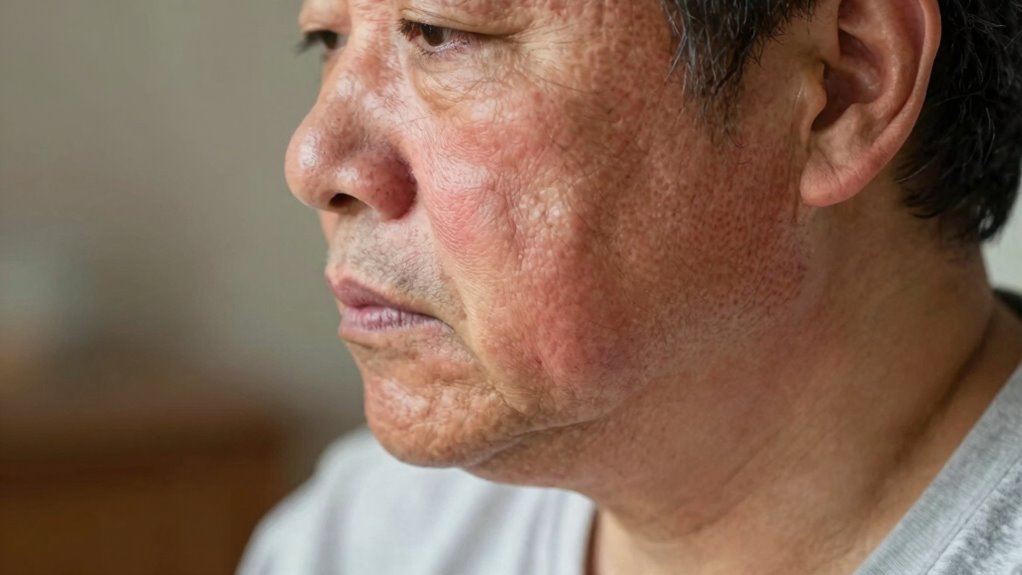
Poor posture can directly contribute to facial puffiness and swelling because it restricts proper circulation and lymphatic drainage in your face. When you slouch or hold your head improperly, blood flow slows, and lymphatic fluid builds up, leading to swelling. This stagnation causes your face to appear puffy, especially around the eyes and cheeks. To combat this, practicing posture correction is essential. Improving your posture helps align your neck and spine, promoting better circulation and encouraging lymphatic flow. As a result, facial swelling diminishes, and your face looks more refreshed. Paying attention to how you hold your head and shoulders can make a significant difference in reducing puffiness caused by poor posture. Correct posture isn’t just about comfort; it’s key to maintaining a healthier, less swollen face. Proper alignment supports overall facial health and can help prevent puffiness from recurring.
Understanding How Lymphatic Drainage Affects Your Face
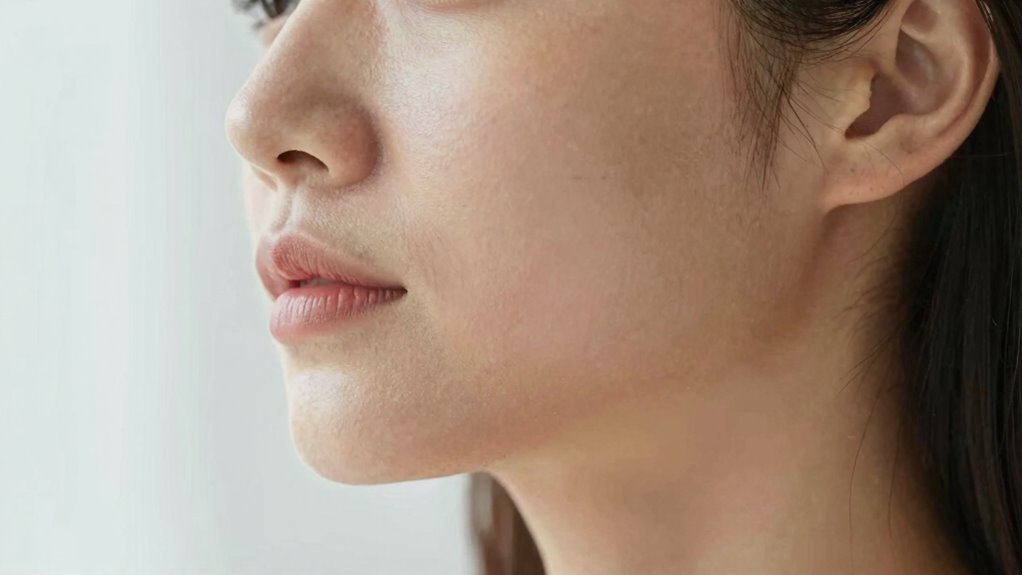
Lymphatic drainage plays a crucial role in maintaining your face’s health and appearance by removing waste and excess fluids. The lymphatic system relies on lymphatic pathways to transport lymph, a fluid containing waste products, away from your tissues. When these pathways function efficiently, they support a natural facial detox, reducing puffiness and promoting a more lifted look. Poor posture can impede lymph flow, causing fluids to stagnate and lead to swelling. Regularly stimulating your lymphatic system through gentle massage or specific movements can enhance drainage and prevent fluid buildup. Understanding how lymphatic drainage works helps you take proactive steps to keep your face looking fresh and vibrant. Maintaining clear lymphatic pathways is essential for a healthy, less puffy face.
Common Daily Habits That Worsen Posture and Cause Face Swelling
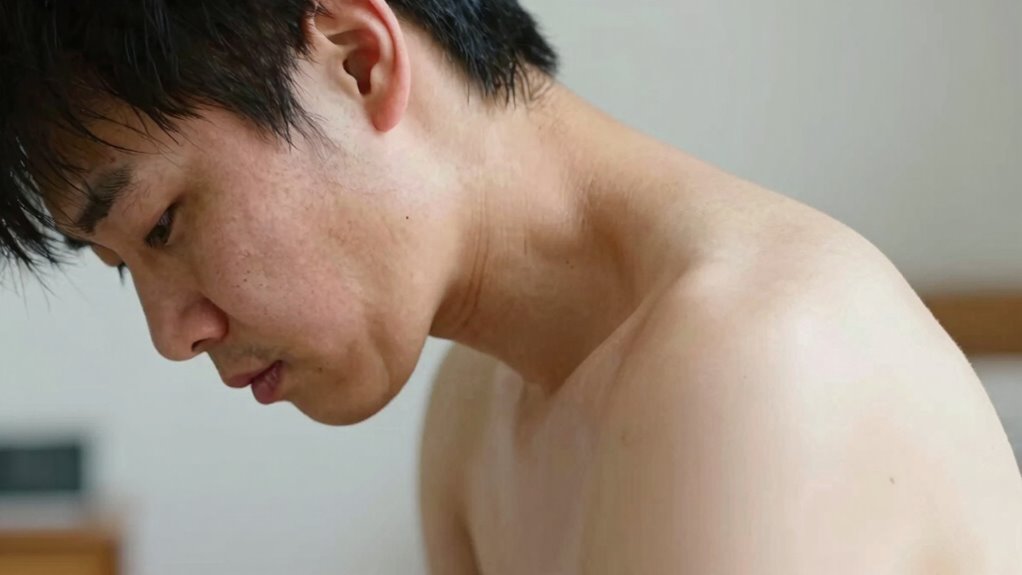
Everyday habits can have a significant impact on your posture, which in turn affects your facial appearance. Poor habits like slouching at your desk or constantly looking down at your tech gadgets can lead to forward head posture and facial puffiness. Spending long hours working without proper workplace ergonomics strains your neck and shoulders, causing fluid retention and swelling. To highlight this, consider the following:
| Habit | Effect | Solution |
|---|---|---|
| Bending over screens | Strains neck, worsens posture | Use ergonomic setups |
| Prolonged device use | Causes muscle tension and swelling | Take regular breaks |
| Poor chair support | Leads to slouching and facial puffiness | Invest in ergonomic furniture |
Additionally, maintaining proper posture throughout the day can help prevent these issues from escalating. It is also important to be aware that muscle tension from poor habits can contribute to facial swelling and discomfort, making awareness and corrective measures essential. Recognizing that postural alignment is crucial for overall health can motivate consistent corrective habits. Incorporating stretching exercises into your daily routine can further alleviate muscle tension and promote better posture, reducing the likelihood of facial puffiness.
Simple Posture Changes to Reduce Facial Puffiness
Making simple posture adjustments throughout your day can considerably reduce facial puffiness. Start by keeping your head aligned with your spine, avoiding forward slouching that can cause fluid buildup. Practice posture correction by sitting upright and pulling your shoulders back slightly to open your chest, which improves circulation and reduces swelling. Elevate your head while sleeping to prevent fluid from pooling in your face overnight. Incorporate facial toning exercises into your routine, as they help strengthen muscles and promote lymphatic drainage. Maintaining good posture enhances blood flow, reduces pressure on facial tissues, and supports natural contours. Small, consistent changes in how you hold yourself can make a noticeable difference in minimizing puffiness and promoting a more sculpted, healthy appearance. Additionally, being mindful of smartphone ergonomics can help prevent postural issues that contribute to facial swelling. Proper posture not only benefits your overall health but also optimizes blood circulation, which is key to reducing facial puffiness. Developing an awareness of posture habits throughout the day can further support these benefits and help maintain a refreshed, youthful look. Paying attention to your home environment and ensuring your workspace encourages good posture can also make a significant difference over time.
Diet and Lifestyle Tips to Manage Face Swelling
Your diet and lifestyle play a big role in reducing face swelling. Keeping hydrated and watching your salt intake can make a noticeable difference, while good sleep supports healthier skin. Try facial exercises or massage to help improve circulation and lessen puffiness. Incorporating smart appliances that assist in healthy meal prep and hydration tracking can further support your efforts. Additionally, maintaining good air quality through effective air purifiers can create an environment that promotes overall skin health. Using electric bikes for daily commutes can also contribute to a healthier lifestyle by encouraging physical activity and reducing stress. Being mindful of sleep habits can enhance these benefits and support overall facial health.
Hydration and Salt Intake
Proper hydration plays a crucial role in reducing facial puffiness, as staying well-watered helps flush out excess salt and toxins that cause swelling. When you drink enough water, you support electrolyte balance, which is essential for preventing water retention that leads to a bloated face. Too much salt in your diet can disturb this balance, prompting your body to hold onto water and increase swelling. To manage this, limit processed foods high in sodium and drink plenty of water throughout the day. Proper hydration not only reduces puffiness but also improves skin elasticity and overall health. Incorporating essential oils for facial care, such as lavender or eucalyptus, into your skincare routine can further help soothe inflammation and promote a clearer complexion. Keep track of your salt intake and stay consistently hydrated to help your body maintain equilibrium, reducing face swelling effectively.
Sleep Quality and Timing
Getting quality sleep and maintaining a consistent sleep schedule are essential for minimizing facial puffiness. Good sleep hygiene helps regulate fluid balance and reduces inflammation that causes swelling. To improve your sleep, establish calming bedtime routines like avoiding screens and caffeine before bed, which can disrupt your sleep cycle. Going to bed and waking up at the same time each day reinforces your body’s internal clock, leading to more restorative rest. Proper sleep reduces stress hormones and promotes lymphatic drainage, helping to prevent face puffiness. Another key factor is managing sleep environment, by keeping your bedroom cool, dark, and quiet, which enhances sleep quality and supports facial health. Maintaining a healthy diet and lifestyle is also crucial in managing facial swelling effectively. Staying mindful of hydration levels during the day can also influence fluid retention and facial puffiness. Ensuring your sleep posture is comfortable can prevent unnecessary pressure on the face and neck, aiding in fluid drainage. Proper sleep habits can also influence your body’s internal clock, promoting better overall health and reducing puffiness. Prioritize a comfortable sleeping environment, stay hydrated during the day, and aim for 7-9 hours of quality sleep nightly. Consistent sleep habits support overall health and keep your face looking less swollen and more refreshed.
Facial Exercises and Massage
Performing facial exercises and gentle massage can effectively reduce facial swelling by stimulating lymphatic flow and improving circulation. Facial exercises target muscles to promote toning and drainage, helping to lessen puffiness. Incorporate simple facial exercises like cheek lifts, jaw stretches, and forehead smoothing into your daily routine. Massage techniques, such as gentle tapping or circular motions, encourage lymphatic drainage and reduce fluid retention. Use your fingertips to apply light pressure along your jawline, cheeks, and under your eyes to boost circulation. Consistency is key—regularly practicing facial exercises and massages can enhance your face’s natural contour and diminish puffiness. Additionally, understanding sleep comfort factors can improve overall rest and reduce facial swelling caused by poor sleep quality. Ensuring proper posture during daily activities can also help maintain facial symmetry and reduce tension that contributes to puffiness. Proper hydration and hydration are essential in supporting these practices, as dehydration can exacerbate swelling and dullness. Combine these techniques with proper hydration for ideal results, making your face look less swollen and more refreshed.
When to See a Professional for Persistent Facial Swelling
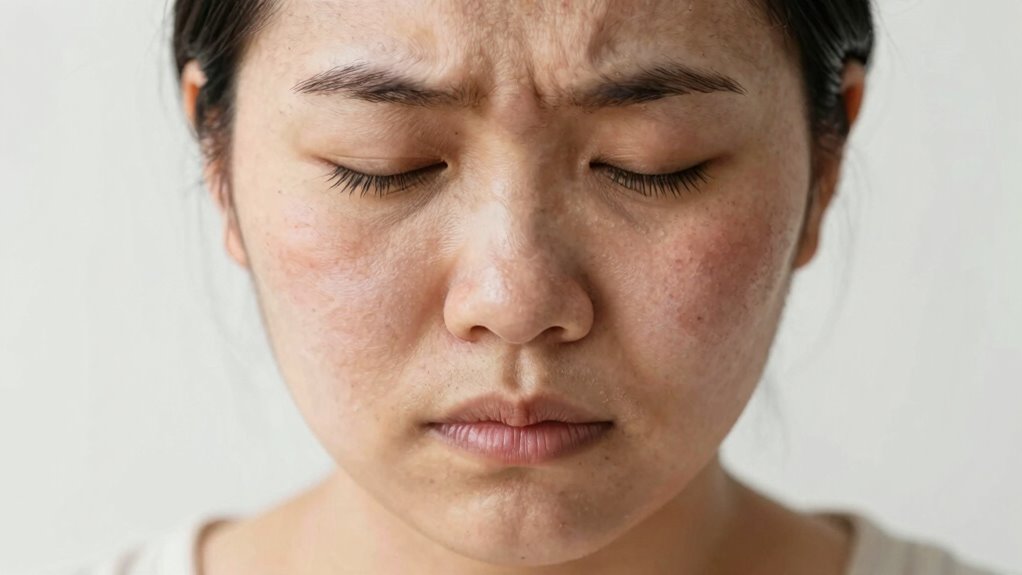
If your facial swelling persists despite home remedies, it’s time to contemplate seeing a professional. Watch for signs like sudden, severe puffiness or difficulty breathing, which could indicate serious issues. Ignoring these symptoms can lead to complications, so don’t hesitate to seek help when needed.
Signs of Underlying Issues
Persistent facial swelling that doesn’t go away or worsens over time can be a sign that something more serious is going on. If you notice consistent facial swelling, it’s important to evaluate your posture awareness, as poor posture can contribute to lymphatic drainage issues and fluid retention, worsening puffiness. However, if swelling persists despite adjusting your posture, it could indicate underlying health problems such as allergies, infections, or systemic conditions. Sudden or severe swelling, especially if accompanied by pain, difficulty breathing, or other symptoms, requires prompt medical attention. Don’t ignore persistent facial swelling—consult a healthcare professional to identify the root cause and get appropriate treatment. Recognizing these signs early helps prevent complications and ensures your health isn’t compromised.
When to Seek Help
Knowing when to see a healthcare professional is essential if facial swelling doesn’t improve or worsens despite making lifestyle adjustments. If you notice persistent puffiness, it’s time to contemplate a medical evaluation to rule out underlying causes. A healthcare provider can assess whether posture therapy might be beneficial, especially if poor posture contributes to fluid retention or facial swelling. Don’t ignore symptoms that persist over several days or worsen, as they may indicate an underlying health issue requiring treatment. Seeking professional help ensures you receive an accurate diagnosis and appropriate intervention. When in doubt, consult a healthcare professional to determine if further tests or specialist care are necessary. Addressing persistent puffiness early can prevent potential complications and improve your overall well-being.
Frequently Asked Questions
Can Specific Exercises Improve Both Posture and Reduce Facial Puffiness?
Yes, specific facial exercises and posture correction can improve both posture and reduce facial puffiness. When you do facial exercises, you strengthen the muscles around your face, helping to lift and tone your skin. Incorporating posture correction exercises helps align your spine and neck, which can reduce fluid retention and puffiness in your face. Consistent practice of these exercises promotes better overall muscle tone and facial appearance.
How Long Does It Typically Take to See Results From Posture Adjustments?
You’ll start noticing changes in your posture within a few weeks, but it depends on your commitment. As you focus on muscle alignment and relieving nerve tension through consistent exercises, your body adapts gradually. Typically, you’ll see improvements in alignment and reduced puffiness in about 4 to 6 weeks. Staying dedicated and mindful of proper posture cues accelerates your progress and enhances overall results.
Are There Particular Sleep Positions That Influence Facial Puffiness?
Certain sleep positions can influence facial puffiness. Sleeping on your back with your head slightly elevated helps reduce fluid buildup, minimizing puffiness in your face. Avoid sleeping on your stomach or with your face pressed into the pillow, as these positions can increase fluid retention and lead to more puffiness. Adjusting your sleep posture may take a few nights to notice a difference, but it can make a significant impact on your facial appearance.
Does Stress Impact the Relationship Between Posture and Facial Swelling?
Stress impact affects how your posture influences facial swelling, as emotional health directly impacts muscle tension and fluid retention. When you’re stressed, your muscles tighten, worsening poor posture and increasing puffiness. This cycle emphasizes the importance of managing stress through relaxation techniques, exercise, and good sleep habits. By improving emotional health, you can break this link, reducing facial swelling and promoting better posture, ultimately supporting your overall well-being.
What Are the Signs That Facial Puffiness Is Caused by Underlying Health Issues?
If your facial puffiness persists despite proper hydration, it could signal underlying health issues. Look for signs like swelling that worsens in the morning, allergy symptoms such as sneezing or itchy eyes, or sudden changes in your face’s appearance. You might also notice swelling that doesn’t respond to hydration or changes in posture. These clues suggest you should consult a healthcare professional to identify potential health concerns.
Conclusion
By improving your posture, you improve your lymphatic flow; by maintaining good habits, you reduce facial swelling; by staying mindful of your lifestyle, you enhance your overall appearance. When you sit upright, you promote drainage; when you hydrate and eat well, you support your body’s natural processes; when you act early, you prevent persistent puffiness. Take control of your posture, your habits, and your health—because a confident, refreshed face starts with you.