
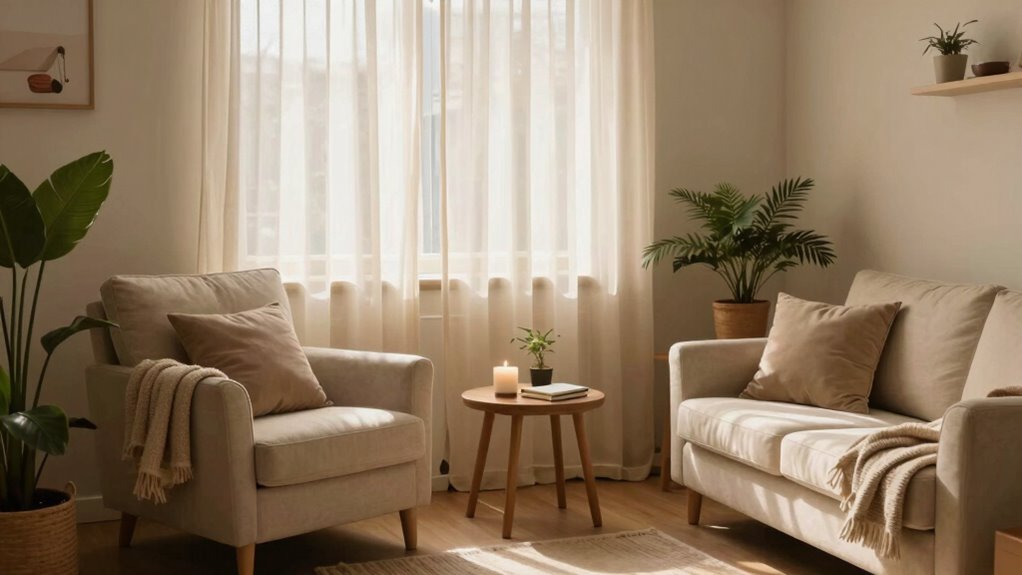

When your space feels safe and familiar, it helps lower stress and anxiety, making it easier to focus on healing. Feeling protected encourages you to open up, share fears, and seek support without fear of judgment. Small adjustments like calming lighting or personal objects strengthen your sense of security. A comfortable environment creates stability, reduces chaos, and boosts confidence. Keep exploring how these comforting spaces can support your recovery journey more deeply.
Key Takeaways
- A safe room reduces stress and anxiety, allowing for better emotional processing during recovery.
- Familiar, comforting environments encourage open communication and willingness to seek support.
- Stability in the space fosters trust, making it easier to focus on healing rather than feeling threatened.
- Natural elements and soothing design promote relaxation, enhancing overall emotional well-being.
- Feeling secure in the environment boosts confidence and motivation to engage actively in recovery.

Have you ever wondered how a safe room can aid in your recovery during a crisis? It’s more than just a secure space—it’s an essential environment that fosters healing. When you’re in a safe room, the feeling of environment comfort plays a critical role. You’re surrounded by familiar, reassuring elements that help reduce stress and anxiety, allowing your mind to settle. Comfort isn’t just about physical features; it’s about creating a space that feels predictable and protected, giving you the mental space to process what happened without feeling overwhelmed.
A safe room offers familiar comfort, reducing stress and supporting healing during difficult times.
In such a setting, peer support becomes a powerful tool. Being with others who understand what you’re going through offers emotional relief and a sense of community. When you’re in a safe room, sharing experiences with peers who’ve faced similar crises can normalize your feelings and validate your emotions. This connection encourages vulnerability, which is essential for genuine healing. Knowing you’re not alone in your struggles can boost your confidence and motivate you to move forward.
The environment comfort within the safe room also encourages open communication. When you feel physically and emotionally secure, you’re more likely to express fears, ask questions, and seek guidance. This openness accelerates your recovery process because it allows you to address concerns early and receive support tailored to your needs. Environment comfort can be enhanced through small adjustments, like calming lighting or familiar objects, which further reinforce a sense of safety. Incorporating familiar elements into the space can help deepen feelings of security and stability. Additionally, understanding the importance of physical environment design in healing spaces can guide meaningful improvements that promote comfort and healing. Creating a space that aligns with evidence-based design principles ensures that the environment actively supports mental health and recovery. Peer interactions in this environment foster resilience, as you draw strength from others’ stories and coping strategies. You begin to see that recovery isn’t about instant fixes but about gradual healing, supported by a community that cares.
Moreover, a safe room helps you establish routines that promote stability. Consistency in your environment—such as familiar furniture, calming colors, or personal touches—helps your brain associate the space with safety. This sense of regularity can decrease feelings of chaos and unpredictability, which often hinder recovery. When your surroundings feel right, your body and mind can focus on healing instead of just surviving the moment.
Additionally, creating an environment that emphasizes biodiversity can contribute to mental well-being by fostering a connection with natural elements, which has been shown to reduce stress and improve emotional health. Incorporating natural elements like plants or water features can further enhance this effect. Ultimately, the combination of environment comfort and peer support in a safe room creates a nurturing space that enhances your recovery. It’s where you can feel secure enough to face difficult emotions, supported by others who understand your journey. This safe haven isn’t just about physical protection; it’s about fostering a mental and emotional landscape conducive to healing. When you’re in a space that feels safe, your recovery becomes more effective, helping you rebuild resilience and hope for the future.
calming lighting for therapy rooms
As an affiliate, we earn on qualifying purchases.
As an affiliate, we earn on qualifying purchases.
Frequently Asked Questions
How Can I Create a Safer Environment at Home?
You can create a safer environment at home by practicing relaxation techniques to reduce stress and promote calmness. Set clear personal boundaries, communicating openly with family members about your needs and limits. Keep your space organized and welcoming, and encourage respectful interactions. When everyone feels comfortable expressing themselves and boundaries are honored, the environment becomes a safe haven, supporting your recovery and overall well-being.
What Signs Indicate My Room Feels Unsafe?
Your room might feel unsafe if you constantly sense trust issues, like every corner hides a threat. Environmental triggers such as loud noises, harsh lighting, or clutter can heighten your anxiety, making the space feel hostile. You may notice you avoid certain areas or feel tense even when alone. These signs show your environment isn’t supporting your recovery, signaling it’s time to create a safer, more calming space.
Does Feeling Unsafe Affect Recovery Speed?
Feeling unsafe can slow down your recovery because emotional security and physical comfort are essential. When you don’t feel secure, your stress levels rise, making it harder for your body to heal. A room that provides emotional security and physical comfort helps you relax, reduces anxiety, and promotes faster recovery. Prioritizing a safe environment encourages your body and mind to focus on healing rather than coping with discomfort or fear.
How Long Does It Take to Feel Safe in a New Space?
It typically takes a few days to a few weeks to feel safe in a new space, depending on your comfort zones and emotional triggers. You’ll gradually build trust by exploring the environment, establishing routines, and recognizing what makes you uneasy. Be patient and gentle with yourself, allowing time for your mind and body to adapt. Over time, the space will start to feel more familiar and secure, easing your recovery process.
Can Safety Improvements Reduce Recovery Setbacks?
Absolutely, safety improvements can reduce recovery setbacks. When you focus on trust building and emotional security, you create a sanctuary where healing flows more smoothly. Think of it as planting seeds of confidence; the more trust you nurture, the stronger your recovery becomes. By fostering a safe environment, you empower yourself to face challenges head-on, turning setbacks into stepping stones toward lasting resilience.
familiar objects for emotional comfort
As an affiliate, we earn on qualifying purchases.
As an affiliate, we earn on qualifying purchases.
Conclusion
When your room feels safe, recovery becomes easier, progress becomes clearer, and healing becomes real. You create a space where trust grows, where fears fade, and where hope takes root. You foster an environment that nurtures resilience, encourages honesty, and inspires change. In a safe room, you embrace patience, practice compassion, and build strength. Ultimately, it’s in this sanctuary of safety that true recovery begins, persists, and blossoms into lasting transformation.
As an affiliate, we earn on qualifying purchases.
soothing environment design for mental health
As an affiliate, we earn on qualifying purchases.
As an affiliate, we earn on qualifying purchases.