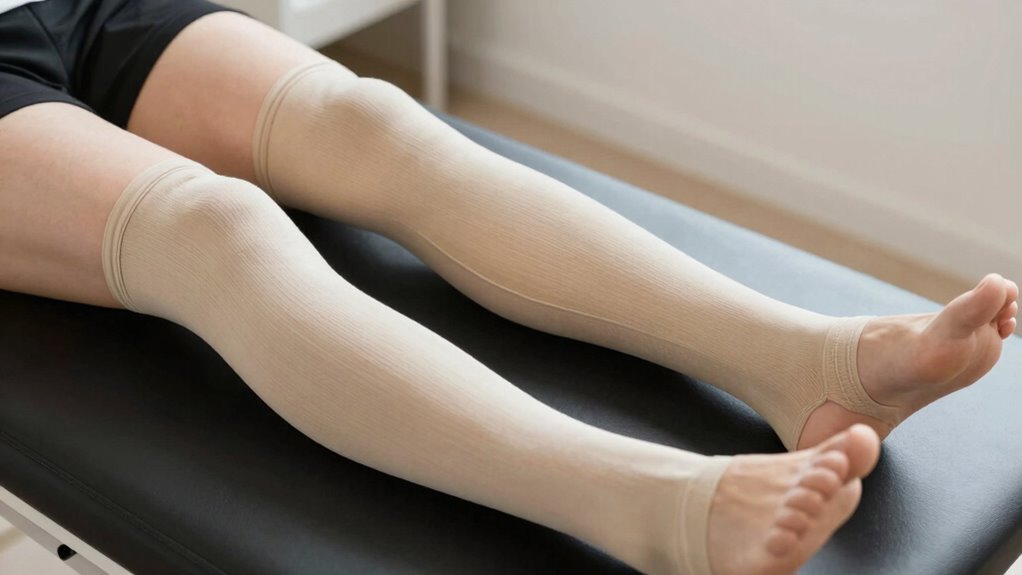

To improve your compression sessions, make sure your legs are properly supported and slightly elevated for better blood flow. Keep the sleeves or boots snug but not too tight, covering the entire targeted area evenly. Avoid crossing your legs or applying pressure to sensitive spots, which can hinder circulation. Maintaining proper posture and keeping your legs relaxed helps compress deeper and more effectively. Stay with us to discover additional tips for maximizing your therapy benefits.
Key Takeaways
- Ensure legs are properly supported and aligned to promote effective compression and prevent discomfort.
- Elevate legs slightly to enhance blood flow and muscle relaxation during sessions.
- Use snug but not tight compression devices that cover the entire targeted area evenly.
- Avoid crossing legs or applying pressure to specific areas to maintain proper circulation.
- Maintain a comfortable, supported posture to optimize therapeutic benefits and prevent strain.
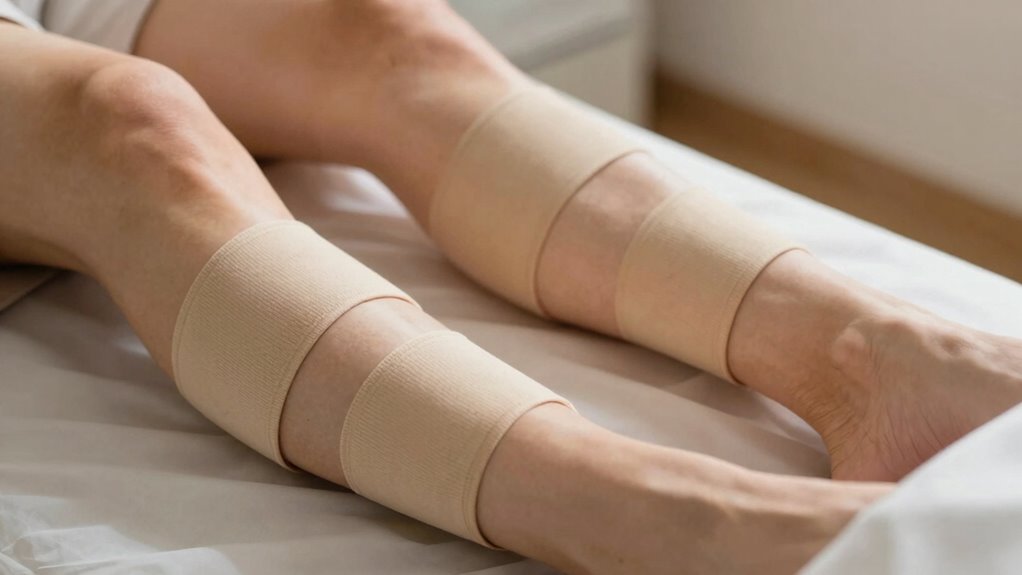
Proper leg positioning during compression sessions is essential to guarantee safety and maximize the treatment’s effectiveness. When you position your legs correctly, you enhance blood flow, which is vital for healing and overall circulation. Good positioning ensures that the compression devices work effectively, applying pressure uniformly across the targeted areas. If your legs are improperly aligned, you risk uneven pressure, which can diminish the session’s benefits or even cause discomfort. Making sure your legs are comfortably supported and aligned helps maintain consistent blood flow, encouraging oxygen and nutrients to reach your tissues more efficiently and reducing swelling or discomfort.
Additionally, proper leg positioning promotes muscle relaxation. When your legs are properly supported, your muscles can relax more easily, allowing the compression to penetrate deeper and more effectively. Tension or awkward positioning can cause muscles to tighten or become stiff, which hampers the therapeutic benefits. Relaxed muscles respond better to compression, facilitating lymphatic drainage and reducing muscle fatigue. You should aim for a position that feels natural and supportive, avoiding anything that causes strain or pinching. Elevating your legs slightly can further enhance muscle relaxation and improve blood flow, especially if you’re dealing with swelling or varicose veins. Maintaining correct body alignment during therapy also helps optimize circulation and prevents unnecessary strain. Incorporating proper posture during sessions can further enhance the effectiveness of the treatment. Proper positioning also reduces the risk of developing pressure sores or nerve compression.
It’s also important to think about the type of compression device you’re using. Whether it’s sleeves, boots, or wraps, each requires specific positioning for the best results. For leg sleeves, make sure they’re snug but not too tight, covering the entire area you want to treat without constricting the joints or restricting circulation. When using compression boots, keep your legs elevated and relaxed, ensuring they don’t hang or bend awkwardly. Proper placement of the device ensures even compression and prevents areas of excessive pressure that could cause discomfort or impede blood flow. To achieve consistent results, understanding the correct device placement can be as crucial as the positioning of your legs themselves. Additionally, being aware of the proper fit of compression gear helps prevent discomfort and ensures effective pressure distribution.
You should also pay attention to the overall posture during the session. Sitting or lying in a position that supports your back and keeps your legs elevated can promote better blood flow and muscle relaxation. Avoid crossing your legs or placing undue pressure on certain areas, as this can obstruct circulation and reduce the effectiveness of the compression therapy. Remember, the goal is to create a comfortable, supported position that allows your muscles to relax fully and blood to circulate freely. Ensuring proper compression device placement is key to achieving optimal results and comfort during your session.

BLITZU Calf Compression Sleeves for Men and Women. Footless Compression Socks Support for Varicose Vein, Nursing, Running. Leg Sleeve Brace for Shin Splints, Pain Relief & Reduces Swelling Black L-XL
Calf Compression Sleeve Sizing Information: For the best fit of your sizes, please refer to our sizing chart….
As an affiliate, we earn on qualifying purchases.
As an affiliate, we earn on qualifying purchases.
Frequently Asked Questions
How Long Should I Stay in a Specific Leg Position During Treatment?
You should stay in a specific leg position during treatment for about 15 to 20 minutes, allowing your muscles to relax and improve circulation. During this time, consider incorporating stretching routines to enhance flexibility and recovery. Also, follow nutritional tips like staying hydrated and eating anti-inflammatory foods to support your treatment. This combo helps optimize results and makes your compression sessions more effective and comfortable.
Are There Differences in Leg Positioning for Various Compression Therapy Goals?
Yes, leg positioning varies based on your compression therapy goals. For circulation improvement, elevate your legs to promote blood flow back to your heart, reducing swelling. If muscle relaxation is your aim, slightly bend your knees or position your legs comfortably to ease tension. Adjusting your leg position accordingly helps maximize the benefits of compression therapy, ensuring better circulation and more effective muscle relaxation during your sessions.
Can Improper Leg Positioning Cause Discomfort or Injury?
Did you know improper leg positioning can increase discomfort by up to 50%? If you don’t position your legs correctly during compression therapy, you risk hindering circulatory health and causing muscle strain. Poor positioning may lead to pain, numbness, or even injury. Ensuring proper leg placement helps maximize benefits, reduces risk, and keeps you comfortable throughout your session. Always pay attention to your leg alignment to protect your health.
How Do I Adjust Leg Positioning for Different Body Types?
To adjust leg positioning for different body types, focus on maintaining proper ankle alignment and muscle engagement. You should position your legs so that your ankles are aligned naturally, avoiding strain or discomfort. Engage your muscles gently to support stability, but don’t overextend. Keep adjusting until you find a comfortable, supported position that promotes ideal blood flow and reduces the risk of discomfort or injury during compression sessions.
Is Special Equipment Needed for Optimal Leg Positioning?
Is special equipment needed for essential leg positioning? Not necessarily, but proper tools can make a big difference. Making sure correct leg alignment is vital for effective compression therapy, and equipment like adjustable supports or padding can help you achieve this. Think of it as fitting the puzzle pieces perfectly—using the right equipment ensures comfort and maximizes results. So, while not always required, the right tools are highly recommended for best outcomes.
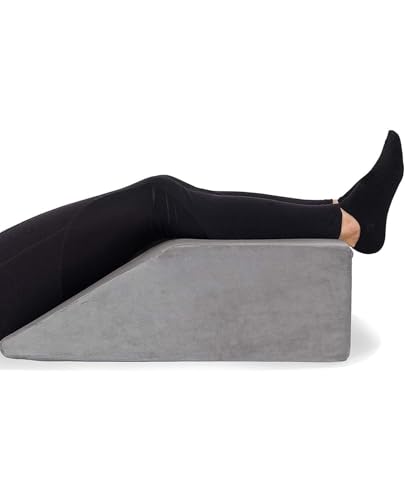
Leg Elevation Pillow – Memory Foam Leg Elevating Pillow | Leg Rest Wedge – Leg Pillow Elevation Blood Circulation | Relieves and Recovers Foot & Ankle Injuries | Foot Elevation Pillows for Swelling
LEG WEDGES FOR ELEVATION FOR SWELLING: When keeping both legs elevated, this innovative memory foam layer support pillow…
As an affiliate, we earn on qualifying purchases.
As an affiliate, we earn on qualifying purchases.
Conclusion
By mastering the meticulous method of leg positioning, you optimize comfort, increase circulation, and maximize compression’s benefits. Thoughtful tweaks and tactical adjustments turn routine sessions into remarkable results. When you focus on fine-tuning your foot, knee, and ankle alignment, you foster faster recovery and stronger strides. So, stay savvy, stay strategic—your success depends on the subtle, smart stance you adopt. Remember, perfect positioning promotes powerful progress, making every compression session a step closer to peak performance.

FIT KING Air Compression Recovery System,Dynamic Pressure for Circulation Improvement and Fast Recovery,Sequential Massage Boots for Athletes (Large)
Fast Recovery & Muscle Relax – This full leg recovery boots uses professional-grade air compression to relax your…
As an affiliate, we earn on qualifying purchases.
As an affiliate, we earn on qualifying purchases.

Full Leg Ice Pack Wrap with 360° Coverage for Injuries Reusable, Hamstring Compression Sleeve for Runners, Reusable Gel Ice Packs for Calf and Thigh Legs Shins Hamstrings (Small)
One-Piece 360° Full Leg Coverage: Unlike typical knee or calf wraps, this full leg ice wrap covers your…
As an affiliate, we earn on qualifying purchases.
As an affiliate, we earn on qualifying purchases.