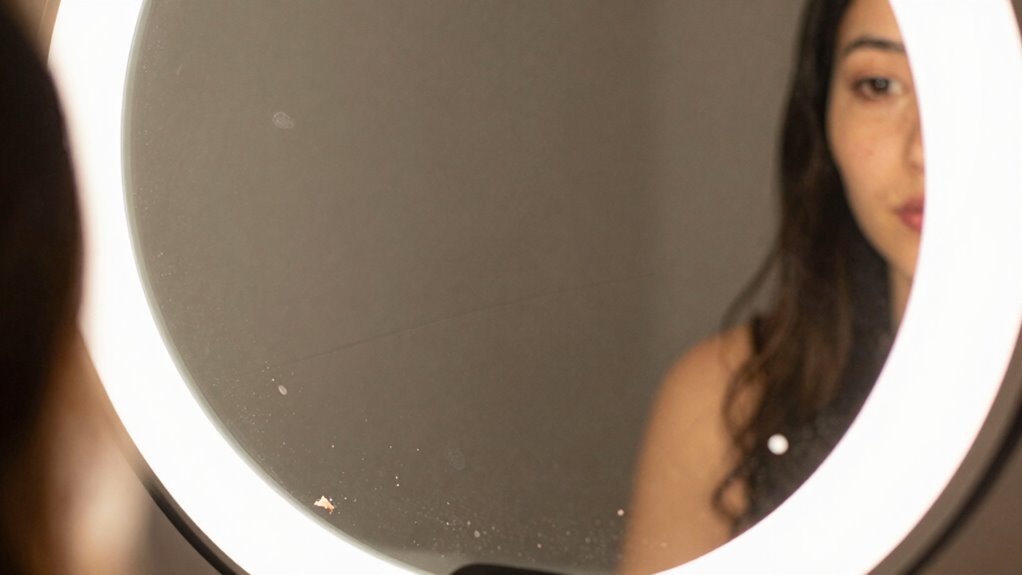

The makeup mirror trap tricks you into seeing flaws that aren’t really there, making you over-focus on tiny imperfections. Its magnification and harsh lighting emphasize every detail, which can lead to obsessing and skin-picking. These illusions distort your perception, increasing dissatisfaction and anxiety about your skin. To avoid this, limit mirror time and shift your attention to overall well-being. If you want to learn more about how these visual tricks impact your self-image, keep exploring.

Turn your quiet moments into listening time
- Thousands of audiobooks, podcasts and originals
- Listen on your phone, tablet or Echo — also offline
- Cancel anytime
Key Takeaways
- Makeup mirrors with magnification and lighting can exaggerate skin imperfections, encouraging obsessive skin-picking behaviors.
- Visual distortions in such mirrors amplify perceived flaws, leading to increased dissatisfaction and anxiety.
- Over-focusing on detailed reflections fosters a cycle of skin obsession and compulsive picking.
- Recognizing illusions and biases helps reduce the impact of makeup mirrors on skin-picking tendencies.
- Limiting mirror time and shifting focus to overall well-being can prevent skin-picking triggered by mirror illusions.
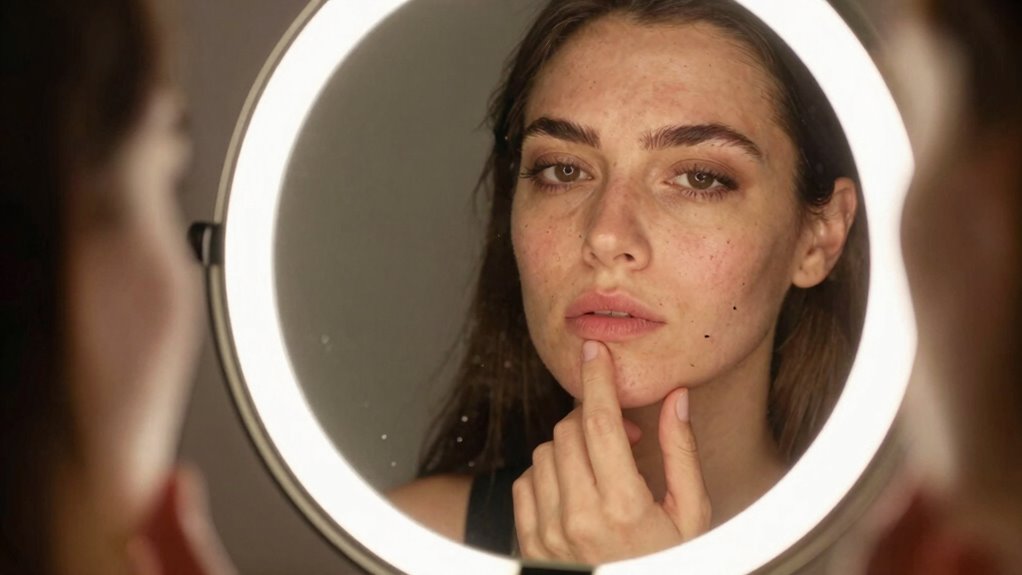
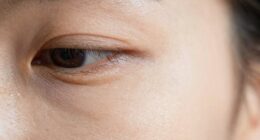
If you find yourself constantly picking at your skin while applying makeup, a makeup mirror skin-picking trap can help break that habit. These mirrors are designed to create what’s known as cosmetic illusions—visual tricks that make your skin appear smoother or more flawless than it truly is. While they might seem like a helpful tool at first, they can also contribute to mirror anxiety, which occurs when you become overly focused on imperfections you see reflected back at you. The more you stare, the more likely you are to notice tiny flaws or irregularities that weren’t apparent before. This heightened focus can turn into an obsessive cycle of skin-picking, especially when combined with the desire for perfection.
The trap lies in how these mirrors are crafted. They often have magnification or lighting that emphasizes every detail, making flaws look more prominent. Instead of helping you feel confident, they can intensify feelings of dissatisfaction, leading to cosmetic illusions that distort your perception of your skin’s true appearance. When you’re fixated on these illusions, it’s easy to get caught in a loop of self-criticism, which fuels the urge to pick at your skin. This habit isn’t purely about vanity; it’s often rooted in deeper issues like anxiety or skin concerns that become magnified by the mirror’s design. The problem worsens because your mind fixates on imperfections, and the mirror becomes a tool that feeds your mirror anxiety rather than easing it. Recognizing how cybersecurity and encryption work can help you recognize how visual distortions are used to manipulate perceptions, similar to how illusions in mirrors can distort your view. Recognizing the psychological impact of these illusions can empower you to take control of your mental well-being.
Additionally, understanding how visual distortions are intentionally used in some contexts can help you develop a more critical perspective on what you see, reducing the likelihood of falling into the skin-picking trap. Developing awareness about perceptual biases can help you challenge the distorted images you encounter and foster a healthier self-image. Recognizing how these illusions influence your perception can be a crucial step toward healthier habits.
If you’re trying to break free from skin-picking, it’s essential to be aware of how these mirrors impact your mental state. Recognizing that cosmetic illusions can distort reality helps you challenge the negative thoughts that arise during mirror anxiety episodes. Instead of obsessing over every tiny flaw, try shifting your focus to your overall well-being. Use the mirror for makeup application without scrutinizing every detail, and consider limiting your time in front of it to reduce the likelihood of falling into the trap. Additionally, developing mindfulness techniques can help you stay grounded and prevent obsessive mirror checking. Remember, the goal is to foster a healthier relationship with your reflection, not to get caught up in illusions that make you doubt your natural beauty. By understanding how these mirrors work and being mindful of their influence, you can take steps to prevent over-picking and cultivate a more positive self-image.
magnifying makeup mirror with adjustable lighting
As an affiliate, we earn on qualifying purchases.
As an affiliate, we earn on qualifying purchases.
Frequently Asked Questions
How Can I Break the Cycle of Skin-Picking Caused by Mirror Habits?
To break the cycle of skin-picking caused by mirror habits, practice mirror mindfulness by setting intentional limits on mirror time and focusing on positive self-talk. Recognize emotional triggers that lead to over-picking, and develop healthier coping strategies like deep breathing or journaling. You can also replace mirror checking with other self-care routines, gradually reducing the urge to over-focus on your skin and breaking free from this harmful cycle.
Are There Specific Types of Mirrors That Increase the Urge to Pick?
You might find that mirrors with strong lighting or magnification increase your urge to pick, as they intensify your mirror reflection and create optical illusions that highlight imperfections. Studies show magnified mirrors can make skin flaws appear 10 times larger, fueling compulsive behaviors. These mirrors distort reality, making it harder to resist over-picking. Consider avoiding such mirrors or using regular ones to reduce the temptation and break the cycle.
What Are Quick Tips to Reduce Skin-Picking in Front of Mirrors?
To reduce skin-picking in front of mirrors, try minimizing mirror distractions by keeping your space simple and clutter-free. Focus on your skincare routines without overexposing yourself to detailed reflections, which can trigger the urge to pick. Use a timer for skincare, and limit mirror time. Cover or dim your mirror if it becomes too tempting, and practice mindfulness to stay present and resist the impulse to pick.
Can Using a Makeup Mirror Worsen Underlying Skin Conditions?
Using a makeup mirror can sometimes worsen your skin conditions if you’re not mindful. Reflection distortion might make imperfections appear worse, prompting unnecessary picking. Poor mirror hygiene, like smudges or bacteria buildup, can also irritate your skin, leading to breakouts or inflammation. To prevent this, keep your mirror clean and take breaks from constant reflection. Remember, the mirror’s illusion can deceive, but your skin’s health depends on gentle, consistent care.
How Long Does It Typically Take to Overcome Mirror-Related Skin-Picking?
Overcoming mirror-related skin-picking varies, but it often takes several weeks to months with consistent effort. Mirror psychology and skin obsession can reinforce the habit, so addressing these triggers is essential. You should focus on replacing skin-picking with healthier routines, like skincare or mindfulness practices. Patience is crucial; progress depends on your commitment, and seeking support from a therapist can greatly accelerate your recovery journey.
lighted vanity mirror for makeup application
As an affiliate, we earn on qualifying purchases.
As an affiliate, we earn on qualifying purchases.
Conclusion
So, next time you find yourself mesmerized by that perfect reflection, remember: your mirror might just be your sneaky accomplice. It promises flawless beauty but secretly encourages endless picking, trapping you in a cycle of obsession. Ironically, the very tool meant to boost your confidence could be the reason behind your skin’s decline. Sometimes, the mirror’s most convincing illusion is that it’s helping—when really, it’s just feeding your skin-picking trap.
As an affiliate, we earn on qualifying purchases.
As an affiliate, we earn on qualifying purchases.
Halloween Picks
halloween
As an affiliate, we earn on qualifying purchases.