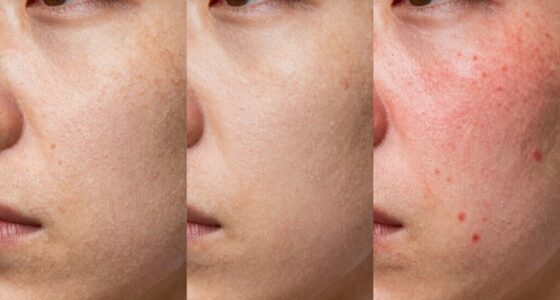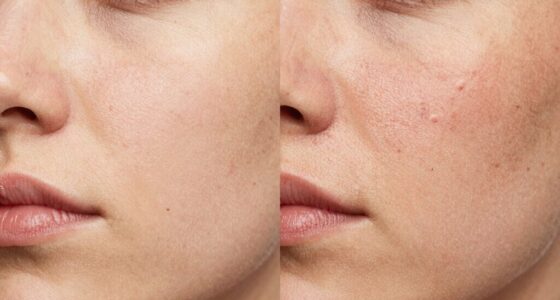

Temporary warmth sensations usually feel like fleeting, gentle heat that quickly fades and aren’t bothersome, often caused by emotional states or minor temperature changes. In contrast, a real irritation response involves persistent discomfort, redness, or visible skin issues that last longer and may need attention. Recognizing the difference can help you understand if your skin is reacting normally or if it’s something more serious. If you want to learn more about how to tell them apart, keep exploring the details below.

Turn your quiet moments into listening time
- Thousands of audiobooks, podcasts and originals
- Listen on your phone, tablet or Echo — also offline
- Cancel anytime
Key Takeaways
- Temporary warmth is usually brief, often triggered by emotions or temperature changes, and fades quickly without skin damage.
- Real irritation involves persistent redness, itching, or inflammation that may indicate a skin issue requiring attention.
- Warmth sensations are often linked to body responses and triggers, whereas irritation involves actual skin tissue reactions.
- External factors like environment can cause temporary warmth, but irritation may persist regardless of external conditions.
- Recognizing whether sensations are fleeting or persistent helps determine if it’s a normal response or a sign of skin irritation.

Sometimes, a sensation of warmth on your skin might seem like an irritation, but it’s often just a temporary response that fades quickly. You might notice this warmth after a shower, during a moment of nervousness, or when you’re feeling particularly emotional. It’s easy to mistake these fleeting feelings for a skin issue, but understanding the difference can help you avoid unnecessary concern. Often, this warmth is linked to your skin sensitivity, which varies from person to person. When your skin is more reactive, even minor stimuli—like a sudden change in temperature or emotional shifts—can trigger a warm feeling. These sensations are usually harmless and short-lived, serving as your body’s way of responding to specific triggers. Additionally, awareness of sleep environment factors can influence skin sensitivity and warmth sensations during rest. Recognizing these responses as part of your body’s natural reactions can help you better interpret what’s happening and reduce anxiety about benign sensations. Being mindful of your body’s responses can also help you identify patterns and better manage skin comfort in daily life. Understanding biodiversity and the natural variations in environmental factors can further help you appreciate how external conditions influence skin reactions. Incorporating knowledge about environmental influences can also empower you to create a more comfortable living space that minimizes unnecessary skin discomfort.
As an affiliate, we earn on qualifying purchases.
Frequently Asked Questions
Can Emotional Triggers Cause Temporary Warmth Without Irritation?
Yes, emotional triggers can cause temporary warmth without irritation. When you experience positive emotional responses like love or happiness, your body’s physiological reactions increase blood flow, leading to feelings of warmth. These responses are often fleeting and don’t involve irritation. You might notice a sudden warmth during a joyful moment, but it lacks the discomfort or redness associated with irritation. This kind of warmth is a natural part of your emotional and physiological reactions.
How Long Does Temporary Warmth Typically Last?
On average, temporary warmth from emotional responses lasts about 10 to 15 minutes. During this time, your thermal sensation shifts as your body reacts to the emotional trigger. Fascinatingly, studies show that nearly 60% of people experience this fleeting warmth without irritation. You might feel a quick heatwave, but it usually fades fast, giving way to your normal thermal sensation once the emotional response subsides.
Are There Physical Signs to Distinguish Irritation From Warmth?
You can distinguish irritation from warmth by noticing physical signs like redness, swelling, or a rash, which indicate skin sensitivity and ongoing irritation. Warmth usually feels more like a gentle heat without visible changes. Emotional responses can also signal irritation, especially if you feel tense or anxious. Pay attention to these signs; warmth often subsides quickly, while irritation persists or worsens, signaling a more serious skin sensitivity issue.
Can Medication Influence the Difference Between Warmth and Irritation?
Yes, medication can influence whether you feel warmth or irritation. Side effects from drugs or reactions may cause sensations like warmth, redness, or itching, which might mimic irritation. Some medications alter blood flow or nerve sensitivity, making it harder to distinguish between simple warmth and genuine irritation. If you notice unusual reactions, consult your healthcare provider to determine if medication side effects are at play and adjust your treatment accordingly.
Is It Possible to Mistake Other Sensations for Warmth or Irritation?
Yes, you can mistake other sensations for warmth or irritation due to sensory confusion and perception overlap. Your nerves might send similar signals for different stimuli, causing you to misinterpret what you’re feeling. Factors like fatigue, medication, or stress can heighten this confusion, making it harder to distinguish between actual warmth, irritation, or other sensations. Paying close attention and noting context can help clarify these confusing perceptions.
As an affiliate, we earn on qualifying purchases.
Conclusion
Understanding the difference between temporary warmth and a real irritation response is like telling apart a flickering candle from a raging fire. You might feel a quick, comforting heat, but true irritation burns deep and lingers. Recognizing these signs helps you respond wisely, avoiding unnecessary reactions or misunderstandings. Just as a flame reveals its true size in the dark, your awareness illuminates what’s genuine versus fleeting, guiding you to handle each situation with clarity and confidence.
As an affiliate, we earn on qualifying purchases.
As an affiliate, we earn on qualifying purchases.
Halloween Picks
halloween
As an affiliate, we earn on qualifying purchases.