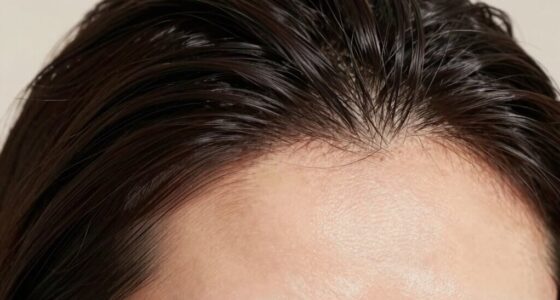
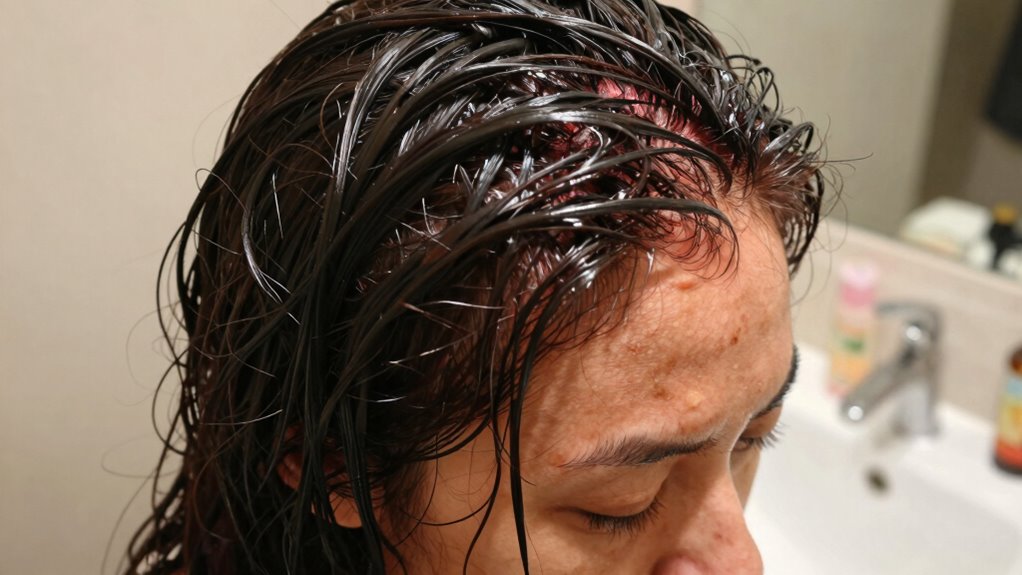

Leaving deep conditioner on too long can backfire by causing product buildup and dullness, which makes your hair look greasy and weighed down. It can also clog your scalp’s follicles, leading to irritation or flakiness. Over-conditioning disrupts your scalp’s natural oils, risking dryness or excess oil. If you extend application time beyond recommendations, you may inadvertently damage your hair and scalp. Keep exploring to discover how to prevent these common deep conditioning mistakes and keep your hair healthy.
Key Takeaways
- Overextending conditioning can cause product buildup, dulling hair and reducing natural shine.
- Leaving conditioner on too long may block scalp pores, leading to irritation or clogged follicles.
- Prolonged conditioning can disturb the scalp’s natural oil balance, causing oiliness or dryness.
- Excessive application time increases the risk of over-conditioning, resulting in greasy roots or dry ends.
- Extended exposure can weaken hair strands, making them more prone to damage and breakage.

Deep conditioning is essential for healthy, hydrated hair, but many people make mistakes that can diminish its benefits. One common mistake is neglecting proper product selection. Not all conditioners are created equal, and choosing the wrong one can do more harm than good. For example, if you have fine or oily hair, heavy, greasy conditioners can weigh your hair down and clog your scalp. Conversely, if your hair is dry or damaged, a lightweight conditioner might not provide enough moisture. Take the time to read labels carefully and look for products tailored to your hair type and concerns. Using the right product guarantees your hair receives the proper nutrients without unnecessary buildup, which can compromise scalp health.
Choose the right conditioner for your hair type to avoid buildup and support scalp health.
Speaking of scalp health, it’s essential to remember that deep conditioning isn’t just about the hair strands; your scalp plays a key role in overall hair health. When you leave conditioner on for too long, especially if it’s rich or greasy, you risk suffocating your scalp. This can lead to clogged follicles, buildup, and even irritation, which hampers hair growth. If you’re prone to scalp issues, it’s better to follow recommended timing guidelines and choose products formulated to support scalp health. Over-conditioning can disturb the natural balance of your scalp, leading to excess oil production or dryness, both of which threaten the health of your hair. Proper product formulation can help you select conditioners that align with your scalp’s needs and avoid these issues. Additionally, understanding how scalp health interacts with conditioning routines can help prevent common problems. Using the correct techniques based on your scalp’s condition ensures you’re not unintentionally causing damage or imbalance.
Timing is another critical factor. It’s tempting to leave conditioner on longer, thinking it will boost results, but more isn’t always better. Most conditioners are designed to work within a specific timeframe—usually 5 to 15 minutes. Going beyond that can cause the conditioner to penetrate too deeply or deposit excess product, leading to product buildup and dullness. Excessive conditioning can also interfere with your scalp’s natural oils, resulting in greasy roots or dry ends. Instead, set a timer and stick to the recommended duration. This approach maximizes benefits without risking the negative side effects of overdoing it. Additionally, understanding product formulation can help you choose conditioners that work best within these timeframes. Recognizing the desired effects of different conditioners can guide you in selecting the right one for your needs.
Lastly, pay attention to how your hair responds over time. If you notice your scalp becoming oily, itchy, or flaky after deep conditioning sessions, it might be a sign that you’re leaving the product on too long or using the wrong type. Adjust your routine accordingly, perhaps opting for lighter formulas or reducing the duration. By selecting the right products, respecting the timing, and prioritizing scalp health, you’ll get the most out of your deep conditioning routine without the pitfalls that come with overdoing it.
deep conditioning hair mask for oily scalp
As an affiliate, we earn on qualifying purchases.
As an affiliate, we earn on qualifying purchases.
Frequently Asked Questions
Can Over-Conditioning Cause Hair Damage?
Yes, over-conditioning can cause hair damage, especially if your hair has high porosity. When you leave conditioner on too long, it can weigh hair down or cause buildup, making strands weak over time. The conditioner formulation matters too; heavy or overly moisturizing formulas can clog hair cuticles. Pay attention to your hair’s porosity and follow recommended timing to prevent damage and keep your hair healthy.
Does Hair Type Affect Ideal Deep Conditioning Time?
Your hair type definitely influences the ideal deep conditioning time. If you have high porosity hair, it absorbs moisture quickly, so shorter sessions work best, preventing over-conditioning. Low porosity hair resists moisture, needing longer, more frequent treatments to open cuticles. Ignoring these differences can lead to damage or ineffective conditioning. Knowing your hair porosity helps tailor your conditioning routine, ensuring you nurture your hair rather than weaken it.
Should I Rinse Out Deep Conditioner if Left on Too Long?
Yes, you should rinse out deep conditioner if left on too long. Leaving it on excessively can cause scalp irritation and might lead to color fading, especially if your hair is color-treated. Over-conditioning can weigh down your hair and cause buildup. To avoid these issues, follow the recommended time and rinse thoroughly. If you experience any irritation, rinse immediately and consider using a gentler product next time.
How Do I Know if My Deep Conditioning Is Effective?
Think of your hair as a garden; if your deep conditioning is effective, you’ll see lush, healthy growth. You’ll notice increased shine, softness, and less breakage. Check if the product ingredients match your hair porosity—porous hair absorbs moisture better, so lighter formulas work best. If your hair feels moisturized and looks vibrant after rinsing, your deep conditioning is doing its job. Adjust timing and products based on these signs for best results.
Can Deep Conditioning Cause Buildup on Scalp?
Yes, deep conditioning can cause buildup on your scalp if you don’t rinse thoroughly or use too much product. This buildup can affect scalp health, leading to itchiness or clogged follicles. To avoid this, make sure to rinse well and use appropriate amounts of conditioner. Regular clarifying treatments can also help remove product residue, keeping your scalp clean and healthy while ensuring your deep conditioning benefits are maximized.
lightweight conditioner for dry damaged hair
As an affiliate, we earn on qualifying purchases.
As an affiliate, we earn on qualifying purchases.
Conclusion
If you leave your deep conditioner on for too long, you might be doing more harm than good. Over-conditioning can lead to weighed-down, limp hair that’s hard to manage. Did you know that 65% of people experience decreased hair health when they extend treatment time beyond recommended limits? To get the best results, stick to the suggested timing. Your hair will thank you for respecting the instructions and avoiding unnecessary damage.
As an affiliate, we earn on qualifying purchases.
hair treatment for buildup removal
As an affiliate, we earn on qualifying purchases.
As an affiliate, we earn on qualifying purchases.