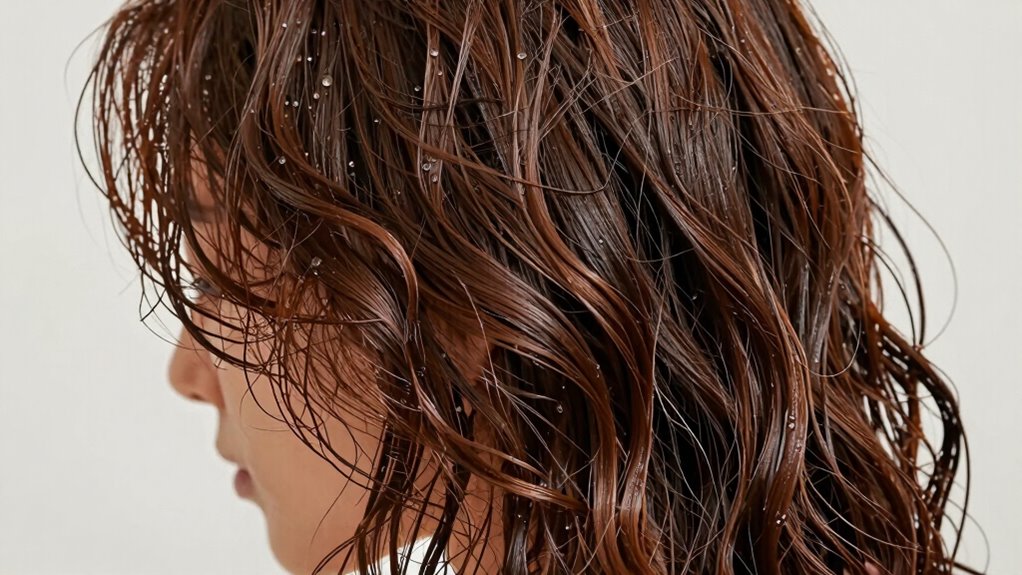

Your hair quickly changes texture in humidity because moisture interacts with your hair’s structure immediately. When air feels damp, water molecules latch onto your hair, causing cuticles to lift and swell, especially if your hair is porous. This leads to frizz, puffiness, and a change in shape within minutes. Scalp oil production can also increase, making hair appear greasier. Want to understand how different hair types respond? Keep exploring to find out more.

Turn your quiet moments into listening time
- Thousands of audiobooks, podcasts and originals
- Listen on your phone, tablet or Echo — also offline
- Cancel anytime
Key Takeaways
- Humidity introduces water molecules that lift hair cuticles, causing rapid changes in texture like frizz and puffiness.
- Hair porosity determines how quickly moisture is absorbed, with high-porosity hair reacting faster to humidity.
- Increased scalp oil production in humid conditions can weigh hair down or make it appear greasy, altering its feel.
- Environmental moisture levels cause immediate physical responses in hair, making texture shifts almost instant.
- Chemical treatments or heat styling can increase sensitivity, causing quicker and more noticeable texture changes in humidity.
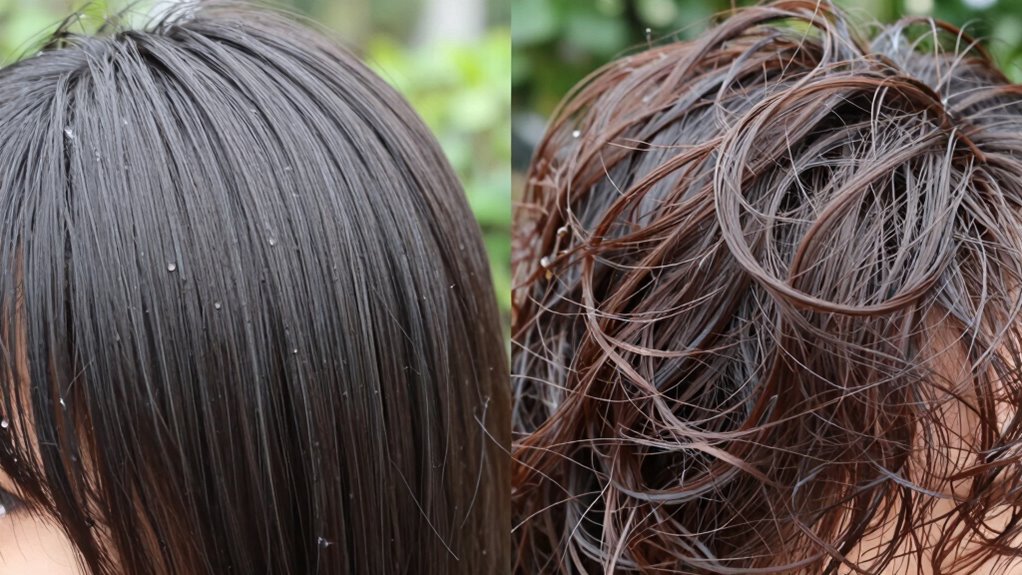
Humid weather can dramatically alter your hair’s texture, making it feel frizzier, puffier, or more tangled than usual. The moment you step outside, your hair reacts to the moisture in the air, quickly shifting from smooth to unruly. This change isn’t just about a temporary look—it’s a reflection of how your hair responds to environmental factors, especially humidity. Your scalp moisture levels fluctuate with the weather, which directly influences your hair’s behavior. When the air is humid, your scalp tends to produce more oil, and the excess moisture can penetrate hair strands, especially if your hair has high porosity. Hair porosity refers to how easily your hair absorbs and retains moisture. High-porosity hair absorbs moisture quickly but also loses it just as fast, making it more susceptible to drastic changes when humidity rises. Conversely, low-porosity hair resists moisture absorption, so it might not frizz as much but can still become dull or weighed down in humid conditions.
The core reason behind these rapid changes lies in how your hair interacts with water molecules in the air. When humidity increases, water molecules latch onto your hair’s surface, causing the cuticles—those tiny scales on each strand—to lift or swell. If your hair has high porosity, these cuticles are already somewhat open, so they readily absorb moisture. This leads to swelling, puffiness, and frizz, as the strands become less controlled. If your hair has low porosity, the moisture mostly sits on the surface, which can still create some frizz but typically less dramatically. The key is understanding your hair’s porosity because it determines how sensitive your hair is to humidity shifts. Additionally, hair porosity can be influenced by chemical treatments or heat styling, which alter the hair’s natural structure and its response to moisture.
Furthermore, scalp moisture plays a role. When your scalp produces excess oil in humid weather, it can make your hair feel greasy or weighed down, further enhancing the frizzy or puffy appearance. Proper scalp care helps manage this oil production, reducing the overall impact of humidity on your hair texture. You might notice that your hair reacts faster to humidity changes if your scalp is already overly oily or dry. Knowing your hair porosity and managing scalp moisture levels can help you better prepare for weather fluctuations. So, next time you step outside and notice your hair suddenly changes, remember it’s your hair’s porosity and scalp moisture working together, responding swiftly to the environment’s humidity. Recognizing the importance of biodiversity in the environment can also remind us how interconnected our ecosystems are, much like the delicate balance within hair health.
anti-frizz hair serum for humidity
As an affiliate, we earn on qualifying purchases.
As an affiliate, we earn on qualifying purchases.
Frequently Asked Questions
Can Hair Treatments Prevent Humidity-Related Texture Changes?
Hair treatments can help reduce humidity-related texture changes, but they can’t prevent them entirely. You might have heard humidity myths suggesting perfect protection, yet treatment limitations mean some frizz and wave shifts are inevitable in humid weather. Use anti-humidity products with polymers or silicones for a barrier. Regular deep conditioning keeps hair healthy and resilient, but don’t expect treatments to fully block humidity’s effects—they only help manage them better.
Does Hair Type Influence How Quickly Humidity Affects Texture?
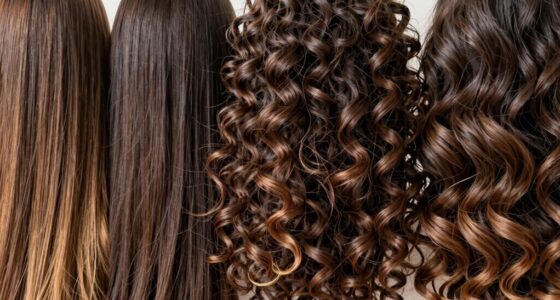
Yes, your hair type influences how quickly humidity affects your texture. If you have high porosity levels, your hair absorbs moisture faster, leading to rapid changes in texture. Conversely, low porosity hair resists moisture, so it stays stable longer. Hair elasticity also plays a role; more elastic hair can expand and contract with humidity shifts, making texture changes more noticeable. Understanding these factors helps you manage your hair better in humid conditions.
Are There Specific Products That Protect Hair From Humidity?
Yes, there are specific products that protect your hair from humidity, especially in humid weather. Look for anti-humidity sprays, serums, or creams designed to create a barrier against moisture. When selecting products, consider your hair type and choose ones with ingredients like silicone or polymers that help lock in moisture and prevent frizz. Proper product selection can help maintain your hairstyle and keep your hair smoother despite the humidity.
How Does Humidity Impact Scalp Health Over Time?
Humidity can negatively impact your scalp health over time by disrupting scalp moisture balance. Excess moisture causes your scalp to produce more oil, leading to clogged hair follicles and potential irritation. This imbalance can result in dandruff, itchiness, or other scalp conditions. To protect your scalp, maintain a proper hair care routine, use lightweight moisturizers, and avoid over-washing, which can strip natural oils and worsen the effects of humidity.
Can Diet Influence Hair’s Response to Humidity?
Think of your diet as the weather forecast for your hair’s response to humidity. Nutritional choices impact your hair’s strength and moisture balance, making it more resilient or vulnerable. A diet rich in vitamins, minerals, and hydration helps your hair adapt better to humidity shifts, reducing frizz and damage. So, yes, your diet impact is essential—fuel your body well, and your hair can handle humidity changes more gracefully.
porosity hair treatment products
As an affiliate, we earn on qualifying purchases.
As an affiliate, we earn on qualifying purchases.
Conclusion
So, next time you step outside and notice your hair acting up, remember—humidity isn’t just a minor annoyance. It can change your hair’s texture faster than you think, catching you off guard. Are you prepared to tame that frizz or embrace the change? Understanding how humidity affects your hair empowers you to adapt your routine. Don’t let unpredictable weather dictate your style—be ready to handle whatever humidity throws your way.
As an affiliate, we earn on qualifying purchases.
As an affiliate, we earn on qualifying purchases.
Fall Picks
fall essentials
As an affiliate, we earn on qualifying purchases.