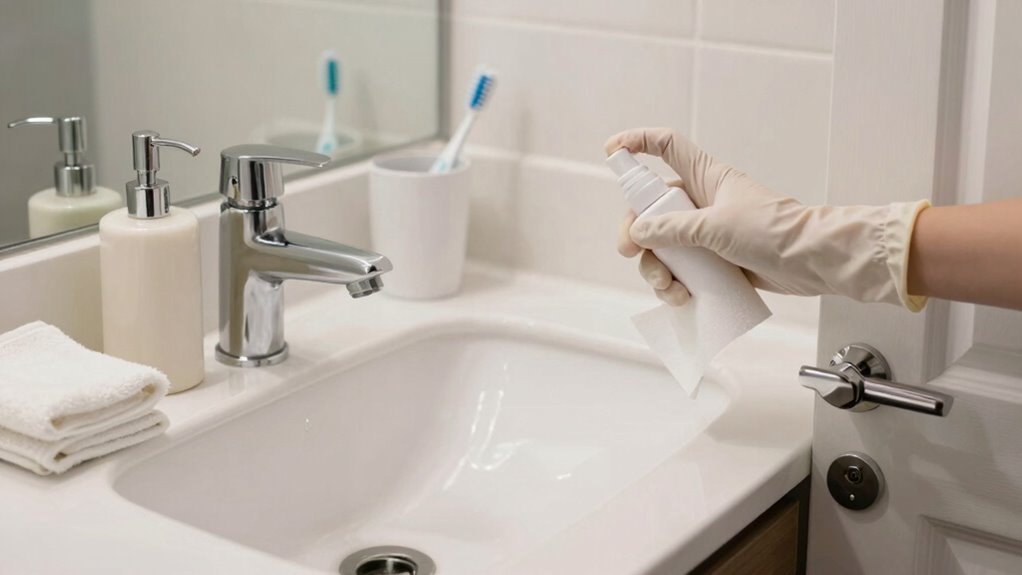
To avoid cross-contamination in a shared bathroom, practice good hygiene by washing your hands thoroughly before and after touching surfaces, and avoid touching your face or personal items afterward. Use disinfectant wipes or sprays on high-touch surfaces like doorknobs and faucet handles before using them. Always use clean towels or air dryers for drying your hands. Keeping everything clean and following proper protocols can help prevent germs from spreading—if you want to learn more, keep exploring these tips.

Turn your quiet moments into listening time
- Thousands of audiobooks, podcasts and originals
- Listen on your phone, tablet or Echo — also offline
- Cancel anytime
Key Takeaways
- Wash hands thoroughly with soap for at least 20 seconds before and after touching shared surfaces.
- Use disinfectant wipes or sprays on high-touch surfaces regularly, such as door handles and faucet knobs.
- Avoid touching personal items until hands are properly cleaned to prevent transferring germs.
- Use covered toilet paper dispensers and avoid contact with used sheets to reduce contamination.
- Choose liquid soap with at least 60% alcohol and avoid communal bar soaps to prevent germ spread.

Sharing a bathroom with others can increase the risk of cross-contamination if you’re not careful. It’s vital to pay attention to how you use shared spaces to keep germs at bay. One of the simplest yet most effective ways to do this involves your approach to toilet paper placement and hand soap selection. How you position your toilet paper roll can make a difference. Keep the roll so that unrolling doesn’t touch the wall or other surfaces, and avoid leaving used sheets exposed. If possible, use a toilet paper dispenser with a cover to prevent contamination from airborne particles or other users touching the same surface. When you grab a sheet, do so with clean hands, and avoid touching more than you need to. This small step minimizes the transfer of germs from the toilet paper to your hands. Proper hand hygiene is crucial in reducing the spread of germs and maintaining a clean environment. Hand soap selection plays a vital role in reducing germs. Opt for a soap that contains at least 60% alcohol if available, as it effectively kills bacteria and viruses. Avoid bar soaps that sit in communal dishes because they can harbor germs. Instead, use liquid soap dispensers that you can press or pump with clean hands or elbows. Make sure to wash your hands thoroughly for at least 20 seconds, covering all areas, including under your nails and between fingers. Proper handwashing is one of the most powerful tools to prevent cross-contamination. After washing, dry your hands with a clean towel or air dryer. Avoid using shared towels, as they can trap germs and spread them around. Additionally, public bathroom protocols can help minimize the spread of germs and should be followed diligently. Maintaining awareness of high-touch surfaces and disinfecting them regularly further reduces the chances of germ transfer. Incorporating proper cleaning techniques can significantly improve overall bathroom hygiene. Beyond your personal habits, pay attention to the overall cleanliness of the bathroom. Use disinfectant wipes or sprays on high-touch surfaces like door handles, faucet knobs, and light switches. If you notice the toilet seat or flush handle looks dirty, wipe them down before use. Always wash your hands before and after touching these surfaces to prevent transferring germs. When leaving the bathroom, avoid touching your face or personal items until you’ve thoroughly washed your hands. These small, consistent practices create a barrier against cross-contamination, protecting you and others. Staying vigilant about how you handle toilet paper, choosing the right hand soap, and maintaining good hand hygiene can considerably reduce your risk of infection in shared bathroom spaces.
Products Worth Considering

Hisense 65-inch U6 Pro Mini-LED 4K UHD Smart Fire TV

Levoit Vital 100S-P Air Purifier with Washable Pre-Filter

Dyson Airwrap i.d. Multi-Styler for Straight and Wavy Hair
As an affiliate, we earn on qualifying purchases.
Frequently Asked Questions
What Are the Most Common Germs Found in Shared Bathrooms?
The most common germs in shared bathrooms are bacteria like E. coli, Salmonella, and Staphylococcus, lurking on germ hotspots such as toilet seats, faucets, and doorknobs. You can reduce their spread by maintaining regular cleaning routines, disinfecting surfaces frequently, and washing your hands thoroughly. Staying vigilant about germ hotspots helps prevent cross-contamination, keeping everyone safer and healthier when sharing bathroom spaces.
How Often Should Bathroom Surfaces Be Disinfected?
You should disinfect bathroom surfaces at least once a day to prevent germ buildup. Regular surface cleaning removes dirt and bacteria, while disinfection kills lingering germs. If someone is sick or there’s visible dirt, increase disinfection frequency to twice daily. Pay special attention to high-touch areas like doorknobs, faucets, and light switches. Consistent cleaning and proper disinfectant use help minimize cross-contamination and keep shared bathrooms safer for everyone.
Are Air Purifiers Effective in Preventing Contamination?
Like a modern-day guardian, an air purifier can be effective in contamination prevention, but its efficiency depends on the model and placement. It helps reduce airborne bacteria and viruses, creating a cleaner environment. However, it shouldn’t replace regular cleaning routines. Combining air purifiers with proper disinfecting practices maximizes protection, especially in shared bathrooms where germs spread easily. Stay vigilant; your health benefits from thorough contamination prevention strategies.
Should Towels and Toiletries Be Shared or Individual?
You should avoid sharing towels and toiletries to prevent cross-contamination. Towel sharing spreads bacteria and fungi, increasing infection risk. Follow proper toiletry etiquette by keeping your items separate and labeled. Use your own towel, toothbrush, and razors, and encourage others to do the same. This simple habit helps maintain hygiene, keeps germs at bay, and respects everyone’s health, making shared bathrooms safer for everyone.
How Can I Inform Others About Hygiene Best Practices?
You can promote hygiene communication and guest etiquette by politely sharing tips with others. For example, leave friendly notes reminding everyone to wash hands, use separate towels, and keep the bathroom clean. You might also casually discuss hygiene practices during conversations or encourage everyone to follow shared guidelines. Clear, respectful communication helps guarantee everyone’s hygiene habits support a healthy, contamination-free shared bathroom environment.
Conclusion
Think of your shared bathroom as a delicate garden, where every tool and touch is a seed that can either flourish or falter. By practicing mindful habits—cleaning surfaces, washing hands, and respecting others’ space—you’re tending to this garden with care. Each act of vigilance becomes a shield, a barrier against unseen invaders. When you nurture this shared space with intention, you guarantee it remains a safe haven, vibrant and resilient for all who enter.