
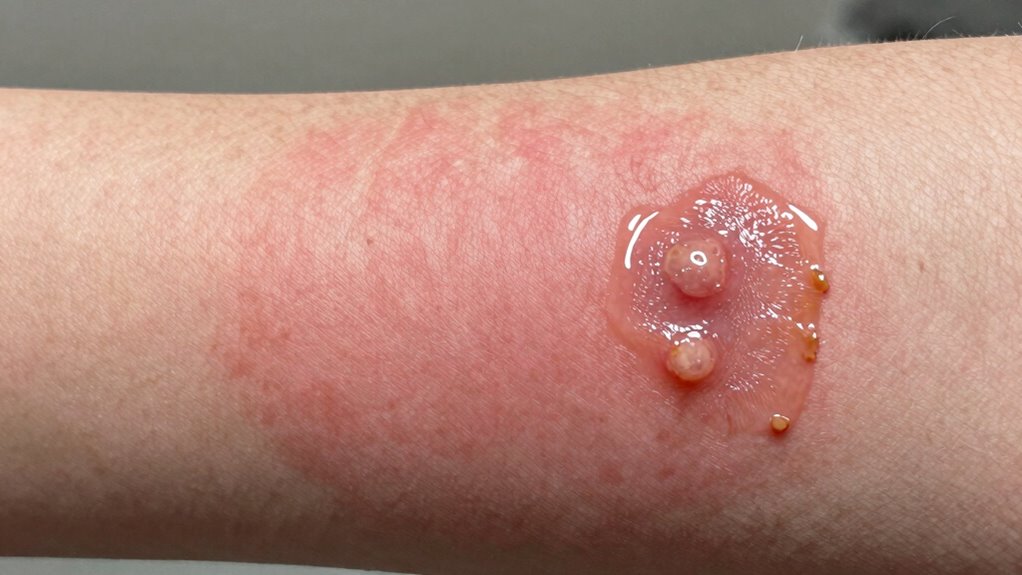
Understanding your skin’s reaction timeline helps you spot trouble early. Right after exposure, you might notice slight redness or itchiness, which often fades quickly. If symptoms like swelling, hives, or spreading redness develop within 24-48 hours, it could signal an allergic response. Days 1-2 may bring dry patches or tenderness, while persistent or worsening signs suggest irritation or allergy. Recognizing these patterns allows you to act early and protect your skin—learn more about these important cues below.

Turn your quiet moments into listening time
- Thousands of audiobooks, podcasts and originals
- Listen on your phone, tablet or Echo — also offline
- Cancel anytime
Key Takeaways
- Monitor initial redness or itchiness within hours to distinguish normal from early signs of trouble.
- Watch for persistent or worsening redness, swelling, or hives after 24-48 hours indicating allergic reactions.
- Identify dry, flaky patches or blistering within days 1-2 as signs of irritation needing reassessment.
- Recognize ongoing itching, swelling, or blistering beyond day 3-4 as indicators of severe allergic response.
- Track symptom progression closely to enable early intervention and prevent long-term skin damage.
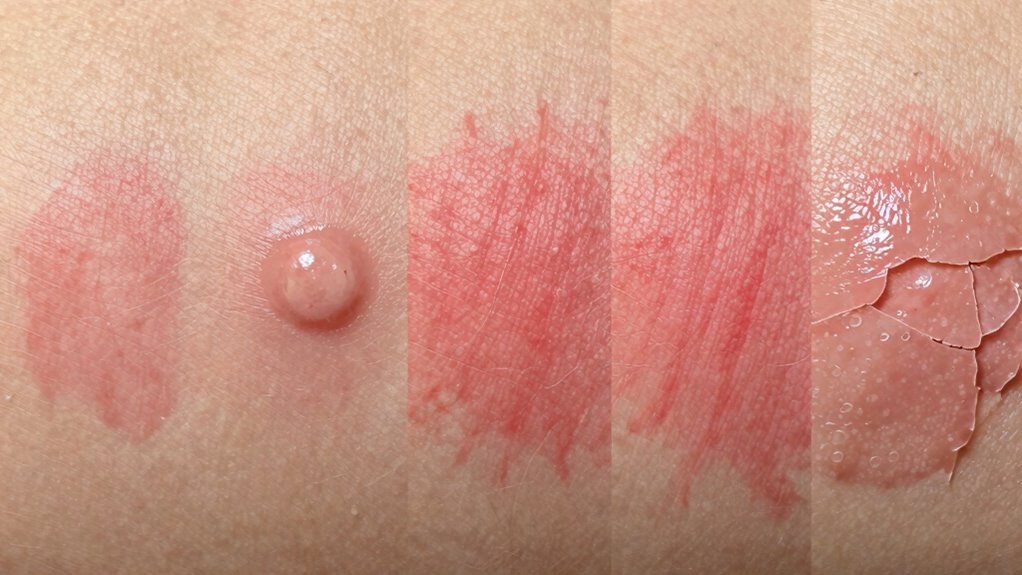
Understanding how your skin reacts over time after exposure or treatment is essential for managing and anticipating potential issues. When you pay attention to the timeline of your skin’s responses, you can catch early signs of trouble, such as allergic responses or irritation patterns, before they escalate. Recognizing these patterns helps you take swift action, reducing discomfort and preventing more serious reactions later on.
Immediately after exposure, your skin might feel slightly itchy or appear red, but these initial signs don’t always mean trouble. It’s common to experience mild irritation that subsides quickly. However, if you notice that redness persists or intensifies over the next several hours, it could signal an emerging allergic response or a developing irritation pattern. Allergic responses tend to appear within 24 to 48 hours and can involve swelling, hives, or a spreading rash. By tracking how these symptoms evolve, you can differentiate between a temporary irritation and a more serious allergic reaction that might require medical attention.
Persisting redness or swelling over hours may indicate an allergic response requiring medical attention.
Within the first day or two, irritation patterns become more evident. You might see patches of dry, flaky skin, or areas that are inflamed, tender, or blistered. These signs often indicate that your skin is reacting negatively to a product, treatment, or environmental factor. If the irritation spreads or worsens despite your efforts to soothe it, it’s a sign you need to reassess and possibly seek professional guidance. Recognizing the early signs of skin reactions is crucial here—early identification of these patterns can help you determine whether to continue using a product or to stop immediately. Additionally, understanding skin sensitivity can help you choose products that are gentler on your skin and reduce the risk of adverse reactions. Being aware of common irritation triggers can also help you avoid repeated issues in the future.
By the third or fourth day, your skin’s response will often clarify whether it’s simply irritated or if an allergic response has taken hold. Allergic responses tend to be more persistent and may involve itching, swelling, or blistering that doesn’t improve without intervention. If you notice these symptoms, it’s important to act quickly—discontinue the suspected product and seek advice from a healthcare professional. Recognizing these early signs based on irritation patterns and allergic responses over time can prevent more severe reactions and help you choose skin care or treatment options more safely in the future. Being aware of reaction progression can help you better understand when to seek medical help.
In essence, understanding your skin’s reaction timeline empowers you to be proactive. When you observe how irritation patterns develop and how allergic responses unfold, you’re better equipped to respond promptly, minimizing discomfort and avoiding long-term damage. Monitoring these signs carefully and acting early makes all the difference in maintaining healthy, resilient skin. Recognizing skin reaction patterns is a key step in effective skin care management.
Products Worth Considering

Philips Hue Smart LED Candle Bulbs, B39, E12, 2-Pack

Ring Alarm 14-Piece Wireless Security System Kit

Arlo Pro Wireless Security Camera, 2K HDR, 6th Generation, 4-Camera Kit
As an affiliate, we earn on qualifying purchases.
Frequently Asked Questions
Can Skin Reactions Occur Without Visible Symptoms?
Yes, skin reactions can occur without visible symptoms, especially when you’re exposed to certain cosmetic ingredients or environmental factors. Sometimes, your skin might react internally, causing subtle changes that aren’t immediately noticeable. You might experience symptoms like dryness, itching, or irritation that develop gradually. Being aware of these early signs helps you identify problematic ingredients or environmental triggers before they cause more visible or severe reactions.
How Quickly Can Allergic Reactions Develop on the Skin?
When it comes to allergic reactions on your skin, they can flare up in a flash, often within minutes to a few hours. Patch testing helps identify triggers by observing your skin’s histamine response over time. You might notice redness, itching, or swelling quickly, so don’t dismiss early signs. Acting fast is key—an allergic reaction can escalate rapidly, making it essential to catch symptoms early before they worsen.
Are Certain Skin Types More Prone to Delayed Reactions?
Yes, your skin type can influence reaction delay. If you have sensitive skin, you’re more prone to delayed reactions because your skin reacts more slowly to irritants or allergens. Thinner or more delicate skin often results in reaction delays, making it harder to spot trouble early. Recognizing your skin sensitivity helps you monitor for delayed reactions, so you can act quickly and prevent further irritation or damage.
What Are Early Signs of Infection From Skin Reactions?
Early signs of infection from skin reactions include increasing redness, swelling, and warmth around the rash. Watch for unusual rash patterns that spread or worsen over time. Infection markers also include pus or oozing, tenderness, and pain. If you notice these signs, it’s important to seek medical advice promptly. Recognizing these early indicators helps prevent complications and guarantees timely treatment, keeping your skin healthier.
How Can I Differentiate Between Irritation and Allergy?
Think of your skin as a guarded fortress. If a harmless visitor causes a brief, localized irritation—like mild redness or itching—it’s probably a simple irritation, easy to identify by rash identification and symptom comparison. But if your fortress reacts with a full-blown alarm—swelling, hives, or persistent redness—it’s likely an allergy. Pay attention to timing and severity; allergies tend to last longer and intensify, while irritation usually fades quickly.
Conclusion
By understanding the skin reaction timeline, you can spot trouble early, respond faster, and seek help sooner. Recognize the signs, understand the patterns, and trust your instincts. Stay alert, stay informed, and stay proactive. Because knowing what to look for empowers you to protect your skin, prevent complications, and maintain your health. When you stay aware of the timeline, you stay ahead of potential problems—because early detection makes all the difference.