TL;DR

Turn your quiet moments into listening time
- Thousands of audiobooks, podcasts and originals
- Listen on your phone, tablet or Echo — also offline
- Cancel anytime
Crystal singing bowls are resonant bowls, usually made from quartz-based fused silica, that produce sustained tones when struck or played around the rim. You can use them for meditation or relaxation if you enjoy the sound, but claims that they cure illness or target specific organs are not established by strong clinical evidence. Listen at a comfortable volume, choose by sound and size, and handle each bowl carefully.
A single bowl can fill a quiet room with a tone that seems to hang in the air long after the mallet stops. That sound is the appeal of crystal singing bowls: you hear a clear, sustained note, and your attention has somewhere simple to rest.
This guide explains what they are, how their materials and playing technique shape the sound, and what you might experience in a sound bath. You’ll also find practical advice for choosing, playing, and caring for a bowl, plus a clear line between personal relaxation and medical claims.
Whether you’re considering a first bowl for your living room or deciding whether to join a group session, the details matter. A tone that feels soothing to one person can feel too loud or sharp to another, so your comfort is part of the practice.
“Crystal” usually means quartz-based glass, often fused silica, rather than a bowl carved from a single quartz crystal.
A bowl’s size and shape influence pitch; your playing speed, pressure, and mallet also affect its sound.
Sound baths may feel relaxing or help you focus, but strong clinical evidence does not support claims that bowls cure illness or target organs.
Choose by sound, weight, dimensions, and included accessories; note, color, price, and chakra labels do not prove a health effect.
Start at low volume, make participation optional, and store the bowl where it cannot chip or break.
What Crystal Singing Bowls Are Made Of
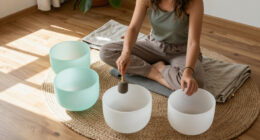
Crystal singing bowls are resonant bowls, usually made from quartz-based material such as fused silica, that produce sustained tones when you strike them or rub a mallet around the rim. “Crystal” usually refers to the glass-like material, not a bowl carved from one solid natural quartz crystal. Recipes and manufacturing methods vary, so two bowls with a similar appearance can sound different.
Imagine holding a frosted bowl beside a clear one in a shop. The frosted surface may look more handmade, while the clear bowl may show light passing through its walls, but appearance alone won’t tell you which one you’ll enjoy hearing. Size and shape influence pitch, while how the bowl was made and how you play it help shape its character.
Some bowls are colored or marketed as blended with minerals. Those details can be part of a maker’s design or a buyer’s preference, but claims that a particular added material gives the sound a special therapeutic effect are not well established. The useful question is simpler: Do you like the tone?
If a seller calls a bowl “crystal,” ask what material they mean and whether they can explain its care needs. That answer gives you a clearer picture than the label alone.
Products Worth Considering

Dyson Cyclone V10 Origin Cordless Vacuum

TCL T7 Series 85-Inch 4K 144Hz QLED Smart Google TV

Dyson Car+Boat Cordless Handheld Vacuum
As an affiliate, we earn on qualifying purchases.
How a Bowl Gets Its Long, Clear Sound
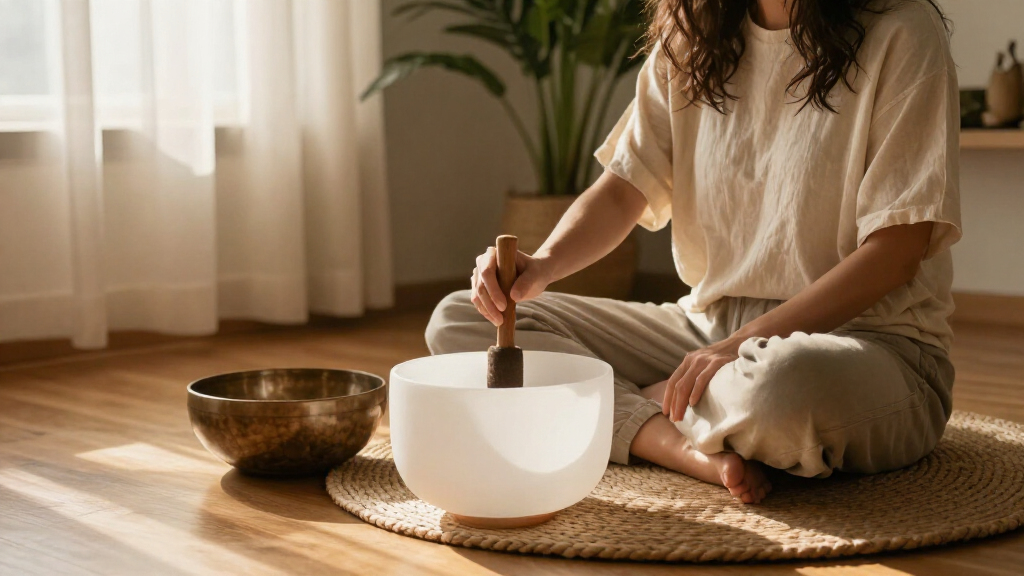
A crystal singing bowl makes sound when its sides vibrate after you strike it or move a mallet around its rim. A gentle strike gives you a clear opening note; steady rim playing can build a sustained tone that seems to bloom and linger. The pressure, speed, and mallet material all affect what you hear.
For example, tap a bowl lightly once and listen as the note fades. Then circle the rim slowly with a suitable mallet, using even pressure. If you move too quickly or press hard, the sound may wobble, squeak, or become rough; a patient hand often makes a smoother note.
Bowls are often marketed by musical note or frequency. These labels can help you compare products or describe pitch, just as you might compare the high note of a small bowl with the lower tone of a larger one. A note label does not show that a bowl treats a health condition or produces a specific bodily effect.
Try starting at low volume in a quiet room. If you’re playing for a friend, ask whether the sound feels comfortable before you repeat it. Good technique starts with listening, not force.
What You Can Expect From a Sound Bath
A sound bath is a listening session where someone plays bowls and sometimes other instruments while participants sit or lie down. Many people describe the experience as calming, immersive, or useful for focusing attention, but the response is personal. The sound can give your mind one thing to follow; it cannot promise a particular result.
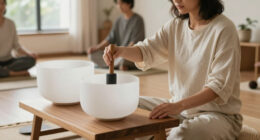
Picture a small yoga studio at the end of a long workday: the lights are soft, a blanket is folded beneath your knees, and a facilitator strikes a bowl before circling its rim. You might settle into the note, notice your breathing, or find the tone too intense. All of those reactions are valid.
People use crystal singing bowls in meditation, yoga, relaxation sessions, and recordings. Some listen to one bowl; others hear several played in sequence. A recording can be convenient if you want to sample a sound at home, though speakers and headphones may change how loud or close it feels.
Relaxation is a reasonable personal aim; claims that bowls heal organs, remove toxins, balance specific energy centers, or cure illness are not supported by strong clinical evidence. You can respect spiritual traditions and personal meaning while staying clear about what research has established.
How to Choose a Bowl You’ll Enjoy Using
Choose a crystal singing bowl by listening to its sound, checking its size and weight, and thinking about where you’ll play it. If possible, hear it in person or listen to a reliable recording at a moderate volume. A higher price, a precise frequency claim, or a particular color does not guarantee better sound or a therapeutic result.
Suppose you want a bowl for a small apartment. A large bowl may offer a lower tone, but it also takes more space and can be awkward to carry between rooms. A smaller bowl may be easier to store, though its pitch may sound brighter to your ear. The choice is a practical tradeoff: the sound you prefer has to work with the space you have and how often you expect to move the bowl.
- Listen first. Notice whether the tone feels pleasant at a comfortable volume. A bowl you enjoy is more likely to fit into a regular practice than one chosen only for its specifications.
- Check the dimensions and weight. Make sure you can store and handle the bowl safely. A larger bowl can be harder to transport and needs a stable place where it will not be knocked over.
- Ask what comes with it. A suitable mallet and protective ring can make playing and storage easier. Confirm that the accessories fit the bowl, since a poorly matched mallet may make it harder to produce the tone you want.
- Match the bowl to your use. A bowl for home meditation may have different practical needs from one you plan to carry to a class. Portability matters more if you travel with it, while a home bowl can be chosen around the sound and space available.
- Treat note or chakra sets as preferences. They can help organize a collection, but they are not a medical requirement. Buying a set may give you variety, while a single bowl lets you learn its sound and technique before spending more.
This simple check makes shopping less about a seller’s promise and more about sound, fit, and handling. If you cannot hear the exact bowl before buying, look for a clear return policy and recordings made with minimal processing.
How to Play and Store Your Bowl Without Damage
You can play a crystal singing bowl by striking it gently with a mallet or circling the rim with steady pressure. Start softly, use the mallet suited to the bowl, and avoid hitting it against hard surfaces. Bowls can chip or break, so secure storage matters as much as careful playing.
For instance, place the bowl on a stable protective ring before you play. Give it a light tap, pause, and listen; then try a slow circle around the rim. If you hear an unpleasant squeal, ease your pressure or slow down rather than pressing harder. That response helps you find the point where the rim vibrates smoothly without making the sound harsh.
When you finish, put the bowl somewhere it cannot roll, topple, or knock against another hard object. If you carry it to a yoga class, use padding and keep it separate from other instruments. Follow the maker’s cleaning guidance, since finishes and materials can differ. The extra care is useful because a small chip can affect both the bowl’s safety and how comfortable it is to handle.
Think of the bowl like a delicate glass serving dish with a voice: it rewards a steady hand, but one careless bump can end the music. A secure ring for playing and a protected shelf for storage are small steps that help you keep using it comfortably.
How to Keep a Sound Session Comfortable
A sound session should feel optional and comfortable, and you can adjust your distance or leave if the tones bother you. Sustained sounds may feel unpleasant to people with sound sensitivity, migraines, tinnitus, or hearing concerns. Ask the facilitator about volume and seating before the session begins.
At a group sound bath, a spot near the bowls may feel immersive to one person and overwhelming to another. Sitting farther away can soften the sound; bringing appropriate ear protection may help, though you can also choose not to attend. If you use a recording at home, start at a low volume and raise it only if it feels good.
Comfort is not a test of whether you are meditating correctly. You might enjoy one bowl but dislike a loud group session, or prefer a short recording over an hour in a studio. Your preferences can change from day to day, too.
A relaxing practice should leave you room to choose. If the sound causes discomfort, pause, move away, lower the volume, or stop listening.
Use bowls as a relaxation practice if they suit you, alongside appropriate health care. They should not replace diagnosis or treatment from a qualified health professional.
Frequently Asked Questions
Do crystal singing bowls really work?
They produce sustained tones that some people find calming or helpful for focusing attention. Evidence does not establish that they treat medical conditions or create the specific physiological effects sometimes claimed.
What are crystal singing bowls made of?
They are usually made from quartz-based material fused into glass, often described as fused silica. Recipes and manufacturing methods differ, and the name does not usually mean the bowl is carved from one natural quartz crystal.
How do you play a crystal singing bowl?
Strike it gently with a suitable mallet or move the mallet around the rim with steady pressure. Start softly; excessive force can produce an unpleasant sound or damage the bowl.
Are crystal bowls better than metal singing bowls?
Neither is universally better. They have different sounds and playing styles, so compare tone, volume, portability, and what feels comfortable to you.
Can a sound bath cause discomfort?
Yes. Loud or sustained tones may bother some listeners, especially people with sound sensitivity, migraines, tinnitus, or hearing concerns. Ask about volume, sit farther away, use ear protection if appropriate, or leave if you feel uncomfortable.
Can crystal singing bowls replace medical care?
No. You may use them as a relaxation practice alongside appropriate care, but they should not replace diagnosis or treatment from a qualified health professional.
Conclusion
Choose a bowl for the sound you enjoy and use it at a volume that feels comfortable. Crystal singing bowls can give you a steady tone to listen to, but personal relaxation is different from a medical treatment.
Play gently, keep the bowl secure, and let your own ears guide you. A good session ends with you feeling free to carry the quiet with you—or switch the sound off.