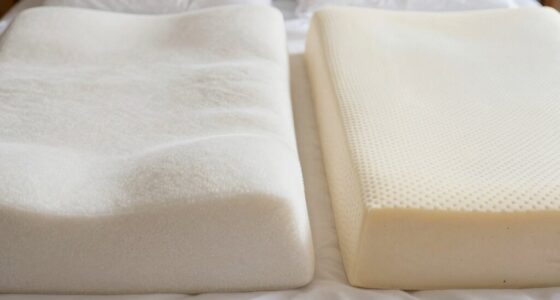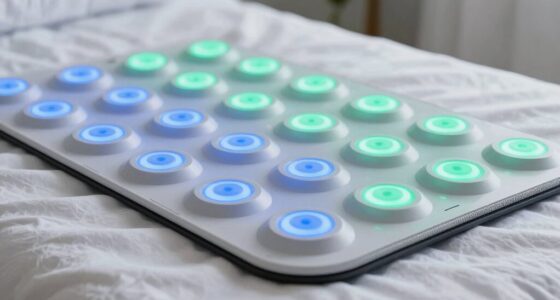
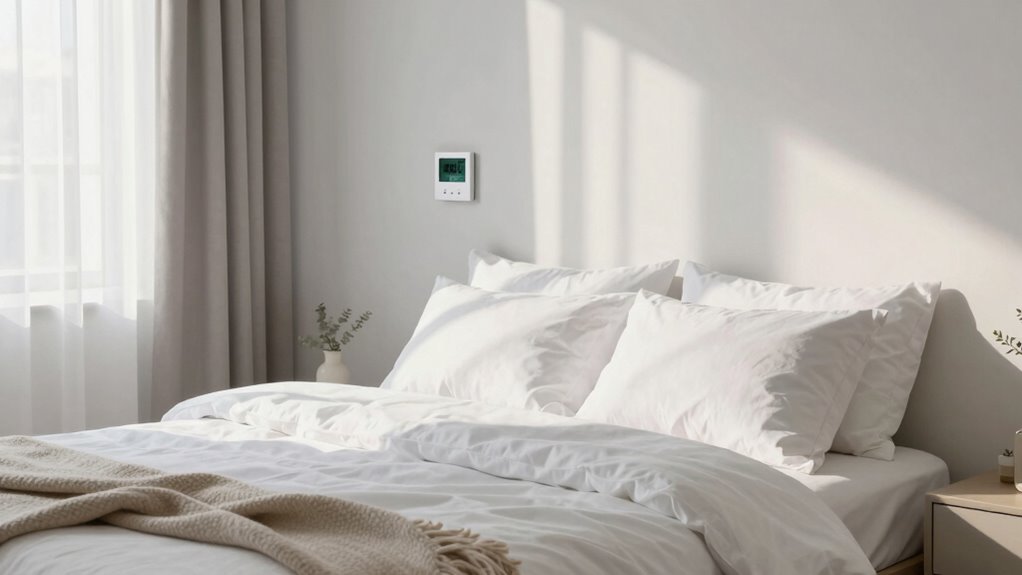

Maintaining your bedroom temperature between 60-67°F (15.5-19.5°C) helps most people sleep better by lowering core body temperature and promoting relaxation. Too hot or cold can cause discomfort, tossing, and difficulty falling asleep. Use a thermostat, fans, or heaters to keep a consistent environment, and consider factors like humidity and bedding. For ideal sleep, focus on creating a stable, comfortable space—more tips to achieve this are just ahead.

Turn your quiet moments into listening time
- Thousands of audiobooks, podcasts and originals
- Listen on your phone, tablet or Echo — also offline
- Cancel anytime
Key Takeaways
- Most people sleep best in a bedroom temperature between 60-67°F (15.5-19.5°C).
- Cooler temperatures help lower core body temperature, signaling the body to prepare for sleep.
- Maintaining a consistent, stable temperature prevents drafts and overheating, promoting restful sleep.
- Adjust bedding and sleepwear to enhance comfort within the optimal temperature range.
- External factors like humidity and seasonal changes can influence the ideal sleep temperature for individuals.
As an affiliate, we earn on qualifying purchases.
Why Bedroom Temperature Matters for Better Sleep
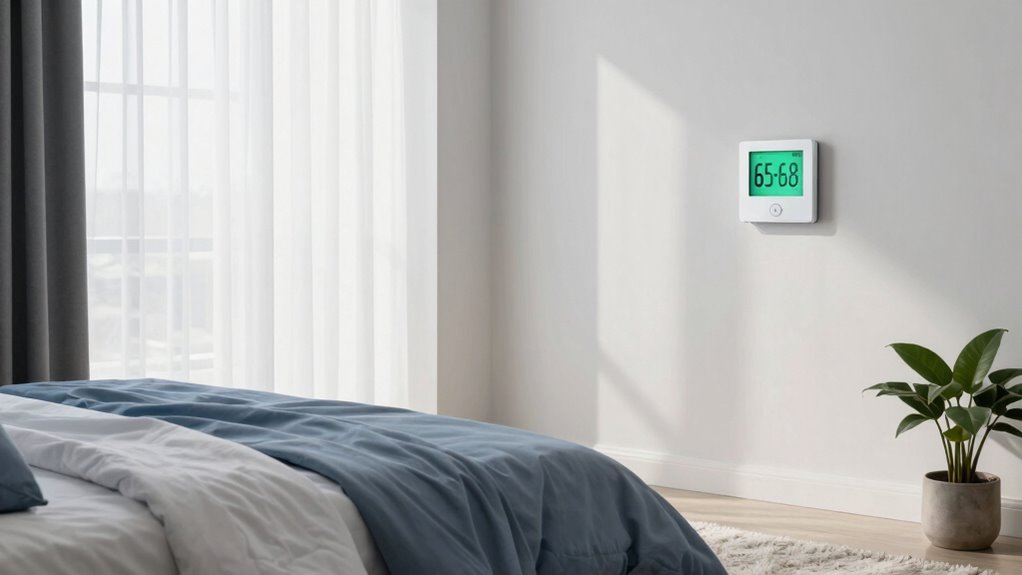
Maintaining the right bedroom temperature is essential for achieving restful sleep. Good sleep hygiene involves creating an environment that promotes relaxation and comfort, and temperature plays a key role. When your room is too hot or cold, your body struggles to regulate its temperature, disrupting your sleep cycle. Proper bedroom insulation helps maintain a consistent temperature, preventing drafts and heat loss that can interfere with sleep. A well-insulated room keeps your space cooler in summer and warmer in winter, so you don’t wake up feeling uncomfortable. Additionally, thermal regulation is vital for optimizing sleep quality and overall health. When your environment is stable, your body can relax more easily, making it easier to fall asleep and stay asleep throughout the night. To ensure effective insulation, investing in quality materials can make a significant difference in maintaining a consistent bedroom temperature. Prioritizing bedroom temperature and insulation directly supports better sleep quality.
As an affiliate, we earn on qualifying purchases.
What Is the Best Sleep Temperature for Most People?
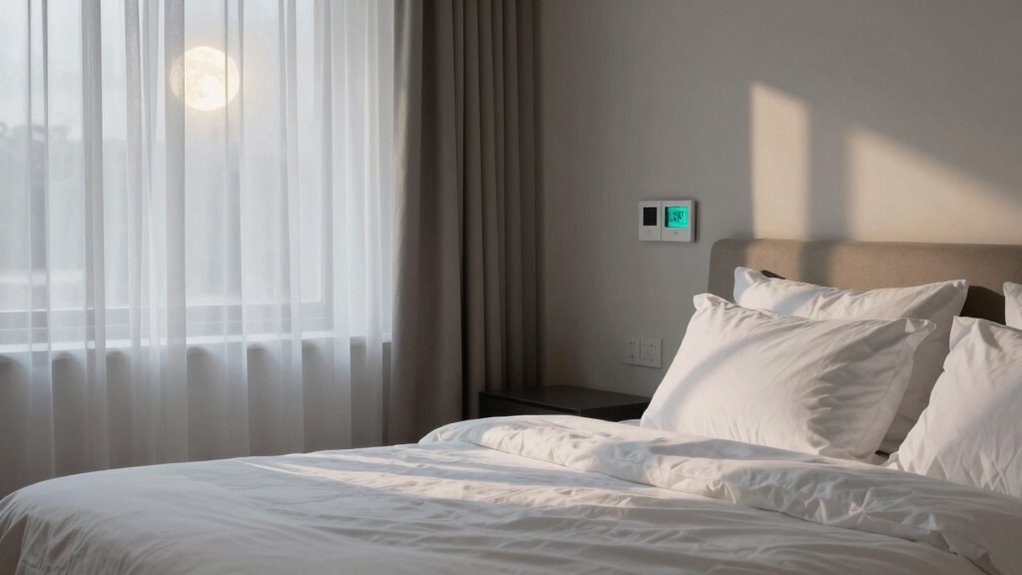
Finding the ideal sleep temperature can considerably improve the quality of your rest, and for most people, a room temperature between 60 and 67 degrees Fahrenheit (15.5 to 19.5 degrees Celsius) works best. Your sleep environment plays a crucial role in setting the right temperature preferences, which can vary slightly from person to person. Generally, cooler temperatures help your body lower its core temperature, signaling that it’s time to sleep. If your room feels too warm or too cold, it can disrupt your sleep cycle. The best sleep temperature promotes comfort, reduces tossing and turning, and helps you fall asleep faster. Additionally, sleep environment optimization can enhance your overall sleep quality by creating a more conducive atmosphere for rest. Being mindful of ambient temperature and adjusting your thermostat or bedding accordingly can make a significant difference. Incorporating smart thermostat technology can help maintain consistent and personalized sleep conditions. Using connected devices can allow for more precise adjustments to your sleep environment, ensuring optimal comfort throughout the night. Remember, adjusting your sleep environment to fit these guidelines can make a noticeable difference in your overall sleep quality. Staying aware of your surroundings and making small adjustments can enhance your safety and comfort during rest.
As an affiliate, we earn on qualifying purchases.
How to Measure Your Bedroom Temperature Correctly
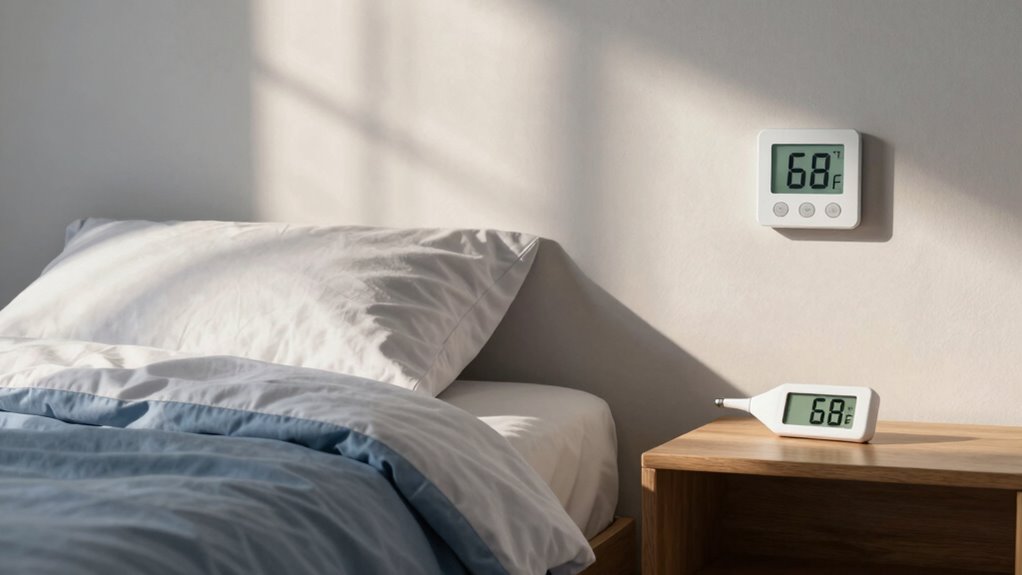
To measure your bedroom temperature accurately, you need a reliable thermometer that provides consistent readings. Make sure to take measurements at the same time each day, preferably when the room is unoccupied and stable. This consistency helps you track temperature fluctuations more effectively. Additionally, consider the indoor air quality in your room, as temperature can be affected by ventilation and air circulation. Ensuring proper airflow can help maintain a consistent temperature and improve overall comfort. Proper ventilation methods are essential to prevent temperature fluctuations and maintain a healthy environment. Monitoring temperature stability over time can also help you identify when adjustments are needed to keep your bedroom comfortable.
Use a Reliable Thermometer
Using a reliable thermometer is essential for accurately measuring your bedroom temperature. A good smart thermometer provides precise and consistent readings, helping you make informed adjustments. Choose one with digital displays and easy-to-read measurements. Place the thermometer in a central spot away from drafts or direct sunlight for the most accurate readings. To give you a clearer picture, consider this:
| Location | Why it matters |
|---|---|
| Near the bed | Ensures sleeping environment comfort |
| Away from windows | Prevents temperature fluctuations |
| On a shelf | Keeps it off the ground and stable |
| Out of drafts | Avoids skewed readings |
| At eye level | Ensures consistent measurement |
Investing in a quality smart thermometer guarantees accurate readings, helping you maintain the ideal bedroom temperature effortlessly. Additionally, referring to a reliable standby generator for climate control checklist can help you prepare your overall household climate management strategies. Incorporating proper placement techniques can further enhance measurement accuracy. Furthermore, understanding the best temperature range for sleep can optimize your environment for better rest. Remember that consistent monitoring is key to maintaining a comfortable bedroom climate over time.
Measure at the Right Time
Timing is crucial when measuring your bedroom temperature to guarantee accuracy. You should take readings when the room has stabilized, ideally after it’s been unoccupied for at least 15 minutes. This ensures the thermometer reflects the true ambient temperature, not fluctuations caused by recent activity. Remember to check your thermometer calibration regularly to maintain precision. Seasonal adjustments are also essential because temperature variations across seasons can affect readings. During colder months, heating may influence the measurement, while in summer, cooling systems might cause fluctuations. Measure at consistent times daily—preferably at night or early morning—to track changes accurately. Consistency helps you monitor your environment and make informed adjustments. Proper measurement techniques are vital for reliable data, especially when managing climate-sensitive conditions. Additionally, understanding the support breakfast options available can help create a comfortable and well-nourished space conducive to better sleep. Incorporating smart thermostats can also improve temperature regulation and ensure your measurements remain accurate over time. By following these guidelines, you’ll get reliable readings that help you optimize your bedroom environment for better sleep.
As an affiliate, we earn on qualifying purchases.
Common Mistakes That Disrupt Your Sleep Because of Temperature
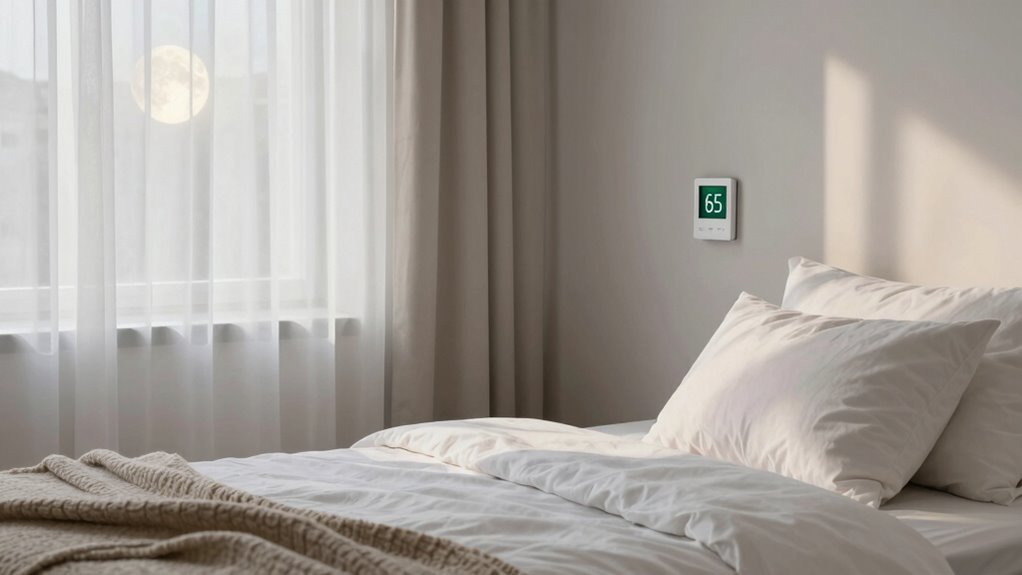
If your bedroom gets too hot or cold, it can seriously disrupt your sleep. Overheating and sweating make it hard to rest, while cold drafts can wake you up or cause discomfort. Small temperature fluctuations also throw off your sleep quality, so paying attention to these issues is key. Maintaining a consistent sleep environment helps your body regulate temperature more effectively, leading to better rest. Additionally, understanding air-based heating and cooling methods can help you optimize your bedroom climate for optimal sleep comfort.
Overheating and Sweating
Overheating and sweating during the night are common sleep disruptors that often go unnoticed. Poor bedroom insulation or using mattress materials that trap heat can cause your body to overheat, leading to restless sleep. When your room isn’t properly insulated, heat escapes less effectively, making it harder to stay cool. Likewise, certain mattress materials—like memory foam—can retain heat and increase sweating. To improve sleep comfort, choose breathable bedding and update your mattress if necessary. Focus on maintaining a consistent, cool temperature to prevent disruptions. Here’s a quick overview:
| Factor | Impact | Solution |
|---|---|---|
| Bedroom insulation | Traps heat, raises room temperature | Improve insulation, use fans or AC |
| Mattress materials | Retains heat, causes sweating | Switch to breathable, cooling materials |
| Bedding | Insulates body, increases heat retention | Use lightweight, moisture-wicking sheets |
| Room temperature | Affects overall sleep quality | Keep at a cool, consistent range |
Cold Drafts and Fluctuations
Cold drafts and temperature fluctuations are common sleep disruptors that often go unnoticed. Drafts can sneak in through gaps in windows or doors, suddenly lowering the room’s temperature and disturbing your rest. These unpredictable temperature fluctuations can cause you to wake up feeling chilly or sweaty, making it hard to stay asleep. To avoid this, check for drafts and seal any gaps around windows and vents. Use heavy curtains or draft stoppers to keep the air steady throughout the night. Keep your thermostat consistent, and consider a fan or space heater to maintain a stable temperature. Minimizing drafts and controlling temperature fluctuations creates a more comfortable environment, helping you sleep more soundly and wake up refreshed.
Practical Tips to Keep Your Bedroom at the Perfect Temperature
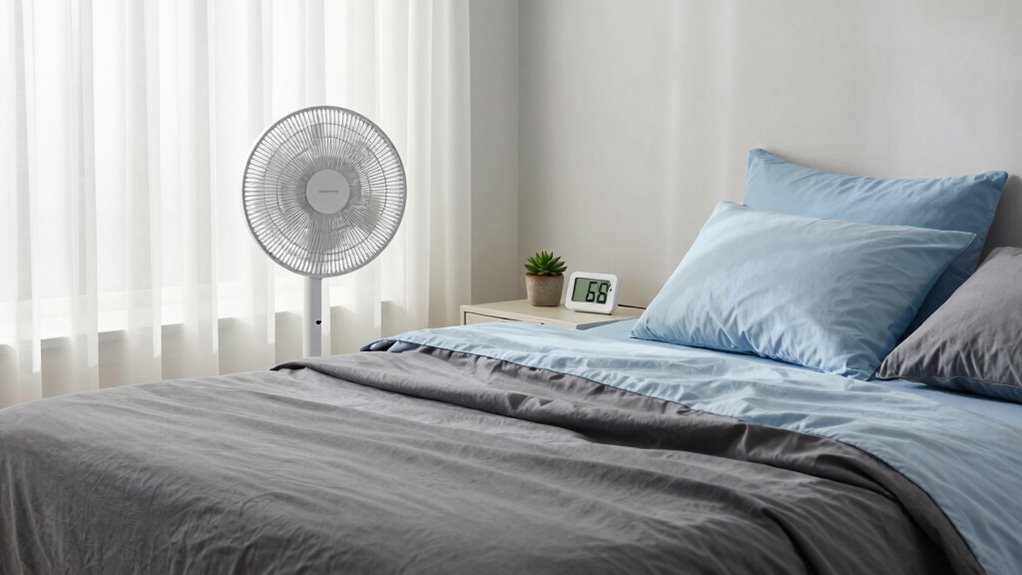
Maintaining the right temperature in your bedroom is essential for restful sleep, and there are several practical steps you can take to achieve this. First, improve your sleep environment by optimizing bedroom insulation—seal drafts and add rugs or curtains to retain warmth. Second, use a programmable thermostat or fan to regulate airflow and prevent temperature swings. Third, consider investing in breathable bedding, like cotton sheets, to help your body stay cool. These simple actions can create a cozy, stable environment that promotes uninterrupted rest. Remember, a well-insulated sleep space keeps you comfortable, reducing the need for constant adjustments and ensuring your bedroom remains within the ideal temperature range all night long.
Factors That Influence Your Ideal Sleep Temperature
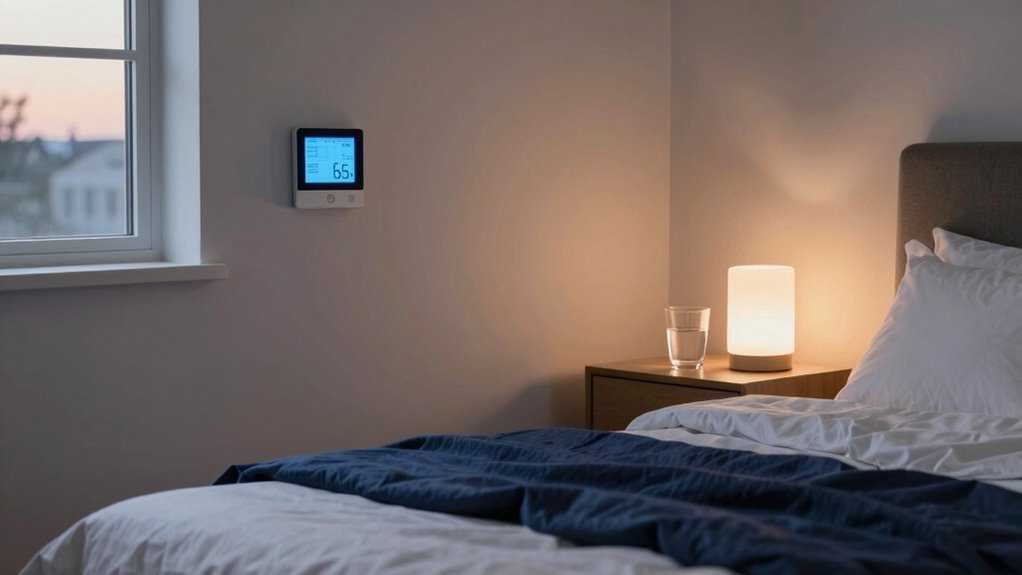
Several factors directly influence your ideal sleep temperature, shaping how comfortable and restful your sleep environment feels. Your personal comfort plays a significant role, as individual preferences vary based on metabolism, age, and health. Climate control also impacts your optimal sleep temperature—if your room’s too hot or cold, it can disrupt your sleep cycle. Additionally, bedding materials, sleepwear, and even your nighttime activity level influence how your body perceives temperature. External factors like seasonal changes and ambient humidity further affect your comfort. Understanding these influences helps you tailor your sleep environment to suit your needs, ensuring you stay within that “cool enough” range that promotes restful sleep. Adjusting climate control settings accordingly can make a meaningful difference in your sleep quality.
When to Use Cooling or Heating Devices to Improve Sleep
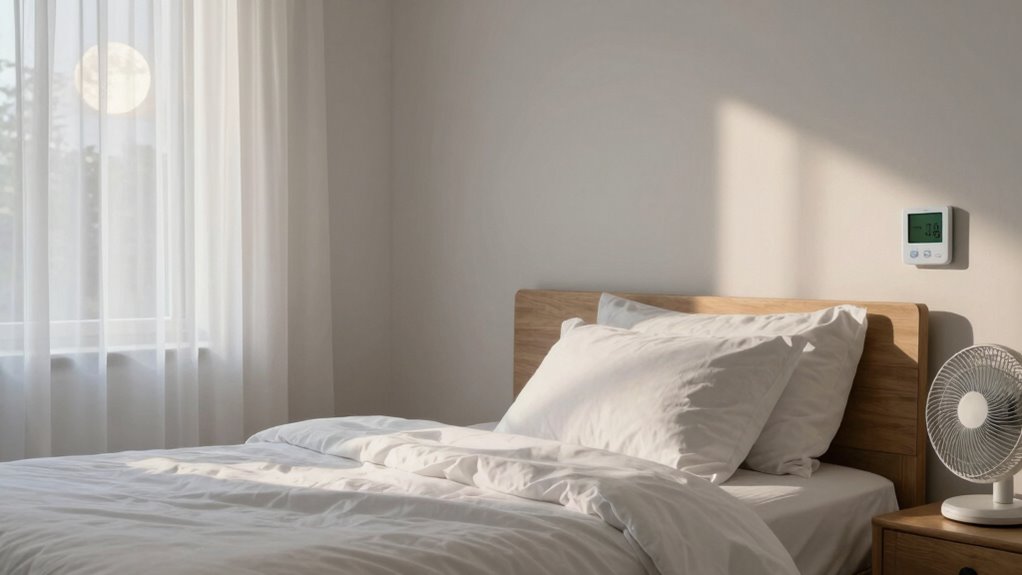
Knowing when to use cooling or heating devices can make a significant difference in achieving a comfortable sleep environment. If your room feels stuffy or humid, contemplate activating a dehumidifier or adjusting humidity control to prevent discomfort. When your room’s temperature drops too low, turn on the heater—especially if you’ve improved window insulation to retain warmth. Conversely, if it’s too hot, use a fan or air conditioner to cool the space effectively. Here are key moments to consider:
- When humidity causes a muggy, sticky feeling.
- During cold nights when window insulation isn’t enough.
- On hot nights, when overheating disrupts your sleep.
Using these devices at the right times helps create a balanced, restful sleep environment.
Frequently Asked Questions
How Does Humidity Affect Bedroom Temperature and Sleep Quality?
Humidity impact notably influences your bedroom temperature and sleep quality. When humidity is high, it makes the air feel warmer, causing discomfort and disrupting your sleep. Conversely, low humidity can make the air feel cooler but may lead to dry skin and throat irritation, affecting rest. Maintaining a balanced humidity level, around 40-60%, helps you stay comfortable, promotes better sleep quality, and keeps your bedroom environment ideal.
Can Sleeping Temperature Vary With Different Seasons?
Yes, your sleeping temperature can vary with seasonal fluctuations. During colder months, you might need to increase indoor climate control to stay comfortable, while in warmer seasons, cooling devices help maintain a cool enough environment. Adjusting your thermostat accordingly guarantees you sleep well year-round, regardless of seasonal temperature changes. Proper indoor climate control helps keep your bedroom’s temperature within that ideal range, promoting better sleep and overall comfort.
What Are the Health Risks of Sleeping in Temperatures Too Hot or Cold?
Sleeping in temperatures that are too hot or cold can turn your rest into a battleground, risking health. Excess heat can cause dehydration, heat exhaustion, or disrupted sleep, while cold temperatures may lead to hypothermia or poor immune function. Climate control is essential for ideal sleep comfort, ensuring your body maintains a healthy core temperature. Keep your room within the ideal range to protect your health and wake up refreshed.
How Do Personal Preferences Influence Ideal Bedroom Temperature?
Your personal comfort and temperature perception heavily influence your ideal bedroom temperature. You naturally prefer conditions that feel most comfortable, which can vary based on your body, sleep habits, and even the season. To optimize your sleep, adjust your thermostat to a temperature that aligns with your personal preferences, usually around 60-67°F, ensuring you feel cool enough without being too cold, fostering better sleep quality and overall health.
Are There Specific Sleep Disorders Linked to Temperature Issues?
Did you know that temperature regulation issues are linked to sleep disorders like insomnia and sleep apnea? When your body struggles to maintain a stable temperature, it can disrupt your sleep cycle. People with these sleep disorders often find it harder to fall asleep or stay asleep if the room is too hot or cold. Managing bedroom temperature helps improve sleep quality and supports healthier sleep patterns.
Conclusion
Finding the perfect bedroom temperature is your secret weapon for unbeatable sleep. When your room stays within that ideal range, you’ll wake up feeling more refreshed than a mountain breeze and ready to conquer the day. Don’t let temperature slip into chaos—small adjustments can transform your nights from restless chaos into serene slumber. Master your sleep environment, and you’ll discover the kind of rest that feels almost supernatural, turning every night into a restorative paradise.
Fall Picks
fall essentials
As an affiliate, we earn on qualifying purchases.