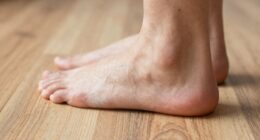

Your calf muscles play a vital role in maintaining foot stability and mobility. Tight or overused calves can cause foot tension, lead to misalignment, and even trigger pain. When calves aren’t flexible, your feet have to work harder to compensate, which can cause discomfort and injury. Taking steps to stretch and strengthen your calves helps prevent these issues. Keep going to learn simple ways to protect your foot health and keep pain at bay.
Key Takeaways
- Calf muscles support ankle mobility, crucial for foot stability and preventing pain during daily movement.
- Tight or overused calves alter biomechanics, leading to increased tension and discomfort in the feet.
- Proper calf flexibility helps absorb shock, reducing strain and risk of foot and joint injuries.
- Imbalances in calf strength or flexibility disrupt foot alignment, causing tension and potential pain.
- Maintaining healthy calves through stretching and strengthening is vital for foot health and injury prevention.
How Calf Muscles Help Your Feet Stay Stable and Mobile
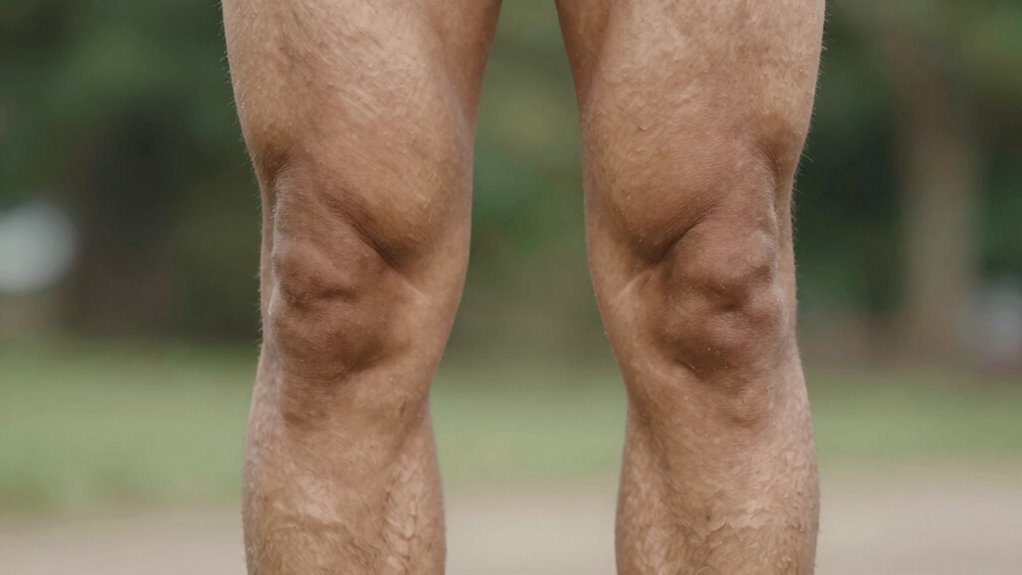
Your calf muscles play a crucial role in keeping your feet stable and mobile. When your calves are flexible, they allow your ankles to move smoothly through their full range of motion, which is essential for balance and agility. Good calf flexibility helps absorb shock when you walk or run, preventing excessive strain on your feet and joints. Strong, flexible calves support proper foot alignment, contributing to overall foot stability. This proper alignment is vital for maintaining healthy foot biomechanics and preventing long-term issues. This stability keeps you steady on uneven surfaces and reduces the risk of injuries. By maintaining healthy calf muscles, you guarantee your feet can perform their functions efficiently. Additionally, understanding the importance of dynamic movement can motivate you to prioritize your overall health and mobility. Ultimately, flexible calves act as a foundation for stable, responsive foot movements, helping you stay comfortable and balanced during daily activities.
What Causes Tight Calves and Foot Pain?
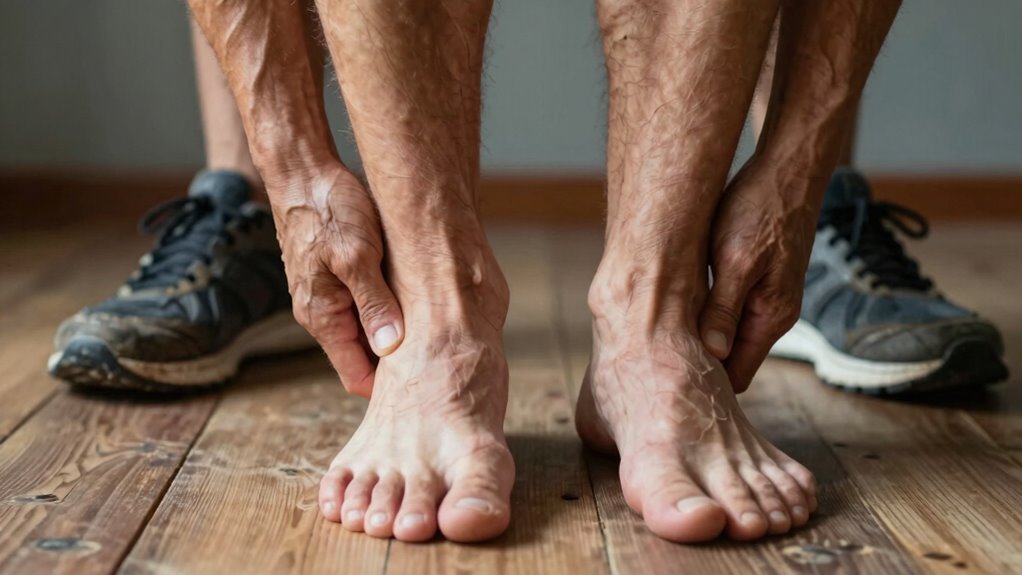
Tight calves and foot pain often stem from muscle tightening triggers, overuse, or strain. Wearing improper footwear can also contribute to these issues by putting extra stress on your muscles. Understanding these causes helps you take steps to prevent discomfort and improve your foot health.
Muscle Tightening Triggers
Muscle tightening in the calves and feet often results from overuse, poor stretching habits, or prolonged periods of inactivity. When your ankle flexibility decreases, it puts extra strain on the calves, leading to calf fatigue and tightness. Activities like running or standing for long hours can exacerbate this, causing muscles to tighten as a protective response. Additionally, insufficient stretching before activity can make muscles more prone to tightening. Inactivity causes muscles to become stiff, increasing tension when movement resumes. Incorporating aquatic exercise can help alleviate some of this tension by providing a low-impact way to improve flexibility and strength. Understanding the role of muscle elasticity can also be crucial in addressing and preventing tight calves and foot pain, especially since natural pools promote biodiversity and can support gentle, restorative movement. The use of dynamic stretching techniques can further enhance flexibility and reduce muscle tightness. Recognizing how muscle flexibility impacts overall foot health can further aid in developing effective prevention strategies.
Overuse and Strain
Overuse and strain are primary reasons why calves become tight and foot pain develops. When you push your muscles too hard without proper recovery, your calves tighten, pulling on your foot structures and causing discomfort. To prevent this, incorporate regular calf stretching and foot exercises into your routine. Here are three key points:
- Overtraining during activities like running or jumping leads to muscle fatigue and tightness.
- Repetitive movements without adequate rest cause strain, making calves and feet more vulnerable.
- Neglecting proper warm-up and cool-down routines worsens muscle tightness and pain over time.
- Regular maintenance of your air purifier can help create a healthier environment that supports muscle recovery by reducing airborne irritants.
- Incorporating proper footwear with adequate arch support can also significantly reduce strain on your calves and feet.
Addressing overuse through targeted stretching and strengthening helps relieve tension, improves flexibility, and reduces foot pain caused by strain.
Poor Footwear Choices
Wearing improper footwear can considerably contribute to tight calves and foot pain because shoes that don’t provide proper support or fit well place extra strain on your muscles and tendons. Ill-fitting shoes, lack of adequate cushioning, or shoes with poor arch support force your calves to work harder to stabilize your feet. Using orthotic inserts can help correct structural issues and reduce tension, while proper shoe cushioning absorbs shock and minimizes impact stress. Avoid high heels or stiff soles that restrict natural foot movement, as they can worsen tightness and discomfort. Opt for shoes that fit well, offer good arch support, and include cushioning tailored to your activity level. Additionally, understanding foot biomechanics can help you select footwear that reduces strain and promotes better muscle balance. Being aware of your foot mechanics can guide you towards footwear choices that prevent unnecessary muscle tightness and improve overall foot health. Making these footwear choices can significantly ease calf tightness and foot pain over time.
Why Calf Imbalances Lead to Foot Tension
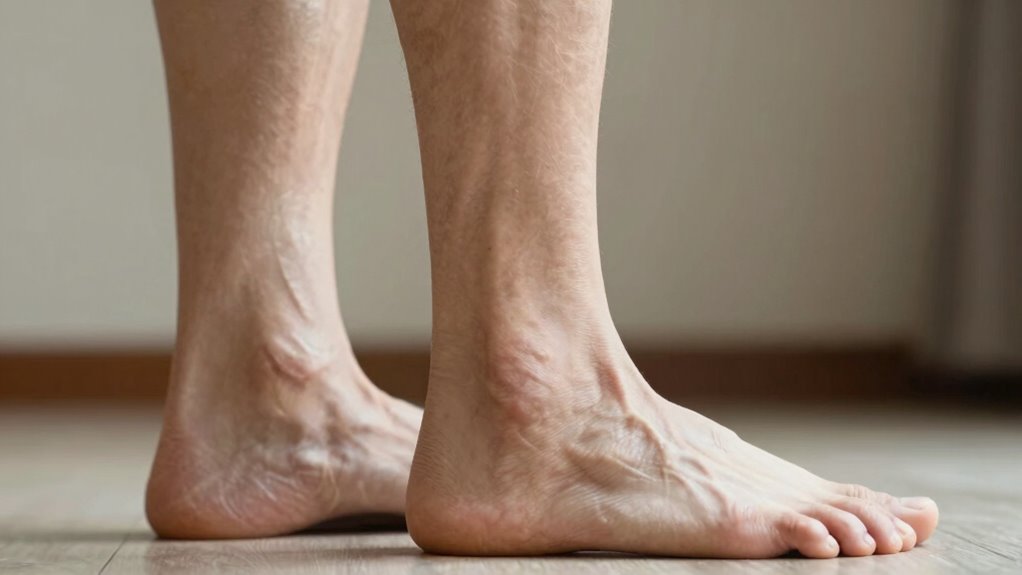
Calf imbalances can directly cause foot tension by disrupting the way your lower leg muscles work together. When your calves lack flexibility or are overly tight, they interfere with proper foot biomechanics. This interference can lead to compensation patterns elsewhere in your gait. Incorporating muscle balance techniques can help maintain healthy muscle function and prevent these issues. Additionally, addressing calf imbalances can positively influence overall postural alignment, leading to better foot health. Understanding the importance of muscle flexibility is essential for maintaining proper mobility and preventing related discomfort. Recognizing the significance of muscle balance in overall movement patterns can further support effective intervention strategies. Here are three ways calf imbalances impact foot tension: 1. Reduced calf flexibility limits ankle movement, affecting how your foot absorbs shock. 2. Tight calves alter foot biomechanics, causing uneven weight distribution. 3. Imbalances create increased strain on the plantar fascia and other foot structures, resulting in tension and discomfort. Addressing calf flexibility issues helps restore proper biomechanics, reducing foot tension and preventing further pain.
Signs Your Calf Tightness Is Affecting Your Feet

When your calves are tight, you may notice that your feet start to feel sore or achy even after light activity. This discomfort often signals that calf tension is affecting your foot muscles and joints. You might experience increased foot pain during or after walking, standing, or engaging in foot exercises. Tight calves can restrict ankle mobility, leading to abnormal foot mechanics and strain. You may also notice tingling or numbness in your toes, or your arch feeling stiff. To address this, regularly incorporate calf stretches into your routine, which can help loosen tight muscles. Additionally, targeted foot exercises can improve foot strength and flexibility, reducing tension and preventing further discomfort caused by calf tightness. Understanding the importance of proper biomechanics can help you develop more effective strategies to maintain foot health and overall mobility. Recognizing how muscle imbalances contribute to foot pain can also guide your stretching and strengthening efforts to achieve better results. Incorporating local automation devices, like smart home exercise reminders, can help ensure consistency in your stretching routine and improve your recovery. Regularly monitoring your progress with wearable sensors can provide valuable feedback on your movement patterns to prevent future issues.
Stretching Your Calves to Ease Foot Tension
To relieve foot tension caused by tight calves, incorporating specific stretching exercises into your routine can be highly effective. These stretches improve ankle flexibility and calf relaxation, reducing strain on your feet. Start with these techniques:
- Runner’s Stretch: Place one foot forward, bend your knee, and keep the back leg straight, pressing your heel into the ground. Hold for 30 seconds and switch sides.
- Wall Calf Stretch: Stand facing a wall, place your hands on it, step one foot back, and press the heel down. Keep your leg straight and hold the stretch.
- Downward Dog: From a plank, lift your hips high, forming an inverted V. Push your heels toward the ground to stretch your calves. Regular practice can also improve muscle flexibility, which is essential for overall foot health.
- Incorporating these stretches regularly can also positively influence fandom culture by promoting health and well-being among supporters. Additionally, understanding the importance of essential oils for muscle relaxation can further enhance your recovery routine after stretching sessions.
Consistent practice enhances ankle flexibility and calf relaxation, easing foot tension effectively.
Strengthening Your Calves for Better Foot Support
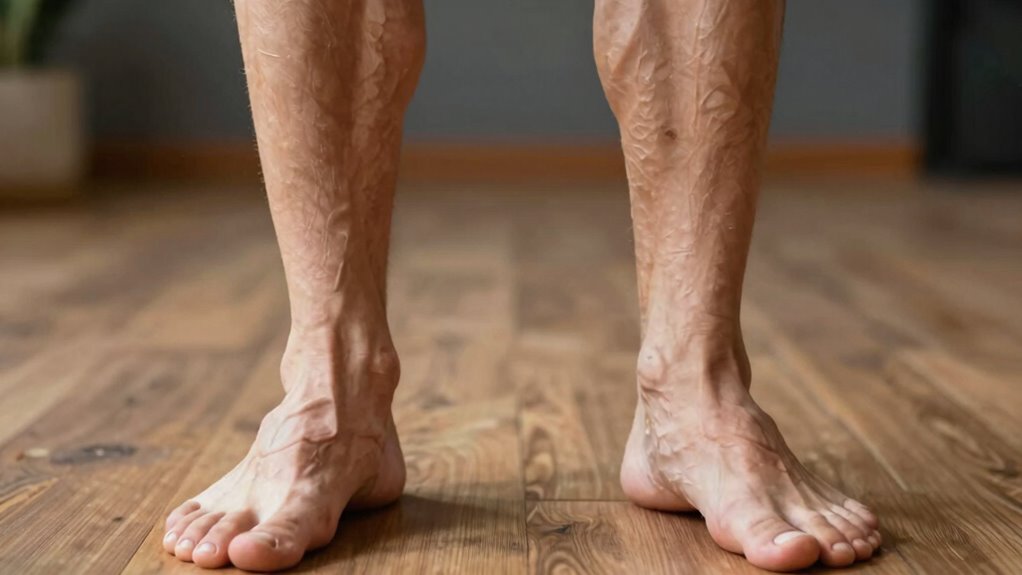
Building strength in your calves is essential for providing better support to your feet and preventing pain. Strong calves improve calf endurance, reducing fatigue and strain during daily activities. To strengthen, focus on exercises like calf raises, which enhance both calf flexibility and muscular resilience. Increasing calf endurance helps stabilize your ankles and arches, alleviating undue pressure on your feet. Consider incorporating variations to target different calf muscles, such as seated or standing calf raises. Here’s a quick overview:
| Exercise | Focus Area | Benefits |
|---|---|---|
| Standing calf raises | Calf strength & flexibility | Improves endurance & stability |
| Seated calf raises | Soleus muscle focus | Boosts calf flexibility |
| Jump rope | Overall calf endurance | Enhances stamina |
| Single-leg raises | Balance & unilateral strength | Prevents imbalances |
Consistent practice increases calf resilience, supporting healthier foot mechanics.
How to Know If Your Calf Issues Are Causing Foot Pain
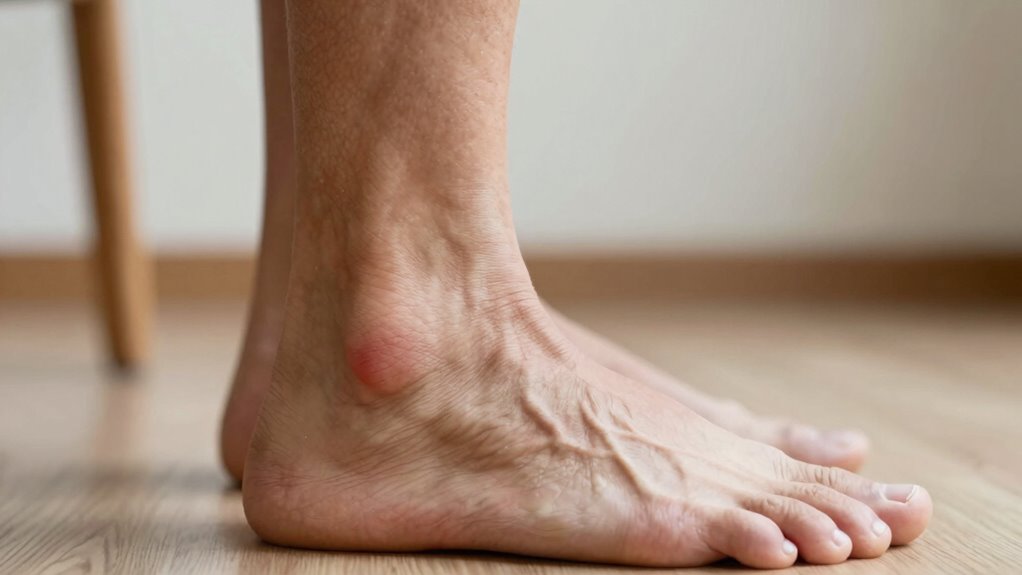
If you notice ongoing discomfort in your foot that doesn’t go away, your calves could be the culprit. Pay attention to any mobility limitations or tightness in your lower legs, as these often signal a connection. Recognizing these signs helps you determine if calf issues are contributing to your foot pain.
Recognize Persistent Discomfort
Persistent discomfort in your foot or calf doesn’t just come and go without warning. If you notice ongoing pain, it’s a sign you should pay closer attention. To recognize if your calf issues cause foot pain, consider these points:
- Limited Calf Flexibility: If stretching feels stiff or painful, your calf tightness may be affecting foot function.
- Altered Foot Alignment: Notice if your foot seems to roll inward or outward during movement, indicating compensation for calf tightness.
- Persistent Pain: Ongoing discomfort despite rest suggests deeper issues related to calf tension and their impact on foot health.
Addressing these signs early can prevent further complications and help restore proper foot alignment and mobility.
Assess Mobility Limitations
To determine if your calf issues are contributing to foot pain, pay close attention to your mobility. Start by evaluating your ankle range of motion—it should move smoothly without stiffness or pain. Limited ankle mobility can alter your gait, leading to compensations that put extra stress on your feet. Conduct a gait analysis by walking naturally and observing how your heel strikes and pushes off. Notice if you limp, shuffle, or favor one side, which could indicate calf tightness affecting your stride. If you struggle to dorsiflex your ankle or notice irregular gait patterns, these are signs your calves may be limiting your mobility and contributing to foot pain. Addressing these issues can help improve foot function and reduce discomfort.
Simple Ways to Care for Your Calves and Foot Health

Taking simple steps to care for your calves and foot health can make a significant difference in reducing pain and preventing injury. First, incorporate regular calf stretching to improve flexibility and ease tension. Second, focus on ankle flexibility exercises to maintain full range of motion, which supports foot stability. Third, wear supportive shoes that fit well and cushion your feet during daily activities. These habits help prevent tightness and strain in your calves, reducing the risk of foot pain. Remember, consistent stretching and mobility exercises keep muscles loose and promote healthy circulation. Prioritize these simple practices to maintain ideal foot and calf health, ultimately reducing discomfort and supporting your overall mobility.
Tips to Prevent Foot Tension by Maintaining Healthy Calves
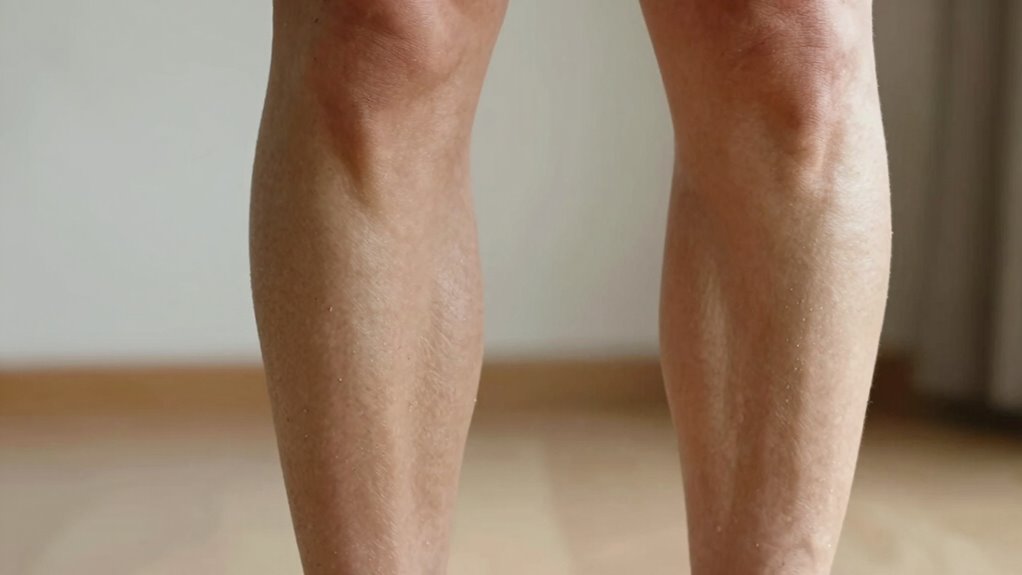
Maintaining healthy calves is essential for preventing foot tension, as tight or weak calf muscles can lead to strain and discomfort in your feet. To keep your calves in check, focus on improving ankle flexibility through gentle stretching and regular calf massage. These practices help reduce tension and promote circulation. Imagine your calves as a bridge supporting your feet’s comfort:
| Tight Calves | Flexible Calves |
|---|---|
| Restricted ankle movement | Free, smooth ankle motion |
| Increased foot tension | Less strain, more comfort |
| Tightness causing foot pain | Relaxed muscles easing tension |
When to See a Professional for Calf or Foot Problems
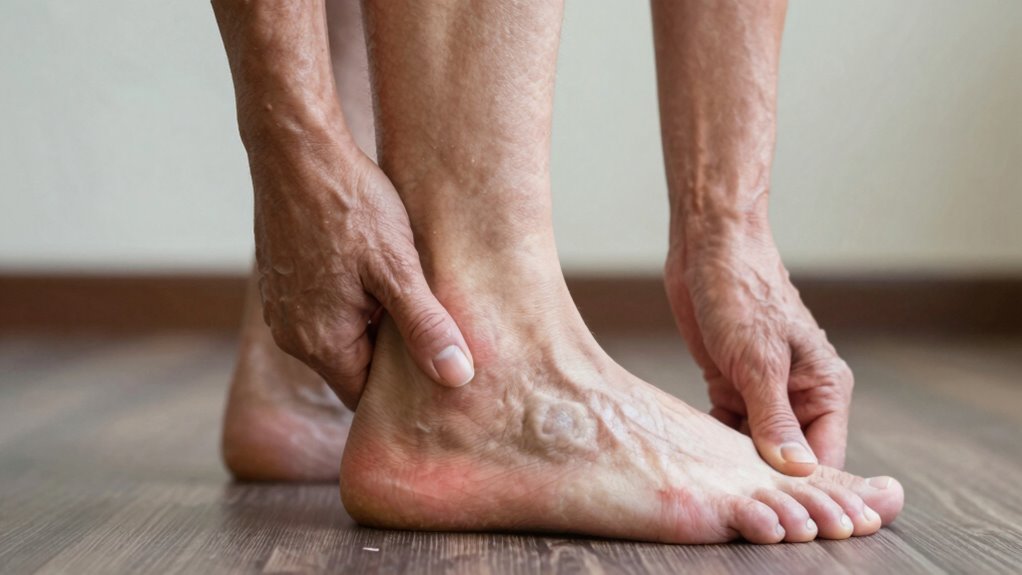
If you experience persistent foot or calf pain, it’s time to see a professional. Don’t ignore signs like swelling, numbness, or pain that worsens over time. Addressing these issues early can prevent more serious problems later on.
When to Seek Professional Help
Knowing when to see a healthcare professional for your calf or foot pain is crucial to prevent further injury or chronic issues. If your pain persists despite rest or self-care, it’s time to seek help. Consider professional intervention if:
- You experience persistent swelling, redness, or warmth, which could indicate inflammation or infection.
- Your ankle stability feels compromised, or you notice instability during movement, raising concerns about ligament or tendon damage.
- You’ve sustained sports injuries or trauma, and pain worsens or doesn’t improve within a few days, signaling possible fractures or severe tissue damage.
Prompt assessment can prevent long-term problems and ensure proper recovery, especially when dealing with ankle stability and sports injuries. Don’t ignore signs that your calf or foot needs expert attention.
Persistent Pain Signs
How can you tell if your calf or foot pain requires professional attention? Persistent pain that doesn’t improve after a few days is a clear sign. If you notice limited ankle flexibility or your calf endurance decreases, it could indicate underlying issues needing expert evaluation. Sharp, intense pain or swelling, especially if it worsens with activity, warrants prompt medical advice. Ongoing discomfort during daily activities or while resting shouldn’t be overlooked. These signs may signal strain, injury, or more serious conditions. Ignoring persistent pain can lead to further damage or chronic problems. If your symptoms last more than a week or interfere with your mobility, see a healthcare professional. Addressing these signs early ensures proper treatment and helps prevent lasting damage.
Frequently Asked Questions
Can Calf Stretches Improve Overall Foot Arch Support?
Yes, calf stretches can improve overall foot arch support by increasing calf flexibility, which helps reduce strain on your arch. When your calves are more flexible, they allow better foot movement and promote arch stability. Regular stretching strengthens the muscles involved, minimizing arch collapse and discomfort. Incorporate calf stretches into your routine to support your foot’s natural arch and prevent issues related to poor arch support.
How Do Calf Muscles Influence Ankle Joint Health?
Calf muscles influence your ankle joint health by supporting ankle stability and mobility. When your calf muscles are flexible, they reduce strain on the ankle, preventing injuries and promoting proper joint function. Tight calves can cause instability, leading to pain or ligament issues. Regular stretching and strengthening improve calf muscle flexibility, which directly enhances ankle joint stability, helping you stay active and avoid potential joint problems.
Are There Specific Footwear Tips for Calf and Foot Health?
A stitch in time saves nine, so choose footwear wisely. Opt for shoes with good arch support and cushioning, and consider orthotic inserts for added relief. Make footwear modifications like wider toe boxes or flexible soles to reduce calf strain and improve foot health. Avoid high heels and unsupportive shoes, as they can exacerbate tension and pain. Proper footwear helps maintain healthy calves, ankles, and overall foot function.
What Role Does Hydration Play in Preventing Calf Tightness?
Hydration plays a crucial role in preventing calf tightness by maintaining electrolyte balance and supporting muscle function. You should guarantee adequate water intake throughout the day, especially if you’re active or in hot environments. Proper hydration keeps your muscles, including calves, supple and less prone to cramps. Drinking enough water and replenishing electrolytes helps prevent tightness, reducing discomfort and promoting overall muscle health.
Can Calf Exercises Help With Chronic Foot Pain Management?
Yes, calf exercises can help manage chronic foot pain by improving calf strengthening and foot biomechanics. When you strengthen your calves, you support better alignment and reduce strain on your feet, alleviating pain. Focus on exercises like calf raises and stretches to enhance muscle flexibility and stability. Incorporating these routines regularly can lead to better overall foot health, decreasing discomfort and preventing future issues.
Conclusion
Taking care of your calves is like tending to the roots of a tree—healthy roots keep everything above strong and stable. When your calves are tight or imbalanced, your feet bear the brunt, leading to pain and tension. By stretching, strengthening, and paying attention to your calf health, you can keep foot discomfort at bay. Remember, your calves are the foundation—nurture them, and your feet will thank you for it.