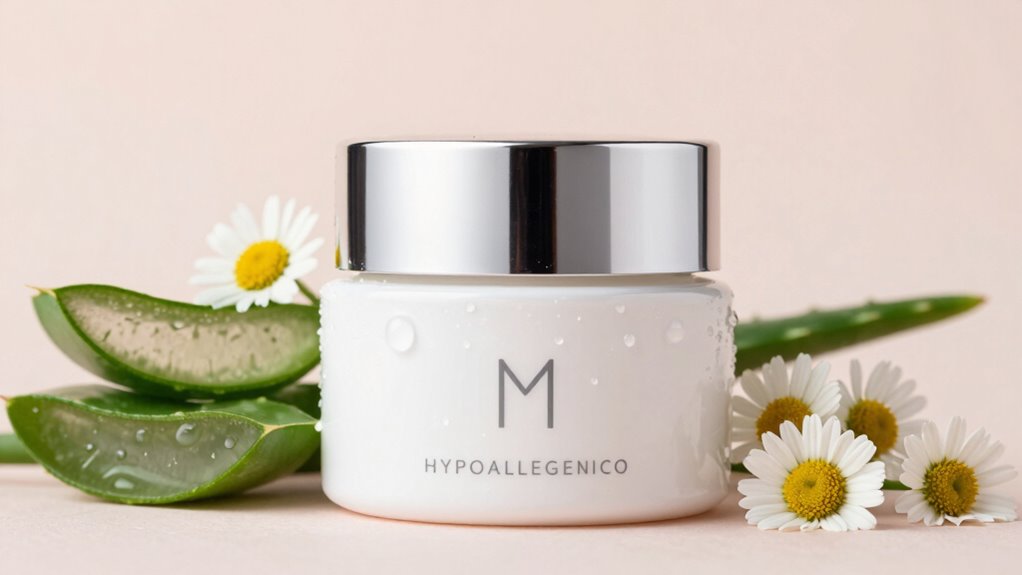

Hypoallergenic claims suggest a product is less likely to cause allergic reactions, but they aren’t regulated or standardized across brands. This means the label doesn’t guarantee safety for everyone, especially if you’re sensitive to specific ingredients like fragrances or preservatives. Even if a product is labeled hypoallergenic, some ingredients might still irritate your skin. To stay safe, check the ingredient list carefully and perform a patch test—trust us, understanding these nuances is worth your time.

Turn your quiet moments into listening time
- Thousands of audiobooks, podcasts and originals
- Listen on your phone, tablet or Echo — also offline
- Cancel anytime
Key Takeaways
- “Hypoallergenic” indicates some testing to reduce allergic reactions but does not guarantee safety for everyone.
- The label is not standardized; different brands may interpret and apply it differently.
- It does not mean free from common allergens like fragrances, preservatives, or dyes.
- Individual sensitivities vary; what triggers a reaction in one person may not in another.
- Performing patch tests and reading ingredient labels are essential for managing allergies effectively.
Many products now claim to be hypoallergenic, but understanding what this label truly means can be confusing. The term often suggests that a product is less likely to cause allergic reactions, but it doesn’t guarantee that everyone will avoid skin sensitivities or allergy triggers. Manufacturers might use the term to appeal to consumers with sensitive skin, yet the reality is that “hypoallergenic” isn’t regulated or standardized across the industry. That means one brand’s hypoallergenic might not be the same as another’s, leaving you to interpret what it really signifies.
Hypoallergenic labels vary; they don’t guarantee safety for everyone.
When you see a product labeled hypoallergenic, it’s tempting to assume it’s safe for all skin types, especially if you have a history of skin sensitivities. However, this label doesn’t mean the product is free from ingredients that could irritate your skin or trigger allergies. Instead, it generally indicates that the product has undergone some testing to reduce the likelihood of causing a reaction. Still, this doesn’t eliminate the presence of common allergy triggers like fragrances, preservatives, or certain dyes. For individuals with sensitive skin, even trace amounts of these substances can lead to redness, itching, or more serious reactions.
It’s essential to remember that skin sensitivities vary from person to person. What causes a flare-up for you might be harmless to someone else. Reading ingredient labels carefully remains your best strategy. Look for products that specifically cater to your known allergy triggers, such as fragrance-free or preservative-free options. Even with hypoallergenic products, perform a patch test before full application—dab a small amount on your skin and wait 24 to 48 hours to see if any reaction occurs. This simple step can prevent larger flare-ups and help you identify what ingredients to avoid.
While hypoallergenic claims can be helpful, they shouldn’t be your only guide. If you know you’re prone to skin sensitivities, consult with a dermatologist who can recommend products tailored to your needs. Remember, the absence of an allergy or sensitivity doesn’t mean the product is universally safe. It’s always wise to prioritize ingredients, read labels diligently, and listen to your body’s reactions. Hypoallergenic is a useful term, but it’s not a guarantee. Your best defense against skin sensitivities and allergy triggers is awareness, research, and cautious testing. Understanding industry standards can help you make more informed choices about what products to trust.
hypoallergenic fragrance-free moisturizer
As an affiliate, we earn on qualifying purchases.
As an affiliate, we earn on qualifying purchases.
Frequently Asked Questions
Do Hypoallergenic Products Really Prevent All Allergic Reactions?
Hypoallergenic products don’t guarantee you’ll avoid all allergic reactions. They often have allergenic ingredient lists that are carefully chosen, and manufacturers follow strict standards to reduce risks. However, everyone’s allergies are different, and some reactions can still occur. So, while hypoallergenic options are safer for many, they can’t promise complete immunity. Always check ingredient lists and consult with your doctor if you have severe allergies.
How Can I Verify if a Product’s Hypoallergenic Claim Is Trustworthy?
You can verify if a product’s hypoallergenic claim is trustworthy by checking ingredient transparency and seeking third-party testing results. Look for brands that openly list every ingredient and provide certification from independent labs. Avoid products without clear labels or third-party validation, as these claims can be misleading. Doing your research helps ensure the product meets genuine hypoallergenic standards and reduces your risk of allergic reactions.
Are Hypoallergenic Products Suitable for Severe Allergy Sufferers?
Think of hypoallergenic products as a gentle stream—sometimes they flow softly, but not always enough for severe allergy sufferers. If you have skin sensitivity or react strongly to allergenic ingredients, these products may not be enough. They might reduce minor irritations, but for severe allergies, it’s best to consult your doctor. Always check labels carefully and avoid products with known allergenic ingredients to stay safe.
Can Hypoallergenic Products Cause Any Allergic Reactions at All?
Yes, hypoallergenic products can still cause allergic reactions. They typically contain fewer allergenic ingredients, but your skin sensitivities may react to other components or traces. Even if a product claims hypoallergenic, it doesn’t guarantee you’re completely safe, especially if you have severe allergies. Always check ingredient labels carefully, do a patch test first, and consult your allergist to ensure a product suits your specific sensitivities.
Do Hypoallergenic Claims Vary Between Different Countries or Brands?
You’ll find that hypoallergenic claims can differ between countries and brands, so don’t assume they’re all the same. Regulatory differences mean some regions have stricter standards, while others are more lenient. Brand standards also vary, with some companies going above and beyond. It’s a case of “different strokes for different folks,” so always check labels and research brands to verify they meet your allergy needs.
preservative-free skincare products
As an affiliate, we earn on qualifying purchases.
As an affiliate, we earn on qualifying purchases.
Conclusion
Remember, hypoallergenic claims are like a promise on a shiny, unbreakable shield—they sound reassuring, but don’t guarantee you’ll dodge every allergy flare-up. Think of them as a gentle breeze, offering some relief but not a hurricane of immunity. Always read the fine print and test new products carefully. Your allergy journey is a wild ride, so stay vigilant and don’t rely solely on labels—your best defense is informed awareness.
allergy-tested sensitive skin creams
As an affiliate, we earn on qualifying purchases.
As an affiliate, we earn on qualifying purchases.
As an affiliate, we earn on qualifying purchases.
Fall Picks
fall essentials
As an affiliate, we earn on qualifying purchases.