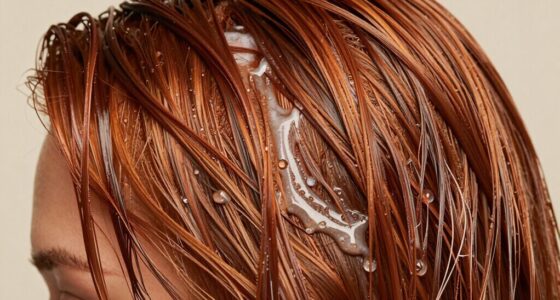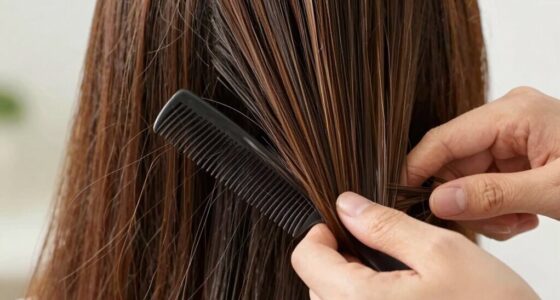
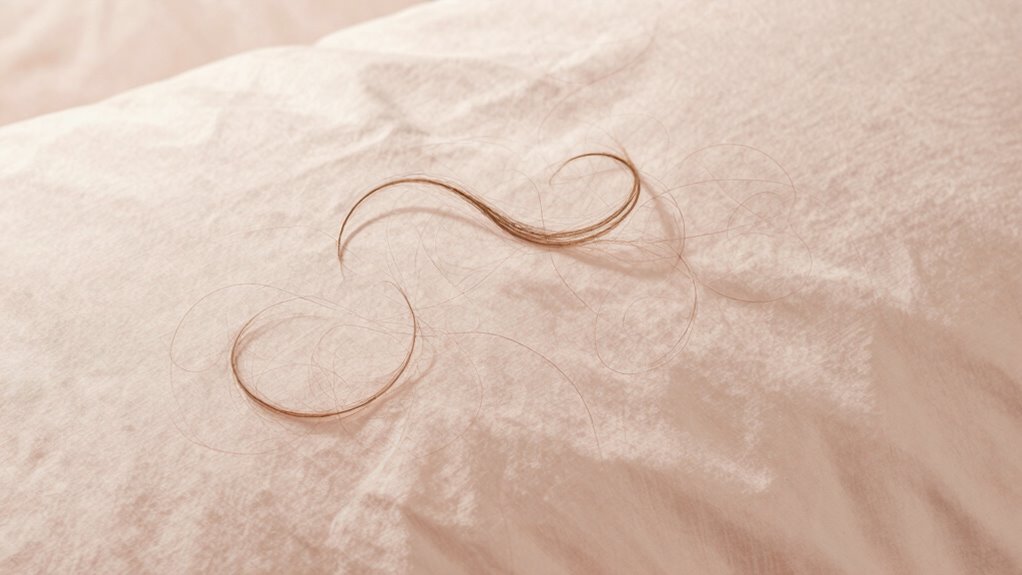
If you don’t protect your hair from pillow friction while sleeping, it can cause breakage, split ends, and dullness over time. Friction happens when your hair rubs against rough or unclean pillowcases, weakening the cuticle. To prevent damage, try using silk or satin pillowcases, tie your hair loosely, or wear a silk bonnet. These simple tips can make a big difference—keep exploring to learn more ways to keep your hair healthy overnight.
Key Takeaways
- Friction from rough pillowcases damages hair cuticles, causing breakage and dullness.
- Silk and satin pillowcases reduce friction, helping maintain healthier, shinier hair overnight.
- Tying hair loosely or braiding before sleep minimizes rubbing and stress on hair strands.
- Regularly washing and changing pillowcases prevents dirt buildup that can worsen friction damage.
- Using protective accessories like silk scarves or bonnets shields hair from friction during sleep.
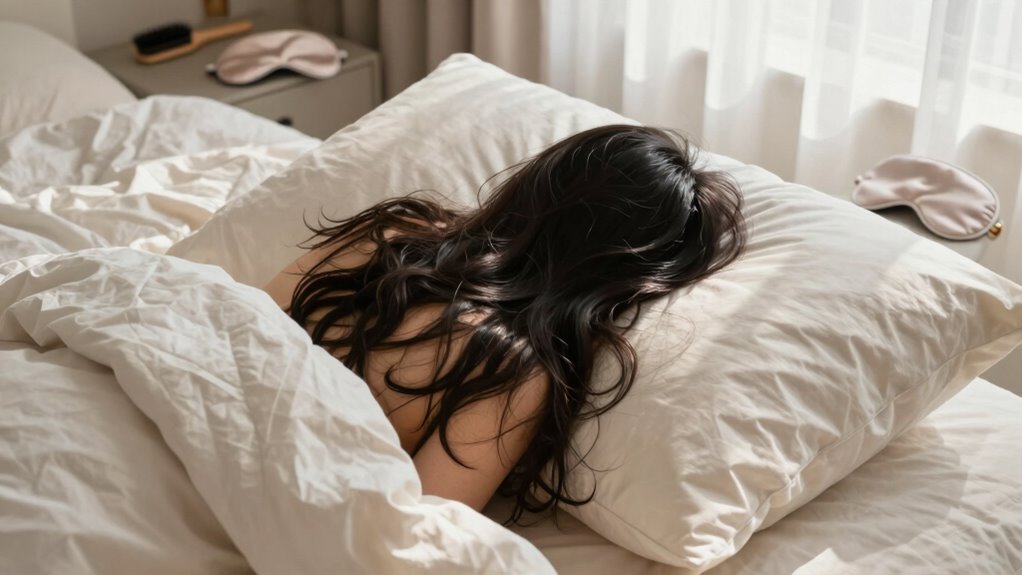
Getting enough quality sleep is essential for healthy hair growth. When you rest, your body repairs itself, supporting stronger, shinier hair. But did you know that your sleep environment, especially your pillow, can influence your hair’s health? Pillow friction is a common issue that can lead to hair damage. When your hair rubs against a rough or unclean pillowcase, it experiences friction that weakens the hair cuticle over time. This repeated rubbing can cause split ends, breakage, and dullness, making your hair look frizzy and unhealthy. If you toss and turn at night, you’re likely increasing this friction, which exacerbates hair damage. It’s not just about how much you sleep, but also about how you sleep and what you rest your head on. Additionally, choosing appropriate sleep accessories can further help minimize friction and protect your hair during the night.
The good news is, you can easily minimize pillow friction and protect your hair. First, choose pillowcases made of smooth, gentle fabrics like silk or satin. These materials create less friction than cotton or linen, allowing your hair to glide effortlessly across the surface. Silk and satin also help reduce static and frizz, keeping your hair smoother and less prone to damage. Additionally, consider changing your pillowcase regularly; a clean, fresh surface means fewer dirt particles and oils that can cling to your hair and scalp, further weakening strands. It’s worth investing in high-quality pillowcases and switching them out weekly to maintain a healthy sleep environment for your hair.
Another simple fix is to tie your hair loosely or braid it before bed. When your hair is free or loosely confined, there’s less movement and rubbing against the pillowcase. This reduces the chances of breakage caused by friction. If you have long or thick hair, using a silk or satin bonnet or scarf can also help protect your strands overnight. These coverings guard against friction and prevent your hair from rubbing directly against the pillow, especially if you tend to toss and turn. Furthermore, keeping your hair well-moisturized and avoiding harsh styling products before bed can make your hair more resilient to damage caused by friction.
Frequently Asked Questions
Can Sleeping Position Affect Hair Health Long-Term?
Your sleep position can affect your hair health long-term by increasing hair friction and causing damage. Sleeping on your side or stomach may lead to more friction against your pillow, resulting in breakage and split ends over time. To protect your hair, try adjusting your sleep posture, use silk or satin pillowcases, and avoid rough fabrics. This simple change helps reduce friction and keeps your hair healthier in the long run.
Does Pillow Material Influence Hair Breakage During Sleep?
Yes, pillowcase material influences hair breakage during sleep. Using silk or satin pillowcases reduces hair friction compared to cotton, which can cause more tugging and breakage. When you switch to smoother pillowcases, you’ll notice less snagging, less damage, and healthier hair over time. Opt for these materials to protect your hair from unnecessary friction and breakage while you sleep, ensuring your hair stays strong and shiny.
Are Certain Hairstyles Better for Preventing Friction Damage at Night?
Think of your hair as a delicate river, flowing smoothly when protected. Braid styles reduce friction by keeping strands contained, preventing tangles and breakage during the night. Pairing these with silk pillowcases creates a silky slipstream, further minimizing damage. Avoid tight styles that strain roots, and embrace loose, gentle braids to safeguard your hair’s natural flow, ensuring your locks stay healthy and vibrant with each dawn.
How Does Sleep Quality Impact Hair Growth and Loss?
Good sleep quality considerably impacts your hair growth and loss. When you sleep well, your hair follicle health improves because your body produces more sleep hormones like melatonin, which support hair regeneration. Poor sleep disrupts this hormone influence, leading to weakened hair follicles and increased shedding. Prioritizing restful sleep helps maintain healthy hair, reduces loss, and promotes stronger growth by supporting your body’s natural processes.
Can Sleeping With Wet Hair Cause More Friction Damage?
Sleeping with wet hair can cause more friction damage, as the moisture increases scalp aeration and makes your hair more susceptible to breakage. Imagine your hair as delicate threads rubbing against pillow fibers; the wetness acts like a slick surface, heightening friction. This can weaken strands over time, leading to breakage and hair loss. To protect your hair, try drying it thoroughly before bed, ensuring moisture retention isn’t compromised.
Conclusion
So, next time you hit the hay, remember that your sleep setup can impact your hair’s health. Avoid friction by switching to silk pillowcases or tying your hair loosely, and your strands will thank you—just like a knight shielding his armor. Don’t let your beauty rest be a “sleep of the unjust,” because simple fixes can make all the difference. Sweet dreams and shiny hair await when you give friction the boot!