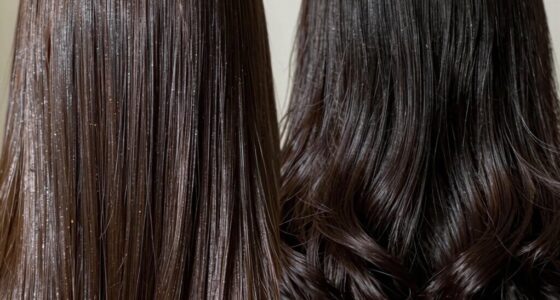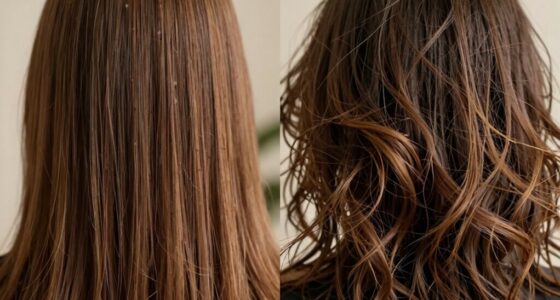
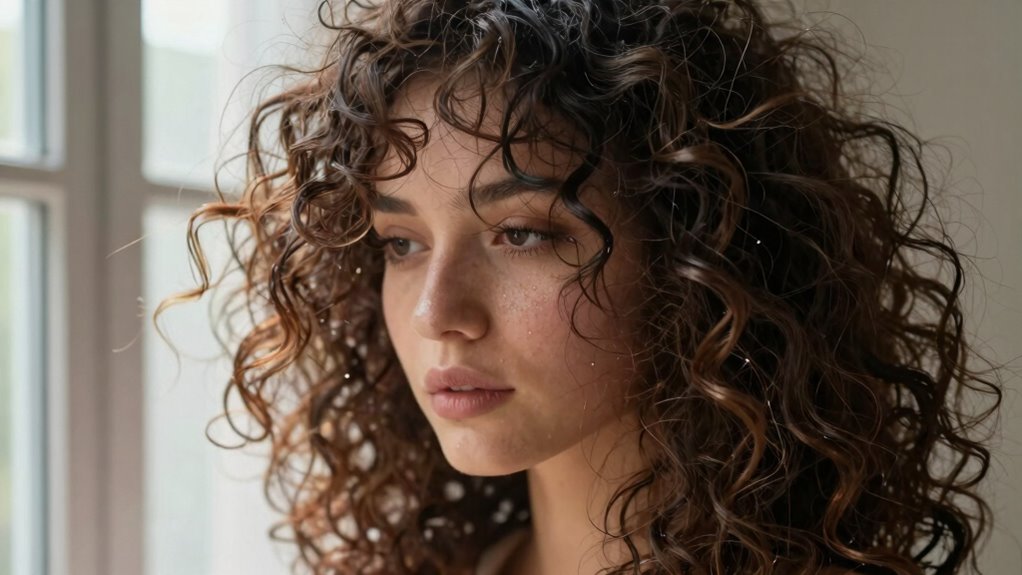
You’ll find that environmental factors often cause more frizz than styling products alone. Humidity, water quality, and climate weaken your hair’s cuticle, making it swell or become brittle. Damaged cuticles trap moisture or lose natural oils, leading to unpredictable frizz. Harsh environmental conditions can also damage hair over time. Understanding these natural influences can help you protect your hair better. Keep exploring to discover how you can adapt your routine for healthier, frizz-free hair regardless of the weather.
Key Takeaways
- Environmental factors like humidity and water quality directly affect the hair cuticle, leading to frizz regardless of styling products.
- Damaged or raised cuticles from environmental stressors trap moisture, causing unpredictable frizz that products alone can’t fully control.
- Fluctuations in humidity cause moisture absorption or loss, influencing frizz more than product ingredients.
- Water mineral content and pH levels impact cuticle health, making environmental water quality a key factor in frizz development.
- Protecting hair from environmental damage through routine adjustments is essential, as products can’t fully counteract external conditions.

Hair frizz occurs when the outer layer of your hair, the cuticle, becomes raised or damaged, allowing moisture to enter and cause your strands to swell and curl unpredictably. While many people blame their favorite styling products or routines, the environment plays a much bigger role in causing frizz than just product misuse. Factors like humidity fluctuations and water quality effects are often overlooked but are essential to understanding why your hair behaves the way it does. Additionally, changes in environmental conditions can weaken the cuticle over time, making your hair more susceptible to frizz. Recognizing the importance of environmental conditions can help you better anticipate and manage frizz before it starts.
Humidity fluctuations are one of the most significant environmental contributors to frizz. When the air is humid, it contains more water vapor, which easily penetrates and hydrates your hair’s cuticle. If your cuticle is already compromised—due to damage from heat styling, chemical treatments, or harsh shampoos—the moisture gets trapped inside, causing your hair to swell and become frizzy. Conversely, on days with low humidity, your hair can become dry and brittle, leading to increased porosity and a heightened tendency to frizz when moisture finally reenters. These constant changes in moisture levels make your hair unpredictable, especially if you’re living in an area with significant weather shifts or traveling between different climates. Incorporating humidity control techniques, such as using anti-humidity sprays or adjusting your environment, can also help mitigate these effects. Being aware of climate impact can help you adapt your routine more effectively.
Water quality effects are another environmental factor that influences frizz. Hard water, which contains high levels of minerals like calcium and magnesium, can leave deposits on your hair. Over time, these mineral buildup can damage the cuticle, making it rougher and more prone to frizz. Soft water, while gentler, can sometimes cause your hair to absorb excess moisture more readily, especially if it’s not balanced with proper conditioning. The pH level of your water also matters; water that’s too alkaline can lift the cuticle, increasing porosity and making your hair more susceptible to frizz. Additionally, chlorine and other chemicals found in some tap water sources can strip natural oils from your hair, further damaging the cuticle and promoting frizz. Recognizing the impact of water quality on hair health can help you better tailor your routine to combat frizz effectively. Using water filters or clarifying treatments can significantly improve your hair’s condition by reducing mineral deposits and chemical residues.

Kenra Professional Anti-Humidity Spray 5 | Frizz & Static Control Spray |72-Hour Humidity Resistance & Protection | Lightweight, Low Hold Formula | Thermal Protection | 5oz
- Type of Spray: Anti-Humidity Frizz & Static Control
- Humidity Resistance: 72-Hour Humidity Protection
- Frizz Control: 72-Hour Frizz Defense
As an affiliate, we earn on qualifying purchases.
As an affiliate, we earn on qualifying purchases.
Frequently Asked Questions
Can Diet Affect Hair Frizz?
Yes, your diet impact can influence hair frizz. Nutritional factors like deficiencies in vitamins A, C, E, and biotin can weaken hair and make it more prone to frizz. Eating a balanced diet rich in these nutrients helps strengthen your hair from within, reducing frizz and enhancing shine. Staying hydrated also plays a key role, as dehydration can dry out hair, making it more frizzy and difficult to manage.
Does Water Temperature Impact Frizz Levels?
In the words of a wise old sage, “Cold water is your hair’s best friend.” Water temperature definitely impacts frizz levels, especially when considering your hair porosity. Hot water strips natural oils, making hair more porous and prone to frizz. Conversely, cold water helps seal the cuticle, reducing frizz and enhancing shine. Adjusting water temperature during your hair wash can markedly improve your frizz control game.
How Does Humidity Specifically Cause Frizz?
Humid air causes frizz because it introduces extra moisture into your hair’s environment, which interacts with your hair porosity. If your hair has high porosity, it absorbs this moisture quickly, leading to swelling and frizz. Conversely, low porosity hair resists moisture, reducing frizz but still reacting to humidity’s effects. So, humidity influences your hair’s moisture balance, making it swell or tighten, and consequently, creating frizz.
Are Certain Hair Types More Prone to Environmental Frizz?
Certain hair types, like curly or coarse textures, are more prone to environmental frizz because their structure naturally traps moisture and reacts strongly to humidity. If you have fine or straight hair, scalp oiliness can weigh hair down, reducing frizz. Notably, 65% of people with curly hair report more frizz in humid weather, highlighting how hair texture markedly influences how your hair responds to the environment.
Can Indoor Humidity Control Reduce Frizz?
Yes, indoor humidity control can reduce frizz. By using humidity sensors, you can monitor moisture levels accurately, ensuring the environment stays balanced. A dehumidifier’s efficacy in maintaining ideal humidity prevents hair from absorbing excess moisture, which causes frizz. Keeping humidity within a controlled range minimizes environmental effects on your hair, helping you achieve smoother, more manageable styles without relying solely on hair products.
As an affiliate, we earn on qualifying purchases.
Conclusion
So, next time your hair frizzes up, don’t blame the products alone. The environment plays a bigger role than you might think. Humidity, air quality, and weather conditions can sabotage even the best hair routine. Before reaching for another serum or spray, consider your surroundings. You might find that adjusting your environment or your routine to suit it is the real key to smoother, frizz-free hair. Sometimes, nature’s the biggest culprit—and solution.
As an affiliate, we earn on qualifying purchases.
As an affiliate, we earn on qualifying purchases.