
Multi-styler tools use airflow direction to give you more control over your hairstyle. By switching nozzles or tilting attachments, you can direct airflow for smoother, sleeker looks or for volume and curls. Downward airflow flattens cuticles for a polished finish, while dispersing airflow lifts roots and adds texture. Adjusting airflow helps you customize your style easily, and mastering these techniques means better, more consistent results. Keep exploring to learn how to perfect your styling skills.
Key Takeaways
- Nozzle attachments direct airflow to target specific hair areas, influencing the final texture and style.
- Downward airflow smooths cuticles for sleek results, while broader airflow adds volume and natural curls.
- Changing nozzle angles or types alters airflow direction, enabling different styling effects.
- Proper airflow control, combined with heat settings, enhances precision and reduces hair damage.
- Mastering airflow manipulation allows for customizable, consistent hairstyles tailored to desired outcomes.
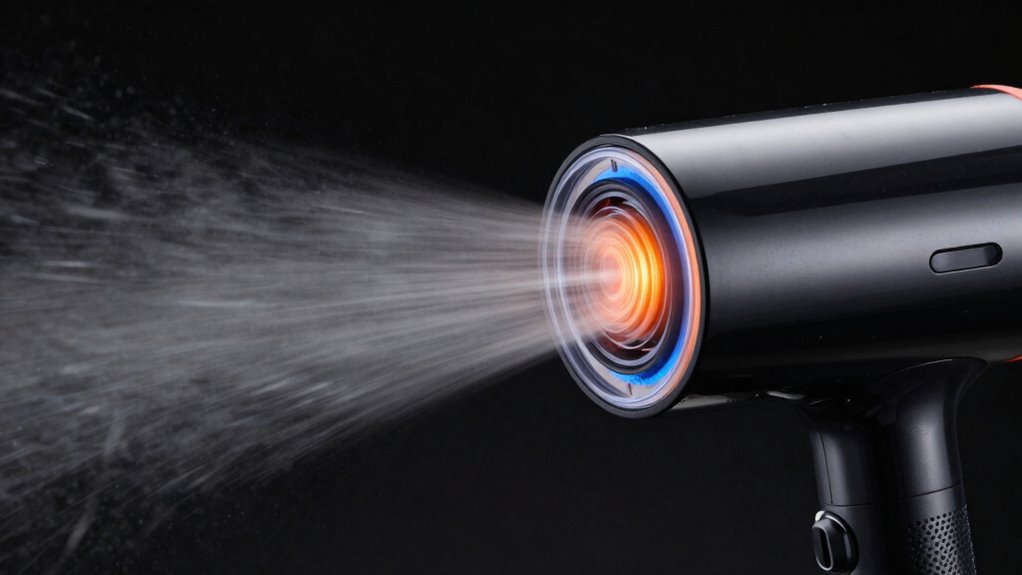
Multi-Styler tools have revolutionized how you approach hair styling by combining multiple functions into a single device. Instead of juggling separate tools like a flat iron, curling wand, and blow dryer, you get a versatile gadget that can do it all. This convenience makes styling faster and more efficient, especially when you’re aiming for a specific look. One of the key features that influence the results of your styling is the airflow direction, which is often affected by the nozzle attachments you use and the heat settings you choose.
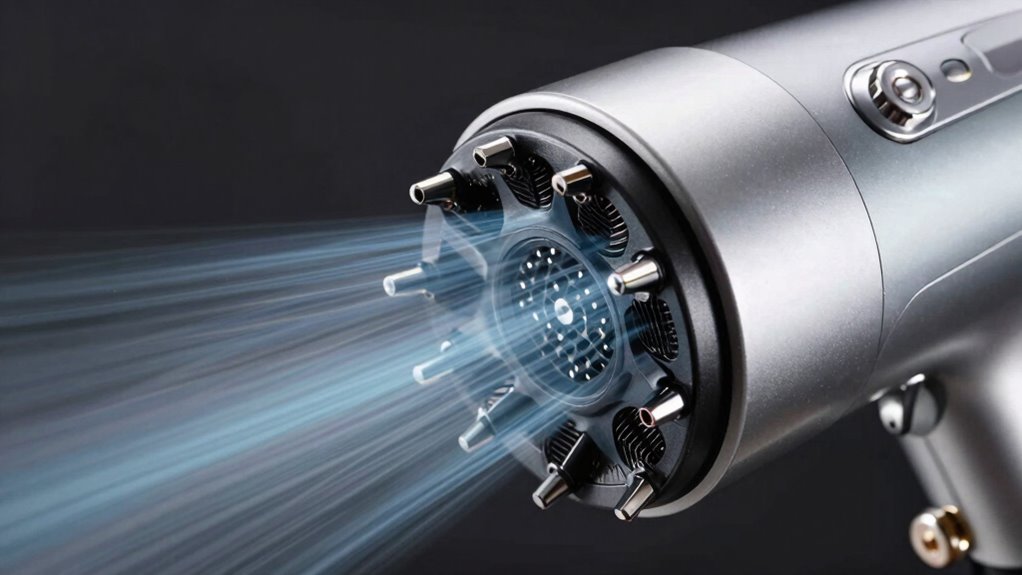
When you switch between different nozzle attachments, you’re effectively redirecting how the air flows through the tool. For example, a concentrator nozzle focuses the airflow into a narrow stream, allowing you to smooth or straighten hair with precision. Conversely, a diffuser attachment disperses air over a broader area, which is ideal for enhancing natural curls or adding volume. Understanding how airflow direction impacts your style helps you manipulate your hair more intentionally. If you want sleek, straight results, directing airflow downward with a concentrator helps flatten cuticles and reduce frizz. For voluminous, bouncy curls, using a diffuser with gentle, varied airflow promotes a softer, more natural curl formation.
Additionally, airflow direction plays a role in how your hair responds to styling, influencing the final texture and hold. Heat settings also play a crucial role in how airflow impacts your results. Lower heat levels give you more control and reduce the risk of damage, especially when combined with airflow that isn’t too forceful. Higher heat settings, paired with the right nozzle, can quickly smooth hair or set curls, but they require caution to avoid overheating and damaging your strands. Adjusting the heat according to your hair type ensures that airflow direction works in harmony with temperature to achieve your desired style without sacrificing hair health. Using the correct combination of airflow and heat can optimize your styling and help maintain healthier hair over time. Moreover, understanding the science of airflow can help you choose the right settings for different hair textures and styles.
The way you change airflow direction can also influence the texture and finish of your hair. Directing air downward while using a high heat setting can create a sleek, polished look, whereas tilting the nozzle or switching attachments can help lift roots or add volume. When you understand the relationship between nozzle attachments, heat settings, and airflow, you gain more control over your styling results. It’s not just about the tool itself but how you use it. By experimenting with airflow direction, you can customize your styling process, making each look precisely what you want—whether it’s smooth and shiny or full and voluminous. Mastering these elements transforms your routine from guesswork to a precise, creative process. Recognizing the importance of styling techniques helps you optimize your tools for the best possible results.
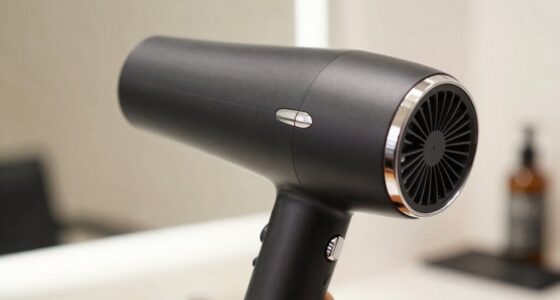
multi-styler hair tool with airflow control
As an affiliate, we earn on qualifying purchases.
As an affiliate, we earn on qualifying purchases.
Frequently Asked Questions
Can Airflow Direction Affect Hair Health and Damage?
Yes, airflow direction can affect your hair health and damage. If you direct airflow improperly, it can cause hair breakage and make your scalp prone to irritation. For example, blowing hot air directly onto the roots or ends may weaken hair strands, leading to breakage. Additionally, inconsistent airflow can lead to scalp irritation, making your scalp sensitive and prone to issues. Always adjust airflow to minimize damage and keep your hair healthy.
Are Multi-Styler Tools Suitable for All Hair Types?
Like a blank canvas ready for art, multi-styler tools offer unmatched styling versatility, but they aren’t suitable for all hair types. If you have fine or delicate hair, aggressive heat or airflow can cause damage. For thick or curly textures, these tools can work wonders if used carefully. Always consider your hair’s texture and needs, and choose settings wisely to protect your hair while achieving your desired look.
How Does Airflow Direction Impact Styling Time?
Changing airflow direction with your multi-styler tool can markedly impact styling time. Airflow customization allows you to target specific areas more precisely, making your styling process more efficient. When you direct airflow correctly, you can reduce the number of passes needed, speeding up styling. Proper airflow control helps you achieve your desired look faster, enhancing overall styling efficiency and saving you time while creating a polished finish.
Can Adjusting Airflow Direction Prevent Heat Damage?
Yes, adjusting airflow direction can help prevent heat damage by improving heat distribution and airflow control. By directing airflow away from sensitive areas, you guarantee even heat distribution, reducing hot spots that cause damage. Proper airflow control also allows you to style more gently, minimizing the risk of overheating your hair. This way, you protect your hair’s health while achieving your desired style efficiently.
Do Different Airflow Directions Create Different Hairstyle Holds?
Yes, adjusting airflow directions can create different hairstyle holds. By customizing airflow, you control how the hair is shaped and set, giving you styling versatility. For example, directing airflow downward can smooth and hold hair in place, while airflow from different angles adds volume or curls. This precise airflow customization helps you achieve various styles, offering you the flexibility to create everything from sleek finishes to voluminous looks with ease.
As an affiliate, we earn on qualifying purchases.
Conclusion
So, don’t let the changing airflow directions discourage you. With a little practice, you’ll see how mastering these tools can transform your styling game. Adjusting airflow direction isn’t complicated once you understand the basics, and it’s key to achieving your desired look. Remember, even professional stylists tweak airflow to perfect their styles. Give it a try—you might be surprised how much control you have over your results just by changing the airflow direction!
concentrator nozzle for hair styling
As an affiliate, we earn on qualifying purchases.
As an affiliate, we earn on qualifying purchases.
As an affiliate, we earn on qualifying purchases.