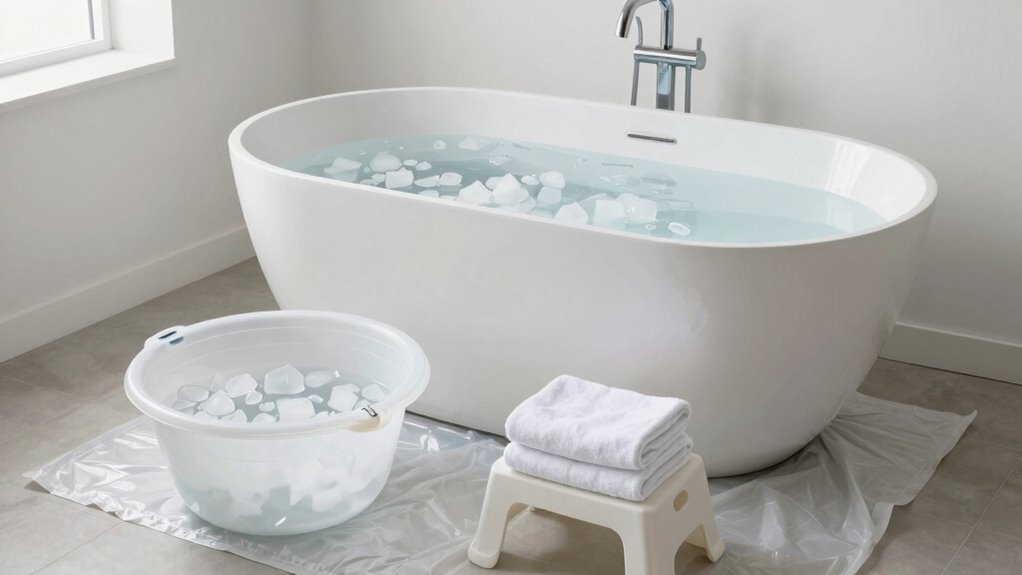

To set up an ice bath without turning your bathroom into a mess, place a large, waterproof container on a towel or mat on a tiled or waterproof surface. Use a plastic sheet underneath to catch drips and spills, and fill the container with water and ice, keeping it between 50-59°F. Monitor the temperature with a thermometer, and keep the bath under 15 minutes. Proper cleanup and ventilation help maintain hygiene—learn more tips to make your setup easier and cleaner.

Turn your quiet moments into listening time
- Thousands of audiobooks, podcasts and originals
- Listen on your phone, tablet or Echo — also offline
- Cancel anytime
Key Takeaways
- Use a large, waterproof container placed on a waterproof surface with a plastic sheet underneath to contain spills.
- Line the area with towels or mats to absorb splashes and prevent water damage to floors.
- Drain and clean the setup promptly after each use to prevent mold and water stains.
- Adjust the water and ice levels carefully to avoid overfilling and spills during setup.
- Ensure proper ventilation and monitor humidity to prevent moisture buildup and bathroom damage.
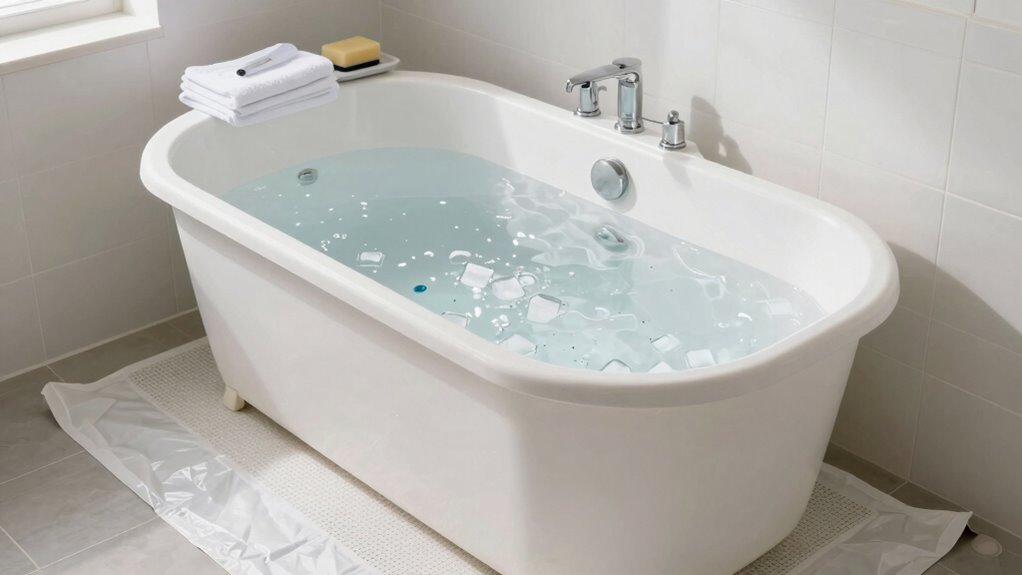
Setting up an ice bath is a straightforward process that can considerably aid in muscle recovery and reduce soreness after intense workouts. To do this effectively without turning your bathroom into a disaster, you need to plan carefully and follow some simple steps. The goal is to create a cold exposure environment that’s safe, efficient, and easy to clean up afterward.
Start by gathering your supplies. You’ll need a large container—like a bathtub, storage bin, or even a portable ice bath tub—large enough to submerge your legs or hips. Fill it with cold water, about halfway, then add ice. A common ratio is roughly one part ice to three parts water, but you can adjust based on your desired temperature. Using a thermometer helps ensure you hit that ideal range of 50-59°F (10-15°C), which is optimal for cold exposure techniques. Keep in mind, colder isn’t always better; you want a temperature that’s effective but not uncomfortable or dangerous.
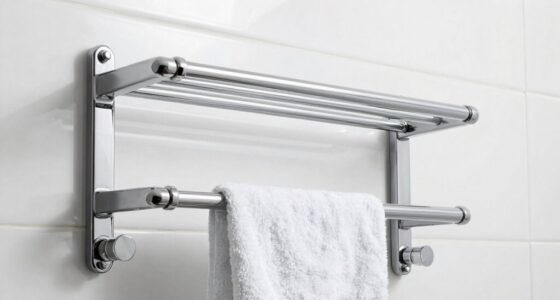
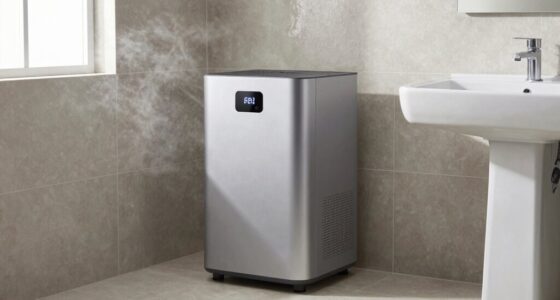
To prevent water from spilling everywhere, consider placing the container on a waterproof surface, like a tiled floor or a large towel. This minimizes cleanup and prevents water damage. Have a towel or mat nearby for easy access when you get in and out. To keep your bathroom tidy, use a plastic sheet or garbage bag underneath the container if it’s on a sensitive surface. This will catch any drips or spills and make cleanup faster. Additionally, monitoring the air quality in your bathroom can help ensure that humidity and moisture levels don’t promote mold growth over time. Proper ventilation can also help maintain a healthy environment during and after the cold exposure, especially in spaces prone to humidity buildup. Regularly checking the humidity levels can help prevent any long-term issues related to excess moisture.
When your setup is ready, step into the ice bath carefully, ensuring your entire lower body is submerged. To maximize post bath recovery, keep the session between 10-15 minutes. During this time, stay relaxed and avoid overexerting yourself. After your session, drain the water into the sink or tub, and wipe down any surfaces that may have gotten wet. This simple cleanup prevents mold and keeps your bathroom hygienic. Properly managing water temperature and cleanup routines can extend the lifespan of your setup and maintain hygiene.
large waterproof ice bath container
As an affiliate, we earn on qualifying purchases.
As an affiliate, we earn on qualifying purchases.
Frequently Asked Questions
How Often Should I Take an Ice Bath for Optimal Recovery?
You should take an ice bath about two to three times a week for maximum recovery. Keep the ice bath duration between 10 to 15 minutes to avoid overexposure. This frequency allows your muscles to recover effectively without risking cold-related issues. Listen to your body, and adjust the frequency if you notice excessive fatigue or discomfort, ensuring you get the most benefits from each session.
Can I Reuse the Ice Bath Water for Multiple Sessions?
Yes, you can reuse the ice water for multiple sessions, but prioritize good bath maintenance tips. To maximize ice water recycling, keep the water clean by draining and replacing it if it becomes cloudy or develops an odor. Use a fine mesh or filter to remove debris, and consider adding fresh ice periodically. This way, you save on resources while maintaining a safe, effective ice bath.
What Safety Precautions Should I Follow During an Ice Bath?
You should always monitor the temperature to guarantee it stays between 50-59°F for safety. Keep an eye on your skin for signs of frostbite or numbness, and limit your immersion to about 10-15 minutes. Use a thermometer to regulate water temperature and avoid sudden temperature drops. Stay hydrated, and listen to your body—if you feel uncomfortable or cold beyond your tolerance, get out immediately.
How Do I Prevent Water From Spilling Outside the Tub?
To prevent water from spilling outside the tub, focus on water containment and spill prevention. Use a sturdy, well-fitting liner or towel around the tub’s edges to catch any splashes. Keep a mop or towels nearby to quickly clean any spills. Filling the tub gradually helps control water level and reduces overflow. Make sure the tub is stable and on a flat surface to avoid accidental tipping, ensuring your setup stays neat and safe.
What Are the Signs of Adverse Reactions to Cold Therapy?
During cold exposure, watch for adverse symptoms like intense shivering, numbness, dizziness, or chest pain. If you experience any of these signs, stop the cold therapy immediately. Your body might also show unusual skin color changes or difficulty moving. These are clear indicators of adverse reactions. Always listen to your body, and if symptoms worsen, seek medical help promptly to prevent serious health issues.
As an affiliate, we earn on qualifying purchases.
Conclusion
Setting up your ice bath is like planting a seed—you start small, nurture it with care, and soon, you’ll harvest the benefits of renewed recovery. With a little planning and a splash of creativity, you turn chaos into calm, transforming your space into a sanctuary of healing. Remember, every icy dip is a step closer to resilience, shaping your body and mind like a sculptor molds their masterpiece. Immerse yourself, and let the cold forge your strength.
waterproof floor mat for bath setup
As an affiliate, we earn on qualifying purchases.
As an affiliate, we earn on qualifying purchases.
digital thermometer for water temperature
As an affiliate, we earn on qualifying purchases.
As an affiliate, we earn on qualifying purchases.
Halloween Picks
halloween
As an affiliate, we earn on qualifying purchases.