
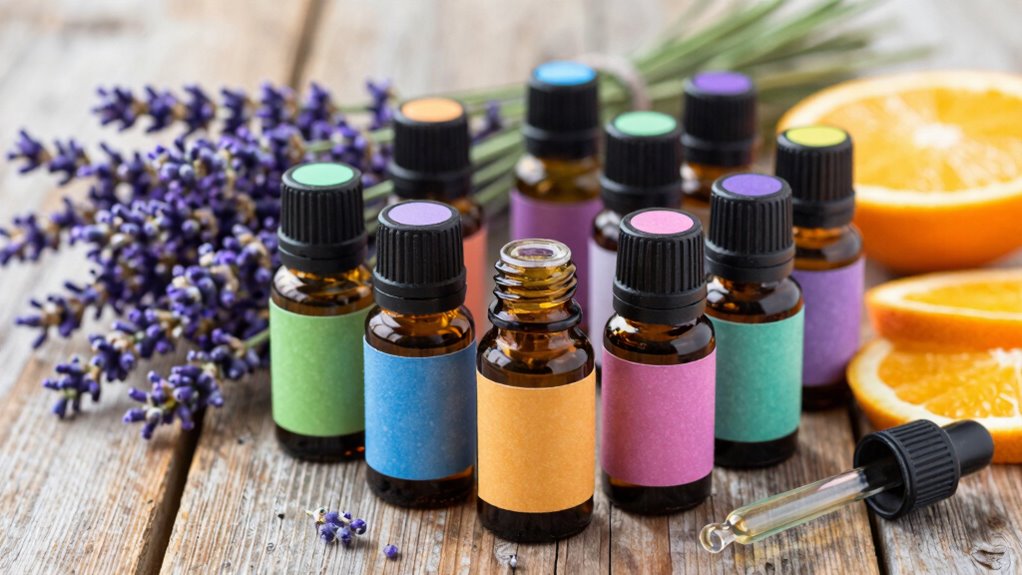

Essential oils are potent plant extracts with powerful effects, but they require careful use to stay safe. Always dilute oils with carrier oils before applying to skin and perform patch tests to check for reactions. Avoid ingesting undiluted oils, and keep them away from eyes, children, and pets. Choose high-quality oils and follow safety guidelines to prevent irritation or toxicity. Continuing your exploration will help you use essential oils confidently and safely for maximum benefits.

Turn your quiet moments into listening time
- Thousands of audiobooks, podcasts and originals
- Listen on your phone, tablet or Echo — also offline
- Cancel anytime
Key Takeaways
- Proper dilution with carrier oils and patch testing are essential to prevent skin irritation and allergic reactions.
- Avoid ingesting essential oils unless guided by a qualified professional to prevent toxicity.
- Keep essential oils out of reach of children and pets to avoid accidental poisoning or adverse effects.
- Use high-quality, authentic oils from reputable sources to ensure safety and effectiveness.
- Be aware of individual sensitivities, and follow safety guidelines for diffusing and topical application.
What Are Essential Oils and How Do They Work?
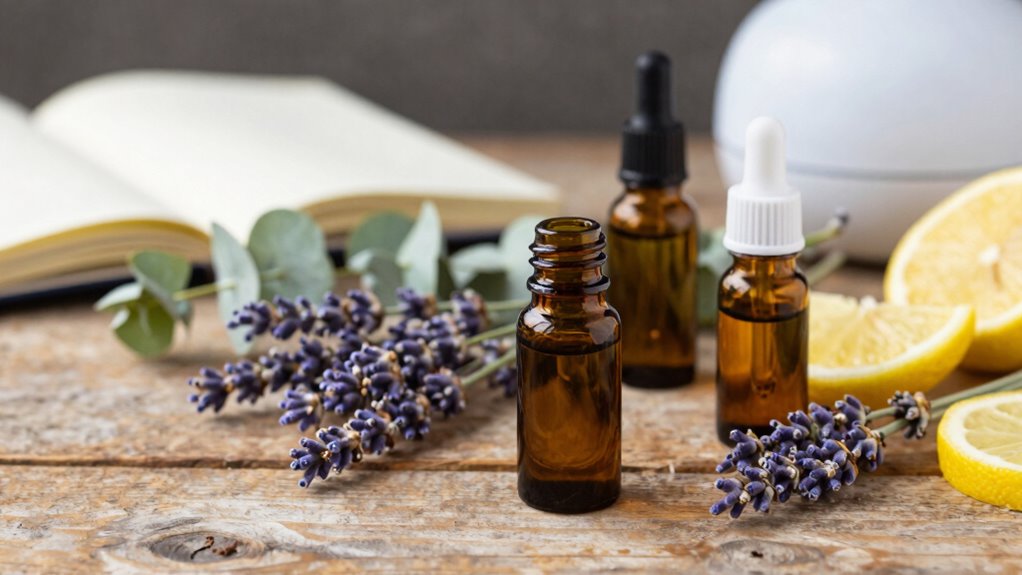
Essential oils are concentrated extracts from plants that contain their natural aroma and beneficial compounds. These potent oils are obtained through a process called essential oil extraction, which captures the plant’s scent and active ingredients. When you use essential oils in aromatherapy, you can experience various benefits, such as stress relief, improved mood, and enhanced relaxation. The aromatic compounds in these oils interact with your olfactory system, sending signals to your brain’s limbic system, which influences emotions and behavior. Because of their concentrated nature, small amounts of essential oils can deliver powerful effects. Understanding how these oils work helps you appreciate their role in promoting physical and emotional well-being, making them a popular choice for holistic health practices. Additionally, being aware of Free Floating properties helps ensure safe and effective use of essential oils, especially when considering their potential interactions with medications or health conditions. Recognizing how concentration levels can affect safety is also crucial for responsible use.
Are Essential Oils Safe to Use? Key Do’s and Don’ts
To use essential oils safely, you need to follow proper dilution practices and always do a patch test before full application. Store your oils in a cool, dark place and handle them carefully to prevent accidents. Paying attention to these do’s and don’ts helps you enjoy their benefits without unnecessary risks. Additionally, be mindful of the air quality considerations in your environment, as using essential oils in poorly ventilated areas can lead to irritation or discomfort.
Proper Dilution Practices
While essential oils can offer many benefits, using them safely requires proper dilution. Always mix essential oils with carrier oils like coconut, jojoba, or almond oil before applying to your skin. This reduces the risk of irritation and sensitization. When creating essential blends, follow recommended dilution ratios—generally 1-3 drops of essential oil per tablespoon of carrier oil for topical use. For diffusing, use a few drops in a diffuser rather than overdoing it. Avoid applying undiluted oils directly to your skin or ingesting them without guidance. Proper dilution not only enhances safety but also maximizes the benefits of your essential oils. Remember, less is often more—start with small amounts and adjust as needed.
Patch Test Importance
Before applying essential oils to your skin, it’s crucial to perform a patch test to check for potential sensitivities or allergic reactions. This allergy testing helps identify skin sensitivity before widespread use, preventing irritation or more severe reactions. To do a patch test, apply a small amount of diluted oil to a discreet skin area and wait 24 hours. If no redness, itching, or swelling occurs, it’s generally safe to proceed. Remember, everyone’s skin reacts differently, so don’t skip this step. Here’s a quick reference:
| Step | Purpose |
|---|---|
| Apply small amount | Test for skin sensitivity |
| Wait 24 hours | Observe for reactions |
| Assess results | Decide on safe use |
This simple step ensures you enjoy the benefits of essential oils safely. Additionally, understanding color accuracy and proper calibration can enhance your overall experience with visual projects, whether for home theaters or other media setups.
Storage and Handling
Proper storage and handling are essential to keep your essential oils safe and effective. To guarantee quality and safety, follow these storage tips and handling precautions:
- Store oils in dark glass bottles away from sunlight and heat to prevent degradation.
- Keep caps tightly sealed after each use to avoid evaporation and contamination.
- Handle oils with clean hands or tools to prevent introducing bacteria or impurities.
- Be aware of air quality and environmental factors, as poor air quality can affect the longevity and potency of your oils, emphasizing the importance of air quality awareness.
What Are the Common Risks of Using Essential Oils?
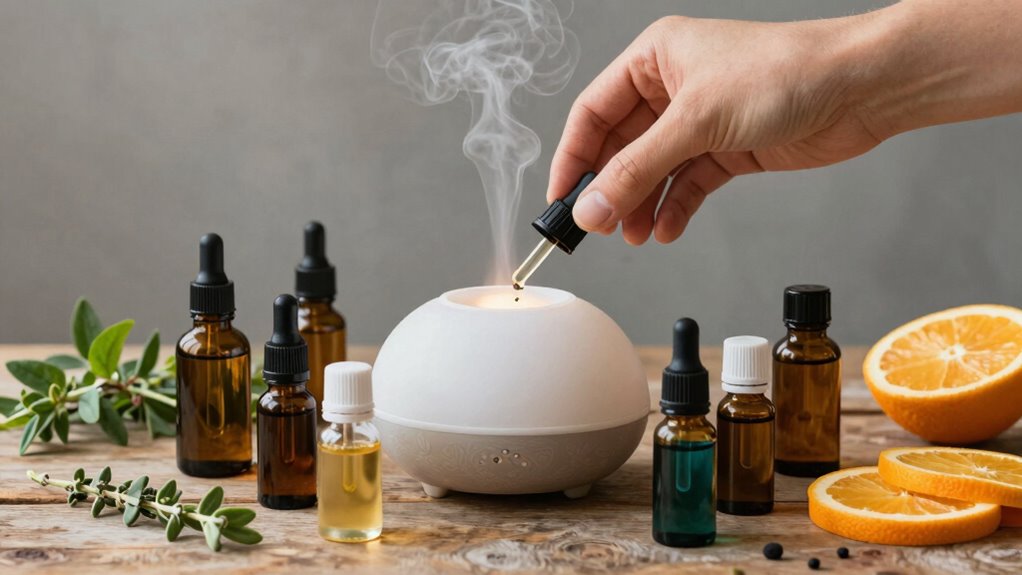
Essential oils can offer many benefits, but they also carry certain risks if not used carefully. In aroma therapy and scent blending, you might encounter allergic reactions or skin irritation, especially if oils are applied undiluted. Some oils are toxic if ingested or applied near the eyes and mucous membranes, posing serious health hazards. Additionally, diffusing essential oils in enclosed spaces can cause headaches, nausea, or respiratory issues for sensitive individuals. Pregnant women, children, and pets are particularly vulnerable to adverse effects. Overuse or high concentrations increase the risk of skin burns or sensitization. It’s essential to understand these common risks and take precautions to avoid harm while enjoying the benefits of aroma therapy and scent blending. Being aware of safe usage practices helps minimize these hazards and ensures a positive experience with essential oils. Proper knowledge of dilution ratios and usage guidelines can significantly reduce potential dangers and improve safety during your aromatherapy routines. Using proper storage techniques also helps prevent accidental ingestion or misuse of potent oils. Educating yourself about potential interactions with medications or health conditions is crucial for safe usage.
How Do I Properly Dilute and Apply Essential Oils Safely?
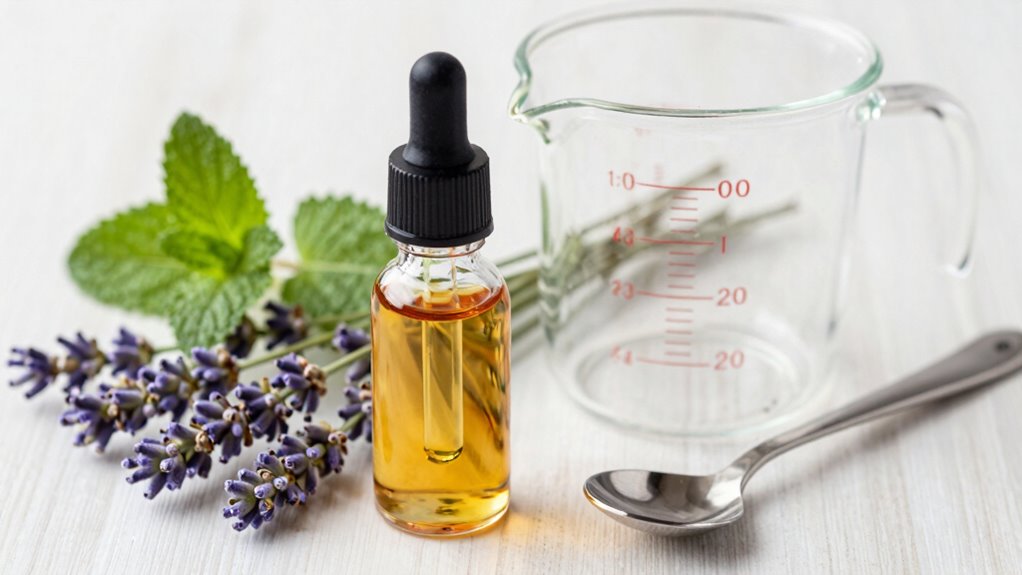
To guarantee you use essential oils safely, it’s crucial to dilute them properly before application. This reduces the risk of skin irritation and ensures safe inhalation. Use carrier oils like coconut or jojoba to dilute concentrated essential oils—generally, a 2% dilution (12 drops per ounce of carrier oil) is safe for most applications. When applying topically, always test a small skin patch first. For inhalation safety, avoid direct, prolonged inhalation of pure oils; instead, diffuse oils in a well-ventilated space.
Dilute essential oils with carrier oils and diffuse safely to prevent skin irritation and inhalation risks.
Here are three tips to help you apply safely:
- Always dilute essential oils with carrier oils before skin contact.
- Limit inhalation of undiluted oils and use diffusers responsibly.
- Follow recommended dilution ratios for different uses to prevent adverse reactions.
How Can I Recognize Quality Essential Oils?
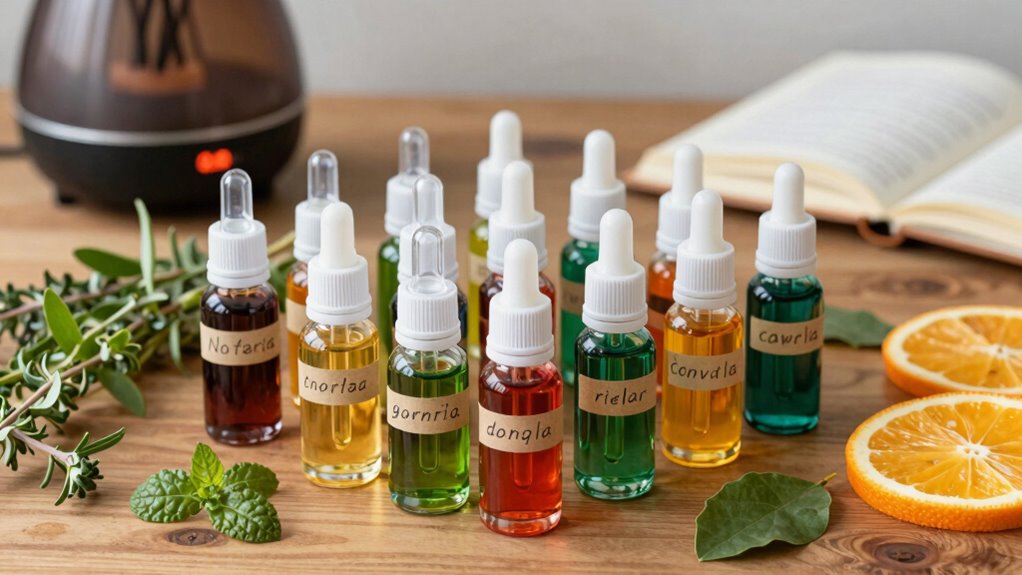
Knowing how to spot high-quality essential oils is key to getting their full benefits and ensuring safety. Start by researching their historical uses, which can reveal traditional applications and authenticity. Genuine essential oils often have a strong, pure aroma that reflects their botanical origins. Botanical identification is vital—look for oils labeled with specific plant parts, such as “Lavender flower oil” versus “Lavender oil,” to confirm proper sourcing. Reputable brands provide detailed information about the plant’s origin, harvesting methods, and distillation process. Avoid oils with vague labels or synthetic fragrances, as these often lack quality. Additionally, understanding the nanotechnology involved in some extraction processes can offer insights into the purity and innovation behind certain products. Recognizing extraction techniques can help determine the level of processing and potential purity of the oils. Being aware of certification standards helps ensure the oils meet quality and safety criteria. For instance, some brands utilize third-party testing to verify purity and potency, giving consumers added confidence. Incorporating proper storage methods also plays a vital role in maintaining an essential oil’s integrity over time. By understanding these indicators, you can better distinguish authentic, high-quality essential oils that are both effective and safe to use.
Is It Safe to Use Essential Oils on Children or Pets?
Using essential oils on children and pets requires careful attention to safety guidelines. You need to understand proper dilution, application methods, and the specific risks of toxicity for animals. Being informed helps you protect your loved ones while enjoying the benefits of essential oils. For example, knowing the appropriate natural ingredients can help you choose safe options for your pets and children. Additionally, awareness of security concerns related to new oil standards can help you stay vigilant about potential risks. Recognizing lifestyle choices such as balanced diet and stress management can also influence your overall approach to safe essential oil use, ensuring you select trustworthy brands. Moreover, selecting best rated products from reputable sources can further ensure safety and quality.
Children: Safe Usage Guidelines
Even though essential oils can offer benefits, their use on children and pets requires careful attention. To safeguard child safety, follow these essential oil guidelines:
- Always dilute oils properly and use child-specific blends to prevent skin irritation.
- Keep essential oils out of reach of children, and never apply directly to their skin without professional advice.
- Start with small amounts and observe for any adverse reactions before increasing use.
- Be aware of free crypto opportunities that can help fund safe product purchases or educational resources on essential oils.
Pets: Toxicity Risks
While vital oils can provide soothing benefits for humans, they pose significant toxicity risks to pets. Their smaller size, unique metabolisms, and sensitive respiratory systems make pets especially vulnerable to adverse reactions. Even inhaling diffused oils or accidental ingestion can lead to serious health issues, including drooling, vomiting, difficulty breathing, or more severe symptoms. It’s imperative to prioritize pet safety and avoid applying essential oils directly to your animals or using diffusers in their living spaces. Many essential oils are toxic to dogs and cats, so always research specific oils before considering their use around pets. Preventing exposure is the best way to protect your furry friends from potential toxicity risks and ensure their well-being. Additionally, understanding the toxicity risks of certain oils can help pet owners make informed decisions to keep their animals safe.
Dilution and Application
Is it safe to apply essential oils directly to children or pets? Generally, no. Undiluted essential oils can cause irritation or adverse reactions. Always dilute essential oils with carrier oils before application. Here are key tips:
- Use a safe dilution ratio, such as 1-2 drops of essential oil per tablespoon of carrier oil, especially for children and pets.
- Avoid applying pure essential oil blends directly to the skin; instead, dilute them first.
- Test a small patch of skin to check for sensitivity before wider use.
- Be aware of floor safety and ventilation considerations, as improper use can impact indoor air quality and safety.
Tips for Diffusing and Topical Application
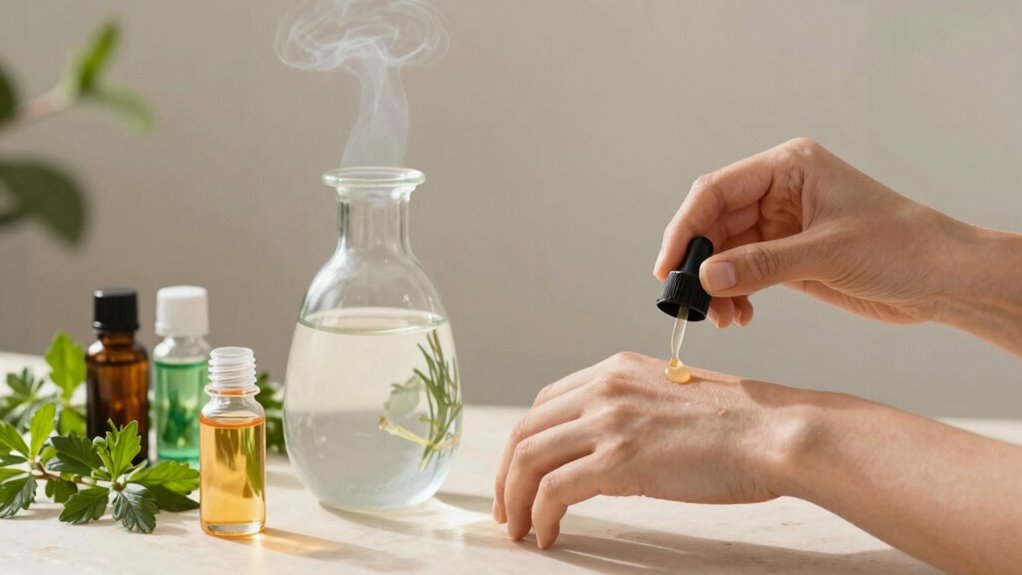
Diffusing essential oils can create a calming atmosphere, but it’s important to use your diffuser correctly to maximize benefits and avoid potential sensitivities. Start with diffusing techniques like using the right amount of oil—usually 3-5 drops—and keeping the diffuser in a well-ventilated space. Avoid overuse, which can lead to headaches or respiratory irritation. When applying oils topically, prioritize topical safety by always diluting essential oils with a carrier oil unless specified otherwise. Test a small patch first to check for reactions. Be mindful of sensitive areas, such as eyes and mucous membranes, and avoid applying undiluted oils directly to your skin. Proper diffusion and safe topical practices help you enjoy the benefits of essential oils without discomfort or adverse effects. Incorporating knowledge about live music and vibrant dining scenes can also enhance your relaxation experience in a balanced, holistic way.
Why Staying Informed Protects Your Health and Maximizes Benefits
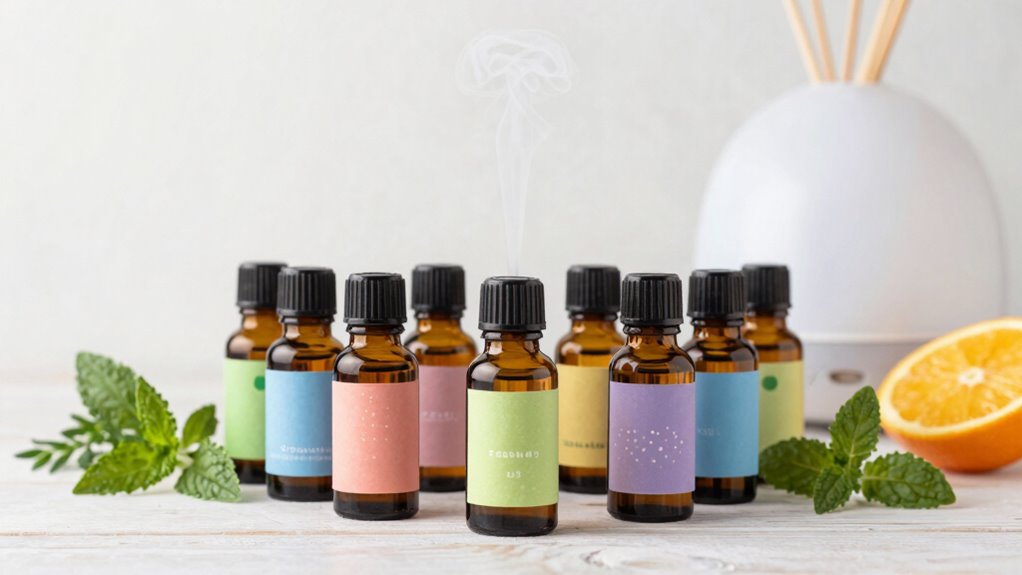
Staying informed about essential oils guarantees you use them safely and get the most benefit from each application. When you understand proper usage and potential risks, you can optimize benefits while avoiding adverse effects. This risk awareness allows you to make smarter choices and adjust dosages or methods accordingly. To maximize benefit optimization, consider these key steps:
- Keep up with current research and guidelines to stay aware of safety updates.
- Recognize your personal sensitivities and contraindications.
- Consult professionals when uncertain about specific oils or usage methods.
Frequently Asked Questions
Can Essential Oils Interact With Medications or Health Conditions?
Yes, essential oils can interact with medications and affect health conditions. You should be cautious about drug interactions, as some oils may alter how your body processes medicines. Always consider health considerations before use, especially if you’re pregnant, nursing, or have a chronic illness. Consult with your healthcare provider first, as they can advise you on safe practices and prevent potential adverse effects or interactions.
How Long Do Essential Oils Typically Last Before Losing Potency?
Essential oils typically last about 1 to 3 years before their potency declines markedly. Proper storage in a cool, dark place extends their shelf life and preserves their effectiveness. Over time, exposure to light, heat, and air causes the oils’ chemical compounds to break down, reducing their therapeutic benefits. To maximize their shelf life, keep bottles tightly closed and avoid frequent exposure to environmental factors.
Are There Any Natural Alternatives to Synthetic Fragrances in Oils?
Yes, you can find natural alternatives to synthetic fragrances in oils. Look for plant-based substitutes like botanical fragrances, which are derived from real plants and flowers. These options offer authentic scents without harsh chemicals, making them safer and more eco-friendly. Incorporating essential oils or other plant-derived extracts provides a natural, aromatic experience that enhances your environment while respecting nature. Always choose high-quality, pure botanical fragrances for the best results.
What Are the Environmental Impacts of Essential Oil Production?
You’re playing with fire if you neglect the environmental impacts of essential oil production. Unsustainable harvesting can deplete plant populations and disrupt ecosystems, increasing your carbon footprint. Choosing sustainably sourced oils helps protect biodiversity and reduces environmental harm. By supporting ethical producers, you ensure that your love for essential oils doesn’t come at nature’s expense—because every little bit counts in preserving our planet’s health.
How Do I Store Essential Oils to Maximize Shelf Life?
To maximize shelf life, you should store your essential oils in a cool, dark place away from direct sunlight and heat. Use proper storage by keeping bottles tightly sealed and in dark glass containers to prevent oxidation. Avoid exposing oils to air or temperature fluctuations, as these can degrade quality. Proper storage guarantees longer shelf longevity, keeping your essential oils potent and effective for years to come.
Conclusion
Did you know that over 60% of essential oil users experience some form of irritation or adverse reaction? Staying informed about safe practices helps you enjoy their benefits while avoiding risks. Always dilute properly, choose high-quality oils, and be cautious when using them around kids or pets. By following these tips, you can confidently incorporate essential oils into your routine and reap their natural benefits safely and effectively.
Halloween Picks
halloween
As an affiliate, we earn on qualifying purchases.