
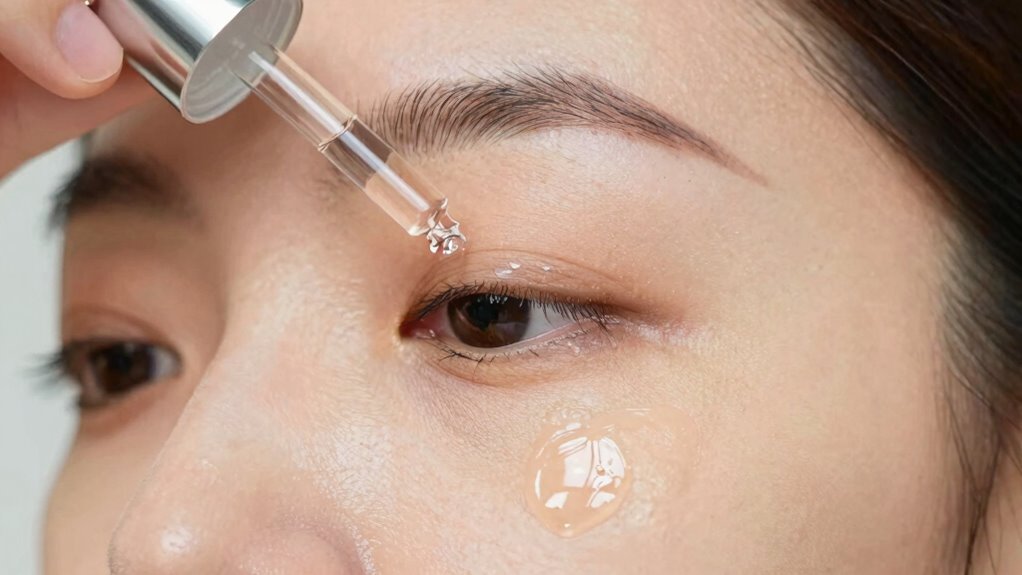

To use active ingredients around your eyes safely, always do a patch test on a small area 24 hours beforehand. Apply products gently with your ring finger, avoiding rubbing or pulling, and keep potent ingredients away from the waterline. Use active ingredients mainly at night and protect your skin with daily broad-spectrum sunscreen. Follow recommended amounts and frequency to prevent irritation. Want to learn more tips on safe application? Keep exploring to maintain healthy, youthful eyes.
Key Takeaways
- Perform a patch test behind the ear or jawline before applying new active ingredients around the eyes.
- Use your ring finger to gently tap small amounts of products around the eye area, avoiding rubbing.
- Apply active ingredients mainly at night and keep them away from eyelids and waterlines to prevent irritation.
- Follow recommended usage guidelines and gradually increase concentration to build skin tolerance safely.
- Always wear broad-spectrum sunscreen during the day to protect the delicate eye skin from sun damage and photosensitivity.
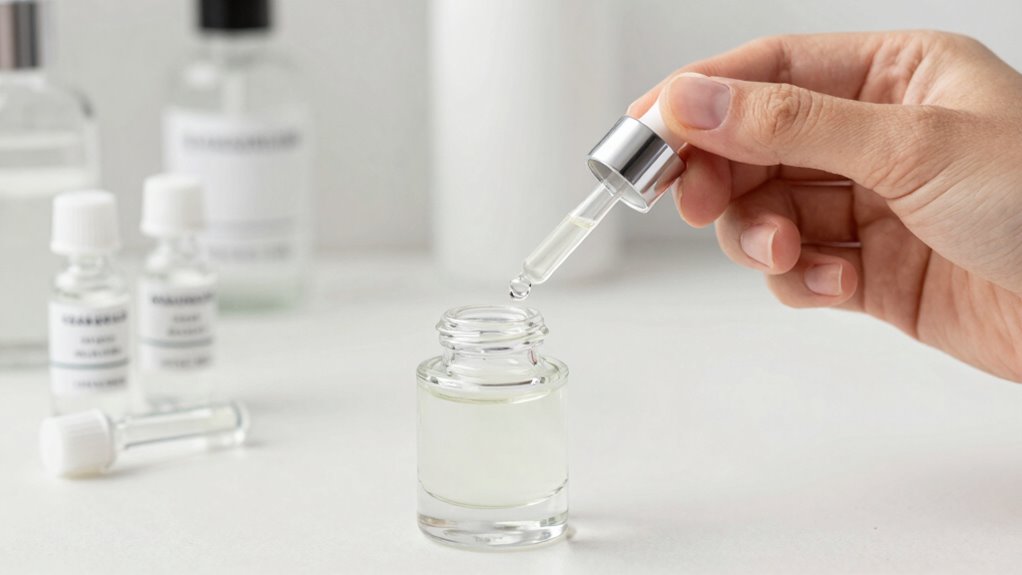
The skin around your eyes is delicate and requires special care, especially when using active ingredients. This area is thinner and more sensitive than the rest of your face, making it prone to irritation, dryness, and early signs of aging if not handled properly. When you’re considering using active ingredients like retinol, acids, or vitamin C near your eyes, it’s vital to be mindful of eye area concerns and follow ingredient safety tips to avoid adverse reactions.
First, always patch test new products before applying them around your eyes. Apply a small amount to a discreet area, such as behind your ear or on your jawline, and wait 24 hours to see if any irritation occurs. This simple step helps you determine whether a product is suitable for your sensitive eye area. Remember, even products labeled as gentle or suitable for sensitive skin can cause reactions if not tested first.
Always patch test new eye products to prevent irritation and ensure suitability for sensitive skin.
When applying active ingredients, use your ring finger to gently tap a small amount of product onto the skin around your eyes. Avoid rubbing or pulling on the delicate skin, as this can cause micro-tears and exacerbate fine lines. Be especially cautious with potent ingredients like retinol or alpha hydroxy acids, which can increase skin sensitivity. If you’re using such actives, start with a lower concentration and gradually increase as your skin builds tolerance.
It’s important to keep active ingredients away from your eyelids and waterline, where the skin is even thinner and more vulnerable. If you accidentally get product in your eyes, rinse immediately with plenty of water and avoid using that product around your eyes until you’re sure it’s safe. Also, consider applying active ingredients only at night, giving your skin time to recover and minimizing sun sensitivity during the day.
In terms of ingredient safety tips, always read the labels carefully. Look for formulations specifically designed for the eye area, as these are usually formulated to be gentler. Use sparingly—more isn’t better when it comes to active ingredients around sensitive areas. Follow the recommended usage frequency, as overuse can lead to irritation, dryness, or peeling.
Finally, protect your eye area from the sun by applying a broad-spectrum sunscreen daily. Sun exposure can worsen existing concerns and accelerate aging, especially if you’re using active ingredients that increase photosensitivity. By taking these precautions, you help guarantee that your eye area remains healthy, youthful, and protected while benefiting from active ingredients.
Frequently Asked Questions
Can I Mix Multiple Active Ingredients Around My Eyes?
You shouldn’t mix multiple active ingredients around your eyes without verifying ingredient compatibility first. Combining certain products can cause irritation or adverse reactions. Always patch test new combinations on a small skin area first to ensure your skin tolerates them. If unsure, consult a dermatologist. Following these steps helps you safely incorporate multiple active ingredients around your eyes while minimizing risks of irritation or damage.
How Often Should I Apply Active Ingredients Near the Eyes?
You should apply active ingredients near your eyes 2 to 3 times a week, but always pay attention to your skin’s response. Overdoing it can irritate sensitive skin, leading to redness or discomfort. Start with less frequent applications, then gradually increase if your skin tolerates it well. Keep a close eye on how your skin reacts and adjust your application frequency accordingly, ensuring safety and effectiveness.
Are Natural Ingredients Safer Than Chemical-Based Ones?
Natural ingredients often seem safer, but their safety depends on your skin type and ingredient quality. You might avoid chemical ingredient risks, yet some natural options can cause irritation or allergic reactions. Always patch-test new products with natural ingredients and consult a dermatologist if you have sensitive skin. Remember, natural doesn’t always mean safer—be cautious and choose reputable sources for natural skincare around your eyes.
What Should I Do if I Experience Irritation?
An ounce of prevention is worth a pound of cure. If you experience irritation, stop using the product immediately. Perform a patch test on a small skin area before applying new active ingredients around your eyes. If irritation persists, discontinue use and consult a dermatologist. Your skin’s health comes first, so listen to your body and avoid further irritation to protect your delicate eye area.
Can Active Ingredients Prevent Aging Around the Eyes?
Yes, eye creams with active ingredients can help prevent aging around your eyes by reducing fine lines and wrinkles. Look for products with safe, proven ingredients like peptides, antioxidants, and hyaluronic acid. Always check ingredient safety to avoid irritation, especially around delicate skin. Incorporate these eye creams into your routine consistently, but be cautious with potent ingredients and follow recommended usage to protect your skin.
Conclusion
Remember, applying active ingredients carefully around your eyes is key to avoiding irritation. Use gentle, targeted amounts and always patch test first. Did you know that the skin beneath your eyes is 10 times thinner than the rest of your face? That’s why being cautious is so important. By following these tips, you’ll protect this delicate area while enjoying the benefits of your skincare. Stay gentle, stay consistent, and see the difference!