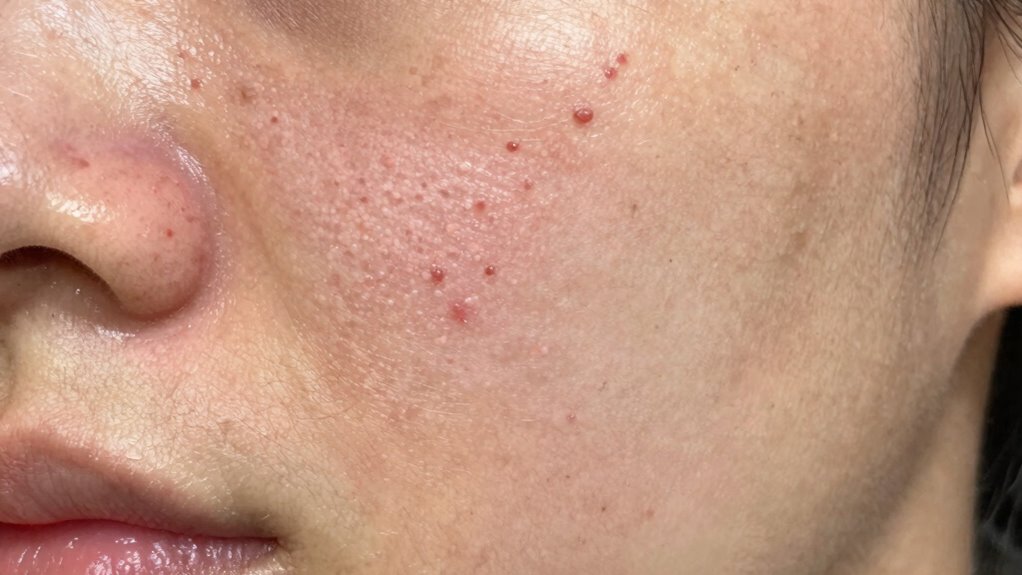

To tell if you’re experiencing skin purging or irritation early on, observe your breakouts—purging usually appears as small, superficial spots in usual areas and fades over time, while irritation causes persistent redness, dryness, and discomfort that worsens or spreads. Purging typically occurs within a few weeks of starting a new product and improves naturally, whereas irritation persists if the product remains. Knowing these signs helps protect your skin—keep going to learn more about making the right choice.
Key Takeaways
- Skin purging appears as localized breakouts in usual acne areas within 2-4 weeks of starting a new product.
- Irritation causes redness, dryness, or burning that persists or worsens beyond initial weeks.
- Purging breakouts are superficial, tend to resolve as skin adapts, and stay confined to typical breakout zones.
- Irritation may spread, cause inflammation, peeling, and discomfort, indicating a negative reaction.
- Continuing products during purging is often safe if symptoms improve; persistent or worsening symptoms suggest stopping and consulting a dermatologist.
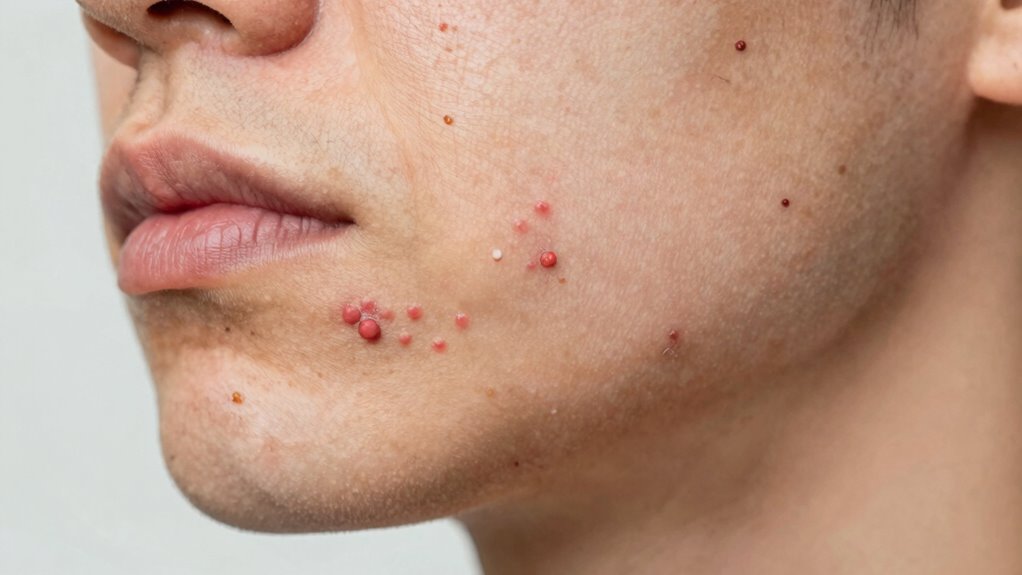
When trying new skincare products, it can be confusing to tell whether your skin is purging or just reacting negatively. If you’ve recently started using retinol, you may notice breakouts that seem more intense than usual. This is often called a retinol breakout, and it can be disconcerting. But understanding the difference between skin purging and irritation can help you decide whether to push through or pause your routine. Skin purging occurs when your skin is accelerating its natural exfoliation process, bringing underlying impurities to the surface more quickly than usual. This is an exfoliation response, a sign that your skin is adjusting to the new treatment. It typically manifests as small, clustered breakouts in areas where you normally experience acne or congestion. These breakouts tend to appear within the first few weeks of starting a new product and usually resolve as your skin adapts. Recognizing skin responses and how they differ is essential for maintaining a healthy skincare routine.
On the other hand, irritation presents differently. It tends to cause redness, dryness, tightness, or burning sensations that aren’t limited to clogged pores or breakouts. When your skin reacts negatively, the symptoms are often more widespread, persistent, and uncomfortable. If your skin feels inflamed or develops peeling, it might be a sign that the product is too harsh for you. The key is to pay close attention to how your skin responds over time. With purging, the breakouts are usually confined to areas where you normally get breakouts, and they clear up as your skin adjusts. If the breakouts spread or your skin remains inflamed beyond a few weeks, it’s likely irritation rather than purging.
Another clue lies in the timeline. Skin purging tends to occur within the first 2-4 weeks of starting a new treatment like retinol. After this period, the breakouts should start to subside, revealing clearer skin. Conversely, irritation often persists or worsens if you continue using the product without modification. It’s also worth noting that an exfoliation response from retinol can sometimes mimic breakouts, but these are usually more superficial and less inflamed. If your skin becomes flaky or sensitive, it might just be responding to the increased cell turnover rather than purging.
Ultimately, the best way to tell the difference is to observe your skin’s behavior carefully. If the issues are temporary, localized, and improve with time, you’re likely experiencing purging. If symptoms are persistent, spreading, or causing discomfort, you should consider stopping the product and consulting a dermatologist. Recognizing these signs early can save you from unnecessary frustration and help you build a skincare routine that works for your skin type.
Frequently Asked Questions
Can Skin Purging Happen With All Skincare Products?
Skin purging can happen with many skincare products, especially those containing active ingredients like retinoids or acids. However, it doesn’t occur with all products. You should pay attention to product compatibility and your ingredient sensitivity. If your skin reacts negatively or quickly, it might be irritation rather than purging. Always introduce new products gradually and patch test to minimize adverse effects and better understand your skin’s response.
How Long Does Skin Purging Typically Last?
Skin purging usually lasts between 2 to 6 weeks, depending on your skin type and the products used. During this period, you might notice increased breakouts or irritation, but these symptoms should gradually improve. Keep track of your symptom duration and how your skin reacts. If the symptoms persist beyond this timeline or worsen, it’s wise to consult a dermatologist to rule out irritation or other issues.
Are Certain Skin Types More Prone to Irritation?
They say “prevention is better than cure,” and it’s true for skin irritation. If you have sensitive skin, you’re more prone to irritation because your skin resilience is lower. You might notice redness, stinging, or dryness more easily. To protect yourself, introduce new products gradually, and always listen to your skin’s signals. With patience and care, you can help your skin build resilience and reduce irritation risks.
Does Diet Influence Skin Purging or Irritation?
Your diet impacts both skin purging and irritation. Consuming foods high in sugar or dairy can trigger acne and cause your skin to purge as it detoxifies. Meanwhile, spicy or greasy foods might irritate sensitive skin, leading to redness and discomfort. To minimize these effects, pay attention to how your skin reacts after eating certain foods, and adjust your diet accordingly to support healthier skin and reduce unwanted reactions.
When Should I See a Dermatologist About Persistent Skin Issues?
You should see a dermatologist if your skin issues persist beyond four weeks, worsen, or cause significant discomfort. If you notice reactions like redness, swelling, or rash, consider patch testing to identify ingredient sensitivities. Don’t ignore persistent problems—professional advice can help determine if you’re dealing with irritation or an allergy, ensuring you get the right treatment and avoid further skin damage.
Conclusion
Understanding the difference between skin purging and irritation is like reading a map—you need to know what signals are signs of progress or warning. If your skin’s response is a brief, expected flare-up, it’s likely purging. But if it’s persistent, painful, or worsening, irritation may be the culprit. Trust your skin’s story; it’s your body’s way of whispering what it needs. Listen carefully, and you’ll navigate your skincare journey with confidence, steering clear of unnecessary setbacks.