
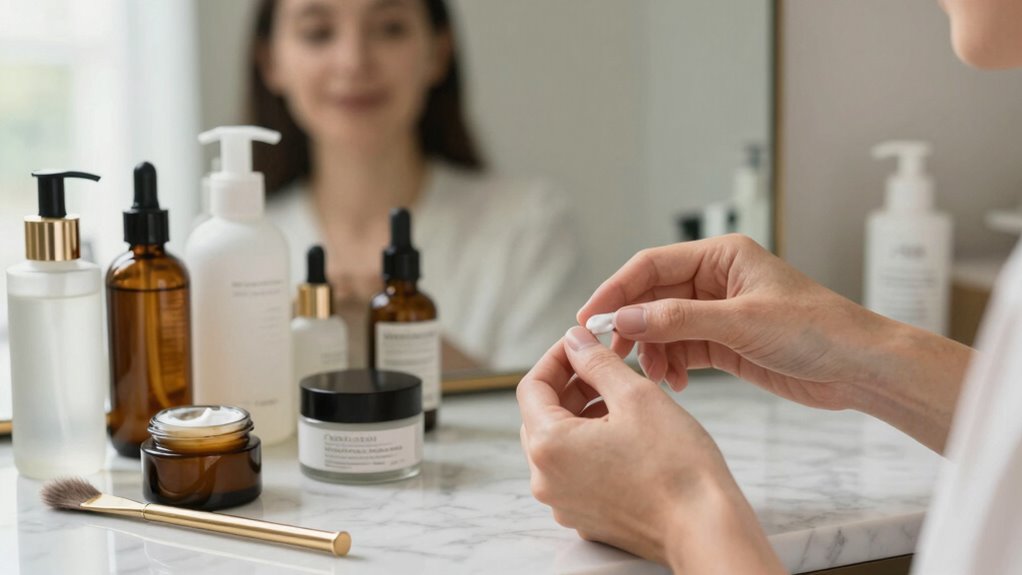

To avoid overdoing at-home treatments, follow product instructions carefully and start with lower frequencies to see how your skin reacts. Use small amounts, avoid harsh ingredients, and give your skin time to recover between treatments. Watch for signs of irritation like redness or burning, then cut back if needed. Maintaining a gentle routine and being patient helps prevent damage. Keep exploring for more tips to protect your skin’s health and beauty.

Turn your quiet moments into listening time
- Thousands of audiobooks, podcasts and originals
- Listen on your phone, tablet or Echo — also offline
- Cancel anytime
Key Takeaways
- Follow product instructions carefully and avoid applying excessive amounts or frequency.
- Start with lower usage and gradually increase based on your skin’s tolerance.
- Watch for signs of irritation like redness, burning, or peeling, and adjust your routine accordingly.
- Incorporate gentle, evidence-based products and avoid harsh chemicals that can damage skin.
- Conduct patch tests before trying new treatments and prioritize consistency over intensity.

At-home treatments can be a convenient way to improve your skin or health, but it’s easy to overdo them and cause more harm than good. When you push your body or skin beyond its limits, you risk product misuse and increasing skin sensitivity, which can lead to irritation, redness, or even long-term damage. Understanding how to use these treatments properly is essential to avoid setbacks and ensure you get the benefits you’re aiming for.
Overusing at-home treatments can harm your skin and delay your progress. Use them wisely and listen to your skin.
A common mistake is applying treatments too frequently or in excessive quantities. Just because something is natural or marketed as safe doesn’t mean you should overuse it. For instance, over-application of exfoliants or masks can strip away your skin’s natural barrier, making it more vulnerable to irritation. This is especially true if you have sensitive skin, which reacts more intensely to aggressive ingredients. When your skin becomes sensitive, even mild products can cause discomfort, redness, and inflammation. To prevent this, always follow the recommended usage instructions and start with lower frequencies, gradually increasing if your skin tolerates it well.
Product misuse is another key concern. Many people assume that more product equals better results, but that’s often not the case. Using too much of a treatment can overwhelm your skin’s ability to process it, leading to clogged pores, breakouts, or increased sensitivity. For example, overusing acids like AHAs or BHAs can disrupt your skin’s pH balance, resulting in irritation. It’s better to use small amounts as directed and give your skin time to adjust before increasing frequency. If you notice signs of irritation, cut back immediately and give your skin a break.
Pay attention to how your skin responds. If you see redness, burning, or peeling, it’s a sign you need to slow down. Sometimes, in the quest for quick results, you might ignore these signs and push through, but this only worsens skin sensitivity and prolongs recovery. Incorporating gentle, evidence-based skincare practices, such as using soothing ingredients and avoiding harsh chemicals, can help maintain your skin’s health. Always, patch tests before trying new products are recommended, and reading labels carefully to understand ingredients and proper usage is essential. Remember, consistency and patience are more effective than aggressive, haphazard treatments.
Ultimately, the key to avoiding overdoing at-home treatments is moderation and awareness. Respect your skin’s limits, follow instructions closely, and listen to what your skin tells you. By doing so, you’ll protect your skin from unnecessary harm and ensure your at-home routines support your health and beauty goals rather than undermine them.
gentle exfoliating masks for sensitive skin
As an affiliate, we earn on qualifying purchases.
As an affiliate, we earn on qualifying purchases.
Frequently Asked Questions
How Often Should I Schedule Professional Skin Treatments?
You should schedule professional skin treatments every 4 to 6 weeks, depending on your skin type and concerns. This frequency helps prevent product overuse and guarantees proper treatment frequency, avoiding irritation or damage. Listening to your esthetician’s advice is vital, as they tailor sessions to your skin’s needs. Overdoing treatments can cause setbacks, so stick to recommended intervals for healthy, glowing skin without risking overexposure or overdoing it.
Are There Specific Signs Indicating I Need a Break From Treatments?
You should take a break from treatments if you notice signs of irritation, such as redness, swelling, or burning sensations, or if you experience treatment fatigue like persistent dryness or sensitivity. Trust your skin’s signals and don’t push through discomfort. Giving your skin time to recover helps prevent damage and maintains your results. Listen carefully, and when in doubt, consult a skincare professional to determine the right interval for your routine.
Can Overusing Products Cause Long-Term Skin Damage?
Overusing products can turn your skin into a battlefield, leading to long-term damage. Excessive treatment causes product buildup, clogging pores and stripping natural oils, which heightens skin sensitivity. This relentless assault weakens your skin’s barrier, leaving it vulnerable and irritated. To keep your skin healthy, it’s vital to follow recommended usage, give your skin time to recover, and listen to its signals—don’t let overdoing turn your glow into a cautionary tale.
What’s the Best Way to Track My At-Home Treatment Progress?
To track your at-home treatment progress effectively, keep a daily journal noting each product used, application times, and skin reactions. Complement this with photo documentation by taking clear, consistent pictures weekly. This visual and written record helps you see real changes over time, identify what works best, and avoid overdoing treatments. Regularly reviewing your journal and photos guarantees you stay on track without risking skin damage.
How Do I Know if My Skincare Routine Is Effective?
Did you know that over 60% of people notice clearer skin within four weeks of a consistent routine? To know if your skincare routine is effective, pay attention to changes like reduced product buildup and decreased skin sensitivity. If your skin feels calmer and looks healthier over time, it’s a good sign. Keep track of your progress and avoid overdoing treatments to prevent irritation and maintain your skin’s natural balance.
at-home skincare treatment kits for sensitive skin
As an affiliate, we earn on qualifying purchases.
As an affiliate, we earn on qualifying purchases.
Conclusion
Remember, more isn’t always better when it comes to at-home treatments. Overdoing it can lead to skin irritation or damage, so listen to your body and follow product instructions carefully. Some experts believe that giving your skin time to breathe and recover actually enhances results. Trust the process, stay consistent, and avoid the temptation to overuse. Your skin will thank you for treating it gently and patiently, ensuring lasting health and beauty.
patch test kits for skincare products
As an affiliate, we earn on qualifying purchases.
As an affiliate, we earn on qualifying purchases.
As an affiliate, we earn on qualifying purchases.
Fall Picks
fall essentials
As an affiliate, we earn on qualifying purchases.