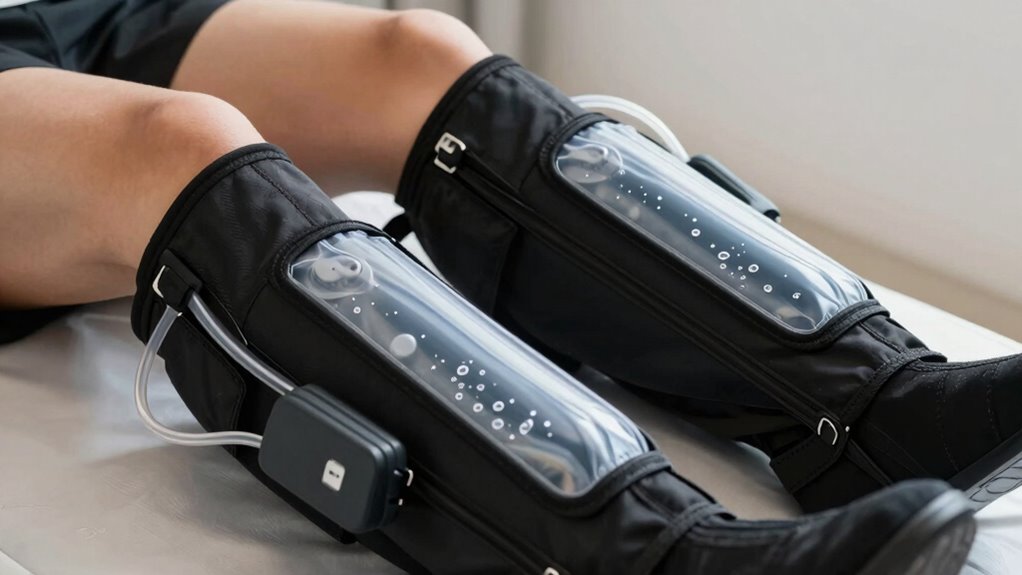

Compression boots deliver a steady, rhythmic air pressure that mimics massage but feels different because they use pneumatic technology to target specific areas with consistent compression. Unlike manual massage, which varies pressure and technique, these boots provide uniform, pulsating sensations that promote blood flow, reduce soreness, and improve circulation. The controlled, customizable pressure offers a steady, predictable feeling, making them a unique recovery tool. If you want to understand how they work and what makes them stand out, keep exploring.

Turn your quiet moments into listening time
- Thousands of audiobooks, podcasts and originals
- Listen on your phone, tablet or Echo — also offline
- Cancel anytime
Key Takeaways
- Compression boots deliver uniform, pulsating air pressure, creating a rhythmic squeezing sensation unlike manual massage.
- They use pneumatic technology to target specific areas with consistent pressure, differing from variable manual touch.
- The controlled air cycles stimulate blood vessels, producing a distinct pulsating feel that massage hands can’t replicate.
- Adjustable compression levels allow personalized comfort, making the pressure feel steady and predictable.
- The sensation mimics massage but offers deeper, targeted, and uniform compression for enhanced recovery.
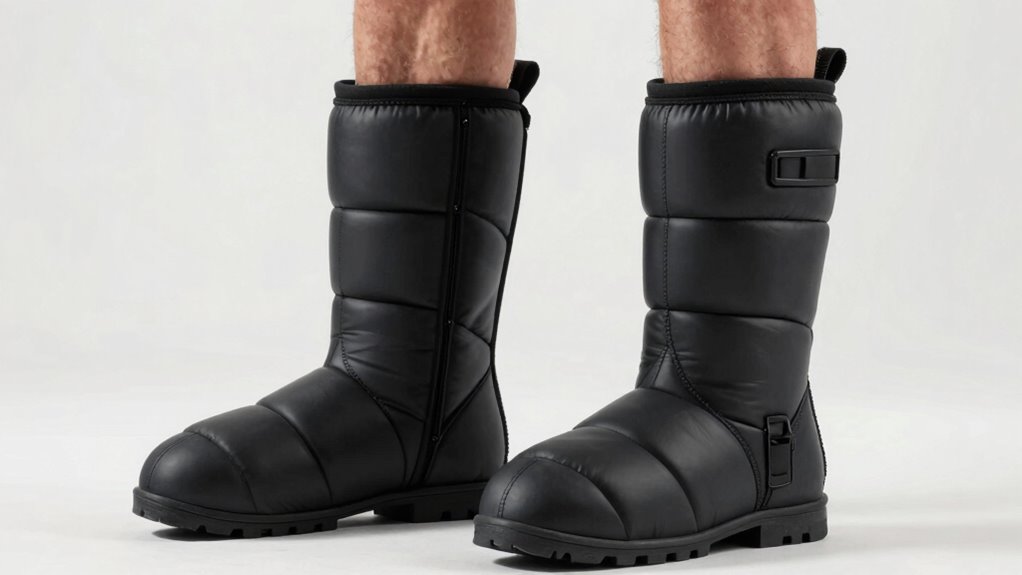
Have you ever wondered how compression boots work to improve circulation and aid recovery? When you wear them, they apply controlled air pressure to your legs, which might feel unusual compared to a traditional massage. This sensation is a result of the way the boots compress and decompress your muscles, creating a rhythmic pressure that encourages blood flow. Unlike manual massage, which relies on a therapist’s hands, compression boots use pneumatic technology to deliver consistent, targeted pressure. This process is key to enhancing circulation, which helps deliver oxygen and nutrients to tired muscles and remove metabolic waste. As a result, your muscles recover more quickly, reducing soreness and stiffness after intense activity. The sensation of air pressure feels different because it’s steady and predictable, unlike the varying pressure and kneading of a massage. When the boots inflate and deflate, they create a pulsating effect that deeply stimulates your blood vessels. This stimulation encourages blood to move more efficiently through your legs, leading to better circulation enhancement. You might notice the feeling as a gentle, squeezing sensation that gradually increases and then releases, mimicking a massage but with a more uniform rhythm. This consistent pressure can reach areas that are hard to target manually, ensuring that every part of your calves, thighs, or feet gets the benefit of improved blood flow. Additionally, the air pressure technology used in compression boots is designed to be adjustable, allowing users to customize the level of compression based on their comfort and needs. Because compression boots target circulation enhancement, they help your muscles recover faster from exertion. With increased blood flow, oxygen and essential nutrients reach your muscles more effectively, helping repair tiny tears and clear out waste products like lactic acid. Many models also incorporate smart controls that enable precise adjustments and monitoring during use, further optimizing recovery. You’ll likely feel a sense of relief and relaxation after a session, with less muscle fatigue and soreness. The rhythmic compression also helps reduce swelling and inflammation, which can be especially beneficial after long flights, heavy training sessions, or standing all day. Furthermore, the steady application of pressure can help prevent blood clots and improve overall vascular health. Incorporating advanced pneumatic systems can enhance the comfort and effectiveness of these devices, making them more accessible for daily use. Using compression therapy regularly can also support vascular health, which is an important aspect of overall well-being. In essence, the difference you feel from compression boots versus a massage comes down to how the pressure is applied and sustained. The steady, pulsating air pressure delivers a unique stimulus that promotes circulation enhancement and accelerates muscle recovery. While massage involves manual manipulation, compression boots use technology to provide a consistent, targeted approach. This makes them an effective tool for recovery, offering a different kind of relief that’s both efficient and comfortable, helping you bounce back faster and feel better after any strenuous activity.
compression boots for leg recovery
As an affiliate, we earn on qualifying purchases.
As an affiliate, we earn on qualifying purchases.
Frequently Asked Questions
Are Compression Boots Suitable for All Age Groups?
Compression boots are generally suitable for most age groups, but you should consider age considerations and safety precautions. If you’re young or elderly, consult a healthcare professional before use. Children and seniors with certain medical conditions may need special attention or refrain from compression therapy altogether. Always follow manufacturer guidelines and seek medical advice to guarantee safe use, especially if you have circulatory issues, heart problems, or are pregnant.
How Long Should I Wear Compression Boots per Session?
Most users find that wearing compression boots for 20 to 30 minutes per session works best. Research shows that this duration maximizes benefits without causing discomfort. Follow the duration guidelines provided by the manufacturer, and consider session frequency of 1-2 times daily for ideal results. Always listen to your body, and if you feel any pain or dizziness, stop using them immediately.
Can Compression Boots Replace Traditional Massage Therapy?
Compression boots can complement alternative therapies for muscle recovery but shouldn’t fully replace traditional massage therapy. While they effectively boost circulation and reduce soreness, massage offers deeper tissue work and personalized touch that boots can’t replicate. For ideal recovery, combine compression therapy with massage. You’ll get the benefits of quicker muscle healing, improved flexibility, and overall relaxation, making your recovery routine more thorough and effective.
What Are the Potential Risks or Side Effects?
Think of compression boots as a gentle river, but sometimes, currents can cause turbulence. You could experience risks like disrupted blood circulation or skin irritation if used improperly or for too long. Always follow guidelines, and avoid using them if you have blood clots, skin conditions, or circulation issues. If you notice discomfort or unusual symptoms, stop immediately and consult a healthcare professional to prevent potential side effects.
How Often Should I Use Compression Boots for Best Results?
You should use compression boots 2 to 3 times a week for ideal results. This frequency supports effective compression therapy, helping improve circulation without overdoing it. Consistent use can reduce swelling, ease soreness, and boost recovery. However, listen to your body and avoid excessive sessions, especially if you experience discomfort. Always follow manufacturer guidelines or consult a healthcare professional to tailor the schedule to your specific needs.
As an affiliate, we earn on qualifying purchases.
Conclusion
Imagine the gentle, rhythmic squeeze of massage, soothing your muscles with warmth and personal touch. Now, picture the firm, unyielding pressure of compression boots, pushing and squeezing with precision. While massage feels like a caring hand, compression boots deliver a structured, almost mechanical embrace. Both aim to rejuvenate, but their sensations couldn’t be more different—one a whisper, the other a command. Understanding these differences helps you choose which experience best restores your body.
pneumatic compression therapy boots
As an affiliate, we earn on qualifying purchases.
As an affiliate, we earn on qualifying purchases.
adjustable compression recovery boots
As an affiliate, we earn on qualifying purchases.
As an affiliate, we earn on qualifying purchases.
Fall Picks
fall essentials
As an affiliate, we earn on qualifying purchases.