
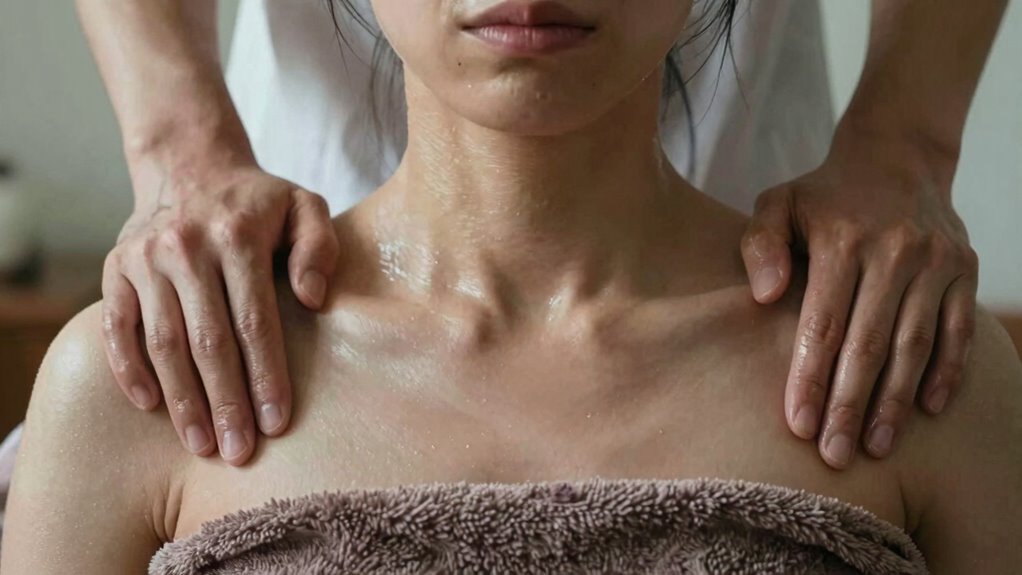

Using too much pressure during a massage can backfire by causing discomfort, muscle tension, and soreness instead of relaxation. Common causes include therapist technique, client’s sensitivity, and difficulty communicating comfort levels. Signs of overpressure include pain, bruising, or feeling more tense afterward. Both therapists and clients can adjust pressure and speak openly to guarantee a soothing experience. Understanding these factors helps prevent discomfort—continue exploring to learn how to keep your massage both safe and effective.
Key Takeaways
- Excessive pressure during massage can cause discomfort, soreness, or bruising, undermining relaxation goals.
- Miscommunication or unexpressed discomfort may lead therapists to apply too much force unintentionally.
- Muscle tension and individual sensitivity influence how pressure is perceived, risking backfire if not adjusted properly.
- Lack of client feedback and poor communication can result in overpressure and decreased massage effectiveness.
- Overpressure can increase muscle stiffness and tension post-massage, counteracting the intended therapeutic benefits.
Why Sometimes Massage Pressure Feels Too Heavy
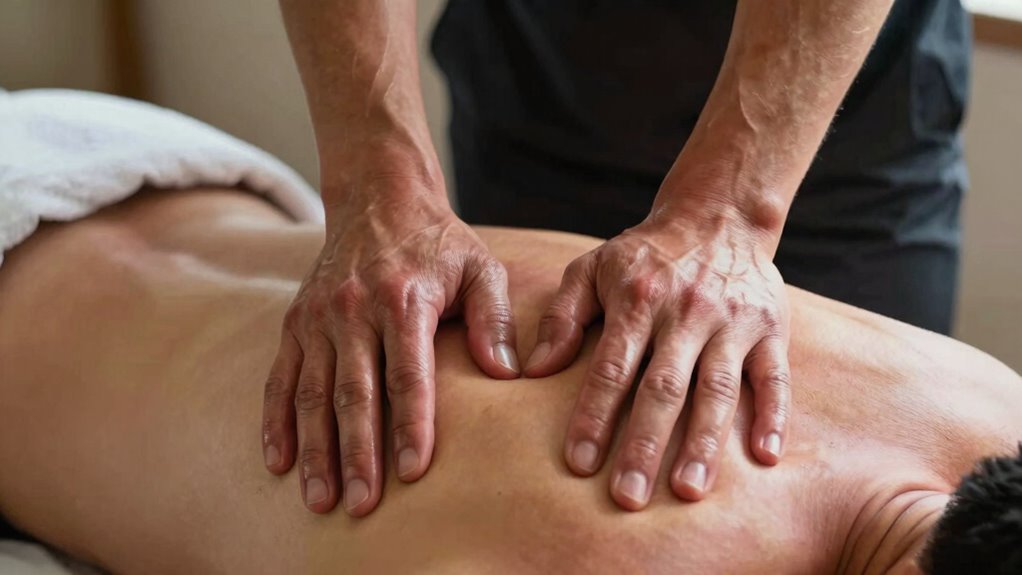
Sometimes, massage pressure can feel overwhelming because your muscles are especially tense or sensitive. If you have high pressure sensitivity or a lower pain tolerance, even moderate pressure might feel too intense. Your body’s response varies, and what’s comfortable for one person could be painful for another. When your muscles are tight or inflamed, they resist pressure more, making even gentle strokes feel heavier. Additionally, if you’re naturally more sensitive to touch, you might perceive pressure as stronger than it actually is. Recognizing muscle tension patterns can help tailor massage techniques to suit your needs better. Understanding your body’s signals helps you communicate with your therapist. Adjusting pressure based on your comfort level ensures a more relaxing experience. Remember, your pain tolerance plays a crucial role in how you perceive massage pressure and how effective the treatment feels. Being aware of body response can further improve your massage experience by highlighting areas that require lighter or more focused pressure. Knowing about individual differences in sensitivity can help you set realistic expectations and improve communication during your massage. Incorporating techniques that promote skin radiance may also help in reducing tenderness and enhancing overall comfort during sessions.
Common Causes of Excessive Pressure in Massage
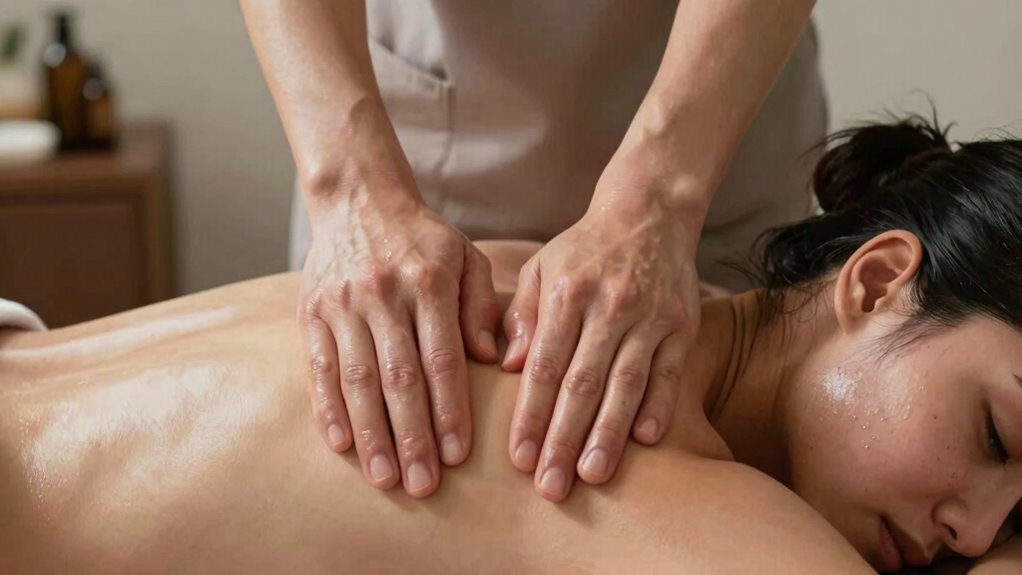
Your tension and anxiety can make it harder to communicate your comfort levels during a massage. Therapists’ technique variations and personal styles also influence pressure, sometimes unintentionally. Clear communication can help bridge the gaps and guarantee you get the pressure that feels right for you. Being aware of different massage styles can also help you better articulate your preferences to your therapist. Additionally, understanding how pressure application varies across techniques can empower you to request adjustments that better suit your needs. Recognizing the importance of client feedback can further enhance your massage experience and ensure your comfort. Understanding holistic approaches in massage can help you choose styles that prioritize your emotional and physical well-being. Knowing about pressure modulation techniques can further improve your ability to tailor your sessions to your comfort level.
Tension and Anxiety Levels
High tension and anxiety levels often lead to excessive pressure during a massage because your muscles tend to tighten involuntarily when you’re stressed. When you’re anxious, your body reacts by increasing muscle tension, making it harder for your therapist to gauge the right amount of pressure. To prevent this, effective stress management is essential. Practicing relaxation techniques like deep breathing, mindfulness, or progressive muscle relaxation before your session can help calm your nerves and reduce involuntary muscle tightening. When you’re more relaxed, your muscles respond better to gentle pressure, and your therapist can work more effectively. Recognizing your stress levels and actively working to manage them ensures a more comfortable, beneficial massage experience, avoiding the pitfalls of excessive pressure caused by tension and anxiety. Additionally, understanding the importance of relaxation techniques can contribute to a more effective treatment. Incorporating muscle tension management strategies can further help in reducing involuntary tightening during your massage.
Therapist Technique Variations
Therapist technique variations can considerably contribute to excessive pressure during a massage. Without proper pressure assessment, you might unknowingly apply too much force, causing discomfort. To prevent this, consider these key points:
- Consistent pressure checks: Regularly ask clients how the pressure feels and adjust accordingly.
- Technique adaptation: Shift your hand positioning or leverage to better control force, especially on sensitive areas.
- Understanding anatomy: Recognize the difference between superficial and deep tissues, tailoring your approach to avoid overdoing it.
- Incorporating pressure regulation techniques can help maintain appropriate force levels throughout the session.
Client Communication Gaps
Often, excessive pressure during a massage stems from communication gaps between you and your client. When clients don’t feel comfortable providing honest feedback, therapists may unintentionally apply too much force. Communication barriers—such as language differences, hesitation, or fear of offending—can prevent clients from voicing their comfort levels. Without clear, ongoing dialogue, therapists might rely on assumptions rather than actual client preferences. To avoid this, ask for specific feedback about pressure early and throughout the session. Encourage clients to speak up if they experience discomfort. Recognizing and addressing these communication gaps helps guarantee the pressure remains suitable, preventing backfire effects like soreness or tension. Open dialogue builds trust and allows you to tailor your technique to each individual. Additionally, understanding client feedback and adapting accordingly is essential for effective therapy. Developing active listening skills can further improve communication and ensure the massage meets each client’s needs. Incorporating effective communication techniques can also help bridge these gaps and enhance client satisfaction.
Signs That Your Massage Is Too Intense
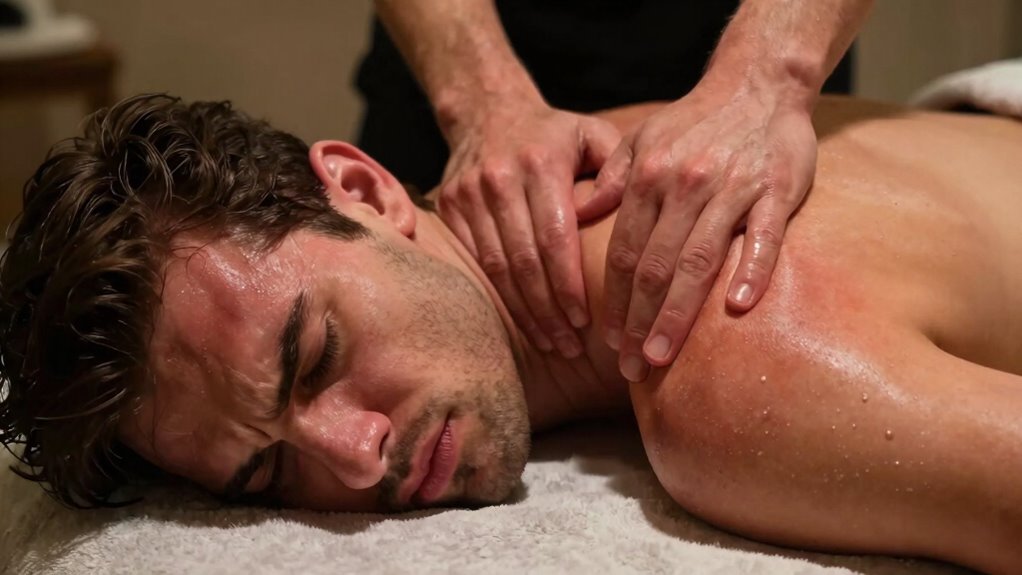
You might notice that your massage feels more uncomfortable than relaxing, which is a key sign it’s too intense. Excessive pressure sensitivity or discomfort during the session indicates the massage depth may be too deep. Watch out for these signs:
If your massage feels uncomfortable or too intense, it’s a sign to communicate and adjust the pressure for your comfort.
- Persistent pain or soreness that lasts beyond the session
- Feeling tender or bruised afterward
- Increased muscle tension or stiffness instead of relief
If you experience any of these, it’s a clear signal that the pressure may be exceeding your comfort level. Pushing too hard can backfire, leading to discomfort rather than relaxation. Recognizing these signs early helps you communicate effectively and avoid unnecessary strain or injury. Remember, a good massage should leave you feeling refreshed, not sore or tense.
How Therapists Can Adjust Pressure for Comfort
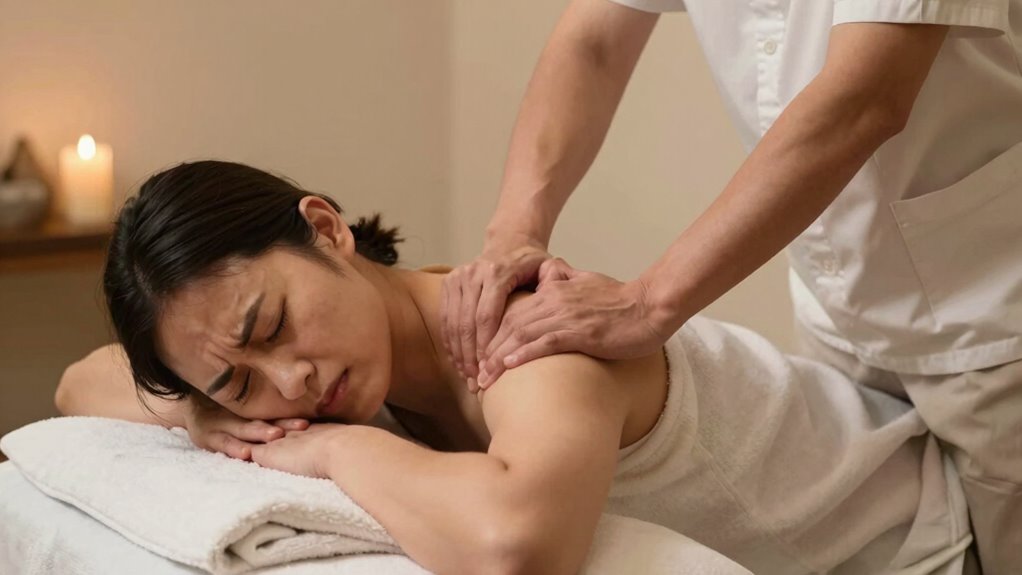
To guarantee that a massage remains comfortable and effective, therapists can actively monitor and adjust their pressure throughout the session. Pay close attention to your client’s body language and breathing, which are key indicators of comfort. If you notice tension or discomfort, perform a quick pressure adjustment—lightening your touch or shifting to a different technique. Ask for feedback periodically to ensure the pressure aligns with their preferences. Using a variety of techniques allows you to modulate pressure smoothly across different muscle groups. Remember, maintaining open communication and observing your client’s responses helps you tailor the pressure for maximum comfort. Incorporating pressure modulation techniques into your approach can make it easier to adjust pressure consistently and confidently. Developing a keen sense of touch sensitivity can also help you respond more intuitively to subtle client cues. Employing vintage tools and methods can also help you develop a more intuitive touch that adapts naturally to your client’s needs. Additionally, understanding security measures in your environment ensures a safe and comfortable setting for your clients. This proactive approach fosters trust, prevents discomfort, and enhances the overall effectiveness of the massage.
Tips for Clients to Communicate Pressure Preferences
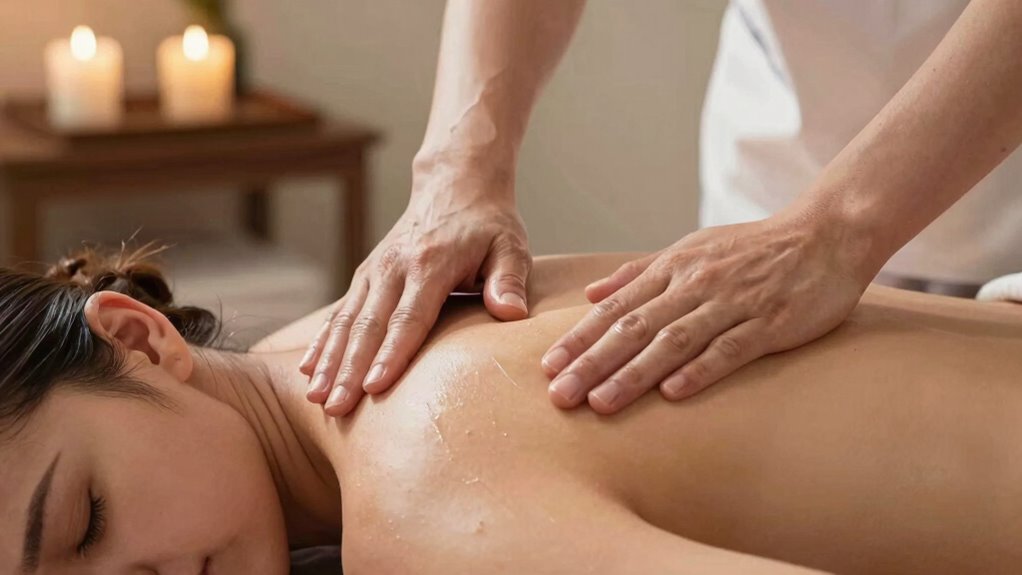
To help your therapist understand your comfort level, be specific about the pressure you prefer. Using clear verbal cues like “This feels too intense” or “I’m okay for now” can make a big difference. Communicating openly guarantees your needs are met and the session stays productive. Paying attention to your body signals during the massage can also help identify when the pressure is just right or needs adjustment. Being aware of home-care techniques can further help you discuss how to maintain comfort between sessions. Additionally, understanding market trends and insights can provide context for stress relief and overall well-being, which can enhance the effectiveness of your massage therapy and support your wealth protection strategies by reducing stress-related health issues.
Be Specific About Pressure
How can clients guarantee their pressure preferences are understood? Be specific about your desired pressure level to prevent pressure inconsistency and sensation overload. Clearly communicate what feels right and what doesn’t. To do this effectively:
- Use precise language like “firm” or “gentle” rather than vague terms.
- Mention areas where you prefer lighter or deeper work.
- Don’t hesitate to stop or adjust if the pressure causes discomfort or feels inconsistent.
Use Verbal Cues
Effective communication about pressure levels goes beyond just choosing words; using verbal cues during your session helps make certain your preferences are understood and respected. Verbal reassurance, like softly stating “That feels good” or “Too much pressure,” lets your massage therapist adjust accordingly. Don’t hesitate to use tone modulation—speak gently or assertively if needed—to guide the pressure to a comfortable level. Clear, direct feedback ensures your therapist knows when to ease up or intensify. By actively using verbal cues, you create a collaborative environment that prioritizes your comfort. Remember, your voice matters. Consistent communication helps prevent unnecessary discomfort and ensures your massage experience remains relaxing and effective.
Mistakes That Lead to Overpressure (And How to Avoid Them)
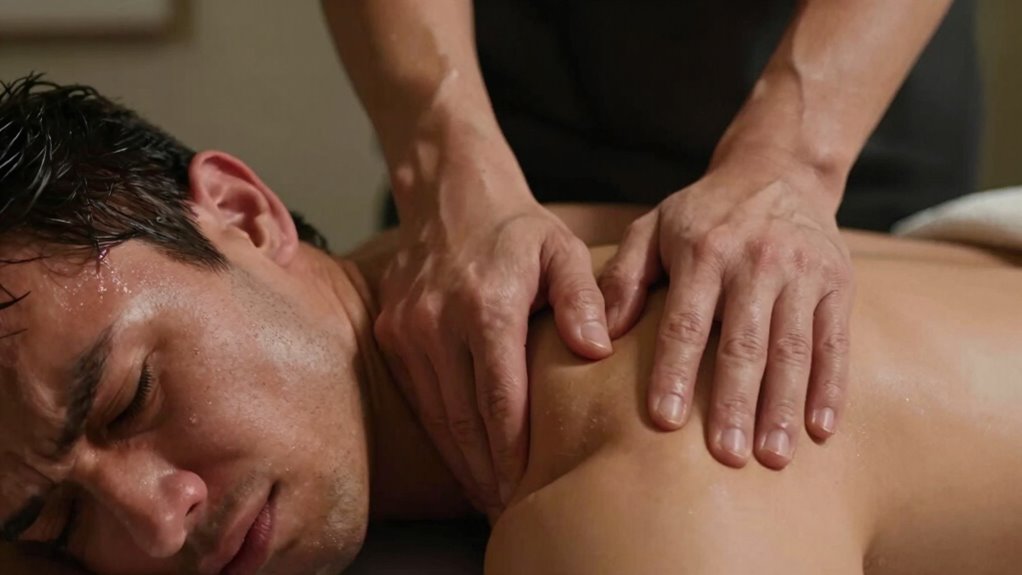
One common mistake that leads to overpressure is setting unrealistic expectations for yourself or others. This often results in pressure miscommunication, where you might assume a certain amount of force is acceptable without checking in. Technique inconsistencies also play a role, as fluctuating pressure levels confuse clients and cause discomfort. To avoid these pitfalls:
- Communicate clearly about pressure preferences upfront.
- Practice consistent technique to maintain steady pressure.
- Regularly check in with clients to adjust pressure as needed.
Benefits of Using the Right Pressure for a Relaxing Massage
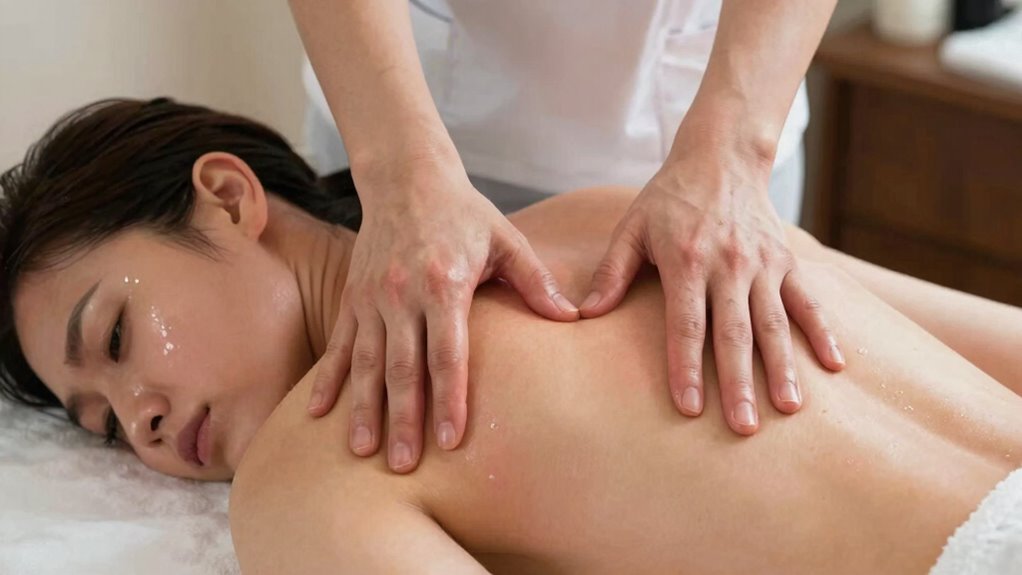
Using the right amount of pressure during a massage can considerably enhance relaxation and overall satisfaction. When you master pressure control, massage therapy becomes more effective at relieving tension and reducing stress. Proper pressure allows your therapist to target deep or superficial muscles without causing discomfort, creating a calming experience. It helps prevent pain or soreness afterward, ensuring you feel refreshed rather than overwhelmed. By applying appropriate pressure, you also promote better blood flow and muscle recovery. Ultimately, using the right pressure makes your massage more enjoyable and beneficial, increasing the likelihood of repeated sessions. Remember, the goal is to relax and heal, not to cause pain. Good pressure control transforms a massage from simply enjoyable into a truly restorative experience.
Frequently Asked Questions
How Can I Identify if My Massage Therapist Is Applying Too Much Pressure?
You can tell if your massage therapist is applying too much pressure by paying attention to pressure signs like discomfort, pain, or muscle tension during the session. Don’t hesitate to give client feedback—mention if the pressure feels too intense. A good therapist will listen and adjust accordingly. Trust your body; if something doesn’t feel right, speak up so your massage remains relaxing and beneficial.
What Are Long-Term Effects of Consistently Receiving Excessive Massage Pressure?
Did you know that 60% of massage recipients report muscle fatigue or nerve irritation after frequent excessive pressure? If you keep applying too much, you risk long-term muscle fatigue, which weakens your muscles over time. Nerve irritation can cause persistent discomfort or numbness. Staying mindful of pressure levels helps prevent these issues, ensuring your massages promote relaxation and healing without unintended negative effects.
Can Too Much Pressure During Massage Cause Muscle Damage?
Yes, too much pressure during massage can cause muscle trauma. Excessive force may damage muscle fibers, leading to soreness, inflammation, and even bruising. To avoid this, practice pressure awareness—listen to your body’s responses and adjust accordingly. Maintaining moderate, controlled pressure helps prevent injury, ensuring the massage is both effective and safe. Always communicate with your therapist if you experience discomfort or pain during the session.
Are There Specific Massage Techniques That Are More Prone to Overpressure?
Certain massage techniques are more prone to overpressure due to their pressure variability and technique sensitivity. Deep tissue massage and trigger point therapy often require precise pressure control, making them riskier if you apply excessive force. You should pay close attention to your client’s feedback and adjust your pressure accordingly. Being mindful of technique sensitivity helps prevent muscle damage and guarantees a safer, more effective massage experience.
How Does Individual Pain Tolerance Influence Perceived Massage Pressure?
Your pain sensitivity directly affects your pressure perception during a massage. If you’re more sensitive to pain, even light pressure can feel overwhelming, while less sensitive individuals might prefer firmer touches. Paying attention to your body’s signals helps you communicate your comfort level. By understanding your pain sensitivity, you can guide your massage therapist to adjust pressure, ensuring a relaxing experience without discomfort or overstimulation.
Conclusion
Finding the right pressure during a massage can feel like steering a minefield, but it’s essential for true relaxation. When you communicate openly and pay attention to your body’s signals, you avoid turning a soothing experience into a nightmare of overpressure. Remember, your comfort is the masterpiece here; too much pressure can turn tranquility into turmoil. Trust your instincts and speak up—your perfect massage is just a conversation away, waiting to transform tension into bliss.