
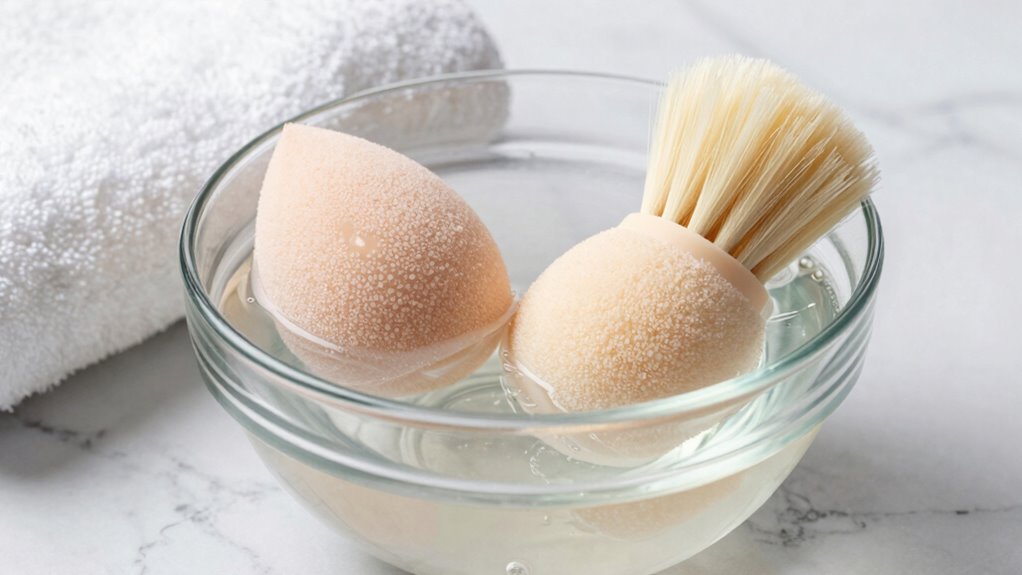
To clean your beauty tools without ruining them, use gentle cleaning methods suited for each material, like mild soap or brush cleaner for brushes and disinfectants such as 70% alcohol for sponges. Rinse thoroughly and avoid hot water or harsh chemicals. Air dry completely before storing to prevent damage or bacteria growth. For more tips on maintaining your tools and extending their lifespan, keep going to learn everything you need to know.

Turn your quiet moments into listening time
- Thousands of audiobooks, podcasts and originals
- Listen on your phone, tablet or Echo — also offline
- Cancel anytime
Key Takeaways
- Use gentle cleansers like baby shampoo, micellar water, or castile soap, avoiding harsh chemicals that can damage bristles or surfaces.
- Rinse thoroughly with warm water to remove all residue, and avoid hot water that may deform or weaken tools.
- Disinfect with alcohol-based solutions (70% alcohol) or diluted vinegar, soaking tools for at least 10 minutes to eliminate bacteria.
- Dry tools completely by air drying or gently wiping with a clean towel to prevent mold or rust.
- Store tools in a dry, ventilated area, using protective covers when possible, and replace damaged or worn tools promptly.
Why Cleaning Your Beauty Tools Is Key for Healthy Skin
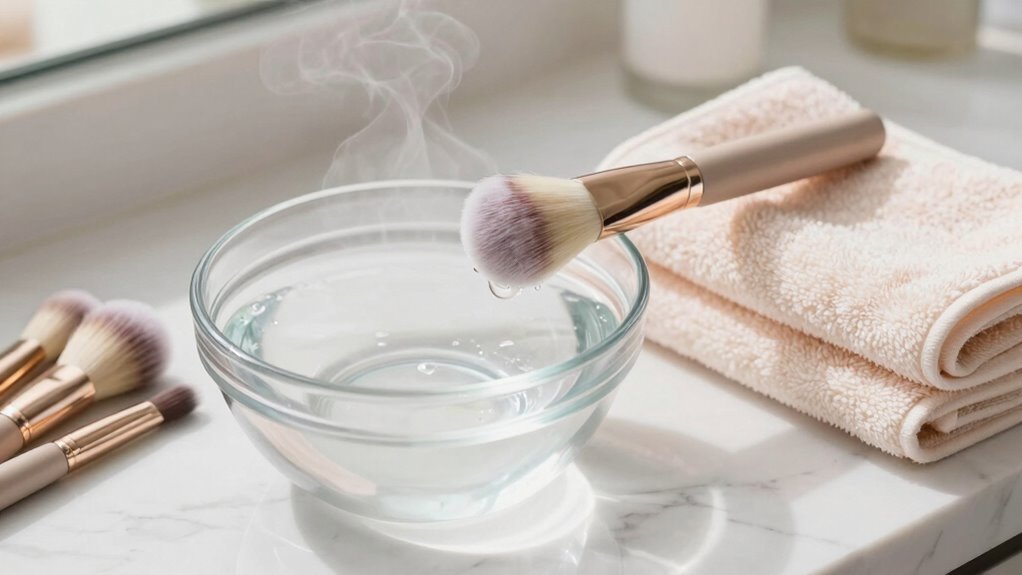
Cleaning your beauty tools is essential because they can harbor bacteria, oil, and dirt that can cause breakouts and skin irritation. When you neglect hygiene habits, these pathogens can transfer to your skin, leading to blemishes and inflammation. Maintaining clean tools directly supports your skin health by reducing the risk of infections and clogged pores. Dirty tools also diminish the effectiveness of your skincare routine, as debris can block product absorption. By regularly sanitizing your brushes, sponges, and tools, you ensure that your skin stays clearer and healthier. Good hygiene habits not only protect your skin but also extend the life of your beauty tools. Incorporating energy-efficient cleaning methods can help reduce environmental impact while maintaining hygiene standards. Prioritizing cleanliness is a simple yet powerful step toward achieving and maintaining radiant, healthy skin.
How Often Should You Clean Different Beauty Tools?
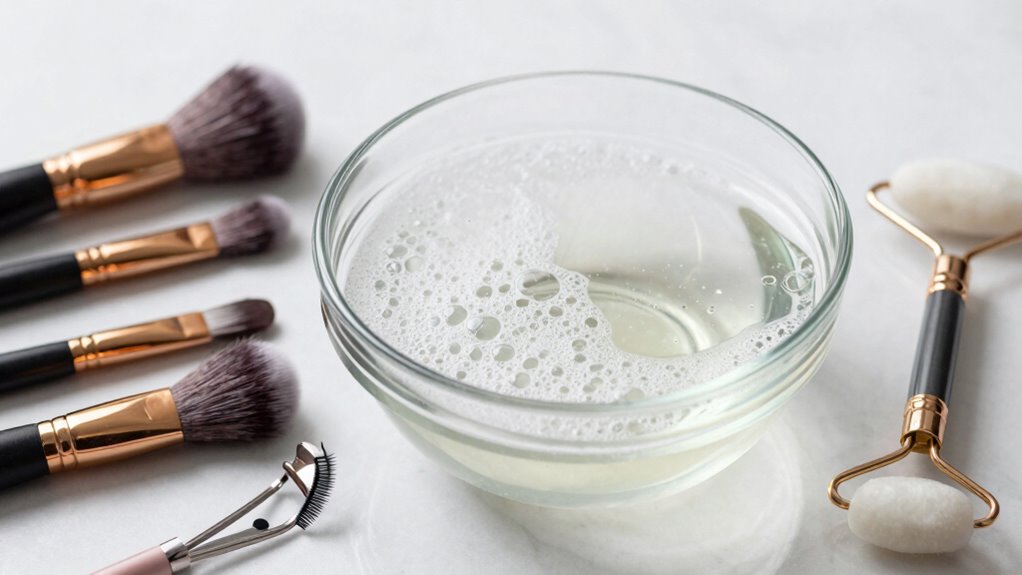
You should clean your beauty tools regularly to keep them hygienic and prevent breakouts. A daily cleaning routine is enough for items like brushes and sponges, while deeper cleaning once a week helps remove buildup. Knowing when to perform these cleanings guarantees your skin stays healthy and your tools last longer. Incorporating proper cleaning techniques ensures that your tools maintain their effectiveness and longevity. Additionally, understanding free floating concepts in maintenance can help you develop more efficient cleaning schedules. Using smart home automation devices can remind you to clean your tools on schedule, making the process more convenient and consistent. Staying aware of personal hygiene and cultural beliefs surrounding beauty practices can further enhance your routine and skincare results.
Daily Cleaning Routine
To keep your skin healthy and prevent breakouts, it’s essential to clean your beauty tools daily. This routine helps you avoid skincare myths that suggest infrequent cleaning doesn’t matter. If you follow current makeup trends, you know that fresh tools are key to flawless application and avoiding bacteria buildup. Wipe brushes with a gentle cleanser or antibacterial wipe after each use, especially if you apply makeup daily. Sponges should be rinsed and air-dried, and tools like eyelash curlers should be wiped down regularly. These simple steps prevent dirt, oil, and bacteria from accumulating, reducing the risk of skin issues. Additionally, proper tool maintenance practices help extend the lifespan of your beauty devices and maintains their effectiveness. Regular cleaning also supports hygienic beauty practices, which are essential for overall skin health and minimizing bacterial transfer. Incorporating proper cleaning techniques ensures your tools stay in top condition and your skin remains clear. Proper tool maintenance practices help extend the lifespan of your beauty devices and maintain their effectiveness.
Weekly Deep Clean
While daily wiping keeps your tools fresh, giving them a thorough deep clean once a week makes certain they stay in prime condition and free from hidden bacteria. This weekly deep clean should align with material compatibility—knowing whether your tools are made of silicone, metal, or plastic helps determine the best cleaning method. For example, metal tools can often handle more rigorous cleaning, while delicate materials need gentler approaches. Incorporating a consistent frequency scheduling to prevent buildup and promote hygiene ensures your tools remain safe and effective. Use appropriate cleaners—antibacterial solutions for most tools, but avoid harsh chemicals on sensitive materials. Regular deep cleaning not only prolongs your tools’ lifespan but also encourages healthier skin by reducing bacteria buildup. Following proper cleaning techniques can ensure your tools remain safe and effective. Establishing a cleaning schedule that accounts for your tools’ material and your routine will help maintain their quality and efficacy over time. Additionally, understanding material compatibility can help you select the safest and most effective cleaning methods for each tool type. Incorporating creative storytelling into your routine can also make the process more engaging, motivating you to stay consistent.
Easy Ways to Clean Makeup Brushes Without Damaging the Bristles
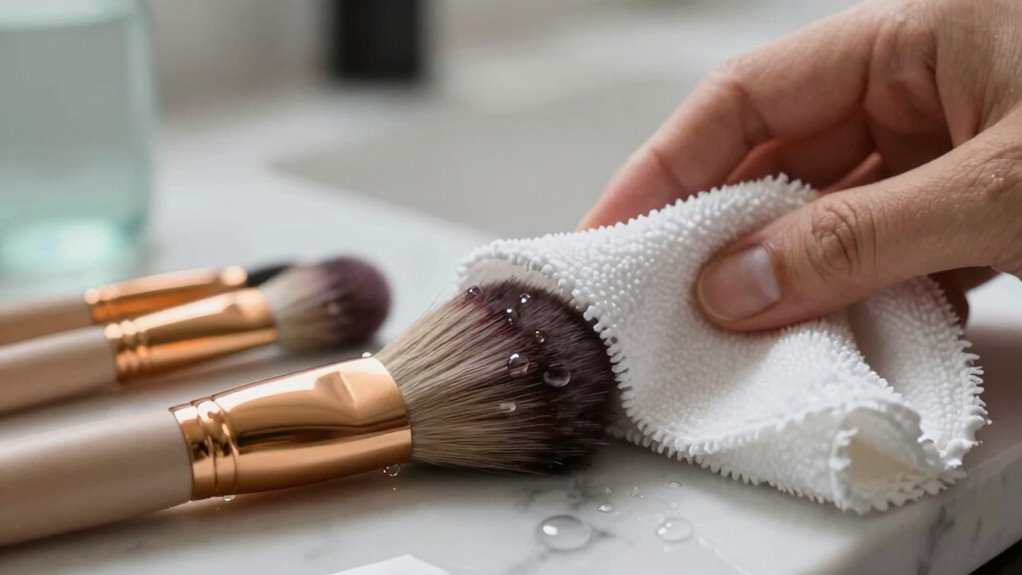
To clean your makeup brushes without damaging the bristles, use gentle cleaners like baby shampoo or brush cleaner. Be sure to avoid harsh scrubbing, which can weaken or loosen the bristles. Rinse thoroughly to remove all residue and prevent buildup. For added protection, consider using gentle essential oils, which can help maintain the health of the bristles while providing antimicrobial benefits. Incorporating air purification techniques in your space can also reduce airborne bacteria that might settle on your brushes, keeping them cleaner and safer to use. Regularly replacing or sanitizing your brush storage can further prevent dust and bacteria from settling on your brushes when not in use.
Use Gentle Cleaners
Using gentle cleaners is essential to keep your makeup brushes in good condition without damaging the bristles. Harsh chemicals can weaken or strip away the natural oils from the brush fibers, leading to fraying or shedding over time. Choose gentle cleaners like mild baby shampoos, castile soap, or specially formulated brush cleansers. These products effectively remove makeup residue and bacteria while maintaining the integrity of the bristles. Remember, cleaning frequency matters—aim to wash your brushes at least once a week to prevent buildup without over-washing, which can also harm the brushes. Additionally, understanding proper tool maintenance can help you extend the lifespan of your makeup brushes and keep them performing their best. Proper storage and handling are also crucial aspects of precise cleaning techniques, which can further prolong the life of your tools. Regularly inspecting your brushes for signs of wear and replacing them when necessary also supports optimal tool longevity. Using the right gentle cleaner regularly ensures your tools remain soft, effective, and long-lasting, helping you achieve flawless makeup looks every time.
Avoid Harsh Scrubbing
Avoiding harsh scrubbing is key to preserving your makeup brushes. Instead of vigorous rubbing, opt for gentle exfoliation to loosen dirt without damaging the bristles. Use soft cloths or fingertips to gently work through the buildup, ensuring you don’t pull or bend the hairs. When cleaning, focus on a light touch to prevent fraying or shedding. If you need extra help, apply a small amount of mild cleaner and gently massage it into the bristles, then wipe away residue with a soft cloth. This careful approach keeps your brushes in top shape, maintaining their softness and longevity. Remember, gentle cleaning methods protect the integrity of your brushes, making sure they perform their best every time you use them. Incorporating proper techniques can also extend the lifespan of your tools and ensure optimal performance.
Rinse Thoroughly
After gently loosening dirt from your brushes, rinsing thoroughly guarantees all water residue and residue buildup are washed away without harming the bristles. Proper rinsing guarantees no soap or dirt remains, preventing damage over time. To maximize effectiveness:
- Use lukewarm water—hot water can damage delicate bristles.
- Gently swirl the brush in water, avoiding the base to prevent loosening glue.
- Keep rinsing until the water runs clear, confirming all residue is gone.
- Be mindful of air purifier maintenance guidelines to keep your tools and environment clean and safe.
This process not only restores your brushes’ softness but also prevents bacteria from thriving. Thorough rinsing is key to maintaining the longevity of your makeup tools and ensuring they stay hygienic for every use. Take your time—your brushes will thank you.
How to Sanitize Sponges and Blenders Safely and Effectively
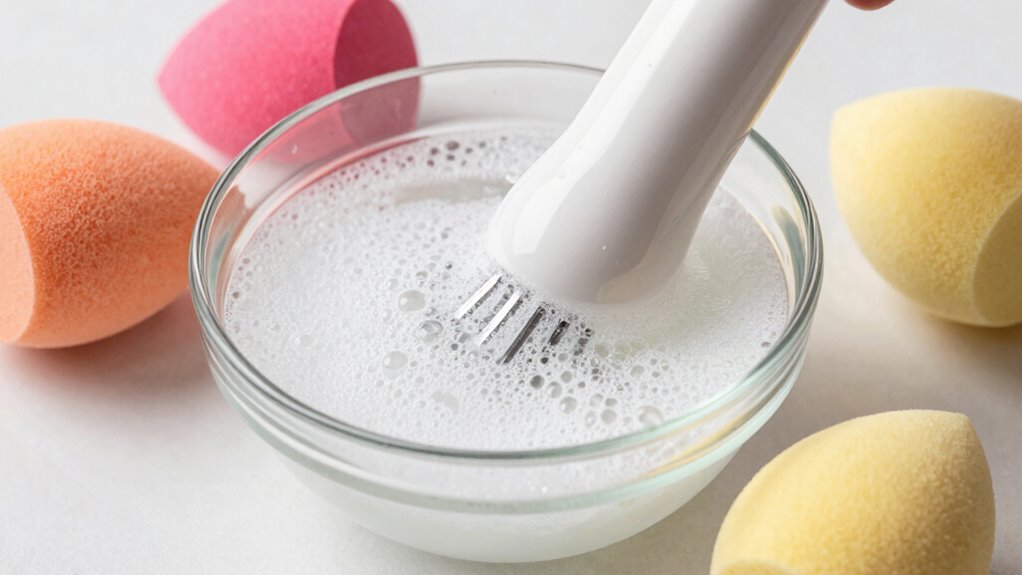
Sanitizing sponges and blenders is essential to keep your skin healthy and prevent breakouts. To maintain good sponges maintenance and blender hygiene, start by soaking them in a mixture of warm water and a disinfecting solution, like a gentle cleanser or vinegar. Let them sit for at least five minutes to kill bacteria. Then, squeeze out excess liquid and rinse thoroughly under running water. For added sanitation, you can microwave damp sponges or blenders on high for 30 seconds—just ensure they’re microwave-safe. This step helps eliminate hidden germs without damaging your tools. Regular sanitization not only prolongs their lifespan but also ensures your skin stays clear and healthy. Make it part of your routine to keep your beauty tools hygienic and safe to use.
The Best Cleaning Products for Your Beauty Tools
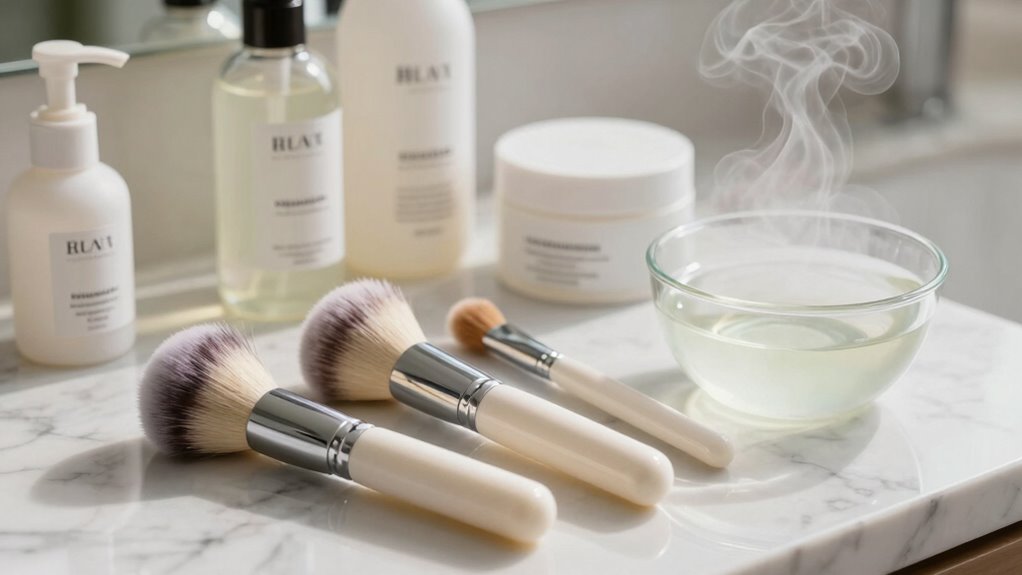
When choosing cleaning products for your beauty tools, consider gentle cleansing solutions that effectively remove dirt without damaging the material. Alcohol-based disinfectants are great for quick sterilization, especially for tools used around your eyes or face. Natural sanitizing agents, like vinegar or tea tree oil, can also be effective options if you prefer more eco-friendly and chemical-free solutions.
Gentle Cleansing Solutions
Choosing gentle cleansing solutions is essential to effectively clean your beauty tools without causing damage. Using the right gentle cleansing solutions guarantees you follow safe cleaning practices while maintaining your tools’ integrity. Here are three options that can make a difference:
- Diluted gentle dish soap – Mild and effective for removing buildup without harsh chemicals.
- Micellar water – Soft on brushes and applicators while breaking down oils and dirt.
- Castile soap – Natural, biodegradable, and safe for delicate tools.
These gentle cleansing solutions help you keep your beauty tools hygienic without risking damage. They’re ideal for safe cleaning practices, especially on sensitive or delicate items. Stick with these options, and you’ll preserve your tools’ lifespan while ensuring they’re clean and ready to use.
Alcohol-Based Disinfectants
After cleaning your beauty tools with gentle solutions, disinfecting them with alcohol-based products offers an added layer of protection. When choosing an disinfectant, make certain you’re aware of the alcohol concentration, as it impacts effectiveness and safety. Typically, solutions with 70% alcohol are ideal for disinfectant safety, as they kill bacteria and viruses without damaging the tools. Higher concentrations, like 90% or more, evaporate too quickly and may be less effective. Always follow manufacturer instructions for use, making sure you soak or wipe tools thoroughly. Be cautious not to overdo it, especially on delicate materials. Proper application of alcohol disinfectants ensures your tools are hygienic without risking damage, making them safe for your skin and reducing the chance of infection.
Natural Sanitizing Agents
Natural sanitizing agents offer a gentle yet effective way to keep your beauty tools clean. They utilize natural disinfectants that eliminate bacteria without harsh chemicals, making them perfect for sensitive skin. Plus, eco-friendly cleaning supports sustainability and reduces your environmental impact.
Here are three powerful options:
- Tea Tree Oil – Its natural antimicrobial properties disinfect tools while leaving a fresh scent.
- Vinegar Solution – A mix of white vinegar and water provides a safe, chemical-free way to sanitize brushes and tools.
- Lemon Juice – Its natural antiseptic qualities help remove germs and add a clean, uplifting aroma.
Using these eco-friendly cleaning agents ensures your beauty routine stays safe, effective, and environmentally conscious.
How to Deep Clean Your Beauty Tools in Simple Steps
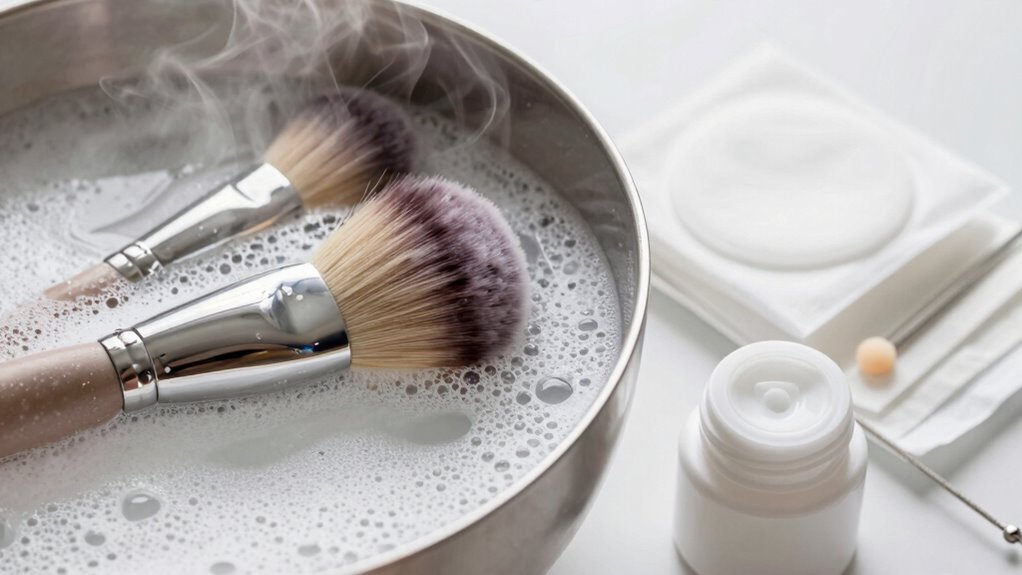
Wondering how to truly disinfect your beauty tools? Start by removing any visible debris and rinsing brushes under warm water. Use a gentle brush cleaner or a mixture of mild soap and water for thorough brush maintenance. Submerge tools like sponges or brushes in a disinfectant solution, such as rubbing alcohol or a specialized brush cleaner, for at least 10 minutes. Rinse well to remove any residue. To ensure longevity, optimize storage by keeping tools in a clean, dry space, avoiding overcrowding that can trap dirt. Regular deep cleaning prevents bacteria buildup and maintains their effectiveness. Remember, deep cleaning isn’t just about sanitizing; it’s about preserving your tools so they serve you well over time.
Drying and Storing Your Beauty Tools for Longevity
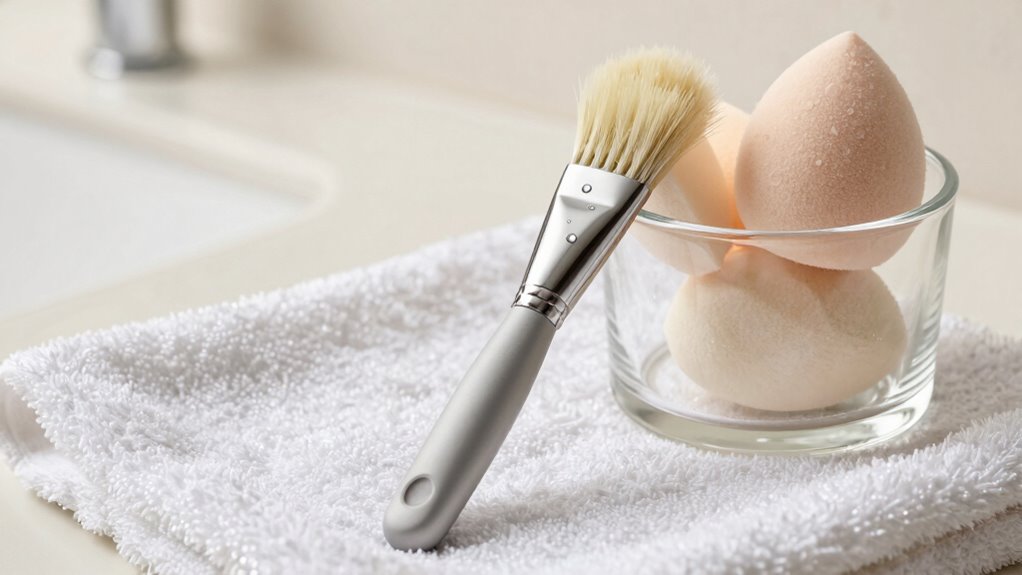
Proper drying and storage are essential to keep your beauty tools in top condition and extend their lifespan. After cleaning, use gentle drying techniques like air drying or wiping with a clean towel to prevent damage. Proper storage tips include keeping tools in a dry, ventilated area, away from moisture and dust. Here are key steps to ensure longevity:
Proper drying and storage extend the life of your beauty tools and keep them in optimal condition.
- Store tools in a clean, organized container to avoid cross-contamination.
- Use open or breathable storage options to promote airflow and prevent mold.
- Avoid storing tools in humid environments, which can cause rust or bacterial growth.
When Should You Replace Your Beauty Tools? Tips and Signs
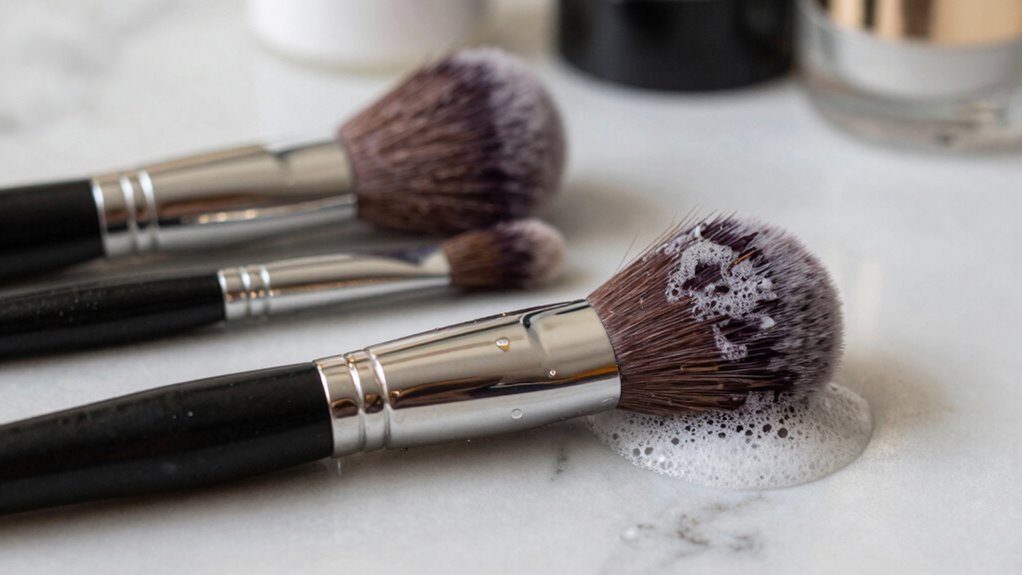
Even with careful drying and storing, beauty tools don’t last forever. Knowing when to replace your tools is essential for safe and effective use. Look for sign indicators like cracks, chips, or warping, which compromise their integrity and hygiene. If a brush’s bristles are frayed or a sponge’s surface becomes rough, it’s time for tool replacement. Metal tools that show rust or corrosion are no longer safe. Additionally, if cleaning no longer restores the tool’s cleanliness or performance, it’s a clear sign to retire it. Regularly inspecting your tools helps prevent bacterial buildup and ensures maximum results. Remember, investing in quality replacements when needed keeps your skincare routine safe and effective. Don’t ignore these signs—your skin will thank you.
Troubleshooting Common Cleaning Issues and Mistakes
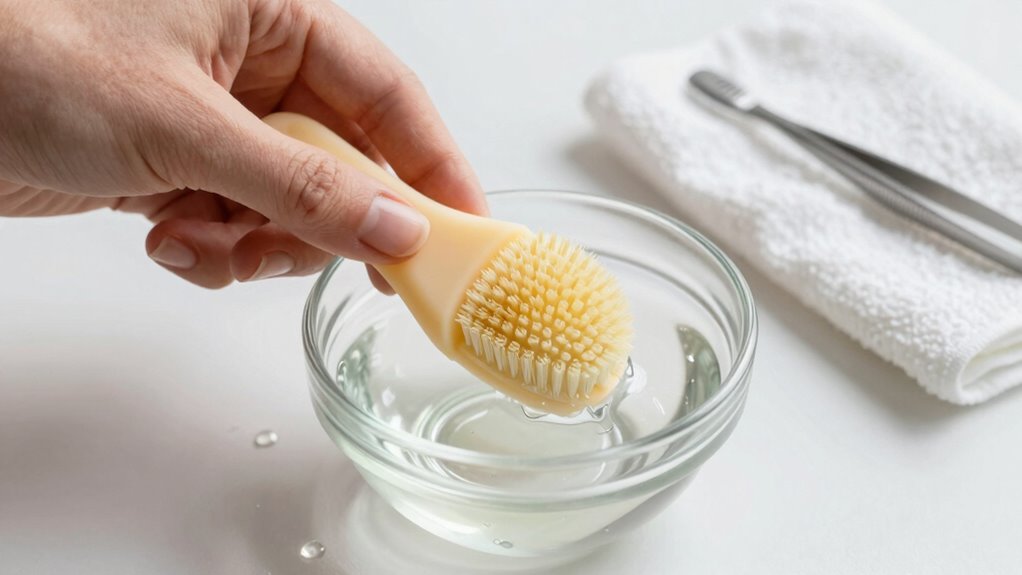
Cleaning your beauty tools can sometimes lead to unexpected issues if you’re not careful, and many common mistakes can hinder their effectiveness or damage them. Troubleshooting cleaning issues involves recognizing what went wrong and fixing it.
- Using harsh chemicals can damage delicate tools—stick to gentle cleansers.
- Not drying tools thoroughly leaves moisture that promotes mold or bacteria growth.
- Overlooking small crevices traps dirt, making cleaning ineffective and risking skin irritation.
Top Tips to Keep Your Beauty Tools in Top Condition Over Time
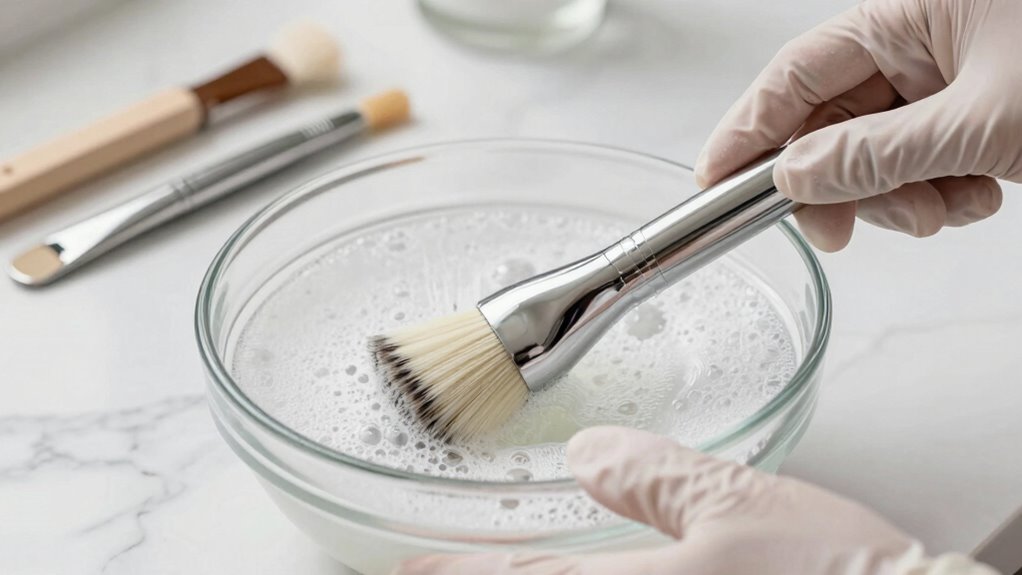
To keep your beauty tools in top condition over time, establish a regular maintenance routine. Proper beauty tool maintenance promotes skincare hygiene and extends their lifespan. Clean tools after each use with gentle soap and disinfectants suited for the material. Store them in a dry, clean place to prevent bacteria buildup. Regularly check for signs of wear or damage, replacing tools when necessary. Use this table to guide your maintenance:
| Tip | Explanation |
|---|---|
| Clean regularly | Prevent bacteria growth and maintain hygiene. |
| Store properly | Avoid damage and contamination. |
| Inspect and replace | Ensure effectiveness and safety. |
Following these tips helps preserve your tools’ functionality and hygiene, making your skincare routine safer and more effective.
Frequently Asked Questions
Can I Use Household Cleaning Products on My Beauty Tools?
You shouldn’t use household chemicals on your beauty tools because they can be unsafe cleaning options. These products may contain harsh ingredients that damage delicate tools or leave residues that irritate your skin. Instead, opt for gentle soap, isopropyl alcohol, or specialized cleaning solutions designed for beauty tools. This way, you guarantee thorough cleaning without risking damage or unsafe cleaning practices that could harm your skin or the tools.
What Is the Best Way to Clean Intricate or Delicate Tools?
To clean intricate or delicate tools, start with gentle brushing to remove debris. For a deeper clean, use ultrasonic cleaning, which uses sound waves to safely dislodge dirt without damaging your tools. Avoid harsh chemicals, and always follow the manufacturer’s instructions. This method keeps your delicate tools in top condition, ensuring they stay effective and hygienic without risking damage or wear.
How Can I Prevent Bacteria Buildup Between Uses?
To prevent bacteria buildup between uses, you should regularly sanitize your beauty tools using effective sanitization techniques like alcohol wipes or brush cleaners. Always store them in a clean, dry place, preferably in a sealed container or case to keep them protected from dust and germs. Avoid sharing tools, and after each use, make sure they’re thoroughly dried before storing. These steps help maintain hygiene and prolong your tools’ lifespan.
Are There DIY Natural Cleaning Solutions for Beauty Tools?
Think of your beauty tools as tiny gardens needing natural nourishment. You can create DIY disinfectants using simple ingredients like white vinegar, rubbing alcohol, or tea tree oil, which act as natural remedies to keep bacteria at bay. Mix a solution of water and vinegar or add a few drops of tea tree oil for a gentle, effective cleanse. These natural remedies help preserve your tools without harsh chemicals, maintaining their longevity and your skin’s health.
How Do I Know if a Tool Is No Longer Safe to Use?
You’ll know a tool is no longer safe if you notice signs of tool deterioration, such as cracks, warping, or rust. Safety signs also include persistent bacteria or residue even after cleaning, or if the tool feels uncomfortable or loose during use. If any of these issues occur, it’s best to substitute the tool to prevent skin irritation or infections. Regular inspection helps guarantee your tools remain safe and effective.
Conclusion
Keeping your beauty tools clean isn’t just about hygiene — it’s about maintaining their effectiveness and your skin’s health. Many believe that frequent cleaning can damage delicate tools, but science shows proper care actually extends their lifespan and ensures better results. Think of your tools as investments; with the right routine, you prevent bacteria buildup and save money in the long run. Clean smart, and your beauty routine will stay safe, effective, and long-lasting.
Halloween Picks
halloween
As an affiliate, we earn on qualifying purchases.