


Stress is very real in how it shows up in your body, especially in your jaw and brow muscles. When you’re anxious or under pressure, you might tighten your jaw or furrow your brow without even noticing. This tension can cause discomfort, headaches, or jaw pain over time. Recognizing these signs can help you take steps to relax those muscles. Keep exploring to learn more effective ways to ease this common response to stress.
Key Takeaways
- Stress triggers muscle tightening in the jaw and brow, leading to discomfort and visible tension signs.
- Common reactions include teeth clenching, forehead squeezing, and furrowed brows during stressful moments.
- Persistent tension in these muscles can cause headaches, jaw pain, and facial soreness over time.
- Symptoms often worsen with anxiety and can alter facial expressions if untreated.
- Relaxation techniques like deep breathing and massage help reduce muscle tightness and alleviate tension signs.
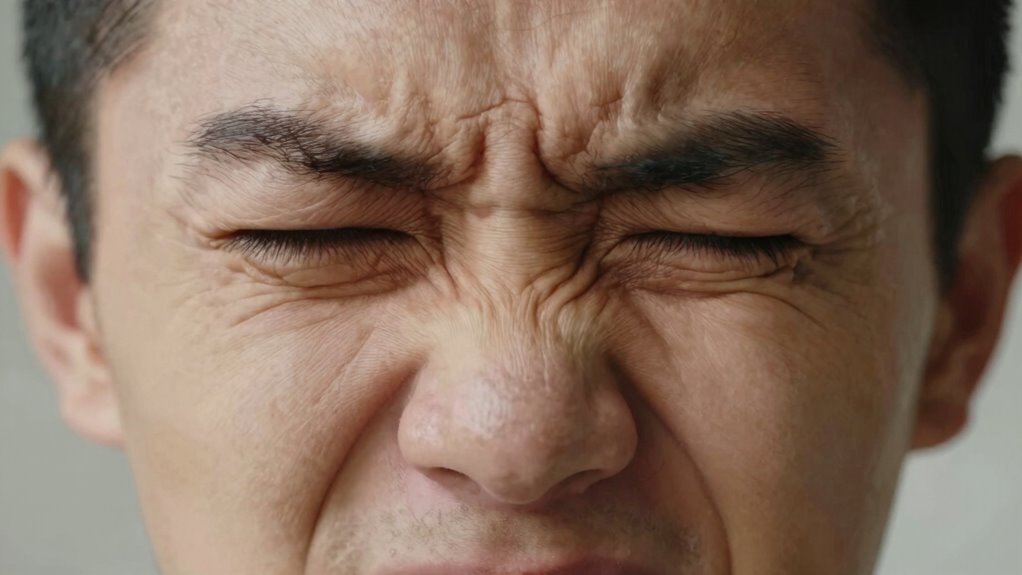
Have you ever noticed tightness or discomfort in your jaw or around your brows during stressful moments? That sensation isn’t just in your head; it’s a real physical response your body has to stress. When stress hits, your muscles tend to tense up, especially in areas like your face. Muscle tightness in your jaw and brow muscles isn’t uncommon and can lead to persistent facial discomfort if left unchecked. You might feel like clenching your teeth or squeezing your forehead, even when you’re not consciously doing so. This tension is your body’s way of preparing for a perceived threat, but it often results in discomfort that persists long after the stressful event has passed.
Tension in your jaw and brow during stress can cause persistent facial discomfort.
The muscles around your jaw and forehead respond quickly to emotional and psychological stress. When you’re anxious or overwhelmed, your body releases stress hormones like adrenaline, which cause your muscles to contract. Over time, this can lead to chronic tightness and soreness. You might notice your jaw feels stiff or tender, especially if you’ve been grinding your teeth at night or clenching during the day. Similarly, your brow muscles can become tight, giving you a perpetually furrowed look and causing facial discomfort. This sustained muscle tension isn’t just uncomfortable—it can also contribute to headaches, jaw pain, and even contribute to the development of temporomandibular joint (TMJ) issues.
Facial discomfort from muscle tightness can be subtle or quite intense. You might experience a constant ache in your jaw muscles or a feeling of pressure around your brows. Sometimes, it’s a sharp pain when you touch the muscles or move your jaw. These sensations often worsen during periods of stress or anxiety, creating a cycle where discomfort increases with ongoing tension. Because these muscles are so close to sensitive areas like your eyes and sinuses, the discomfort can sometimes feel more intense than it actually is. It’s important to recognize that these physical signs of stress are your body’s way of signaling that it’s under duress. Ignoring this tension can lead to chronic pain and even alter your facial expressions over time.
Managing facial discomfort caused by muscle tightness requires awareness and proactive steps. Techniques like deep breathing, progressive muscle relaxation, or gentle stretching can help ease the tension. Being mindful of clenching your jaw or furrowing your brow during stressful moments allows you to consciously relax those muscles. Regular self-care, such as massage or applying heat to tight areas, can also reduce discomfort. Remember, your face’s muscles are just as susceptible to the effects of stress as the rest of your body. Paying attention to these signs and taking steps to relax can make a significant difference in reducing facial discomfort and improving your overall sense of well-being.
Frequently Asked Questions
Can Facial Exercises Reduce Jaw and Brow Tension Effectively?
Yes, facial exercises can help reduce jaw and brow tension effectively. Incorporate relaxation techniques like gentle stretching and massage therapy to loosen tight muscles. Regularly practicing these exercises relaxes your facial muscles, easing stress-related tension. Massage therapy also promotes circulation and relaxation, making it easier to release built-up stress. Combined, these methods can considerably improve facial comfort and reduce the impact of stress on your jaw and brow areas.
Are There Specific Foods That Help Relieve Facial Muscle Stress?
Yes, eating nutrient-rich foods can help relieve facial muscle stress. Focus on a muscle relaxing diet that includes magnesium-rich foods like leafy greens, nuts, and seeds, which promote muscle relaxation. Incorporate omega-3 fatty acids from fish or flaxseed to reduce inflammation and tension. Staying hydrated and avoiding processed foods also support muscle health. These dietary choices can help ease tension in your jaw and brow areas naturally.
How Long Does It Typically Take to Notice Improvements?
Think of your face as a garden needing consistent care; improvement timeline varies like seasons. Usually, you’ll notice some relief within a few days, but significant change takes about two to four weeks with regular stress-relief practices. Timing expectations depend on your routine’s consistency and the severity of tension. Stay patient and persistent—gradual progress is the natural rhythm for easing facial muscle stress.
Is Facial Tension Linked to Underlying Mental Health Issues?
Yes, facial tension is often linked to underlying mental health issues. When you’re experiencing emotional stress, your body reacts by tightening muscles in your jaw and brow, creating a mental health connection. This tension can be a physical sign of anxiety or depression. Recognizing this link helps you address emotional stress proactively, reducing facial tension and improving overall mental well-being through relaxation techniques and seeking support.
What Are the Best Professional Treatments for Chronic Facial Tension?
You should consider professional treatments like massage techniques and relaxation methods to manage chronic facial tension. A licensed massage therapist can target tight muscles in your jaw and forehead, providing relief. Additionally, relaxation techniques such as guided imagery, deep breathing, or biofeedback can help reduce stress that causes facial tension. Combining these approaches often yields the best results, helping you relax your face and decrease ongoing discomfort.
Conclusion
So, next time you notice that tight jaw or furrowed brow, remember it’s more than just a random habit—it’s your stress showing up. Sometimes, the tiniest tension can sneak in unnoticed, like how a busy day can leave your face clenched without you realizing. Pay attention to these signs; they’re your body’s way of telling you to slow down. Because, in the end, easing that face tension could be the first step to easing your mind.