
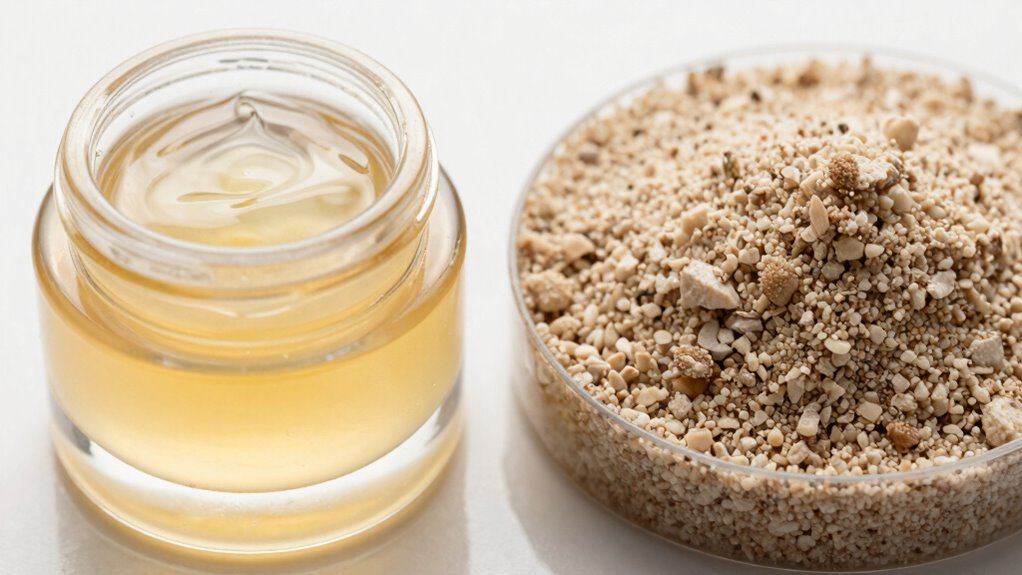

Brightening ingredients work to improve your skin’s radiance and even out tone, focusing on reducing dark spots and enhancing glow with antioxidants and vitamins. Exfoliating ingredients remove dead skin cells, revealing smoother, fresher skin underneath, often through chemical or physical action. While brightening products are gentle enough for daily use, exfoliants may need cautious application to avoid irritation. Understanding how these ingredients differ can help you choose the right products for your skin. Keep exploring to learn more about how they work together for better results.

Turn your quiet moments into listening time
- Thousands of audiobooks, podcasts and originals
- Listen on your phone, tablet or Echo — also offline
- Cancel anytime
Key Takeaways
- Brightening ingredients aim to improve skin radiance and reduce dark spots, while exfoliating ingredients remove dead skin cells to reveal smoother skin.
- Brightening agents typically contain antioxidants or melanin-inhibitors, whereas exfoliants rely on acids or enzymes to promote cell turnover.
- Exfoliants often depend on specific pH levels for effectiveness, unlike brightening ingredients which are generally less pH-sensitive.
- Brightening ingredients are gentler and suitable for daily use, whereas exfoliants may require cautious use to prevent over-exfoliation.
- Understanding these differences helps tailor skincare routines and select appropriate products for skin concerns.

Understanding the difference between brightening and exfoliating ingredients is key to choosing the right skincare products for your needs. Both types of ingredients work differently on your skin, and knowing how they operate can help you avoid irritation and achieve the results you want. Brightening ingredients mainly target dullness and uneven skin tone, aiming to give your complexion a more radiant glow. They often contain antioxidants or compounds that inhibit melanin production, resulting in a visibly brighter appearance. Exfoliating ingredients, on the other hand, remove dead skin cells that accumulate on the surface, revealing fresher skin underneath. They work through chemical reactions that break down the bonds holding dead cells together, promoting cell turnover. To maximize their benefits, it’s important to understand how these ingredients interact with your skin’s natural pH balance, as many chemical exfoliants rely on specific pH levels to work effectively. Maintaining the right skin pH balance ensures that exfoliating ingredients perform *effectively* without disrupting your skin’s protective barrier. Proper pH levels help prevent issues like dryness, redness, or increased sensitivity, which can happen if the skin becomes too acidic or alkaline after application. Brightening ingredients tend to be less aggressive and usually don’t involve significant chemical reactions that alter your skin’s pH. Instead, they focus on providing antioxidants, vitamin C, or other compounds that inhibit melanin synthesis, helping to reduce dark spots and promote a more luminous complexion. Because they are gentler, brightening agents are often suitable for daily use, even on sensitive skin, as they’re less likely to disturb your skin’s pH balance or cause irritation. Recognizing the mechanisms of action behind these ingredients can aid in selecting the most suitable products for your skincare routine. Additionally, understanding the differences in formulation can help you better tailor your routine to meet your skin’s specific needs.
brightening vitamin C serum for dull skin
As an affiliate, we earn on qualifying purchases.
As an affiliate, we earn on qualifying purchases.
Frequently Asked Questions
Can Brightening Ingredients Cause Skin Sensitivity?
Yes, brightening ingredients can cause skin sensitivity, especially if you have sensitive skin or use them alongside other potent products. They may act as sensitivity triggers due to ingredient interactions or overuse. Always patch-test new products and introduce them gradually to avoid irritation. If your skin becomes red, itchy, or inflamed, reduce application frequency or discontinue use and consult a dermatologist to prevent further sensitivity issues.
How Often Should I Use Exfoliating Products?
Think of exfoliating as a gentle dance for your skin—do it too often, and you risk overdoing it. You should typically use exfoliating products 2-3 times a week, especially if you’re using chemical peels or other potent formulas. This helps maintain skin hydration while removing dead cells. Always listen to your skin’s cues, and if it feels irritated, cut back to avoid damaging your skin’s natural barrier.
Are Natural Ingredients Effective for Brightening?
Yes, natural ingredients can be effective for brightening your skin. Natural remedies, like botanical extracts such as licorice, turmeric, and vitamin C-rich ingredients, help brighten your complexion gently and safely. These plant-based ingredients have antioxidant and anti-inflammatory properties that promote a more radiant, even skin tone. Incorporating natural remedies into your skincare routine can enhance brightness without harsh chemicals, making your skin look healthier and more luminous over time.
Can I Combine Brightening and Exfoliating Products?
Did you know 80% of skincare enthusiasts combine products daily? Yes, you can combine brightening and exfoliating products, but ingredient compatibility matters. Always layer with care, starting with lighter, water-based products before heavier creams. Use exfoliants a few times a week and brightening serums daily. Be cautious of over-exfoliating, which can irritate skin. Proper skincare layering guarantees you get the best results without compromising your skin’s health.
What Are the Long-Term Effects of Frequent Exfoliation?
Frequent exfoliation can boost skin renewal, but overdoing it may lead to long-term damage. You might experience increased sensitivity, redness, or even a compromised skin barrier, especially if you use harsh chemicals or perform aggressive treatments like chemical peels too often. This can cause irritation and premature aging. To avoid these effects, balance exfoliation with proper skin hydration and sun protection, and consult a dermatologist for personalized advice.
chemical exfoliant with acids for face
As an affiliate, we earn on qualifying purchases.
As an affiliate, we earn on qualifying purchases.
Conclusion
Think of brightening ingredients as the sunrise, illuminating your skin’s natural glow, while exfoliating ingredients are like a gentle scrub brush, clearing away dullness and dead cells. Brighteners bring radiance, making your skin look fresh and luminous, whereas exfoliants reveal a smoother, more refined surface beneath. Together, they’re a dynamic duo—one illuminating, the other refining—working in harmony to reveal your most radiant, healthy skin.
gentle daily exfoliating face wash
As an affiliate, we earn on qualifying purchases.
As an affiliate, we earn on qualifying purchases.
As an affiliate, we earn on qualifying purchases.
Fall Picks
fall essentials
As an affiliate, we earn on qualifying purchases.