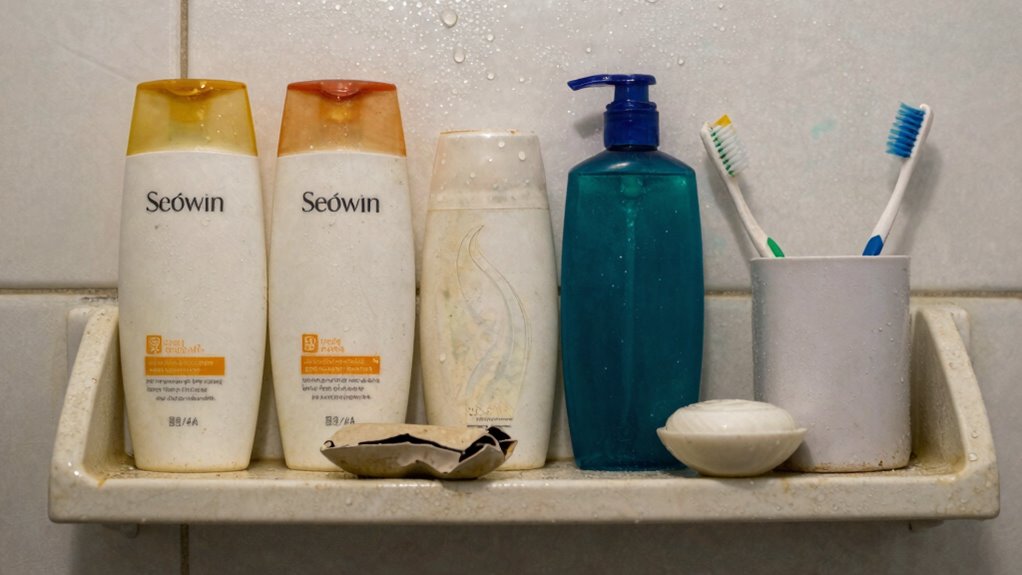
In humid bathrooms, you often overlook how moisture speeds up the deterioration of your toiletries and cleaning products. Increased humidity can cause products to become watery, develop mold, or lose their potency faster than expected. This shortens their overall shelf life and can even cause potential health issues. By understanding how humidity affects your products, you can take simple steps to extend their freshness and safety. Keep going to discover how to better protect your essentials.

Turn your quiet moments into listening time
- Thousands of audiobooks, podcasts and originals
- Listen on your phone, tablet or Echo — also offline
- Cancel anytime
Key Takeaways
- Humidity accelerates product spoilage, often shortening shelf life without visible signs of deterioration.
- Moisture can cause separation, clumping, or loss of potency in toiletries and cleaning products.
- Mold growth may occur unnoticed, compromising safety even if products appear unaffected.
- Proper storage outside humid bathroom environments extends product usability and prevents early expiration.
- Regularly inspecting products for changes in smell, texture, or appearance helps detect unseen humidity damage.
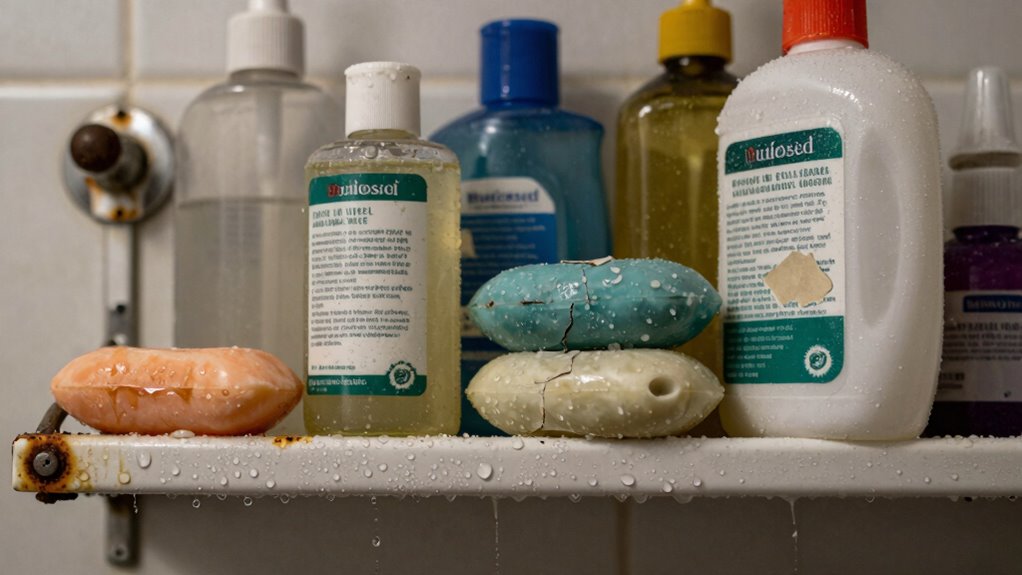
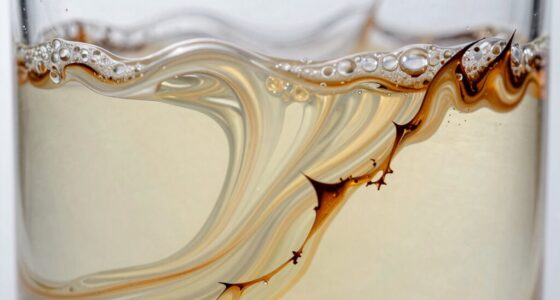
Product deterioration is another major consequence of high humidity. Many toiletries, such as creams, lotions, and liquid soaps, contain ingredients sensitive to moisture and temperature changes. When exposed to continual dampness, these products can change in texture, become watery, or develop an off smell. For example, a moisturizer stored in a humid bathroom might separate or develop a moldy film, reducing its effectiveness and even making it hazardous to apply. Similarly, cleaning products like sprays and powders may lose their potency or become clumpy, making them harder to use efficiently. This deterioration means you’re often throwing away products sooner than expected, leading to unnecessary waste and expense.
You might think keeping products in the shower or on the sink is convenient, but that’s often where the worst damage happens. Moisture from daily showers, steam, and splashes creates a consistent damp environment that accelerates both mold growth and product deterioration. To extend the shelf-life of your toiletries, you should consider storing them in a dry, well-ventilated area outside the bathroom or in moisture-resistant containers. Regularly cleaning your storage spaces can also prevent mold spores from settling and multiplying. Ventilation plays a crucial role in reducing indoor humidity, thereby helping preserve your products. Ensuring proper storage conditions can significantly slow down the deterioration process. Additionally, choosing moisture-resistant containers can further protect your products from humidity damage. Recognizing and addressing humidity levels is essential for maintaining product integrity over time. Being aware of the product expiration date can help you identify when items are no longer safe or effective to use.
Also, pay attention to the condition of your products. If you notice changes in color, texture, or smell, it’s a sign they might be compromised. Using expired or moldy products can cause skin irritation or infections, so it’s *especially* important to monitor their condition. Recognize that humidity isn’t just a minor inconvenience; it’s a *key* factor that can drastically reduce the useful life of your toiletries and cleaning supplies. Taking simple steps to control moisture and storage conditions can save you money and keep you healthier by preventing mold growth and product deterioration.
Products Worth Considering

Levoit Core 600S-P Smart Air Purifier for Large Rooms

Levoit Vital 200S-P Smart Air Purifier for Large Rooms

LEVOIT Vital 100S-P Smart Air Purifier with Washable Pre-Filter
As an affiliate, we earn on qualifying purchases.
Frequently Asked Questions
How Does Humidity Specifically Accelerate Product Spoilage?
Humidity effects directly accelerate product spoilage by creating a moist environment that fosters bacterial growth and mold. When humidity levels are high, moisture seeps into packaging, breaking down active ingredients and weakening preservatives. This spoilage acceleration shortens product shelf life, especially for toiletries and cosmetics. You’ll notice products degrade faster, develop unpleasant smells, or change consistency, so keeping your bathroom dry helps preserve their effectiveness and extends their usability.
Are There Any Products That Are Unaffected by Bathroom Humidity?
Some products remain unaffected by bathroom humidity, especially those in moisture-resistant packaging or made from humidity-proof materials. For example, sealed medications, certain cosmetics, and electronic devices are designed to withstand high moisture levels. You should look for labels indicating moisture resistance or humidity-proof features. By choosing products with these qualities, you guarantee they stay effective and intact despite the humid environment in your bathroom.
How Can I Tell if a Product Has Expired Early?
If a product’s packaging shows signs of wear or damage, it’s a good hint it might be past its prime. Changes like a foul smell, color shifts, or a thinner consistency can also signal early expiry. Always consider storage conditions; if kept in a humid bathroom, products may degrade faster. Trust your senses and check packaging integrity regularly—these clues help you determine if it’s still good to use.
What Are the Health Risks of Expired Bathroom Products?
Expired bathroom products can pose health risks because shelf stability decreases over time, especially in humid environments. Chemical breakdown may lead to skin irritation, infections, or allergic reactions when you use expired items like lotions or cleansers. Bacteria and mold can develop, increasing the risk of infections. To stay safe, regularly check expiration dates and replace products, especially if their texture, smell, or color change, indicating chemical changes and potential health hazards.
Does Ventilation Improve Shelf Life Significantly?
Yes, proper ventilation greatly improves shelf life by promoting better air circulation and moisture control. When you guarantee good airflow, it reduces humidity levels that can accelerate product deterioration. Moisture control prevents mold, bacteria, and product breakdown, keeping your bathroom products fresh longer. Regularly opening windows or using exhaust fans helps maintain an environment that slows down spoilage, so your products stay safe and effective for a more extended period.
Conclusion
So, next time you’re grabbing that shampoo or skincare product from a humid bathroom, remember the shelf life matters more than you think. For example, a friend ignored her moisturizer’s expiry date, only to find it caused breakouts. Avoid that mistake by checking labels and storing products properly. Keeping an eye on shelf life can save you from skin issues and wasted money, making your bathroom routine safer and more effective in the long run.