

To ease jaw tension with Gua Sha, use a smooth tool and gentle, mindful strokes along your jawline, starting from the center outward to your ears. Focus on relaxing your face and take deep breaths as you glide the tool gently—no force needed. Incorporating this simple routine regularly can help release built-up stress, promote facial relaxation, and improve overall comfort. Keep going to discover more ways to make your self-care both effective and soothing.

Turn your quiet moments into listening time
- Thousands of audiobooks, podcasts and originals
- Listen on your phone, tablet or Echo — also offline
- Cancel anytime
Key Takeaways
- Use a smooth-edged Gua Sha tool with gentle, mindful strokes along the jawline to promote relaxation without force.
- Incorporate facial oil or moisturizer to ensure soft gliding and prevent skin tugging during the routine.
- Focus on slow, rhythmic movements from the center of the jaw outward toward the ears, emphasizing a calming, non-aggressive approach.
- Combine Gua Sha with deep breathing to enhance relaxation and release built-up tension in jaw muscles.
- Practice daily for consistent stress relief, integrating additional tools like LED therapy or microcurrent devices for complementary benefits.

Have you ever noticed how jaw tension can cause discomfort and even headaches? It’s a common issue that often goes unnoticed until the pain becomes bothersome. Luckily, there’s a gentle approach that can help: Gua Sha for jaw tension. This technique isn’t about aggression or forcing anything; it’s about promoting facial relaxation and stress relief through a soft, mindful routine. When you incorporate Gua Sha into your daily care, you’re giving your face a moment of calm, helping to release built-up tension and improve circulation.
Facial relaxation is essential for easing jaw tightness. As you gently glide the stone along your jawline, you activate muscles that tend to cling onto stress, often subconsciously clenching your jaw during stressful moments. Using a smooth, flat Gua Sha tool, you can apply light pressure to those areas, encouraging the muscles to loosen without causing discomfort. This simple act helps melt away tension, making your face feel lighter and more at ease. The key is to stay gentle—there’s no need to press hard or rush through the process. Instead, focus on slow, deliberate strokes that follow the natural contours of your face.
Gentle strokes along your jaw activate muscles, releasing tension and promoting a lighter, more relaxed face.
Stress relief plays a significant role in reducing jaw tension. When you’re stressed, your body tends to hold onto that tension, especially around your face and jaw area. Incorporating Gua Sha into your routine can serve as a calming ritual, helping you shift your focus inward and relax. As you massage your jawline, you stimulate lymphatic drainage, which can help reduce swelling and promote a sense of well-being. The rhythmic motion of Gua Sha also encourages deep breathing, further amplifying the stress-relief benefits. It’s a small, daily act that signals your body to unwind, releasing the mental and physical pressure that accumulates over time.
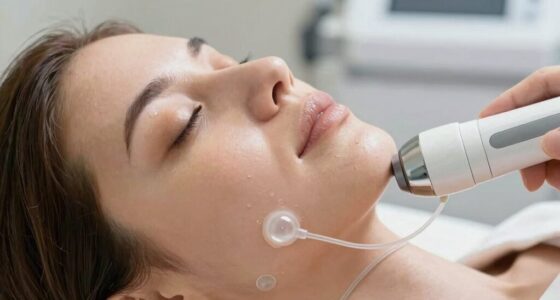
This gentle routine is accessible and easy to integrate into your day. All you need is a smooth-edged Gua Sha tool and a bit of facial oil or moisturizer. Start by relaxing your face and taking a few deep breaths. Then, softly glide the tool along your jaw, from the center outward toward your ears. Repeat this motion several times, focusing on areas where you feel tightness. Over time, you’ll notice a decrease in tension and a more relaxed, refreshed feeling. Gua Sha isn’t about forcing your face into a new shape; it’s about nurturing it with kindness, promoting facial relaxation and stress relief naturally. Incorporating LED therapy or microcurrent devices can further enhance relaxation and circulation, complementing your Gua Sha routine.
As an affiliate, we earn on qualifying purchases.
Frequently Asked Questions
Can Gua Sha Help With TMJ Disorder?
Yes, Gua Sha can help with TMJ disorder by promoting jaw relaxation and reducing muscle tension. When you gently massage your jaw area with a Gua Sha tool, it encourages blood flow and eases tight muscles. This practice can relieve discomfort and improve jaw mobility over time. Just remember to use gentle pressure and consistent routines to see the best results without causing any strain or irritation.
How Often Should I Perform Gua Sha for Jaw Relief?
You should perform gua sha for jaw relief about 3 to 4 times a week—because who needs a skincare routine that’s actually relaxing? Incorporate it into your facial massage techniques, focusing on gentle, deliberate strokes. Overdoing it can backfire, so listen to your body. Consistency is key, but remember, sometimes less is more—so enjoy the calming routine without turning it into a daily grind.
Is Gua Sha Safe for Sensitive Skin?
Yes, gua sha can be safe for sensitive skin if you’re careful. To address safety concerns, use a gentle touch and a smooth, clean stone. Avoid excessive pressure, which can irritate skin sensitivity. Always do a patch test first to check for reactions, and consult with a dermatologist if you have concerns. Taking these precautions helps you enjoy the benefits without risking skin irritation or damage.
Are There Specific Gua Sha Techniques for Jaw Tension?
Think of your facial anatomy as a delicate landscape, and gentle gua sha techniques as a soft breeze. To target jaw tension, use light, sweeping strokes along your jawline, moving from the center outward. Maintain gentle massage pressure, avoiding deep pressure that can cause discomfort. Focus on areas like the masseter muscle, and always listen to your body’s signals to prevent overstimulation, ensuring a soothing and effective routine.
Can Gua Sha Replace Professional Jaw Therapy?
Gua sha can’t replace professional jaw therapy, but it can complement your self-care routines and massage techniques. It helps reduce tension and improve circulation, making it a gentle, effective addition to your overall jaw care. Use it regularly with mindful pressure, but always consult a healthcare professional for persistent issues. Incorporating gua sha into your routine can support relaxation, but it shouldn’t be seen as a substitute for expert treatment.
As an affiliate, we earn on qualifying purchases.
Conclusion
Imagine releasing jaw tension without force, just gentle strokes that soothe rather than strain. Gua sha offers a calming alternative to aggressive methods, transforming stress into serenity. Instead of clenching in frustration, you can glide your tools softly, embracing a mindful routine. It’s a quiet revolution—powerful in its gentleness—that leaves you feeling more relaxed and in control. Sometimes, the strongest relief comes not from force, but from gentle, intentional care.
As an affiliate, we earn on qualifying purchases.
As an affiliate, we earn on qualifying purchases.
Halloween Picks
halloween
As an affiliate, we earn on qualifying purchases.