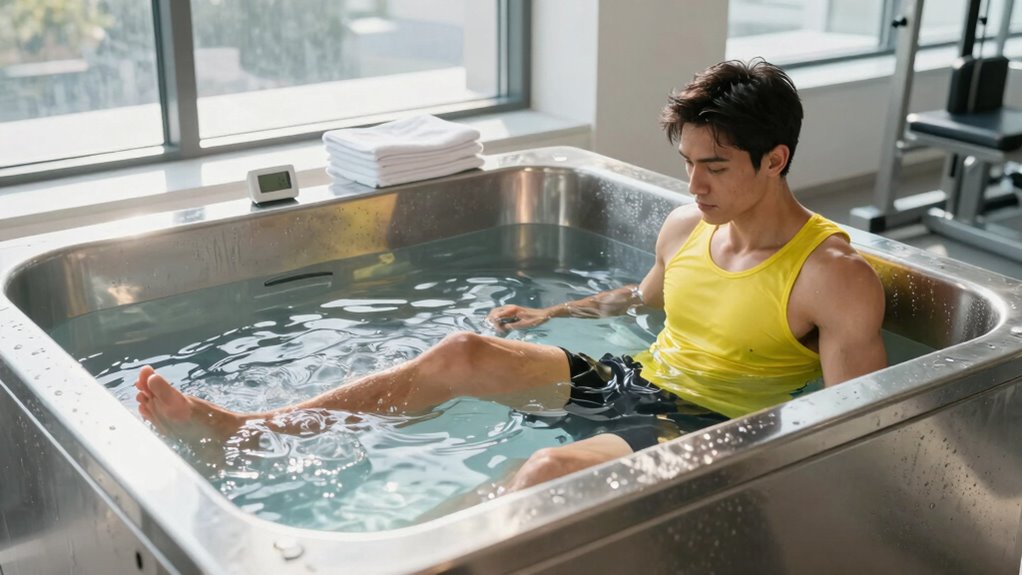

The best-case use of ice baths involves submerging yourself within 30 minutes after intense activity for 10-15 minutes in water around 50-59°F (10-15°C). Focus on steady breathing and avoid prolonged exposure to prevent numbness or fatigue. Use cold baths as part of a balanced recovery routine, including hydration and rest. If you keep exploring, you’ll discover how to tailor this technique to your needs and optimize your recovery outcomes.

Turn your quiet moments into listening time
- Thousands of audiobooks, podcasts and originals
- Listen on your phone, tablet or Echo — also offline
- Cancel anytime
Key Takeaways
- Take ice baths within 30 minutes of exercise, lasting 10-15 minutes at 50-59°F for optimal recovery.
- Focus on steady breathing to manage discomfort and prevent numbness during cold immersion.
- Use cold exposure as part of a balanced recovery routine, including hydration, nutrition, and sleep.
- Tailor ice bath timing and temperature to individual cold tolerance for maximum safety and benefit.
- Combine ice baths with other recovery methods, like contrast therapy, for enhanced circulation and faster muscle repair.
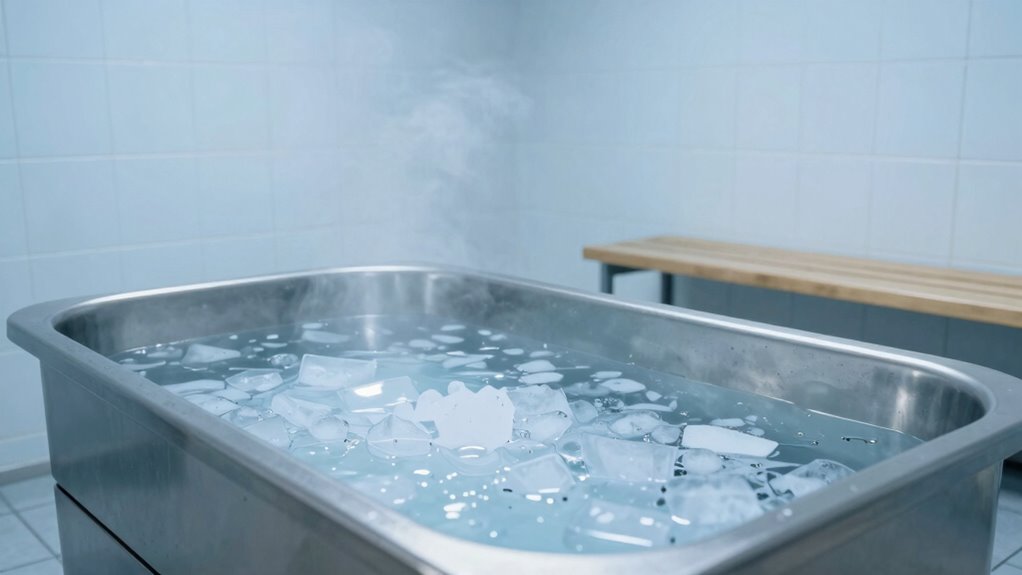
Have you ever wondered if taking ice baths can truly speed up your recovery after intense exercise? The idea is that cold exposure, like submerging yourself in icy water, can reduce inflammation and soothe sore muscles. But how effective is it, and what does the best-case use really look like? When you immerse yourself in an ice bath, the cold causes your blood vessels to constrict, limiting blood flow to your muscles. This process helps decrease swelling and flush out metabolic waste products that build up during strenuous activity. Once you get out of the cold, your body warms back up, and fresh blood rushes to your muscles, bringing oxygen and nutrients that aid muscle repair. This cycle is believed to accelerate recovery and reduce muscle soreness, especially after high-intensity workouts or competitions.
To maximize these benefits, timing and technique matter. You should aim to take an ice bath within 30 minutes of finishing your workout, when inflammation is at its peak. Keep the cold exposure brief—typically between 10 to 15 minutes—so you don’t risk hypothermia or impairing your muscle function. Using a tub filled with water around 50 to 59°F (10 to 15°C) is usually ideal; warmer water won’t provide the same anti-inflammatory effects, while colder water could be dangerous or uncomfortable. As you sit in the cold, focus on steady breathing to help manage discomfort. Avoid lingering in the bath too long, as extended exposure can lead to adverse effects, including numbness or diminished muscle strength. Additionally, understanding the effects of cold exposure on your body can help you tailor your recovery routine more effectively. Incorporating proper timing can enhance the recovery process, so understanding your body’s response is crucial for optimal results. It’s also beneficial to consider individual differences in cold tolerance, which can influence how your body reacts to ice baths and how often you should use them. Recognizing that personal response varies among athletes can help in customizing the approach for better outcomes.
It’s important to remember that ice baths aren’t a miracle solution. They work best as part of a balanced recovery plan that includes proper hydration, nutrition, sleep, and active recovery. Not everyone responds the same way, so pay attention to how your body reacts. If you find that cold exposure leaves you feeling more drained or stiff afterward, it might not be the right recovery method for you. Additionally, some athletes prefer contrast therapy—alternating between hot and cold—to promote circulation and muscle repair. Ultimately, the best-case use involves consistent, mindful application tailored to your individual needs and the intensity of your workouts. When used correctly, ice baths can be a powerful tool to help you bounce back faster and keep your training on track.
As an affiliate, we earn on qualifying purchases.
Frequently Asked Questions
How Long Should I Stay in an Ice Bath for Optimal Recovery?
You should stay in an ice bath for about 10 to 15 minutes for maximum recovery. This duration helps boost mental resilience and build cold tolerance over time. Keep the water between 50-59°F (10-15°C), and listen to your body—if you feel uncomfortable, exit sooner. Regular exposure enhances mental toughness and adapts your body to cold, improving recovery and overall resilience.
What Temperature Is Ideal for an Ice Bath?
Like a winter chill on a frosty morning, the ideal ice bath temperature for cold immersion is between 50-59°F (10-15°C). This range helps with temperature regulation, promoting recovery without risking frostbite or hypothermia. Staying within this zone guarantees your body benefits from the cold shock, reducing inflammation and soreness. Always listen to your body, and don’t immerse for too long if you start feeling uncomfortable.
Are There Any Risks or Side Effects of Ice Baths?
You should be aware that ice baths can trigger cold shock, which may cause rapid breathing or heart rate increases, especially if you have underlying heart concerns. While generally safe when used properly, overdoing it or staying in too long can lead to hypothermia or stress on your cardiovascular system. Always listen to your body, limit exposure time, and consult a healthcare professional if you have heart issues before trying ice baths.
How Often Should Athletes Use Ice Baths During Training?
You should use ice baths strategically, often after intense training sessions, to maximize benefits like reducing inflammation. Limit immersion to about 10-15 minutes to avoid cold shock and guarantee proper recovery. Typically, 2-3 sessions per week work well without overdoing it. Always pay attention to your body’s response and adjust immersion timing accordingly, so you avoid potential risks and enhance your recovery process effectively.
Can Ice Baths Help Prevent Injuries or Only Aid Recovery?
Think of cold therapy like a shield for your body—ice baths primarily aid recovery, but they can also help prevent injuries. Regular cold therapy reduces inflammation and muscle soreness, lowering injury risk. For example, athletes who incorporate ice baths after intense sessions often report fewer strains. While they’re not foolproof injury preventers, ice baths support tissue health and resilience, making injury less likely over time.
As an affiliate, we earn on qualifying purchases.
Conclusion
So, if you want to release recovery faster than a rocket blasting into space, ice baths might just be your secret weapon. When used properly, they can turn your sore, tired muscles into fresh, ready-to-go powerhouses. Don’t let post-workout pain hold you back—embrace the cold and watch your recovery speed skyrocket. Remember, this isn’t just about feeling better; it’s about transforming your fitness game into something truly legendary.
As an affiliate, we earn on qualifying purchases.
As an affiliate, we earn on qualifying purchases.
Halloween Picks
halloween
As an affiliate, we earn on qualifying purchases.