
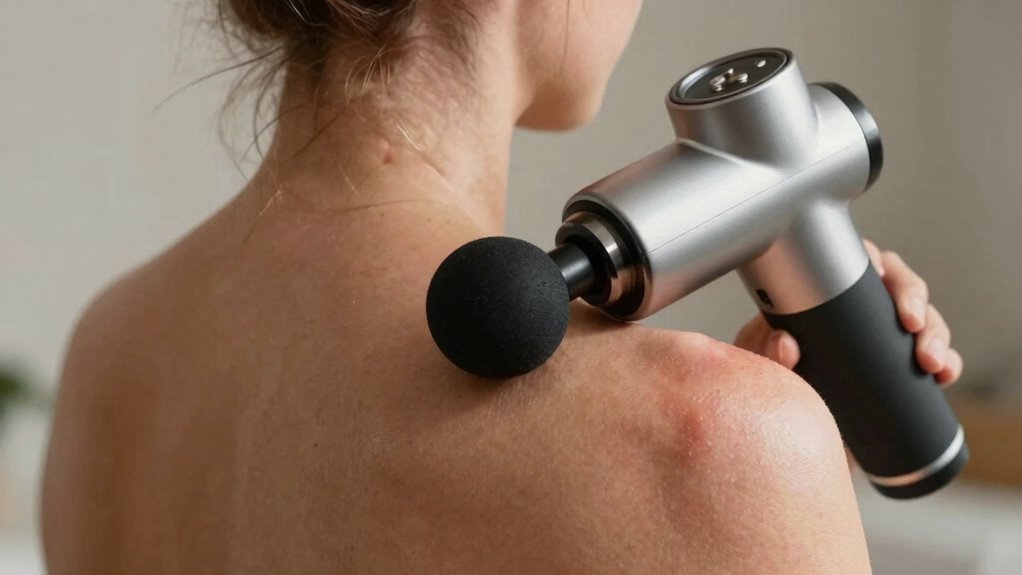

A massage gun is the wrong tool if you’re dealing with deep tissue problems, active inflammation, or complex muscle injuries. Using it on these issues can worsen pain, cause further damage, or delay healing. It’s not suitable for trigger points or injuries like muscle tears or skin infections. If you keep exploring, you’ll discover safer, more effective ways to manage these conditions and know when professional help is the best choice.
Key Takeaways
- When dealing with deep tissue, trigger points, or muscle knots that require precise, slow manual therapy.
- If experiencing inflammation, swelling, or acute injuries that need rest and swelling control.
- On skin infections, open wounds, or areas with skin irritation to prevent spreading bacteria or worsening conditions.
- For muscle tears, joint issues, or complex conditions needing individualized treatment from a healthcare professional.
- When sharp pain occurs during use, indicating possible injury or tissue damage requiring immediate cessation.

Massage guns have become a popular tool for relieving muscle tension and speeding up recovery, but they aren’t always the right choice. While they can be effective for general soreness, they aren’t designed to handle every type of muscular issue. If you’re dealing with deep tissue problems or stubborn trigger points, a massage gun might not be enough, or worse, could make things worse. These devices deliver rapid bursts of percussive force, which can help loosen up tight muscles, but they lack the finesse needed for certain conditions.
Massage guns help with soreness but aren’t suitable for all muscle issues or deep tissue problems.
When it comes to deep tissue work, massage guns may fall short. Deep tissue therapy often requires precise pressure and slow, deliberate movements that target specific layers of muscle. Trigger points—those tender knots of muscle fibers that can refer pain elsewhere—are particularly tricky. Applying a massage gun directly on trigger points might cause discomfort or even aggravate the problem if used incorrectly. You need a more focused approach, like manual therapy performed by a trained massage therapist, to properly release these knots without risking injury. Proper technique is essential for safe and effective treatment. Additionally, understanding muscle anatomy can help determine the appropriate method of therapy. Recognizing muscle structure can also guide effective treatment strategies, especially when aiming to avoid further injury.
Furthermore, if you have underlying issues such as inflammation, muscle tears, or joint problems, using a massage gun can be counterproductive. For example, if you experience sharp pain during use, it’s a sign you should stop. Relying solely on a handheld device for complex issues like deep tissue injuries can lead to further tissue damage or prolong recovery. A targeted approach—often involving specific techniques like myofascial release—can more effectively address these issues.
Additionally, if you’re experiencing swelling or acute injury, a massage gun is not your friend. Applying percussion therapy to inflamed tissues can increase blood flow and worsen swelling. Rest, ice, compression, and elevation should be your priority in these cases, rather than percussion therapy. The same applies if you have skin infections or open wounds; using a massage gun could spread bacteria or exacerbate the injury. It’s important to recognize that muscle injuries require careful management and may need professional treatment rather than self-administered therapy.

Komogir Wood Therapy Massage Tools 5-in-1 Lymphatic Drainage Massager Maderoterapia Kit Wooden Massager Body Sculpting Tools for Muscle Pain Relief, Anti-Cellulite, Body Contouring and Shaping
- Complete 5-in-1 Maderoterapia Kit: Includes various wooden massage tools and accessories
- Premium Craftsmanship and Materials: Precision-cut, smooth, burr-free, durable wood tools
- Deep Muscle and Fascia Massage: Penetrates deeply to relieve soreness and stiffness
As an affiliate, we earn on qualifying purchases.
As an affiliate, we earn on qualifying purchases.
Frequently Asked Questions
Can Massage Guns Replace Professional Physical Therapy?
A massage gun can’t replace professional physical therapy, especially for serious injuries or chronic conditions. While it can be a helpful self-massage technique for muscle relief, it’s best used as a supplement rather than a substitute. For ongoing issues, explore alternative therapy methods and consult a licensed therapist. They can create personalized treatment plans, ensuring you get the targeted care your body needs beyond what a massage gun can provide.
Are Massage Guns Safe for Pregnant Women?
You stay safe during pregnancy by steering clear of massage guns, as pregnancy safety is essential. These devices can sometimes cause massage gun risks like discomfort or unintended pressure on sensitive areas. Always consult your healthcare provider before using one, since what seems harmless might not suit your unique pregnancy needs. Protect your glow and wellbeing—trust professional advice over gadgets to keep both you and your baby healthy.
How Long Should I Use a Massage Gun on One Area?
You should use a massage gun on one area for about 15 to 30 seconds at a time, focusing on muscle relaxation and tension relief. Avoid prolonged use to prevent overstimulation or discomfort. Move the device slowly and gently, and listen to your body; if you feel pain or excessive soreness, stop immediately. Keep sessions brief, and always follow the manufacturer’s guidelines for safe, effective use.
Can Massage Guns Help With Chronic Pain?
Yes, massage guns can help with chronic pain by promoting muscle relaxation and providing pain relief. They stimulate blood flow, loosen tight muscles, and reduce tension, which can alleviate ongoing discomfort. However, you should use them carefully, avoid overuse, and consult a healthcare professional if pain persists. Remember, while massage guns can support pain management, they aren’t a cure-all and work best alongside other treatments.
Are There Any Medical Conditions That Prevent Using a Massage Gun?
Certain medical conditions, like deep vein thrombosis, skin infections, or osteoporosis, can prevent you from using a massage gun. Always consider medical contraindications and consult your healthcare provider before using one, especially if you have heart issues, blood clotting disorders, or recent surgeries. To guarantee safety, follow all safety precautions, avoid sensitive areas, and listen to your body. If in doubt, get professional advice to prevent injury.
As an affiliate, we earn on qualifying purchases.
Conclusion
Just like trying to hammer in a nail with a screwdriver, using a massage gun for every ache can backfire. I once thought it would fix my stubborn shoulder pain, but instead, I worsened it. Remember, tools are meant for specific jobs—sometimes a gentle stretch or rest does more good than a powerful device. Know when to pick the right tool, or risk turning a simple fix into a bigger problem.
As an affiliate, we earn on qualifying purchases.
As an affiliate, we earn on qualifying purchases.